Crucifix BJJ: 7 No-Gi Entries That Force the Tap
The crucifix BJJ position is the rarest scoring position in no-gi grappling — and the most lopsided. Both of your opponent’s arms get pinned by your limbs while you sit on his back, which means he is defending submissions with zero functional limbs. Marcelo Garcia rode this exact setup to four ADCC gold medals against opponents who routinely outweighed him by 40 pounds. The catch is that nobody teaches it until purple belt, which is why most no-gi competitors will tap to a crucifix entry they could have shut down at the snap-down.
This guide walks through what the crucifix is, three high-percentage no-gi entries, the two armbar finishes that work without a kimono to grip, the chokes Marcelo himself favors, and the one defensive layer most people skip. Every position covered here is no-gi specific — no lapel chokes, no spider-guard nonsense.
What Is the Crucifix Position in BJJ?
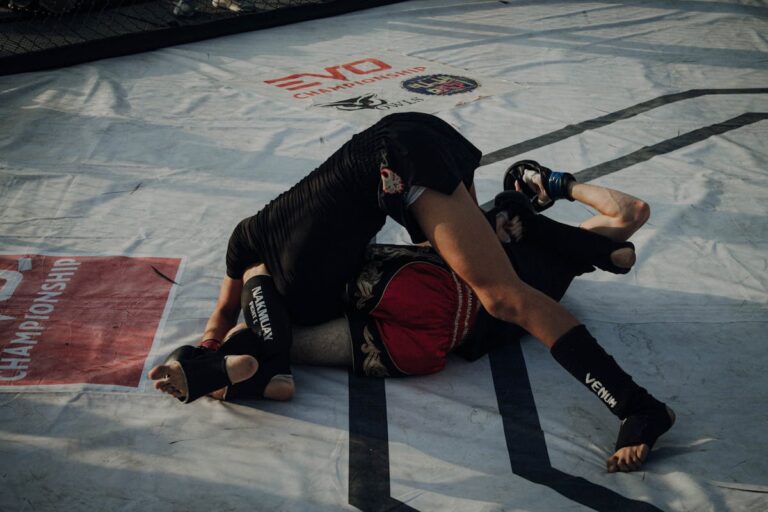
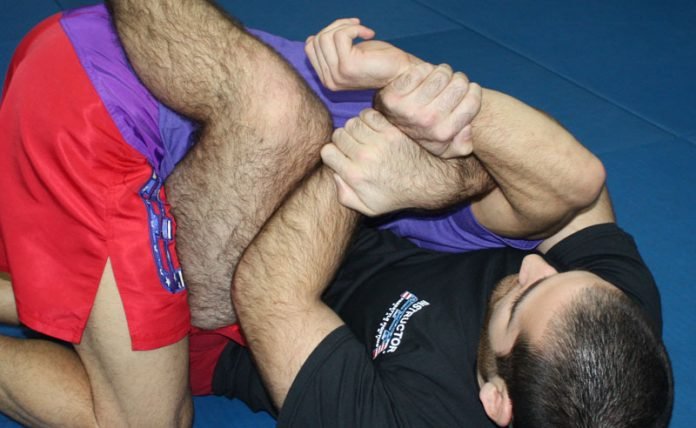
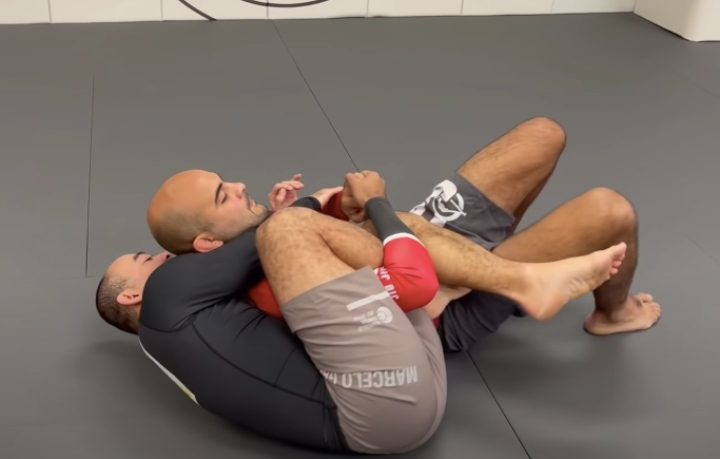
The crucifix is a back-attack position where you trap one of your opponent’s arms between your legs and the other under your armpit, with him kneeling or lying on his side facing away. His arms form a T — hence the name. Your seatbelt grip is still locked, but now two thirds of his defense is gone because both arms are committed. In rear mount with hooks, he still has both hands free to grip-fight, frame, and post. From the crucifix, he has neither.
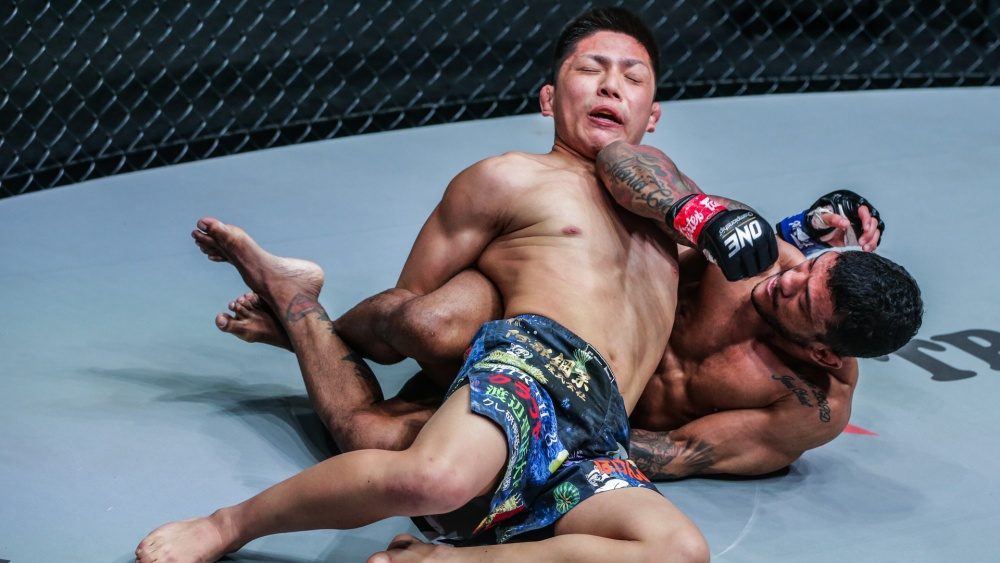
The position came into BJJ through wrestling — the original crucifix is what catch wrestlers used to set up the elbow-extension before the sport banned it. Eddie Bravo’s 10th Planet system built an entire submission catalog around it. Marcelo Garcia rebuilt it as a no-gi scoring system. Shinya Aoki finished MMA opponents from there inside ONE Championship cages. Three different lineages, one position, one common thread — when both arms are gone, the choice is tap or sleep.
Why the Crucifix Is the Most Underrated No-Gi Trap
The honest position here: most blue belts learn rear naked choke, rear triangle, and bow-and-arrow, then quit studying the back. That leaves four feet of vertical control real estate completely unused. The crucifix sits in that gap. It scores in IBJJF no-gi (mount equivalent), it sets up four high-percentage finishes, and most opponents have never drilled the escape because their coach never showed them.
Marcelo Garcia recorded all four of his ADCC absolute runs with crucifix attacks landing in at least one match per tournament. That is not a small sample. Compare that to the bow-and-arrow, which scores in maybe two matches across the same span. The reason crucifix is rare on highlight reels is exactly the reason it works — opponents do not know what they are looking at until their elbow is already extended.
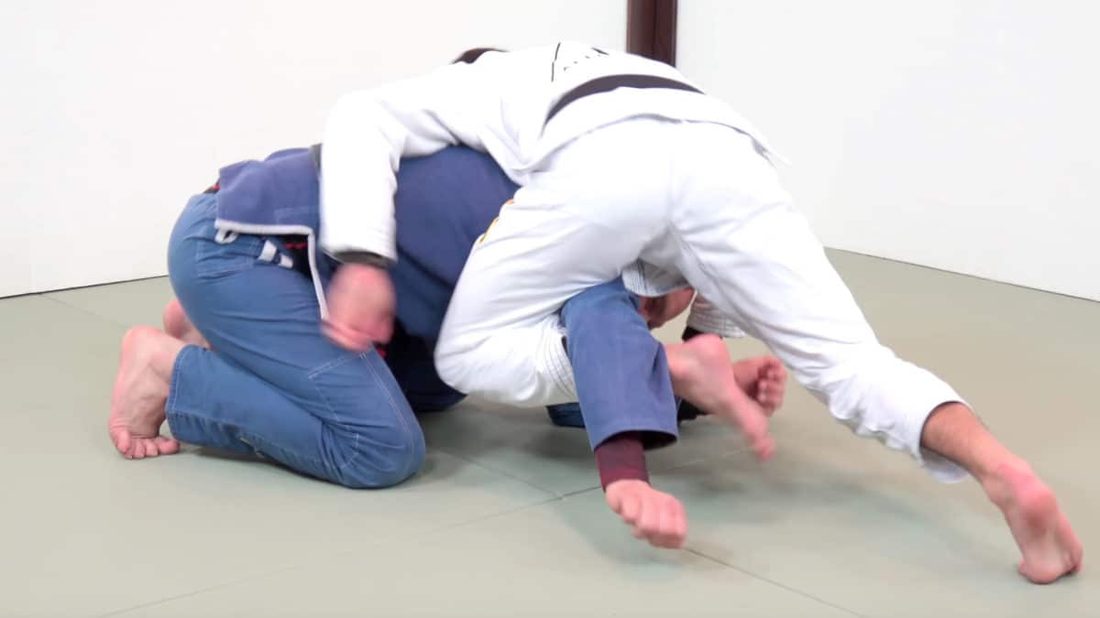
Entry 1 — Turtle Pull to Crucifix
This is the Marcelo Garcia entry and the highest-percentage option in no-gi. Your opponent turtles after a failed sweep. You sit to the side hip-to-hip, threaten the seatbelt, and as he raises his hand to defend the choke, you scoop your near leg under his elbow. The arm is now triangle-trapped between your shin and thigh. From there you sit through, fall to the side opposite the trapped arm, and your free hand secures his far wrist. Crucifix locked. Total time: about two seconds if his defense is slow.
The key detail most people miss: you do not pull him over. You sit through and let gravity finish the rotation. Pulling triggers his base reflex and he posts. Sitting through stays under his radar until the rotation is past the point of no return.
Entry 2 — Snap-Down Front Headlock to Crucifix
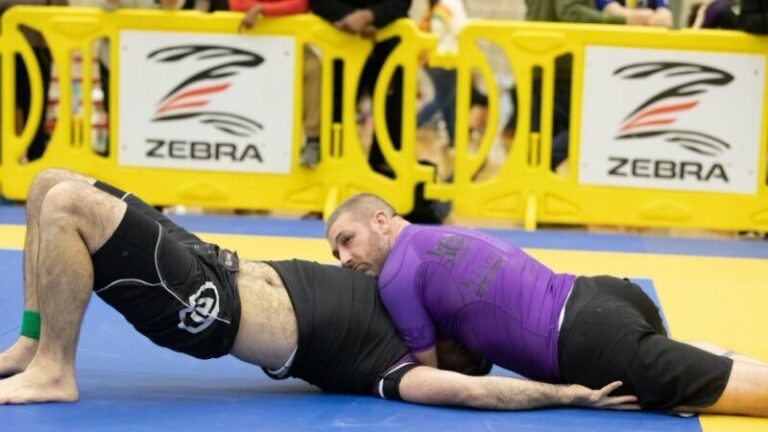
Wrestling shows up in modern no-gi for one reason — front headlock series finish matches. You snap your opponent down out of a tie-up, end up in front headlock, and his arms post on the mat to base. Reach for the far arm with your same-side hand, drag it across his body, and step over it. Now you are on his side with his arm pinned under your far leg. Take the seatbelt and your near leg traps the second arm — crucifix.
This entry rewards aggressive hand-fighting. The snap has to be sharp enough that he posts heavy on the lead hand, because that is the hand you are stealing. Soft snaps let him circle out before the trap closes. Building a wrestling base for no-gi pays off here more than anywhere else on the mat.
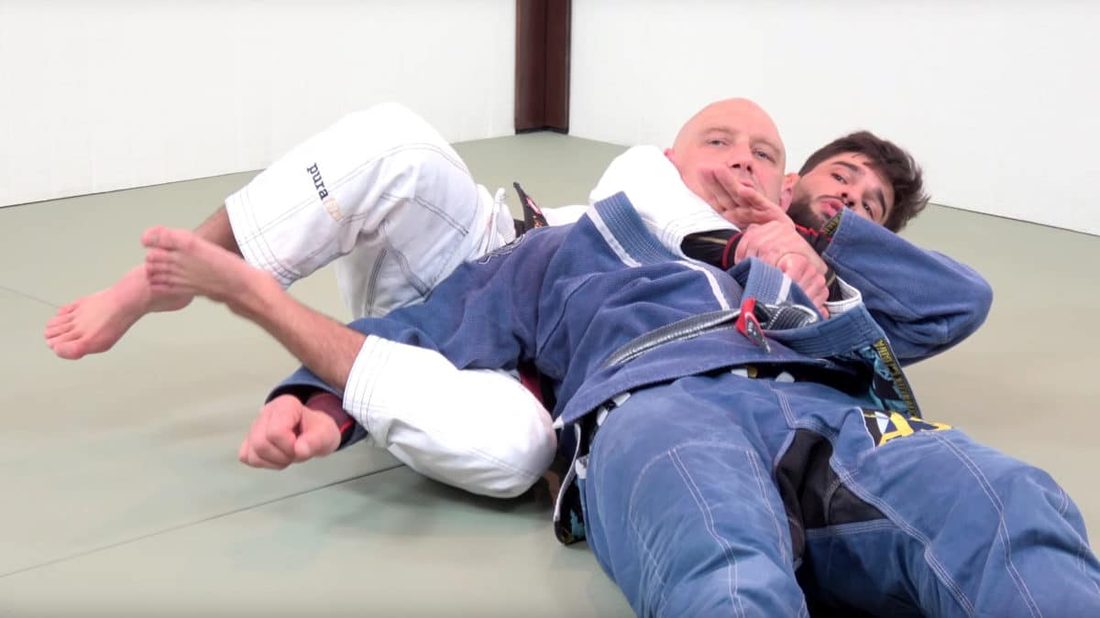
Entry 3 — Back Mount to Crucifix Roll
You took the back. He defends the rear naked choke by gripping his own collar — except there is no collar in no-gi, so he grips his own wrist or two-on-one fights your choke hand. As soon as one of his arms commits to that defense, you have an opening. Slide your top hook under his elbow on the choke-defense side, then roll him toward his trapped arm. You finish on top with both arms isolated.
The mistake here is rolling too early. Wait until both of his hands are working on your one arm — then his elbows are exposed and the roll is uncontested. Roll before he commits and he posts a free hand to block the rotation.
The Crucifix Armbar — Two Variations Every No-Gi Player Needs
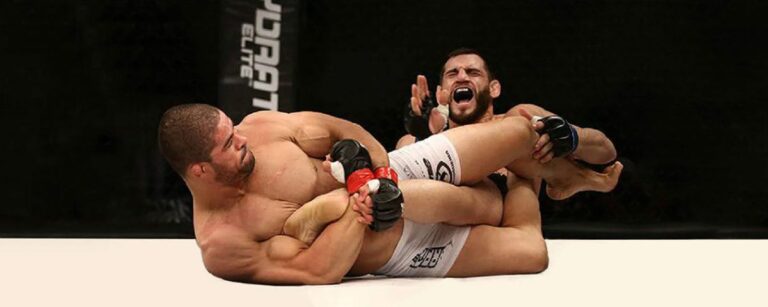
The crucifix armbar is the finish that opponents never see coming. Standard armbar setups telegraph through hip rotation. The crucifix armbar finishes from a static position, with the elbow already isolated and the hips already loaded.
Variation one: triangle your legs around his trapped arm and roll your hips toward his head. The elbow extends because his shoulder cannot follow. Drop both feet to the floor for the final wedge. Most opponents tap before you complete the full extension because the angle is so unfamiliar.
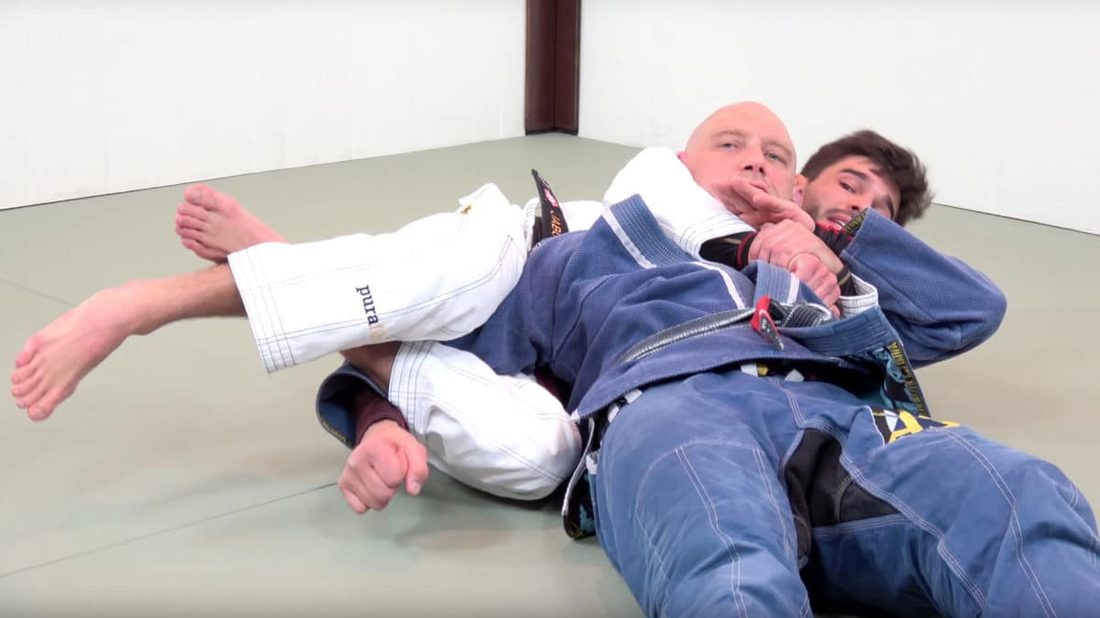
Variation two — for when he turns his thumb up to escape the first armbar — cross your feet the opposite way, bridge into the trapped elbow, and finish to the other side. Stephan Kesting calls this the “thumb-up escape counter” and it has been the highest-percentage second-attempt finish in his crucifix data set for over a decade.
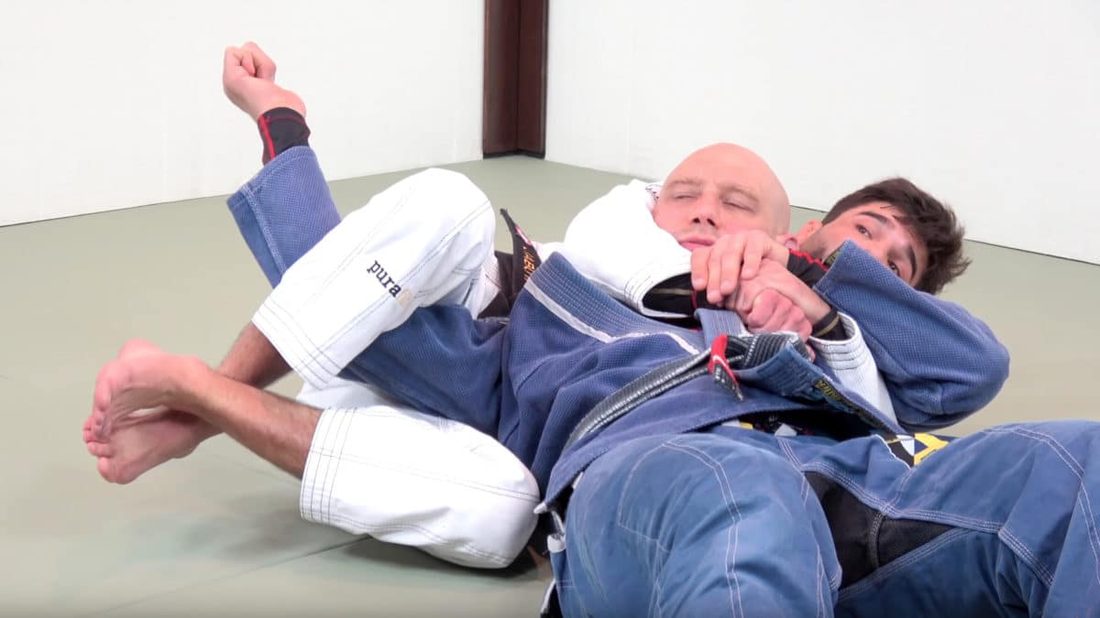
Crucifix Chokes Without the Gi — Claw, Triangle, Short Choke
The reason crucifix chokes are underrated in no-gi: people assume you need a collar grip. You do not. The claw choke wraps your free hand around the front of his throat with the web of your thumb sinking under his jaw. Squeeze your bicep into his far carotid while your trapped arm tightens the seatbelt — a one-handed blood choke that finishes inside eight seconds when set properly. The same principle that makes Marcelo’s north-south choke work is what makes the claw choke work here. Both carotids, opposing pressure, no gi required.
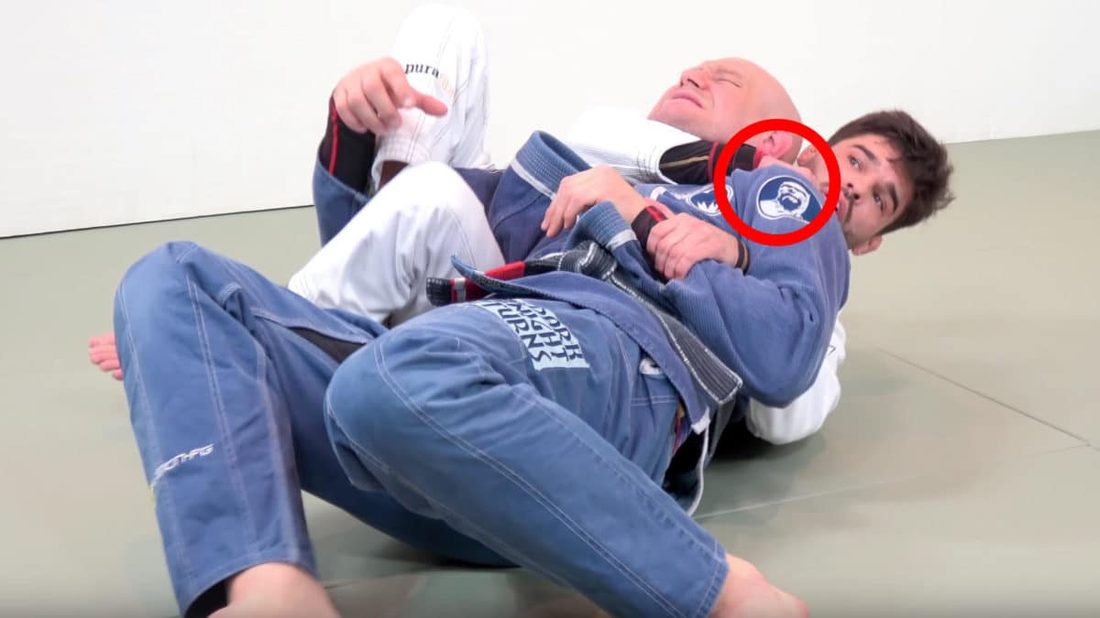
Short choke variation: instead of wrapping the throat, drive the blade of your forearm across the side of his neck and pull his trapped arm into your hip. The compression closes the carotid against his own deltoid. This one is brutal in feel — opponents describe it as the carotid being pinched between two bones. Tap is usually instant.
The third option no-gi specialists use is the rear triangle from crucifix. Your leg that is triangle-trapping his near arm slides up to his neck, locks behind his head, and you finish standard rear triangle with his arm already inside. This is the Eddie Bravo finish that built 10th Planet’s crucifix reputation in the 2000s.
Crucifix Neck Cranks and Why Rules Matter
This is the dirty truth most BJJ blogs avoid: the crucifix produces an obvious neck crank if you do not finish a choke cleanly. Pulling his head with your bicep while his trapped arm prevents him from posting compresses the cervical spine. In IBJJF no-gi, neck cranks are illegal. In ADCC, they are legal. In EBI overtime, they are legal. In MMA, anything goes.
Train it knowing the ruleset of your next match. Do not drill the crank reflexively if you compete IBJJF — you will eat a DQ. Do drill it if you train for ADCC, sub-only, or MMA, because it is one of the most reliable finishes available from the position. Shinya Aoki has multiple ONE Championship submissions that began as choke attempts and finished as neck cranks the referee scored as legal submissions.
Defending and Escaping the Crucifix
Most defense begins at the snap. Once both arms are trapped, the best window is gone. If you feel his leg threading under your arm from turtle, post the trapped-side hand on the mat and walk your knees forward — get to a low base before the seatbelt locks. The second window is during the rotation. If you can land on your trapped-arm shoulder rather than your back, you are at a worse angle for him to finish armbars.
If you do land flat in full crucifix, the escape priority is in this order: free the over-hooked arm first (the one stuck under his armpit) because that one creates the biggest defensive frame; then bridge into the choke-side and roll toward the trapped-leg side; then rebuild base. Do not try to free the leg-trapped arm first — it is the most secured and the slowest to recover, and you waste the bridge attempting it. Defending no-gi back attacks covers the broader escape framework that this fits inside.
Where to Start Drilling
If you have never trained the crucifix, three rounds a week of one focused entry — pick the turtle pull because it is the simplest — will give you a working version inside six weeks. Add the armbar finish first, the claw choke second, the rear triangle last. Resist the urge to learn all three entries at once. One reliable entry plus two finishes beats four half-entries with no committed finish.
Drill against a resisting partner who knows the position exists. Sparring an opponent who does not know what is happening teaches you nothing about whether your control is real — you need someone who actively tries to free the over-hooked arm. That is the rep that builds genuine crucifix understanding, and that is the rep that translates to ADCC, EBI, or your next sub-only tournament. Check the ADCC ruleset before competing so you know which finishes pay.
Sources
- Grapplearts — The BJJ Crucifix Position and Your Best Submission Options From There by Stephan Kesting, the most detailed public breakdown of crucifix entries and submissions.
- Evolve Daily — BJJ 101: The Crucifix covering position fundamentals and competition use.
- BJJEE — Marcelo Garcia’s Formula For Getting More Taps From the Crucifix detailing his ADCC-tested system.
- ONE Championship — Shinya Aoki athlete page with MMA submission history including crucifix-derived finishes.
- ADCC Official Rules clarifying which crucifix submissions are legal in sub-only competition.
Browse our top-rated rashguards and no-gi gear at the RashguardGuy shop →