50/50 Guard No-Gi: 7 Essential Heel Hook Attacks
At ADCC 2019, Lachlan Giles — a sub-77kg competitor — heel-hooked three heavyweights in a row on his way to an absolute bronze medal. Kaynan Duarte, Patrick Gaudio, and Mahamed Aly all tapped, and the position that made it possible was the 50/50. That run did more to sell the 50/50 guard no-gi game to a generation of grapplers than any instructional ever could. The position looks passive — two people sitting with their legs tangled — but it hides one of the fastest finishes in the sport.
What Is the 50/50 Guard in No-Gi?
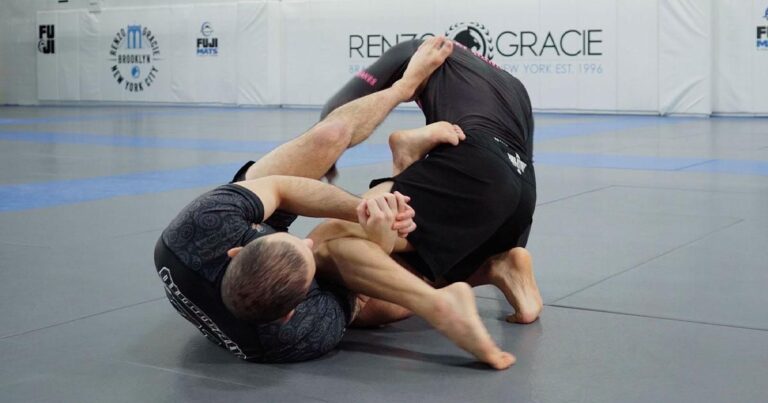
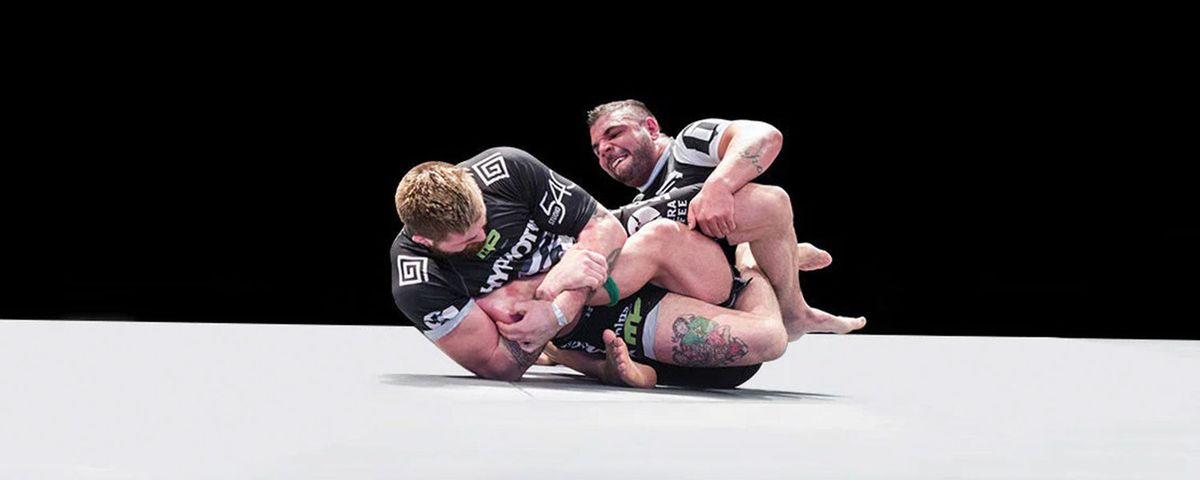
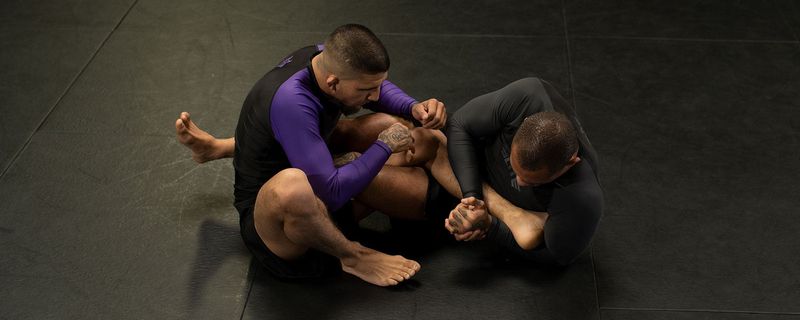
The 50/50 guard no-gi is a leg entanglement where you and your opponent each pass one leg between the other’s thighs and triangle your own legs around it. The name comes from the symmetry: both athletes have the exact same control, the exact same submission threats, and the exact same danger. There’s no top or bottom in a true 50/50 — you’re mirror images of each other on the mat.
That symmetry is what makes the position so strange to newcomers. In most guards, one person attacks and the other defends. Here, the moment you reach for a heel, your own heel is sitting right there for the taking. The position rewards whoever understands the small details — heel exposure, hip angle, and cross-body pressure — and punishes anyone who muscles in blind.

Why 50/50 Took Over No-Gi Grappling
In the gi, 50/50 earned a reputation as a stalling position. Grips slow everything down, heel hooks were banned in most gi rulesets, and two skilled players could sit there for ten minutes trading grip fights. No-gi flipped that completely. Strip the gi grips away and 50/50 becomes a sprint — sweaty limbs slide, control is temporary, and the heel hook is legal in the rulesets that matter.
The Danaher Death Squad — John Danaher’s team of Gordon Ryan, Garry Tonon, and later Craig Jones — built entire competitive careers on treating leg entanglements as a primary attacking system rather than a last resort. Gordon Ryan, a seven-time ADCC champion, made the inside heel hook from 50/50 and its cousin positions his signature. Once the results piled up, the rest of the grappling world had to learn it or get caught by it.
How Do You Get Into the 50/50 Guard?
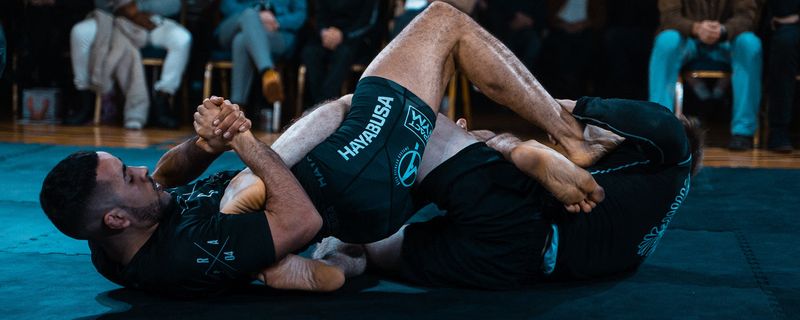
You rarely start a match in 50/50 — you build to it. The most reliable no-gi entries come off failed passes and off your own sweeps. A few that hold up under resistance:
- Off a single-leg-X sweep: when your opponent bases out to stop the sweep, feeding your outside leg across their hip drops you straight into 50/50.
- From closed guard: break your ankles free, thread one leg through, and swivel — a classic entry that shows up constantly in no-gi.
- Off a guard pass counter: as your opponent tries to leg-drag or knee-slice past, catching their passing leg and inverting can dump both of you into a shared entanglement.
- From ashi garami: if your opponent clears their knee out of a standard ashi, following them with your second leg often lands you in 50/50.
The single-leg-X connection is the one worth drilling first. It links two positions that already share a lot of mechanics, and it gives you a live sweep threat that forces your opponent to react — which is exactly when the entanglement opens up. If you want the full sweep breakdown, our single-leg-X guard no-gi guide walks through the entries step by step.
The Inside Heel Hook From 50/50
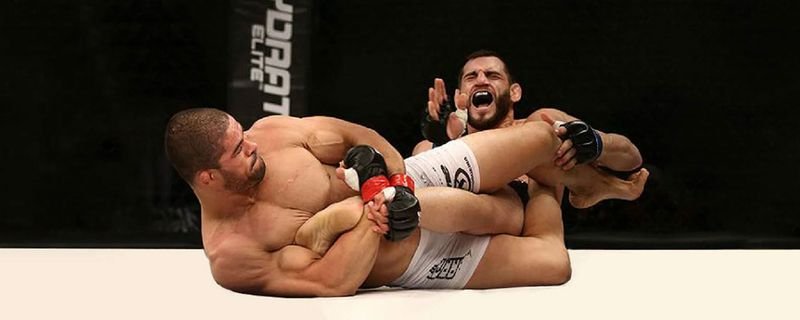
This is the finish everyone is worried about, and for good reason. The inside heel hook attacks the knee by rotating the foot laterally, and the knee simply doesn’t bend that way. Damage happens fast and often without pain warning, which is why it’s a competition submission, not a sparring toy.
The mechanics come down to three things. First, isolate the heel: your opponent’s heel needs to be trapped across your body, tucked under your same-side armpit or bicep. Second, kill the knee line — pinch your knees together so their thigh can’t slide out and kill your finishing angle. Third, rotate with your whole torso, not your arms. The finish is a slow topside rotation, not a jerk. Yank on it and you’ll either lose the heel or hurt a training partner who never got a chance to tap.
The catch, always, is that your heel is exposed too. Good 50/50 players attack while hiding their own foot — pointing their toes, blading their knee inward, and staying ahead in the race. This is why the position is often described as a game of “who hides their heel and finds their opponent’s first.” For the complete submission breakdown, see our full no-gi heel hook guide.
Attacks Beyond the Heel Hook
Treating 50/50 as a one-trick heel hook position is a mistake, and it’s the mistake that gets your own leg taken. The position is a hub, not a dead end. From here you can also hunt:
- The toe hold: when your opponent defends the heel by hiding it, their exposed toes become the target instead.
- The kneebar: extending their trapped leg and bridging attacks the knee from the opposite direction — a great answer when they curl their heel away.
- Sweeps to top: if the submission isn’t there, 50/50 offers clean sweeps to a strong top passing position, scoring points in ADCC and IBJJF alike.
- The back take: switching to a “backside 50/50” lets you climb toward the back, which is often the highest-percentage option against a savvy defender.
The best 50/50 players chain these together. Attack the heel, feel the defense, switch to the toe hold or the sweep before your opponent settles. Sitting on a single heel hook attempt in a symmetrical position is how you end up defending instead of finishing.
How Do You Escape the 50/50 Guard?
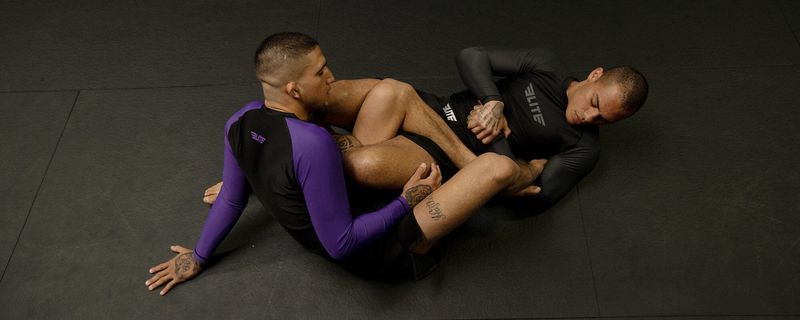
Escaping starts with defense that never stops. The first job is heel safety — the instant you feel your foot being isolated, point your toes hard and rotate your knee toward the danger to relieve the twisting pressure. A safe heel buys you time; an exposed one ends the match.
From there, the standard exit is to clear the knee line. Frame on your opponent’s top leg, kick your trapped foot free, and turn to face them so you can start passing or backing out. Many grapplers also use the “hip switch” — rotating their hips away from the entanglement to break the symmetry and gain a slight positional edge before disengaging. The key detail most beginners miss: don’t try to escape and attack at the same time. Secure your own leg first, then work out. The ashi garami no-gi escapes carry over directly, since 50/50 and ashi share so much of the same defensive logic.
Is the 50/50 Guard Legal in No-Gi Competition?
The position itself is legal everywhere. What changes across rulesets is which submissions you can throw from it.
In ADCC and most submission-only events like EBI, heel hooks are legal for all skill levels, which is why 50/50 is a central battleground there. IBJJF banned heel hooks for years, but in 2021 it started allowing them in no-gi for brown and black belts — a rule change that pulled the 50/50 game into mainstream competition. Below brown belt in IBJJF no-gi, heel hooks and toe holds remain off-limits, so your 50/50 attacks shrink to kneebars, straight ankle locks, sweeps, and back takes. Always confirm the specific ruleset before you compete; the same entanglement can be a submission goldmine or a points-only scramble depending on the promotion.
Watch: Heel Hook From 50/50 Explained
Lachlan Giles breaks down the details of finishing the heel hook from the 50/50 position — heel isolation, knee line, and the rotation that actually gets the tap:
Common 50/50 Mistakes to Avoid
Most 50/50 problems come from a handful of repeatable errors. Fix these before you chase fancy finishes:
- Ignoring your own heel: reaching for the submission while your foot sits exposed is how you get caught first in a symmetrical position.
- Yanking the finish: the inside heel hook is a slow rotation. Fast, explosive cranks injure partners and blow the control.
- Letting the knee line escape: if your opponent’s thigh slides past your hip, your control is gone — pinch your knees.
- Going passive: two defensive players in 50/50 stall out. Whoever attacks first usually dictates the exchange.
One more thing worth saying plainly: 50/50 is not a beginner’s first position. Drill the heel hook mechanics slowly, tap early, and respect the fact that leg locks give almost no pain warning before damage. A good study of how the modern greats built their leg-lock games will teach you more about patience than any single move.
The Bottom Line on 50/50 No-Gi
If you compete in no-gi under ADCC or sub-only rules and you haven’t drilled 50/50, you’re one scramble away from being in a position you don’t understand — with your heel exposed. Learn the entries, obsess over heel safety, and treat the entanglement as a hub with four or five real attacks rather than a single heel hook gamble. Start with slow positional drilling, add the inside heel hook once your defense is automatic, and build from there. Grab your rashguard, get a trusted training partner, and put in the reps before you need them under the lights.
Sources
- BJJ Heroes — Are Heel Hooks the Key to ADCC Success? — background on the rise of leg locks in elite no-gi competition.
- BJJ Fanatics — Lachlan Giles’ ADCC 2019 absolute run — details on the three heavyweight heel-hook finishes.
- ADCC Official Rules — current submission legality for ADCC competition.
- Grapplearts — Leg Lock Entries — reference on entering leg entanglements including 50/50.