
Leg Drag Pass No-Gi: 7 Essential Setups & Details
At the 2022 ADCC World Championship, roughly a third of all guard passes at the black-belt level started or finished with some version of the leg drag. That is not an accident. Strip away the collar and sleeve grips that make gi passing possible, and you need a pass that works off the legs alone — one that turns your opponent’s own hips against them. The leg drag pass does precisely that, and it scales from a first-year white belt trying to survive the scramble to Kade Ruotolo hunting a back take in a title fight.

What Is the Leg Drag Pass in No-Gi?
The leg drag pass takes one of your opponent’s legs and pulls it across the midline of your body, trapping it against your near hip so the knee points away from you. Once that leg is dragged and pinned, your opponent can no longer square their hips to you — and square hips are what every guard needs to function. You end up chest-to-chest at a right angle, in a position that flows straight into side control, mount, or the back.
What separates it from a toreando or a knee cut is the control point. You are not bull-fighting the legs past you or slicing a knee through a shield. You are isolating a single leg, killing its mobility, and stacking your weight on top of a dead limb. That distinction matters more without the gi, because you have no fabric to grab and slow the action down. The leg drag gives you a mechanical trap instead of a grip.
Why the Leg Drag Works So Well Without the Gi
Sweaty limbs slide. That is the whole problem with no-gi passing, and it is also why the leg drag thrives. Instead of relying on friction, you use bone-on-bone control — your hip bone against the back of their thigh, your forearm wrapping the shin. Nothing has to grip anything slippery.
John Danaher built an entire no-gi passing framework around this idea of using the legs as the primary control tool rather than an afterthought. His argument is blunt: in no-gi, the person who wins the inside position on the legs wins the pass, full stop. The leg drag is the cleanest expression of that principle. You take an inside angle, drag the leg, and the guard collapses because there is nothing left to grip you back with.
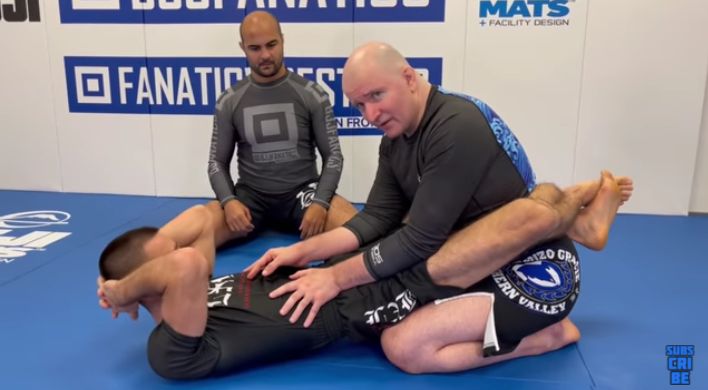
There is a second reason it belongs in no-gi specifically. The leg drag chains into leg locks. When you drag a leg across your body, you are one small adjustment away from an ashi garami entry. In a ruleset that rewards heel hooks and knee bars, a pass that doubles as a leg-attack entry is worth two techniques for the price of one.
7 Essential Steps to Hit the Leg Drag Pass
The move looks simple in a highlight reel and falls apart the first time you try it live. These are the seven checkpoints that decide whether the pass lands or your opponent recovers guard.
- Win the inside position first. Before anything, get your hands or forearms inside their knees. If your control is on the outside of their legs, you are passing on their terms, not yours.
- Isolate one leg. Pick the leg you will drag — usually the one that is already extended or reaching. Pin the other knee down or push it away so it cannot follow.
- Drag across the centerline. Pull the chosen leg across the midline of your body, not just off to the side. The knee should end up pointing away from you, the outside of their thigh facing your hips.
- Trap with the hip, not the arms. The instant the leg crosses, drop your near hip onto it. Your arms will tire; your bodyweight will not. This is the pin.
- Kill the underhook race. As you settle, dig for the far-side underhook or wrap the near arm across their hips. Whoever gets the underhook here usually decides the exchange.
- Walk to the perpendicular angle. Step your feet toward their head so your chest lands across their chest at ninety degrees. Passing straight forward invites the recovery; walking around it does not.
- Threaten the back immediately. The leg drag is not a resting spot. The moment it is set, they will turn away — ride that turn straight into a back take before they re-guard.
Miss step four and the pass becomes an arm-wrestling match you will lose against a fresh opponent. Miss step seven and you hand back everything you just earned.
Setting Up the Leg Drag From Common No-Gi Positions
Nobody hands you a leg drag from neutral. It shows up as a reaction to what your opponent gives you. The most reliable entry in no-gi is off a failed knee cut pass — when a strong knee shield stuffs the cut, you retract, extend their leg, and hop into the drag instead. Levi Jones-Leary and Lachlan Giles teach exactly this transition, and it is one of the highest-percentage entries in the sport because it turns your opponent’s best defense into your setup.
It also lives off the open guards you already fight against every round. When someone attacks you with a single leg X guard or a butterfly hook, their leg is already extended and exposed — drag it across before they can load a sweep. The same logic applies against a seated guard: as they reach a leg toward your hip, that reach is the invitation.
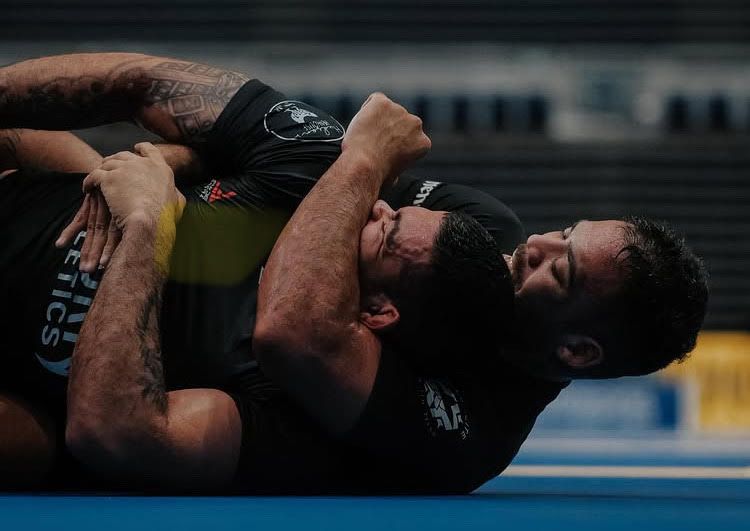
The takedown-to-pass chain matters too. A clean double leg that lands you in their half guard puts you a single leg-drag adjustment from clearing the last barrier. If your no-gi takedowns already land you in top position, the leg drag is how you convert that position into an actual pass instead of a stall.
Locking Down the Pass — Pressure and Weight Distribution
Here is where most people leak the position. They drag the leg, feel good about it, and then float. Floating on top of a dragged leg is an invitation to re-guard. The pin has to be heavy.
Drive your dragged-side hip down into the mat so your opponent’s trapped leg is sandwiched between your hip and the floor. Your weight should feel like it is pouring through that one contact point, not spread evenly across your whole base. A common cue from Giles is to imagine screwing your hip into the ground — a downward, rotating pressure that flattens their leg and takes away the hip escape.
Keep your head up and your posture forward. If you collapse your chest too early chasing the finish, you give up the underhook and the space to turn back into you. The truth is, most leg drags are lost not in the drag itself but in the two seconds after, when the passer relaxes and the guard player scrambles a knee back in front. Stay greedy with the pressure until you have the perpendicular angle locked.
From Leg Drag to Back Take and Leg Attacks
A leg drag that only ends in side control is leaving points on the table. The position’s real value is that it forces your opponent to make a bad choice: give up the back or give up a leg.
When they turn away to defend the pass — and they almost always do — their back opens up. Chase the near-side seatbelt as they roll and you convert a pass into the highest-scoring position in the sport. This is the sequence the Ruotolo brothers have made a career out of: drag, pressure, back take, submission, often inside a single exchange.
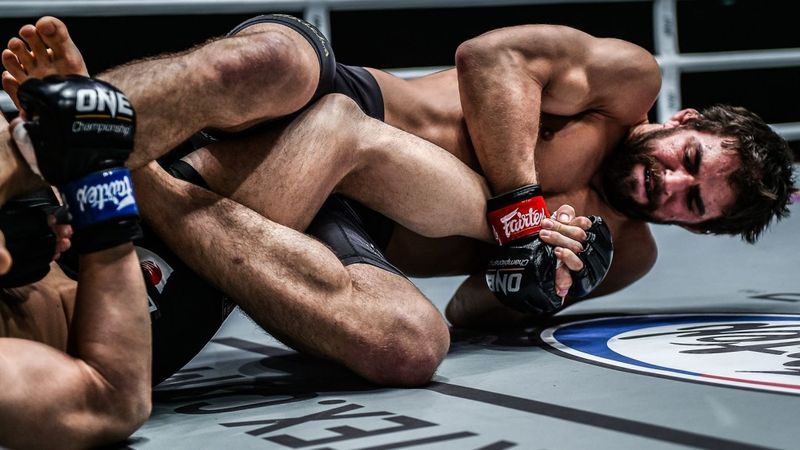
If they instead flatten and defend the back, the trapped leg is right there. Rotating down into an ashi garami off a leg drag is a short trip, and from there the toe hold and heel hook are both live. That two-way threat — back or legs — is what makes the leg drag so hard to defend under no-gi rules. Defend one door and you open the other.
Common Leg Drag Mistakes (and How to Fix Them)
The pass fails in predictable ways. Reaching for the leg with your arms instead of positioning your hips is the first. Arms get stripped; a hip pin does not. Fix it by treating the arms as a temporary guide and the hip as the real anchor.
The second is dragging without first killing the far leg. If their free leg can follow the dragged one, they simply re-square and you are back to open guard. Pin or frame that second leg before you commit. The third mistake is treating the leg drag as a destination. Sit in it too long and even a mediocre guard player will recover. Danaher’s framing is useful here — the pass is a transition, not a position, and it decays the moment you stop moving.

One more that trips up smaller grapplers: relying on strength to muscle the leg over. The drag is a timing move. Wait for the leg to extend or for your opponent to reach, then move with that momentum rather than against a braced, coiled leg.
Who Uses the Leg Drag at the Highest Level
The technique traces to the Mendes brothers, who weaponized it in the gi a decade ago, but it has arguably found its truest home in no-gi. Watch any ONE Championship submission grappling card or a Tezos WNO event and you will see it repeatedly — Kade and Tye Ruotolo pass almost exclusively off leg-drag mechanics, and lighter competitors like Mikey Musumeci use it to neutralize far larger opponents by trading strength for angle.

It shows up across weight classes and body types for a reason. A pass built on angle and pressure rather than raw grip strength is one of the few that a 135-pound competitor and a heavyweight can both rely on. That is also why it belongs in your game regardless of where you sit on the bracket.
Drilling the Leg Drag Into Your Game
Start from the knee-cut retraction and drill only the entry for a week — no finish, just the drag and the hip pin, twenty reps a side. Once the entry is automatic, add the back-take chase off your partner’s turn. The pass rewards repetition more than athleticism, which is good news: it will still be there when your legs are tired in the third round of a tournament. Pick one entry, own it, and let the rest of the system grow off that single reliable door. Next time you get stuck bull-fighting a slippery open guard, stop chasing both legs and take one — that is the whole game.
Sources
- John Danaher Details His Systematic Approach To No-Gi Guard Passing — Grappling Insider breakdown of leg-based no-gi passing principles.
- Connecting the Toreando to the Leg Drag with Lachlan Giles — BJJ Fanatics technique article on leg drag entries.
- How To Perform The Leg Drag Guard Pass — Evolve MMA step-by-step reference and history of the technique.
- FloGrappling — Event coverage of Tezos WNO, ADCC, and ONE Championship submission grappling.
Browse our top-rated rashguards and no-gi gear at the RashguardGuy shop →