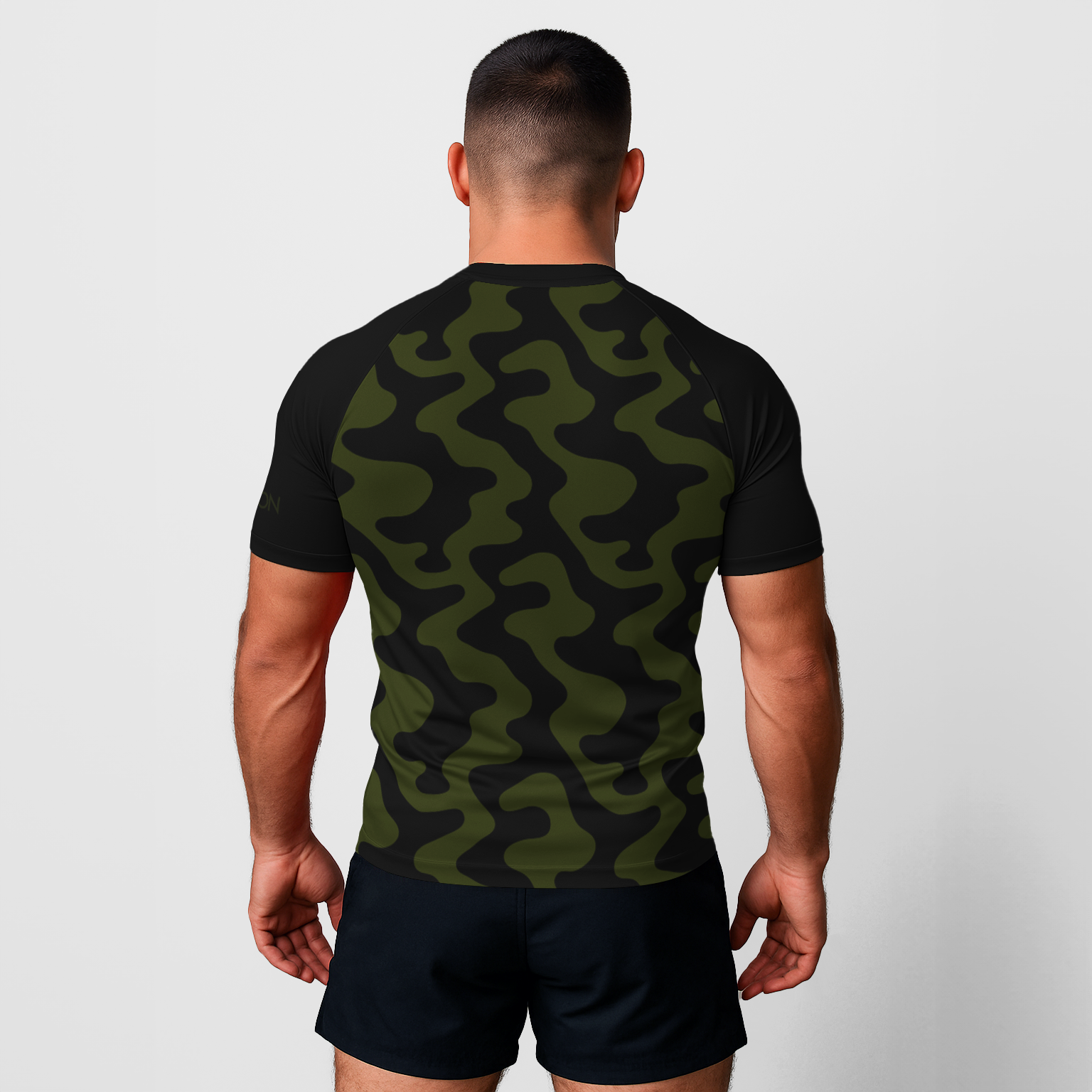
Rashguard Sizing Charts, Decoded: Nailing the Right Fit Before You Roll
Every no-gi grappler has done it at least once: ordered a rashguard in the size they “always wear,” pulled it out of the mailer, and found something that either strangles the shoulders or hangs like a wet flag by the third round. The problem is almost never the brand lying to you. It is that rashguard sizing lives in its own universe, the charts contradict each other across labels, and most of us guess from memory instead of measuring. If you want to know how rashguards should fit, the honest answer is that fit is a math problem before it is a feel problem. Get the measurements right and the feel takes care of itself.
This is a guide to reading a size chart like it owes you money. We will cover what to measure, why two brands can both call the same shirt a “medium” and be forty millimeters apart in the chest, how to decide when you sit between sizes, and the handful of body-shape situations where the chart quietly betrays you. No numbered checklists, no “top five hacks” — just the reasoning that turns a coin-flip purchase into a repeatable one. For what correct fit should actually feel like once the numbers land you in the right size, see our complete guide to no-gi rashguard fit; this piece is entirely about getting the measurements right before you ever pull the shirt on.
Why Rashguard Charts Never Agree
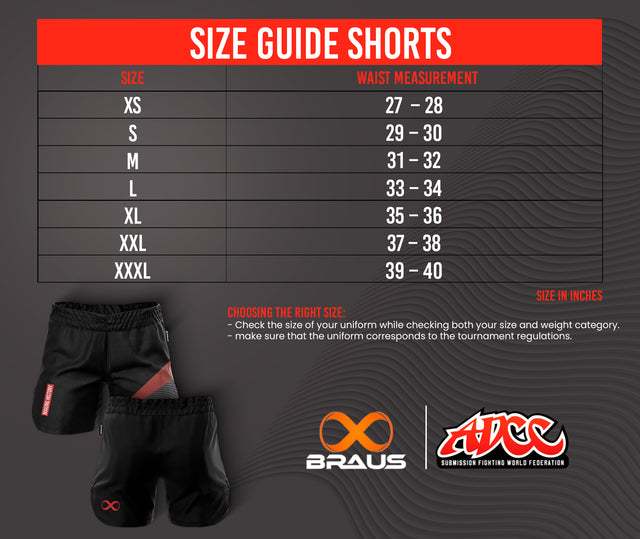
A rashguard is a compression garment, which means the manufacturer is not building it to your body’s actual dimensions. They are building it a few centimeters smaller so the fabric stretches over you and grips. That deliberate undersizing is called negative ease, and every brand picks its own amount. One label might cut a medium for a 96 cm chest and pull it in by 6 cm of negative ease. Another cuts the same nominal medium for a 100 cm chest with only 3 cm of squeeze. Put those two shirts side by side and they are genuinely different garments wearing the same label.
This is why “I’m a medium” is close to meaningless when you cross brands. It is also why the single most useful habit you can build is ignoring the letter on the tag and reading the centimeter ranges printed underneath it. The letter is marketing. The numbers are the contract. When a size chart lists a chest range of 97 to 102 cm for a large, that range is the promise; the word “large” is just the shorthand.
There is a second wrinkle: material. A rashguard cut mostly from polyester with 15 percent spandex stretches and recovers differently than one running 20 percent-plus elastane. Higher stretch content forgives a chart mismatch; a stiffer, more durable panel does not. So the same chest measurement can feel locked-in on one fabric and slightly loose on another, even when the printed numbers match. Read the fabric composition next to the size chart, not on a separate page.
The Three Measurements That Actually Decide Fit
You need a soft tape measure and about ninety seconds. Skip the bathroom scale — weight ranges on size charts are the least reliable column, because two grapplers at the same weight can carry it completely differently across the shoulders and gut.
Chest, at the widest point
Wrap the tape around the fullest part of your chest, under the armpits, across the shoulder blades, tape parallel to the floor. Do not flex or puff up — stand relaxed, because that is how you will feel in round four, not round one. This number is the primary gate. If your chest lands outside a size’s range, nothing else about that size matters.
Torso length, collar to waistband
This is the measurement almost nobody takes, and it is the one that decides whether the shirt stays tucked. Measure from the base of your neck, down the front, to where you want the hem to sit — roughly at the hip bone for a rashguard you plan to tuck into shorts or spats. A long torso in a short-cut rashguard is the number-one cause of the shirt riding up and bunching under the armpits during scrambles. Two grapplers with identical chests can need different sizes purely on torso length.
Biceps and sleeve reach
If you lift or you are naturally thick through the arms, measure your flexed bicep. Sleeves are where compression garments fail loudest — a sleeve that is right in the chart but tight on a developed arm will cut off circulation and roll at the cuff. For long-sleeve rashguards, also note whether you want the cuff at the wrist bone or slightly past it; sleeve length is rarely listed and varies wildly between short and tall cuts of the same size.
Once the Numbers Land You in a Size
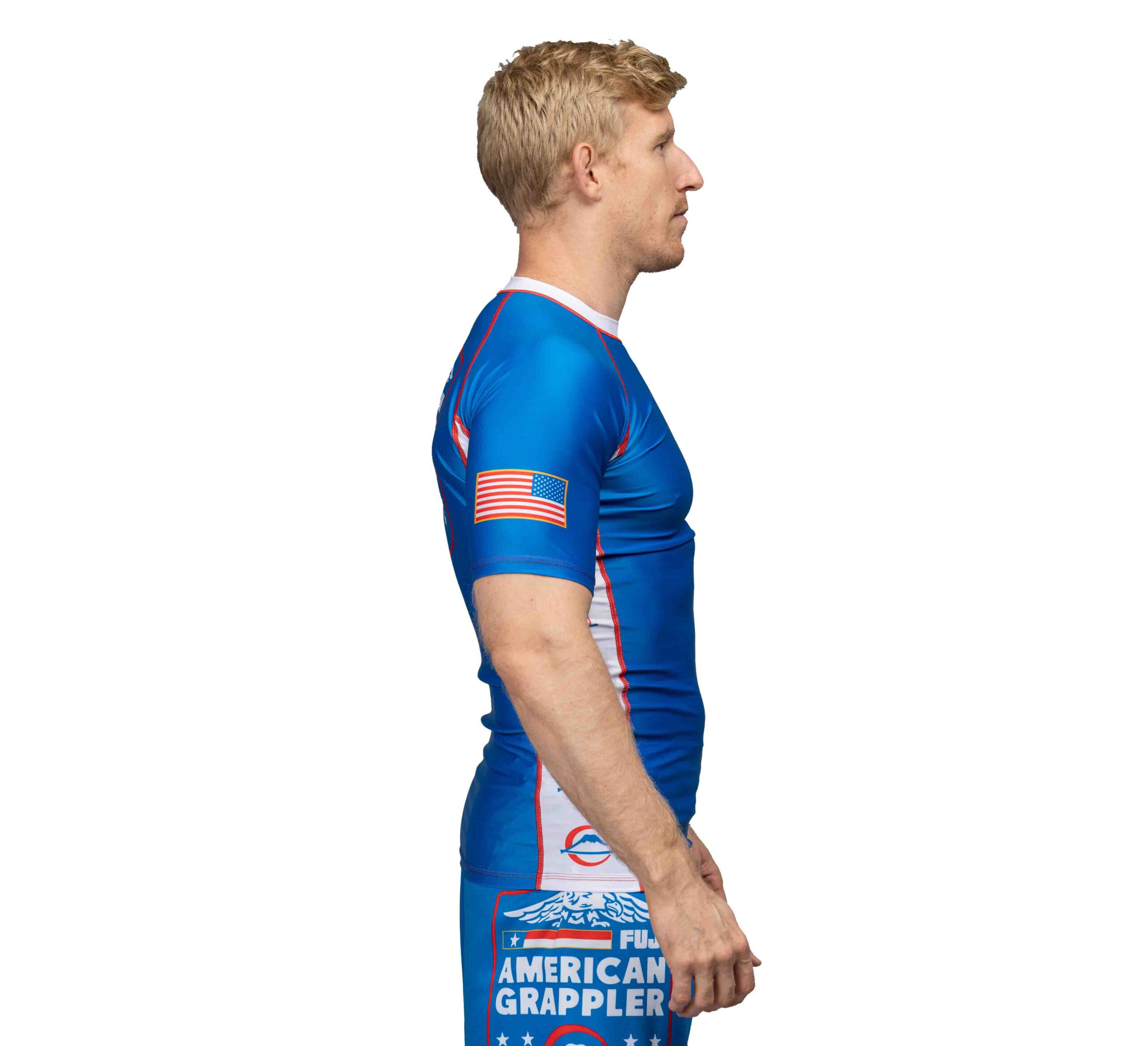
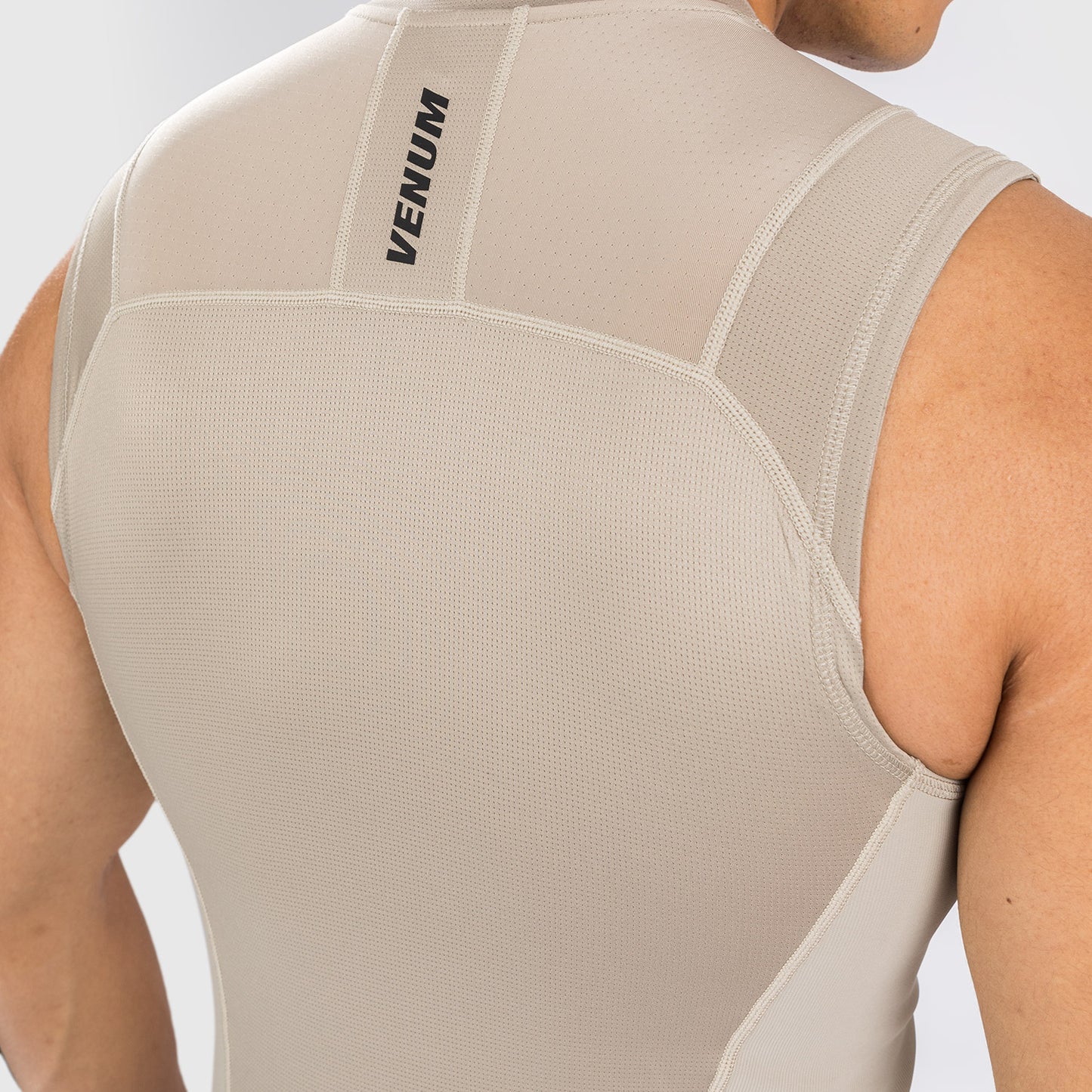
Measuring gets you to the right size on paper. Whether that size actually fits is a separate question — one that’s answered by putting the shirt on and moving, not by re-checking the tape. A correctly fitted rashguard is snug enough that you can’t pinch more than a small fold of fabric anywhere on the torso, the shoulder seams sit on top of your shoulders rather than down the bicep, and the hem stays down when you reach overhead. If your measurements say one size but the shirt fails those checks, the cut doesn’t match your build — see the full fit breakdown linked above for how to read that signal and what to do about it.
When You Land Between Two Sizes
This is the moment everyone gets wrong. Your chest measures 101 cm, the medium tops out at 100 and the large starts at 100 — you are on the seam between them. The instinct is to size up “to be safe,” and for street clothes that is fine. For a compression garment it is usually the wrong call.
A rashguard is designed to be worn under tension. Size up when in doubt and you sacrifice the exact thing the garment exists to provide: the fabric no longer grips, so it slides during transitions, pools sweat, and telegraphs your grips less effectively than it should. The general rule for no-gi is to size to the smaller option when your chest sits on the boundary, provided the torso length still covers you. The fabric’s stretch is built to absorb that last centimeter. You want the shirt working slightly against your body, not draping over it.
The exception is torso length. If sizing down would leave the hem riding above your waistband when your arms go up, size up and accept a hair less compression — a shirt that stays covered beats a shirt that squeezes but exposes your lower back to mat burn every scramble. Chest decides tightness; torso decides which way to break a tie.
The Body Shapes the Chart Doesn’t See
Size charts assume an average build for every weight and chest number. Plenty of grapplers are not average, and knowing which outlier you are saves you a return.
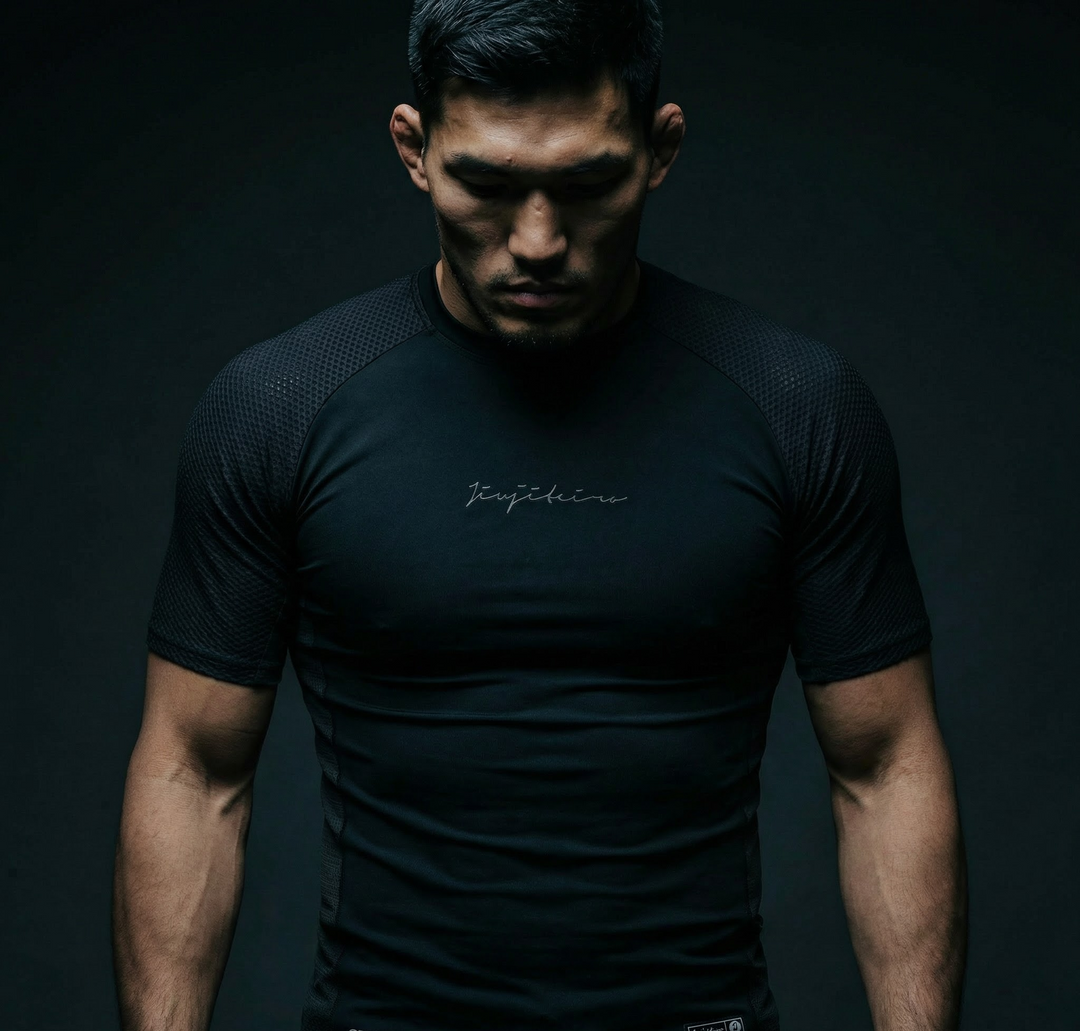
The V-taper lifter — broad chest and shoulders, narrower waist — is the most common casualty. The chest number pushes you into a larger size that then billows at the stomach. If that is you, prioritize the chest and shoulder fit and look for brands that advertise an “athletic” or “tapered” cut, which trims the waist relative to the chest instead of scaling every dimension up together.
The long-torso grappler gets burned on hem coverage even when the chest is dead-on. Watch for brands that publish separate “tall” cuts or explicitly list garment length, and always run the arms-overhead test before trusting a chest-only match. The shorter, stockier build has the opposite problem — a size that fits the chest can leave excess sleeve and torso fabric that bunches; here a higher-spandex fabric that shrinks back to the body is your friend.
None of these are flaws in the chart. They are just the places where a two-dimensional table meets a three-dimensional athlete, and the fix is always the same: measure the dimension that matters most for your build, treat it as the gate, and let the rest flex around it. If you are shopping and want to compare cuts across brands, a broad no-gi rashguard search lets you line up size charts side by side before you commit, and filtering to a tapered athletic-fit rashguard narrows it fast if you carry a V-taper.
Build the Habit Once, Buy Right Forever
Here is the payoff. Measure your chest, torso, and biceps one time, write the three numbers in your phone, and you never guess again. When a new brand catches your eye, you pull up their chart, match your chest number to the range, sanity-check the torso length, glance at the fabric’s spandex percentage, and you know before you order whether it will fit. The letter on the tag becomes irrelevant. You are buying to numbers, and numbers do not lie the way memory does.
That is the whole discipline of how rashguards should fit: stop trusting the size you think you are, start trusting the tape. Compression garments punish guessing and reward measuring, and the ninety seconds you spend with a tape measure is the cheapest upgrade to your no-gi game you will ever make. A rashguard that fits right disappears — and a shirt you never think about is a shirt that lets you think about the grappling.
Sources
- Compression garment — Wikipedia
- Rash guard — Wikipedia
- International Brazilian Jiu-Jitsu Federation (IBJJF)
- Compare no-gi rashguards and size charts (Amazon search)