No-Gi Scrambles and Ear Guards: The Transition Phase Where Cauliflower Ear Actually Happens
Most grapplers who develop cauliflower ear cannot pinpoint the session that caused it. They remember general training — a hard round, a lot of movement — but the specific moment of trauma is gone. That vagueness is not accidental. It reflects where the damage actually happens: not in the positions grapplers study and recognize, but in the transitions between them. Scrambles, in no-gi grappling, are where the real ear risk lives. They are faster, more chaotic, and more contact-dense than static positions, and they happen dozens of times per round without anyone registering them as a defined event. Understanding why the scramble phase carries this risk changes how you think about ear protection — not as something you wear for specific hard rolls, but as something you need throughout the entire environment no-gi creates.
The Scramble Phase Is Not a Brief Moment
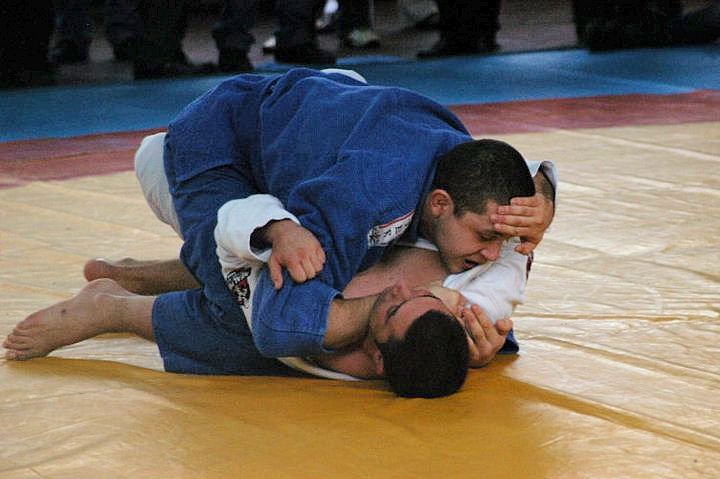
Grapplers tend to compress their mental model of a scramble into a single burst of chaos that resolves cleanly into a recognized position. In practice, scrambles chain. A guard retention attempt turns into a sweep attempt. The sweep attempt fails and shifts into a back-exposure scramble. The defender avoids the back and the round briefly resets before a leg entanglement sequence starts. In no-gi grappling, this kind of multi-link scramble happens multiple times per round at every level — white belt through elite competition. There is no grip to slow the game down, no lapel to manage pace, no sleeve to create pause. When control breaks, it breaks quickly, and the next scramble starts before either athlete has fully registered what just happened.
Each link in a scramble chain involves dynamic head position changes. Your head moves as you change direction, duck under a limb, and turn into or away from pressure. Your opponent’s body moves in ways that are neither controlled nor predictable. An elbow, a hip, a thigh, a knee — all of these can contact your ear during positional transitions, and the contact happens at the speed of the movement, not at the deliberate pace of a settled clinch or a controlled drilling sequence. This is why scramble-generated ear trauma is so difficult to remember: the contact that causes damage does not feel significant because it is incidental to movement with a different objective. You were trying to recover guard. You were not registering that your ear just dragged across your opponent’s hip at full speed.

What the Ear Actually Experiences During Transitions
The ear’s vulnerability comes from its specific anatomy. The auricle — the outer ear — is cartilage covered by a thin layer of skin. Between them sits the perichondrium, a membrane that supplies blood to the cartilage. When the perichondrium separates from the cartilage — through blunt impact or repeated friction — blood collects in that space. If left undrained, the collected blood hardens into fibrous tissue. That is cauliflower ear at the tissue level, and it is irreversible once it sets.
During scrambles, two mechanisms that cause perichondrial separation operate simultaneously. The first is impact: a hard glancing contact from a knee during a guard pass, or a shoulder driving into the side of the head during a back-exposure scramble, generates blunt force capable of immediate separation. The second is friction: an ear dragging across a forearm during a direction change, or catching a hip bone during a positional reset, creates shear forces across the skin and cartilage interface. Friction-based trauma is arguably more dangerous than impact in the scramble context because it is harder to feel in real time. Grapplers register pressure clearly. Repeated friction at movement speed can accumulate significant damage without any single moment registering as particularly hard contact.
The loss of positional awareness during a scramble removes any ability to manage ear placement. In a controlled position, you can make micro-adjustments — angle your head, create space, remain conscious of where your ear is relative to your opponent’s body. During a scramble, that awareness collapses. Your ear is wherever the movement takes it, which is regularly into uncontrolled contact with body parts generating significant force. The scramble does not offer the same feedback loop that a static position does, and the ear pays for that gap.
Guard Retention — The Highest-Contact Scramble Zone
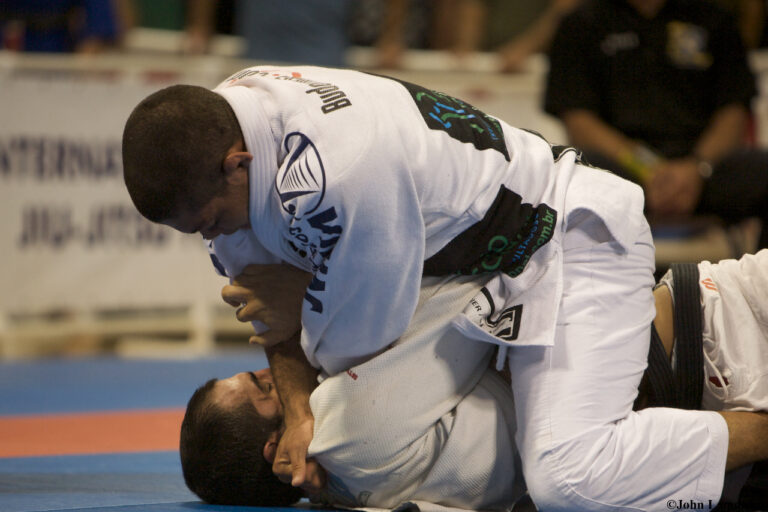
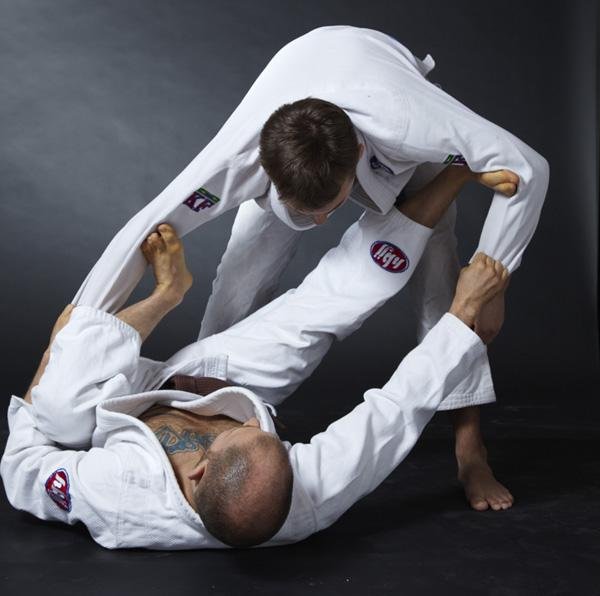
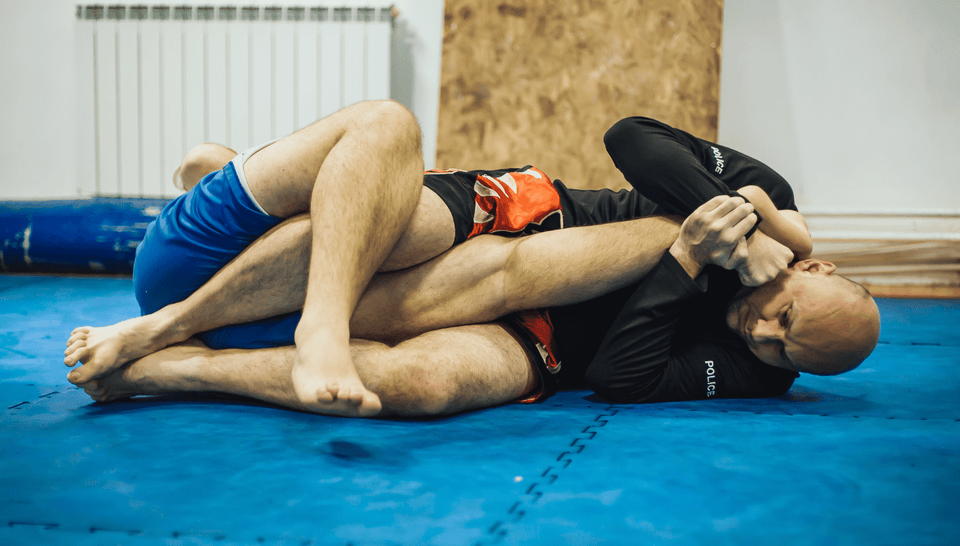
Guard retention scrambles represent one of the most concentrated sources of ear contact in all of no-gi grappling. When a top grappler is actively passing your guard, you are moving your hips laterally, inverting, shrimping, potentially posting on your head — and your ear is in constant proximity to your opponent’s legs, hips, and knees throughout that movement. A guard passer who drives through their pass with hip and leg pressure will regularly make contact with the defending grappler’s head in ways that neither athlete specifically intends or registers as a defined event.
This is amplified in no-gi because guard passers have no fabric to manage or grip through. The leg drag, the torreando, the knee slice, the over-under pass — all of these rely on hip and leg pressure applied directly against the bottom grappler’s frame, and that pressure regularly reaches the head. When guard retention escalates into a full scramble — the bottom player shooting back to recover guard, the top player chasing the pass — the head contact frequency increases further. Both athletes are moving at maximum effort in different directions, and the ear of the grappler on the bottom is the part of the body most consistently in the contact zone.
For grapplers who primarily play guard, this is the single most relevant ear-risk environment in their training. An ear guard that sits well in a standing clinch needs to maintain that position when you are inverting under a leg drag or scrambling back to your knees from a failed sweep. That is a meaningfully harder retention requirement, and it is one worth testing before assuming your gear is doing the job you think it is.
Back Takes and the Brief, High-Force Window
Back takes in no-gi produce a distinct scramble pattern with its own ear risk profile. The entry to back control — whether from a seat-belt attempt, a body lock, or a turtle attack — involves the attacker working their head and upper body close to the defender’s shoulder and ear zone. When the defender sprawls, rolls, or creates an explosive scramble to deny back exposure, the head positions change rapidly under load.
The exposure window here is short but high-intensity. A hard knee catch during a sprawl, or a shoulder driving laterally into the side of the head during a roll to prevent back control, can generate immediate blunt impact. This is contact under speed and bodyweight, which is capable of causing hematoma formation from a single event — not a cumulative process. Grapplers who have experienced sudden ear swelling after a specific contact during a round, rather than gradual swelling from training volume, are often recalling a back-take scramble moment. The back-take scramble is one of the few no-gi scenarios where a single exchange can initiate the process rather than many exchanges adding up over time.

Leg Lock Resets and a No-Gi-Specific Scramble Risk
The emphasis on leg entanglements in no-gi grappling introduces a scramble pattern that does not exist at equivalent frequency in any gi context: the leg lock reset. After an unsuccessful leg attack — or after defending a heel hook attempt — both athletes are typically in an entangled position that requires a positional reset. These resets involve both grapplers moving simultaneously in directions that are neither predictable nor coordinated, regularly creating conditions for accidental head contact that neither athlete planned.
During leg lock entries and exits, the upper body is frequently in unusual orientations. If you are entering a leg entanglement with your head near your opponent’s leg, a scramble to prevent the lock can drive your head into their body at speed. The knee-cut-to-inside-heel hook sequence — common in no-gi competition — involves the passer’s movement creating potential sudden head contact for the defender. The lower body game makes this relevant to a large percentage of no-gi training rounds. Grapplers who engage frequently in leg entanglements carry a scramble-specific ear risk that rarely appears in their thinking about protection, because the leg game does not intuitively feel like a head-contact environment — until it is.
What Scramble Risk Means for Ear Guard Strategy
The practical implication of scramble-centered ear risk is that ear guard requirements in no-gi are defined by movement, not position. A guard that sits flush and stays in place in a standing clinch needs to do exactly the same when you are inverting under a guard pass, rolling to deny a back take, or resetting out of a leg entanglement. That is a harder requirement than most product descriptions acknowledge, and it is worth building your selection criteria around it explicitly.
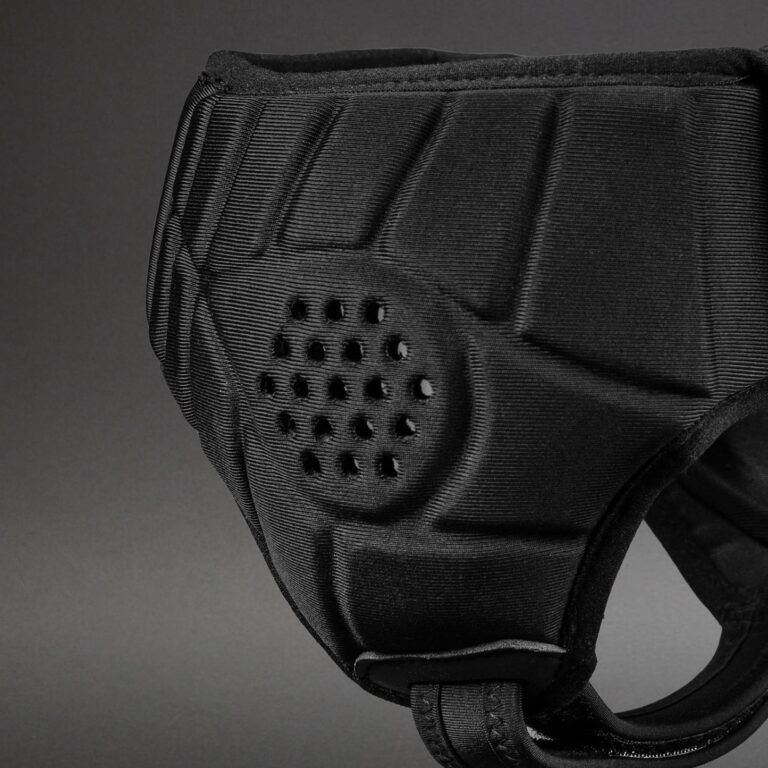
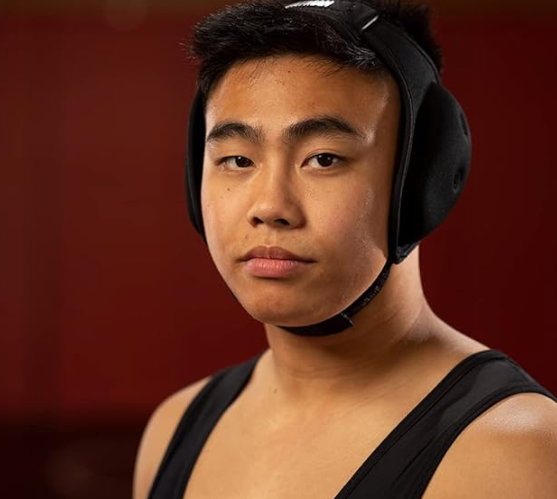
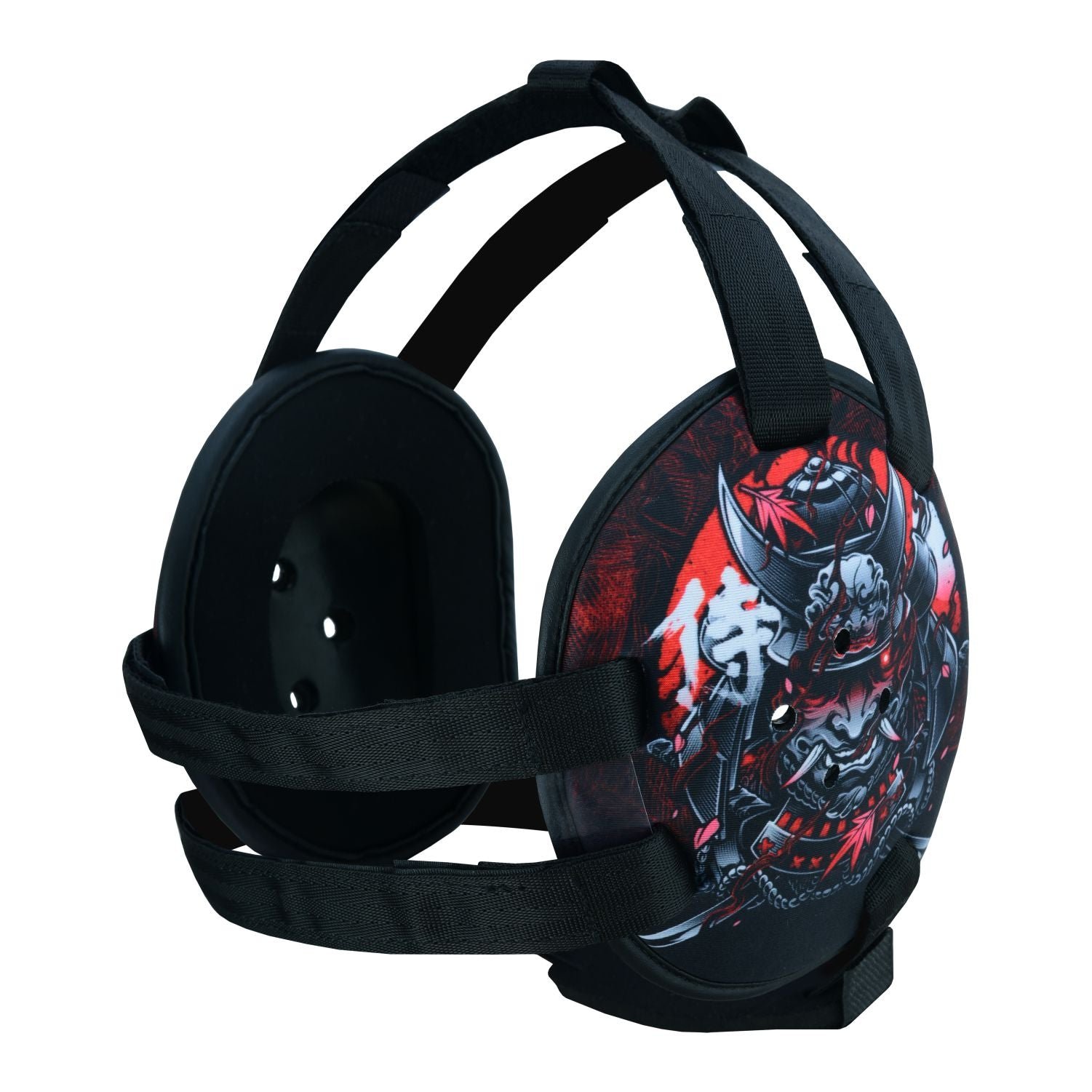
Retention across dynamic movement means the strap system cannot be an afterthought. Guards that rely on sitting flush to stay in position — without an independent retention system that holds under head movement — will shift during the kinds of direction changes scrambles require. A chin strap that tightens under movement rather than loosening is better suited to a scramble-heavy no-gi environment. Low-profile design also matters: a high-profile guard can catch and twist when your head moves quickly through tight spaces around an opponent’s body, which turns the guard from protection into an additional contact point that makes the scramble more chaotic, not less. No-gi ear guards with chin retention systems are worth prioritizing over models that rely on pressure fit alone.
The other strategic implication is timing. Some grapplers wear ear guards selectively — for specific partners, for rounds they expect to be harder, or only after they notice some ear soreness beginning. The scramble distribution across a session argues against this approach. The risk is not concentrated in defined moments you can predict in advance. It is spread across every scramble sequence in every round, which in no-gi might mean thirty or forty high-contact transition events per training session. An ear guard that is not on your head when the scramble happens provides no protection from that scramble.
Consistent wear across the full session is the only strategy that actually covers the scramble variable. That puts real weight on comfort and breathability. A guard that is tolerable to wear for an entire two-hour training session is more protective in practice than a guard with superior technical specs that you take off after twenty minutes because it is too hot or too uncomfortable. The most effective ear guard for no-gi scrambling is the one you will keep wearing through the rounds you did not expect to be difficult — because those rounds have scrambles too.
Sources
- Cauliflower ear — Wikipedia
- FloGrappling — No-Gi Grappling Coverage
- MedlinePlus — U.S. National Library of Medicine