North South Choke No-Gi: 7 Setups That Force the Tap
The north south choke is the most under-respected blood choke in no-gi grappling, and the proof is on tape: Marcelo Garcia walked through Pride veteran Masakazu Imanari in 2007 by finishing him from north-south after a takedown, and nobody on the roster had an answer for it for the better part of a decade. The choke uses no grips, no gi handles, and no leg attachments. It compresses both carotid arteries by trapping the opponent’s neck between your bicep, ribcage, and shoulder, and it is one of the few submissions that punishes the exact defense most beginners default to under side-control pressure.
That makes the north south choke a quietly perfect weapon for no-gi. It survives the sweaty arm slip that breaks most front-headlock chokes. It requires zero fabric. And because the finish comes from a dominant pin, the worst case if you miss is that you stay on top in north-south — which is hardly a punishment. The 7 setups below cover the entries that show up most often in live no-gi rolls and in modern submission grappling competition, plus the small details that turn a stalled pin into a tap.
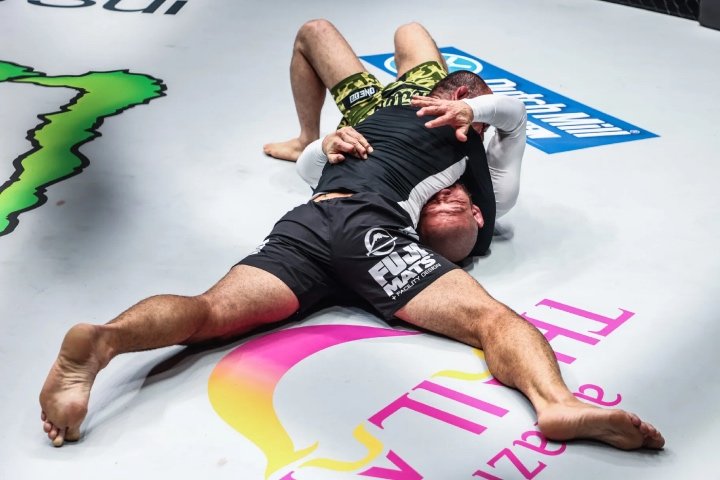
What the North-South Choke Actually Does
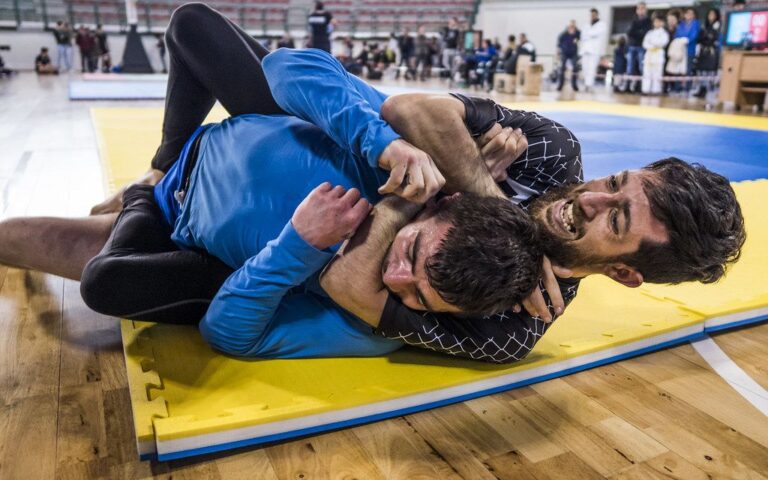
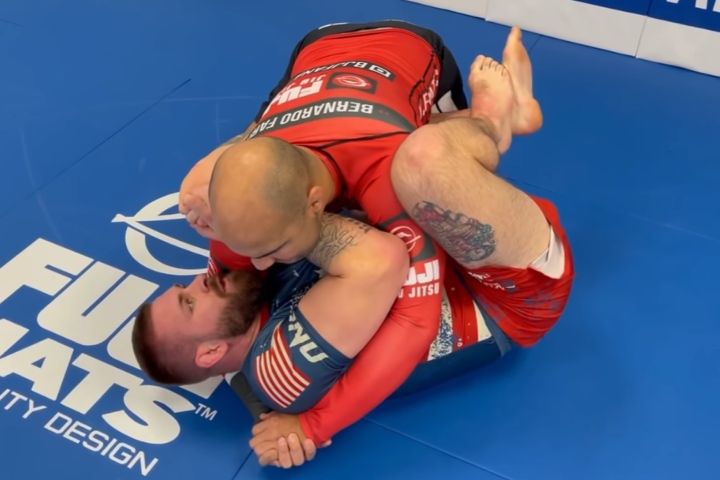
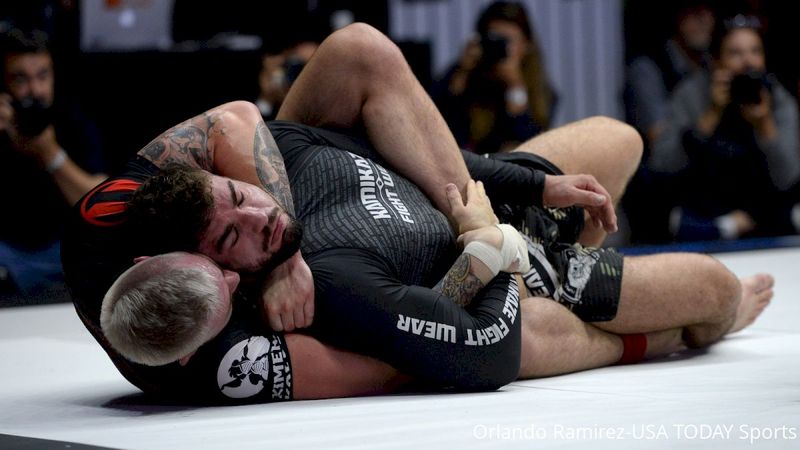
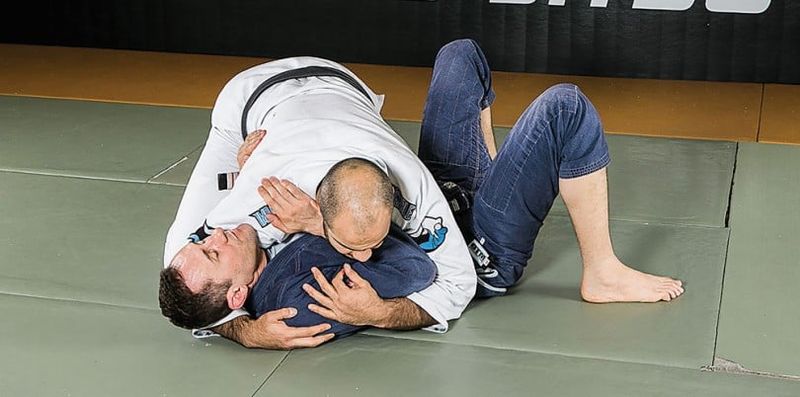
Most people who fail with this choke believe it works the same way as a guillotine — squeeze with the arms until something gives. It does not. The finishing mechanic is geometric. Your bicep traps one side of the neck, your ribcage and the side of your chest seal the other side, and the cut comes from sinking your hips and dropping your weight forward, not from arm tension. Once the seal is correct, the tap takes 3 to 5 seconds because both carotid arteries are pinched at the same time.
The most common Reddit question about this choke — and there is a long-running r/bjj thread on it — is “why don’t we see this more?” The answer is unglamorous. The choke requires the finisher to feel the seal through their chest, not see it with their eyes, and most beginners never learn to read pressure that way because they spend their early years drilling visual finishes like the armbar and triangle. Once you learn the seal, it is one of the highest-percentage submissions available from the top position.
Setup 1: Top Side Control → Skim Across
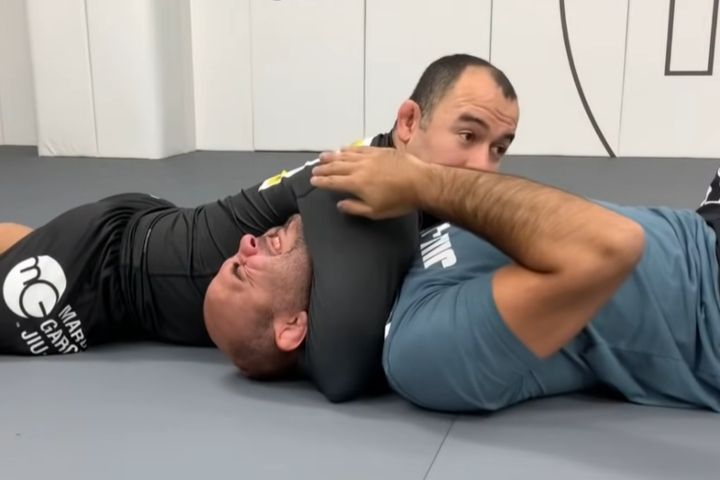
This is the textbook entry, and the one Marcelo Garcia popularized in his original instructional series. From top side control, your far arm threads under their head and traps their near shoulder. As you walk your hips up toward their head, your chest replaces your arm against their face, and your bicep settles against the far side of their neck. The skim should be slow — fast motion gives them a window to turn their head and break the seal.
The detail nobody teaches at white belt is the chin tuck. Before you walk your hips, drive your forehead lightly into the mat next to their ear. That blocks them from rolling toward you, which is the standard scramble recovery against this entry. Skip the chin tuck and good partners will turn into you every time, and the choke evaporates.
Setup 2: Kimura Grip Bait
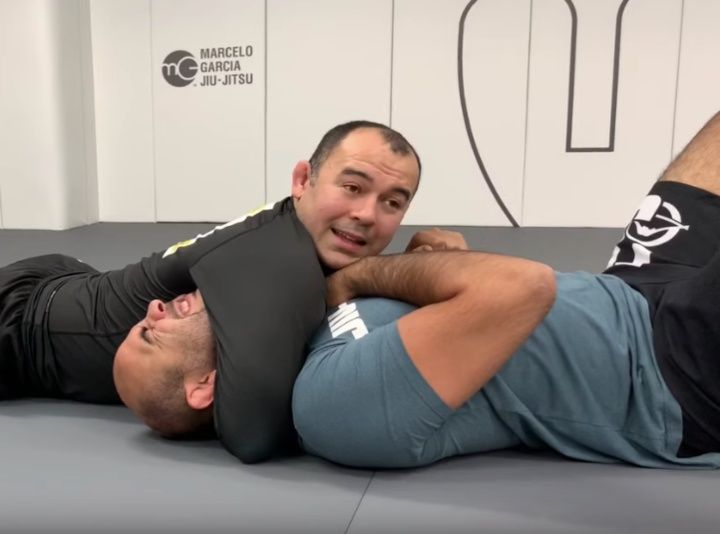
From side control, attack the kimura grip on the far arm. The opponent’s standard defense is to hide the elbow tight to their ribs and bridge into you. As they bridge, do not fight to keep the grip. Release the wrist, swing your hips up around their head, and arrive in north-south with their arm already wrapped — a position they cannot recover from cleanly because their defending arm is committed to one side of their body. This is the entry the Atos team has been hammering in competition since 2019.
For the full series of kimura entries from every position in no-gi, the same kimura-to-NSC transition shows up as a backup finish. Treating the two attacks as one chain — kimura threatens, NSC closes — doubles your finishing rate from side control without learning a single new grip.
Setup 3: Failed Armbar Recovery
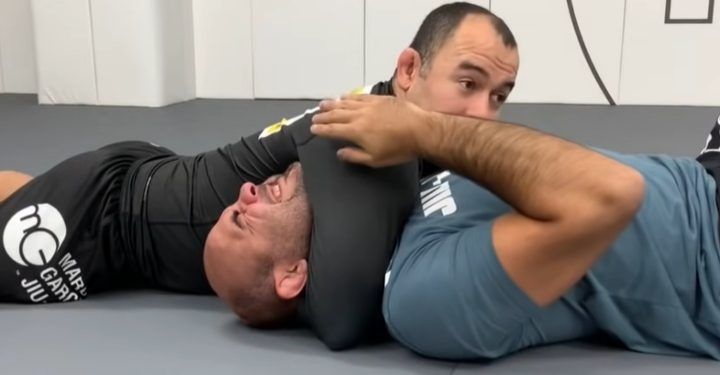
The cleanest entry on this list, and the one that gives most beginners the first real tap they will ever get with this choke. Attack a standard armbar from side control. When the opponent hides the elbow and stacks you — the textbook escape — instead of falling back and fighting for the joint, swing your hips up toward their head and arrive in north-south with their arm already trapped tight against their own face. The seal is already 80% set because their arm is doing the work of blocking one carotid for you.
A useful comparison is the way no-gi specialists chain failed armbars into the arm triangle — same logic, different finish. The NSC version is faster because you do not need to walk all the way around to the opposite hip, you just slide up.
Setup 4: Mount → North-South Slide
When you mount a strong opponent in no-gi, their first move is usually an explosive bridge to upa toward their stronger side. Most top players fight the bridge by posting on the head or grabbing the far arm. A better answer: ride the bridge. Let their hips lift you, and instead of resisting, plant your forehead near their hip and walk your knees up over their shoulders. You land in north-south with the choke seal already half-built, and they are stuck flat because they just spent their explosive energy.
One mild opinion that will save you a year of frustration: never try to choke directly from mount. The mounted triangle and ezekiel get the headlines, but the highest-percentage finish from mount in no-gi is the transition off the bridge into north-south. It punishes the most common escape attempt with the seal that requires no gi grip.
Setup 5: Front Headlock Scramble Catch
The north south choke lives in the same family as the darce, the guillotine, and the anaconda — all four are front-headlock chokes that exploit the moment the opponent ducks into your hip. The differentiator: NSC needs them on their back, while darce and anaconda finish off the side. So the chain looks like this. You catch the front headlock during their shot. They post out and start to recover. You sprawl them flat to their back. From there you walk to north-south and finish.
If the front headlock series is unfamiliar, the dedicated breakdown of the darce choke and its 7 no-gi setups covers the parent grip that makes this entry feel natural. Once you can hit the darce reliably, the NSC chain adds a finishing option for the scenario where the opponent settles flat instead of turning to their side.
Setup 6: Back Take That Failed When They Turtled Belly-Down
Modern no-gi has trained the back defense out of most experienced opponents. When you attack the back and they turtle belly-down to avoid the body triangle, the standard advice is to circle to a crucifix or to pressure them flat for a darce. There is a third option that almost nobody trains: feed your inside arm under their nearest shoulder, swing your legs over the top of their head, and land in north-south with their face already pinned to the mat. The choke seal is identical to setup 1, but you arrive at it without ever attacking from side control.
This is the entry Gordon Ryan and the New Wave team have used in ADCC trials to clean up matches where the opponent gives up the back take to avoid the choke. The lesson: the NSC is not a side-control-only weapon, it is a finishing position that pairs with any failed top attack.
Setup 7: Counter to the Underhook Escape
The number-one escape from side control in no-gi is the deep underhook on your far side, used to bridge and recover guard. Defense is to switch your base. Smart no-gi players take this further: as the opponent commits to the underhook, walk your hips around their head and arrive in north-south using their underhook arm as the choke seal. Their own arm becomes the bicep against one carotid, and your chest closes the other side. The technique punishes their cleanest escape, which is what makes it brutal for opponents who have only ever learned the standard side-control escape.
The first time a partner taps to this, they will assume you cheated somehow. It is the most counterintuitive setup of the seven, and it converts at a higher rate than any of the others against blue and purple belts who have been drilling the underhook escape for years.
Why the North-South Choke Belongs in Your No-Gi Game
Three reasons it should be a higher priority than most no-gi practitioners give it. First, it has no failure cost. Miss a heel hook and you give up position and possibly the match. Miss the NSC and you stay in north-south, which is itself a 4-point dominant position in IBJJF rules and a pinning position in submission-only rulesets. Second, it builds the connection-based finishing skills that translate to every other top choke — the d’arce, anaconda, arm triangle, and even the mounted ezekiel all reward the same chest-pressure mechanic. Third, in the heel hook era of no-gi, the top game has gotten ignored. Most opponents have not drilled NSC defense in 6 months. That is your window.
Common Mistakes That Kill the Tap
The four errors that account for almost every failed NSC attempt in no-gi rounds:
- Squeezing with the arms. The choke is geometric, not muscular. If you have to flex your bicep to make it work, the seal is wrong. Reset and walk your hips closer.
- Sitting back instead of dropping forward. The cut comes from sinking your weight onto their face, not from leaning back. Sitting back gives them air and the angle to turn out.
- Letting the head turn. If you can see both of their ears, the seal is gone. Trap one ear against the mat with your forehead before you commit to the finish.
- Killing your own pressure with wide feet. If your feet are sprawled too wide for balance, you cannot transfer body weight forward. Bring your knees in toward their shoulders.
How to Add the NSC to Your Game in 21 Days
A simple drilling progression that works for white belts through brown belts. Week one: drill the side-control entry (setup 1) and the kimura bait (setup 2) only. Hit each one 50 times on a non-resisting partner, focusing on hip walk and chest seal, not arm pressure. Week two: add live reps from side control rounds only. No starting from north-south — you have to earn the position. Week three: add the failed armbar entry (setup 3) and start chaining it. By the end of week three you should have a tap rate above 50% from any side-control position against partners at your belt level.
Skip weeks one and two and try to learn this from rolling alone, and the choke will feel mysterious for years. Marcelo Garcia drilled this position thousands of times before it became automatic for him, and there is no shortcut. The good news: once it clicks, it does not unclick. Practitioners report a 20-year shelf life on this specific submission with almost no maintenance reps required.
Whatever your current top game looks like, add the north south choke as the closing weapon of every side-control sequence. Start with the kimura bait this week — it is the entry with the lowest learning curve and the fastest payoff in live rolls.
Sources
- The Complete North South Choke by Marcelo Garcia — Definitive instructional from the choke’s modern popularizer
- BJJ World — The “Hardest Simple” BJJ Choke — Breakdown of the most common NSC errors
- r/bjj — When to opt for the d’arce over the north south choke — Community discussion on entry overlap
- Elite Sports — BJJ North-South Choke Complete Guide — Position overview and historical context
- BJJ Eastern Europe — Marcelo Garcia Perfects the NSC — Detail breakdown of Garcia’s grip and pressure
- John Danaher — North/South Strangle Two-Hand Finishing Concepts — DDS founder’s technical breakdown of the seal
Browse our top-rated rashguards and no-gi gear at the RashguardGuy shop →