Darce Choke: 7 No-Gi Setups That Force the Tap
The darce choke is the submission that ends matches when an opponent’s wrestling fails — a figure-four arm triangle that compresses one carotid with your bicep and the other with their own shoulder. It hides inside ordinary positions: a sprawl, a side control reset, a half guard top, a turtle stall. In no-gi, where collars and lapels are not on the menu, the darce is one of a small handful of chokes that finishes both world-class grapplers and middle-of-the-bracket blue belts.
This piece breaks down seven setups that actually finish in live rolling, the grip mistakes that get your opponent off the hook, and how to drill the choke without ruining the necks of every training partner you have.
How the Darce Choke Works in No-Gi
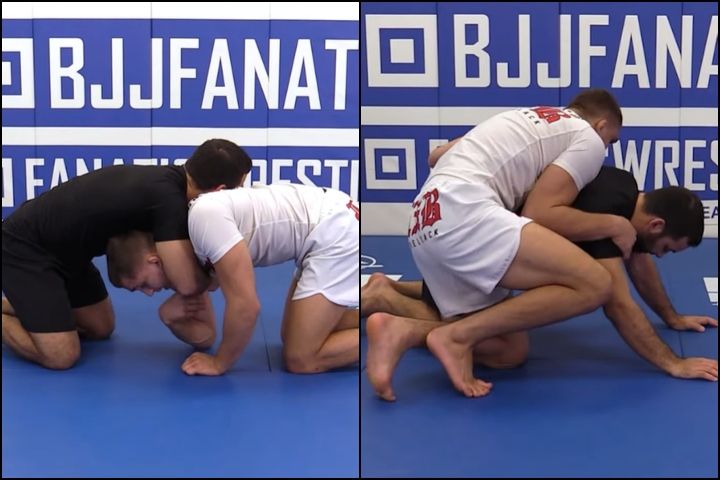
The mechanics of the darce choke are simple to describe and hard to execute. You thread one arm under your opponent’s near-side armpit, across their throat, and out the far side of their neck. Your other hand grabs your own bicep, and your free hand presses against your own head or shoulder to lock the figure-four. The squeeze comes from rotating your elbow down and pulling their trapped shoulder into the side of their neck — not from cranking with your arms.
In no-gi specifically, the absence of friction matters. With a kimono, you have collars and sleeves to stall a defender’s escape. Without one, sweaty arms slip through bad darce grips before the squeeze ever connects. The fix is positional: you have to control posture and far-side hip pressure before the submission. Every setup below leads with that control.
1. Darce From the Sprawl
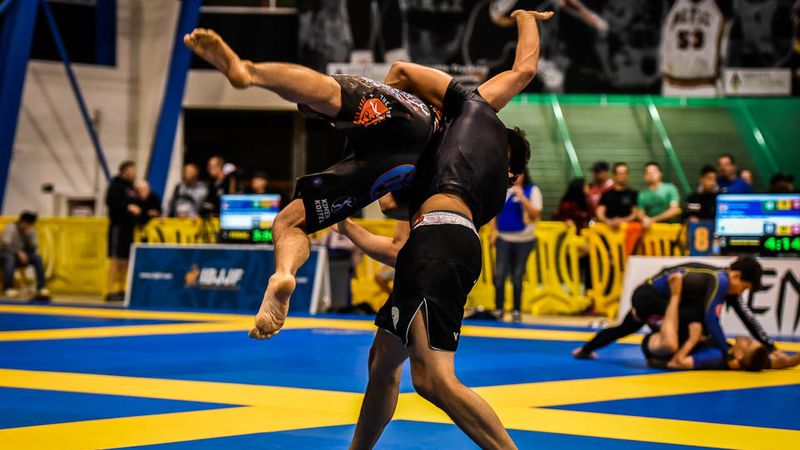
The fastest darce in no-gi happens off a failed shot. When your opponent ducks under for a single or double leg and your sprawl lands clean, their head is already in front of their hips and one arm is already extended. That is the natural darce position before any grip has been threaded.
The setup is three movements. Drive your near-side underhook deep enough to clear past their tricep. Walk your hips back so their head is glued to your chest — chest control beats arm strength here. Then thread the choking arm through, palm up, and finish the figure-four. The whole sequence takes under two seconds when the sprawl is clean. The no-gi guillotine attacks the same failed-shot scenario from the front — many top no-gi competitors hunt one and finish the other.
2. Darce From Side Control
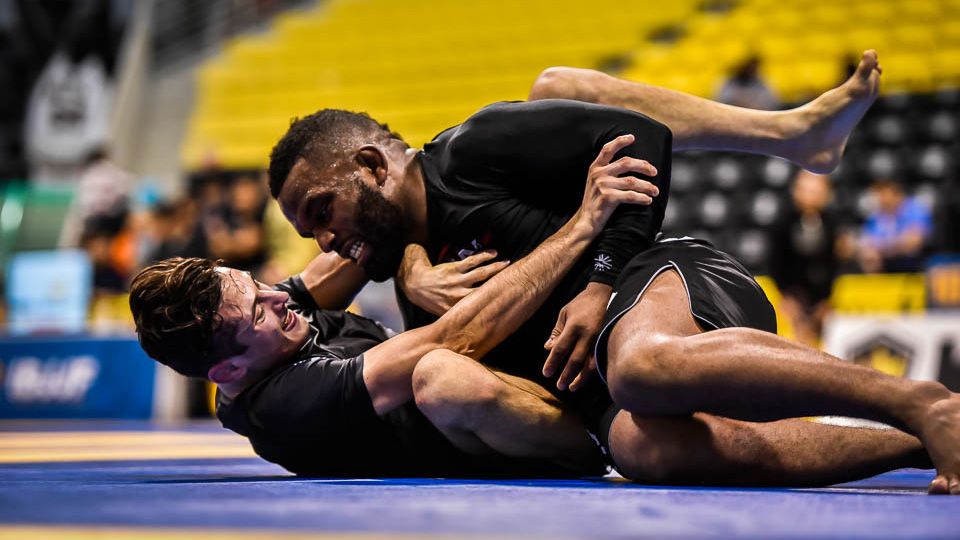
Side control is the darce’s home base. Once you have crossface and underhook on a flat opponent, the choke is one shrimping mistake away. Most defenders, when stuck under side control, try to turn into you and rebuild guard. That turn exposes their near-side arm — exactly the arm you need for the darce.
The grip path: as they turn, slide your far hand under their head and walk it through their armpit until your fingertips reach the floor on the far side. Your near hand catches your own bicep, and you collapse your chest down onto their shoulder. The finish does not require you to leave side control. You stay heavy, drop your weight onto their trapped shoulder, and let the squeeze do the work.
The brutal honesty here is that most blue belts try to finish from a worse angle than they need. If your forehead is not pressing into the mat past their head, you do not have the angle yet. Adjust before squeezing.
3. Darce From Half Guard Top
Half guard top is the most under-used darce entry in no-gi. When you are passing and your opponent traps your bottom leg, the default instinct is to fight the pass. The smarter instinct is to attack their neck while their arm is still on the wrong side of your body.
Here is the sequence: as your opponent goes to underhook your far side, you punch your near arm under their head and across their neck. Their underhook becomes their problem — that trapped arm is now the second wall of the choke. Step over their head with your free leg to break their posture, then finish.
The half guard darce works because it punishes the lockdown game directly. No-gi half guard sweeps rely on the bottom player controlling the underhook race — the darce flips that race into a submission threat.
4. Darce From Turtle
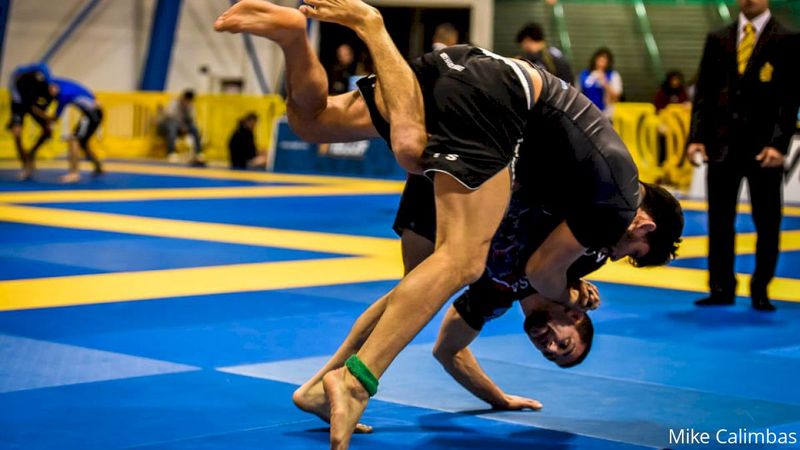
When an opponent turtles to deny back exposure, most grapplers spend the round trying to force a seatbelt grip. The faster answer is the darce. From the side of turtle, you have a clean line straight to the choking arm position — under the armpit, across the throat — without ever needing to break their posture down first.
The constraint is wrist control on the near-side arm. If they post out and frame, your darce stalls. Strip the post first — use your near-side knee to pin their forearm, then thread the arm. Once the figure-four locks, the finish comes from rolling them belly-up. You end in mounted darce, which is the highest-percentage finishing position the submission has.
5. Standing Darce — The Ruotolo Method
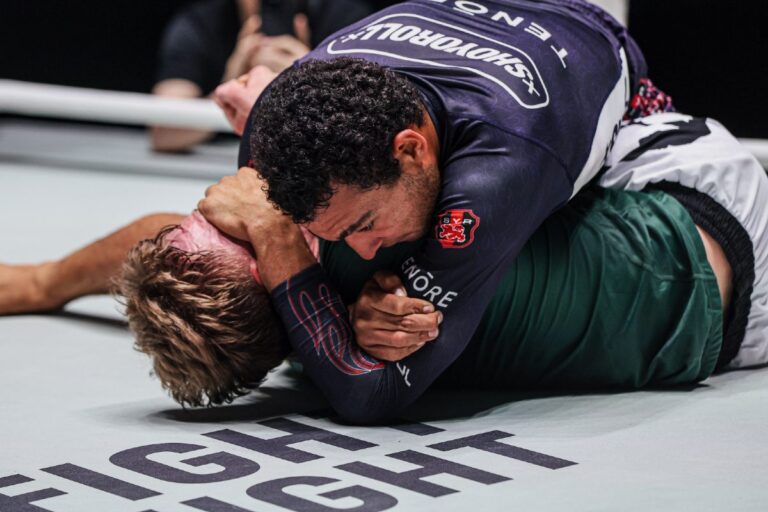
Kade and Tye Ruotolo have done more to popularize the standing darce in modern no-gi than any other competitors. Tye finished Garry Tonon with a standing darce in 2022 in under two minutes — ONE Championship later named it their grappling submission of the year.
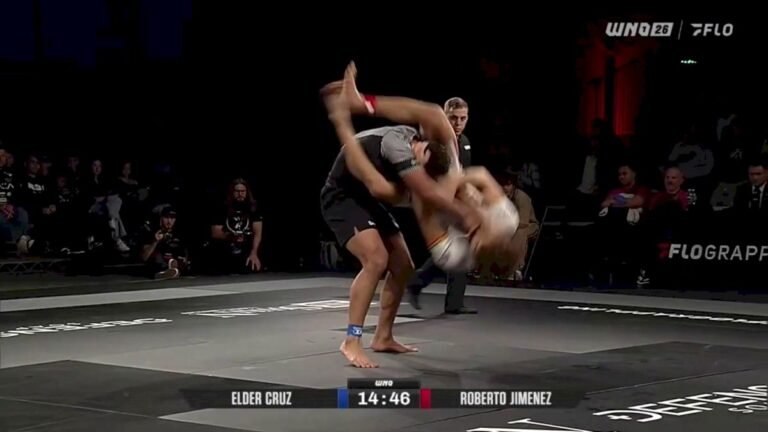
The mechanics depart from the ground game. From a collar tie and wrist control, you snap your opponent’s head down into a front headlock without committing to a shot of your own. As their head drops, your far arm threads through underneath. The catch happens before they ever touch the mat. This is the version of the darce that looks like a magic trick at the highest levels — and it works because most opponents are reading for a snap-down to a takedown, not a snap-down to a choke.
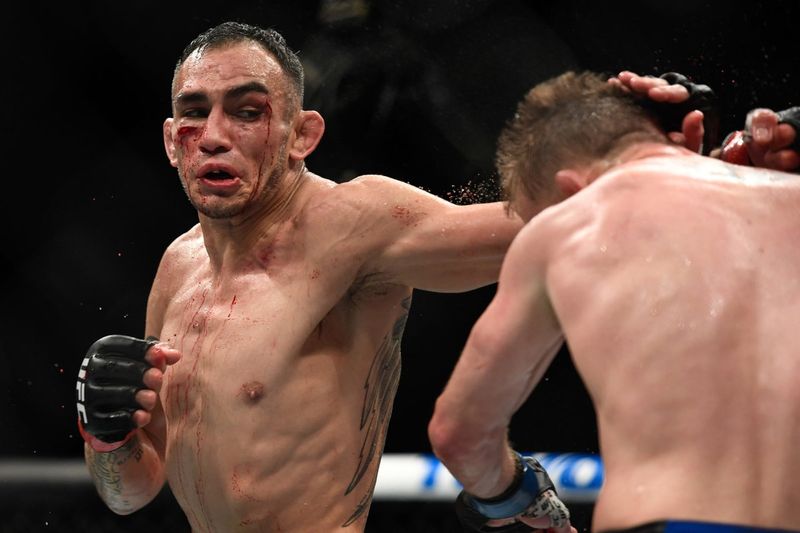
6. Counter-Wrestling Darce — Tony Ferguson’s UFC Setup
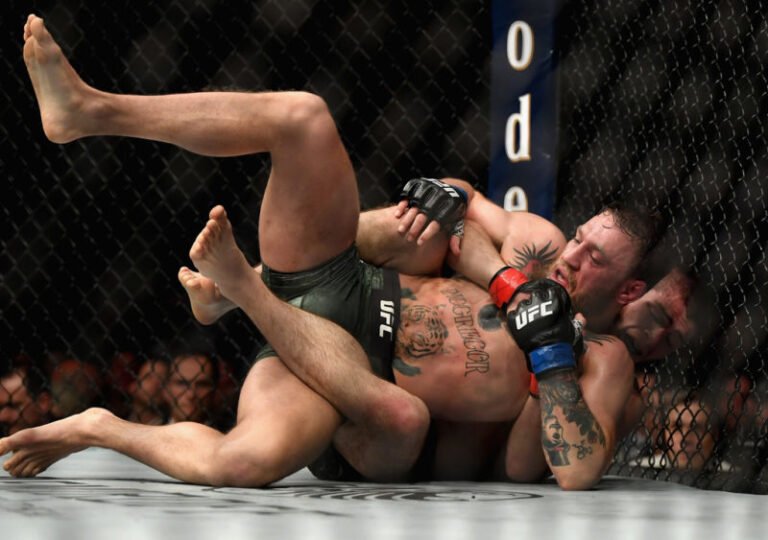
Tony Ferguson holds the UFC record for darce choke finishes with three — Mike Rio, Edson Barboza, and Lando Vannata. The Barboza finish at UFC Fight Night 80 in December 2015 is the cleanest film study available. Ferguson did not chase the choke. He used it as a counter to Barboza’s level changes.
The Ferguson setup works in three layers. He invites the takedown attempt by leaning his weight slightly forward. When the opponent shoots, he frames on their head and walks his hips back — a basic sprawl. Then he hunts the underhook on whichever side the opponent posts to. The darce closes off the only safe exit. In MMA, where strikes punish stalling in the front headlock, the darce is the conversion that makes the position pay.
The lesson for no-gi grapplers training without strikes: stop treating the front headlock as a holding position. Treat it as a darce-or-anaconda fork in the road.
7. Darce From a Snap-Down Front Headlock
The last setup is the one most beginners learn first and still botch in competition. From a tied-up neutral position, you snap your opponent’s head down and catch a front headlock. From there, the darce is the choke that attacks the side they cannot post on.
The detail people miss: you have to pick the side before the snap. If your opponent’s right arm is already up, you darce on their right side — that arm is your second wall already. Trying to switch sides mid-attack gives them time to clear their head. Pick the side, commit, and finish.
One specific drill is worth running for this version. Have a partner shoot a single leg at 50 percent intensity. You snap them down, catch the front headlock, and finish the darce within 10 seconds. Run it 20 reps a side per session for two weeks and the entry becomes automatic.
Darce vs Anaconda: When to Pick Which
The most common question around the darce is when to pick it over the anaconda. Both attack the front headlock. Both use a figure-four. The difference is the side of the body they finish from and the direction they roll.
The darce finishes from the same side as the trapped arm — your arm threads under their armpit and across their throat. You finish without rolling, often staying on top. The anaconda goes the other way — under the throat, across, and through — and finishes with a forward roll that puts the attacker on the side opposite the trapped arm. Top no-gi competitors hunt both interchangeably, but the rule of thumb is straightforward: if the opponent’s head is past their centerline toward you, attack the darce; if their head is buried straight down, attack the anaconda.
One last detail. The darce is the safer pick when your opponent is bigger than you. You finish without committing to a roll, which means you do not have to drag dead weight. For smaller grapplers training in open mats with size mismatches, this matters.
Three Grip Mistakes That Let Your Opponent Survive
Most failed darces in no-gi fail for the same three reasons. The first is a shallow choking arm. If your fingertips have not cleared the far side of your opponent’s neck before you lock the figure-four, the bicep is squeezing air. Thread deep enough that your forearm presses against the far side of their jaw, not the middle of their throat.
The second is a vertical squeeze. New darcers try to crank their hands toward their chest. The choking force is rotational — you drop your choking elbow down toward the floor, which pulls their trapped shoulder into their own carotid. Think of folding a hinge shut, not pulling a rope.
The third is leaving the trapped arm loose. If your opponent can bring their trapped elbow back into their own body, they create a gap that breaks the seal. Hip pressure into their trapped shoulder closes that gap. You should feel chest-to-shoulder contact through the whole finish.
Drilling the Darce Without Wrecking Training Partners
Carotid chokes train cheap if you respect them and expensive if you do not. The darce is among the fastest chokes in the sport — the squeeze peaks in roughly two to three seconds — which means the gap between “training” and “putting your partner unconscious” is shorter than people realize.
A reasonable drilling protocol looks like this. Positional reps with no finish, partner taps when the grip closes. Live reps from a known starting position (turtle, half guard top, front headlock), partner taps the second they feel pressure on the carotid. Free sparring with one cycle per round of darce hunting allowed, partner taps at the first sign of light-headedness.
That last point is non-negotiable. The carotid responds to pressure milliseconds before consciousness goes — if you wait until you see the lights flicker, you have already cooked the rep. Tap early, train often, and the darce becomes a tool you can sharpen for years.
Final Word
Most grapplers who plateau on the darce do so because they treat it as a position rather than a sequence. The choke does not start when you thread the arm — it starts the moment you commit to a sprawl, a half guard pass, or a snap-down. Pick the entry that fits your game. Drill the grip mistakes out one at a time. Keep the squeeze rotational. The darce rewards everyone who learns it patiently, regardless of size or athleticism. For a paired front-headlock submission that exploits the same entries, the peruvian necktie is the next piece worth studying.
Sources
- Kade Ruotolo Fighter Profile — BJJ Heroes — competitive record, ADCC titles, no-gi credentials of the Ruotolo brothers
- Tye Ruotolo’s Darce Choke on Garry Tonon — ONE Championship — submission of the year breakdown, the standing darce reference fight
- BJJ 101: D’Arce Choke — Evolve MMA — mechanics overview and naming history
- Tony Ferguson’s UFC Darce Finishes — Essentially Sports — three-finish record and the Barboza fight
Browse our top-rated rashguards and no-gi gear at the RashguardGuy shop →