No-Gi Lower Back Injuries: 7 Keys to Recover
Ask around any no-gi gym about injuries and the knee or shoulder usually comes up first. Ask the guys who have been training five years or more, and the lower back is what actually shows up on every mat chat about “what’s bothering you this week.” A 2015 study on BJJ athletes in Rio de Janeiro found chronic low back pain in 80.6% of practitioners surveyed, with the rate climbing to 88.9% among professional competitors — higher than the prevalence usually reported for the shoulder, the knee, or the wrist. It just doesn’t get talked about the same way, because it rarely ends a career in one dramatic moment. It erodes a career instead, one tight Monday morning at a time.
Why No-Gi Positions Load the Lower Back Differently
Gi grappling gives you something to grab that isn’t skin. A lapel grip, a sleeve, a pant cuff — all of it lets you control pace and distance without putting your spine in a bad spot to make up for lost grip. No-gi takes that away. When there’s nothing to grab, grapplers compensate by sitting lower, pulling harder with the hips, and absorbing more force directly through the lumbar spine instead of through a grip exchange.
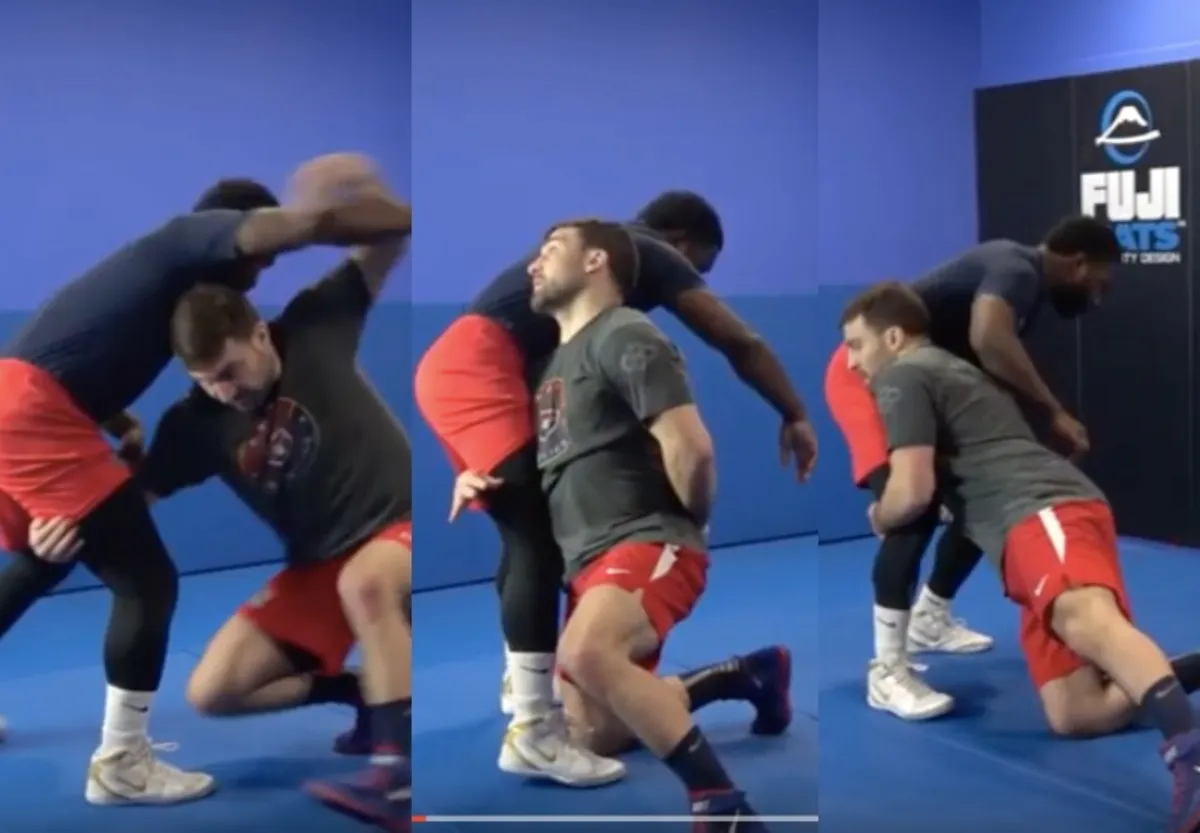
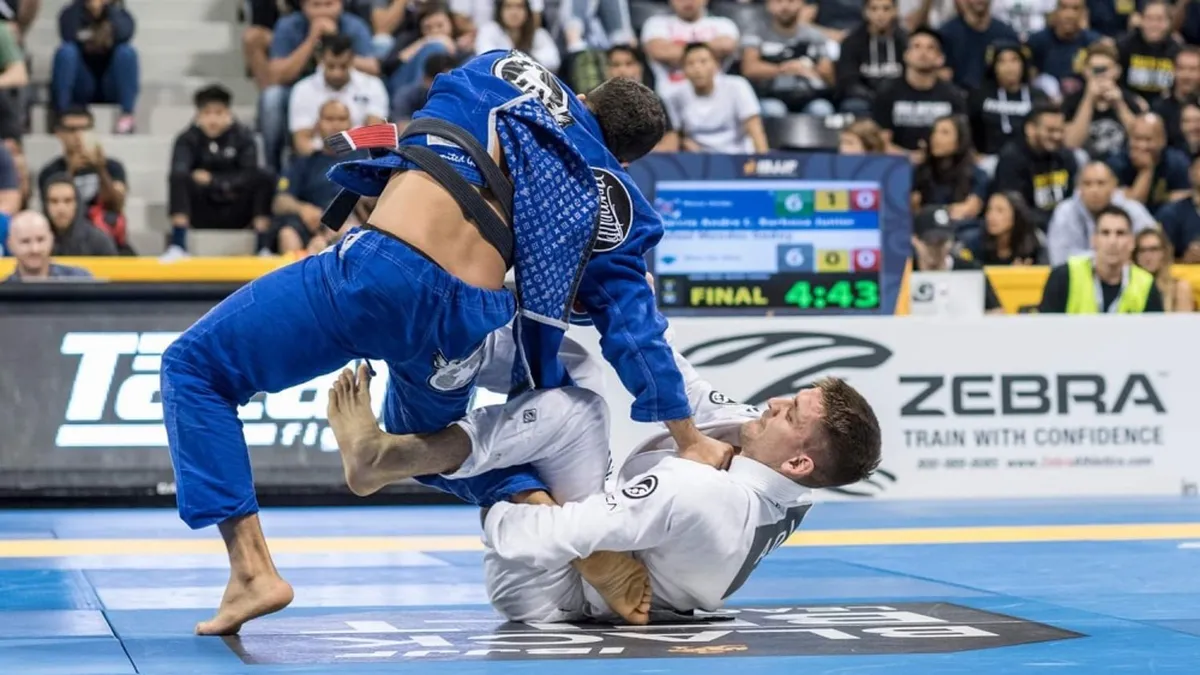
Guard pulling is the clearest example. In the gi, a pull is slowed by a sleeve or collar grip that lets you control the descent. In no-gi, most grapplers pull by grabbing a wrist or the back of the head and dropping straight down, which means the lower back takes the landing instead of the arms sharing it. Do that dozens of times a week for years and the lumbar erectors and the discs underneath them are absorbing load a gi grappler’s grip exchange would have spread out.
Hand fighting changes the picture too. Without a lapel to fight over, no-gi grapplers spend more of a round bent at the waist, fighting for underhooks and collar ties from a crouched, flexed posture. That posture alone isn’t dangerous for a few minutes. Repeated for six or seven five-minute rounds, several times a week, it adds up to a lot of time spent in the exact spinal position — flexed, loaded, slightly rotated — that physical therapists flag as the highest-risk posture for disc injury.
Inversions compound the problem. The berimbolo, worm guard entries, and any single leg X or ashi garami scramble that ends with a grappler upside down puts the lumbar spine into flexion and rotation at the same time — the single worst combination for a spinal disc, which is built to resist straight compression far better than twisting under load. No-gi’s grip-fighting style produces more of these scrambles per round than the slower, grip-controlled pace of gi matches, simply because there’s less to hold onto and stop the spin.
The Lower Back Injuries No-Gi Grapplers Actually Get
Three patterns account for almost everything that shows up in a gym’s physio referrals, and they come from different mechanisms.
Muscle and ligament strains are the most common and the least dramatic. A sudden stack, an awkward landing off a sweep, or grinding through live rounds with a tired core all produce the same result: a deep ache across the lower back that gets worse with specific movements (usually bending forward or twisting) and calms down with rest. This is a Grade 1 or 2 soft tissue injury, and it’s uncomfortable rather than dangerous.
Disc bulges and herniations are the ones that change training plans for months. Roughly 95% of lumbar disc herniations occur at the L4/L5 or L5/S1 level, and the mechanism in grappling is almost always twisting under load — a leg lock scramble where one grappler gets stacked and rotated at the same time, or an inverted guard sequence that gets stopped mid-spin by an opponent’s weight. Symptoms run past the back itself: pain, numbness, or weakness running down one leg (sciatica) is the tell that a disc is pressing on a nerve root rather than just an irritated muscle.
SI joint irritation shows up in grapplers who live in asymmetric guards — De La Riva, single leg X, half guard with a deep underhook on one side — for years. One hip stays anchored while the other does all the attacking work, and over enough rounds the sacroiliac joint on the anchored side gets inflamed from the uneven load. It feels like it’s “one-sided” in a way muscle strain usually isn’t, concentrated just below the belt line on one side rather than across the whole lower back. It’s also the easiest of the three to miss, because it rarely shows up on an X-ray or MRI the way a disc problem does — the diagnosis comes from a physical exam that loads the joint directly, not from imaging.
The No-Gi Positions Most Likely to Cause It
Four moments account for most of the lower back injuries that actually show up at the ER or the physio’s office, rather than just a tight Tuesday.
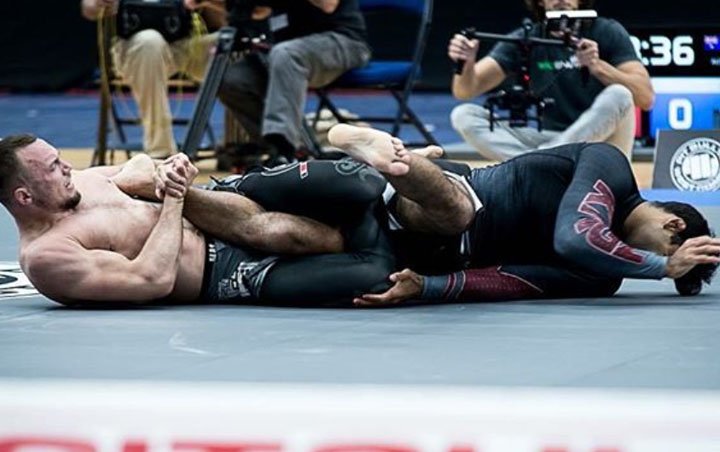
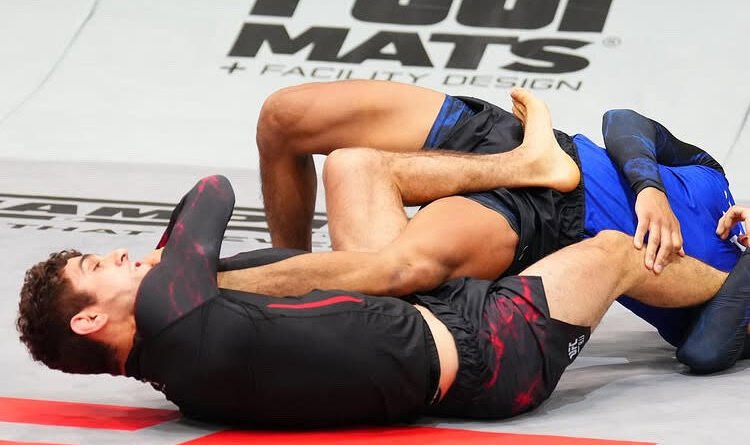
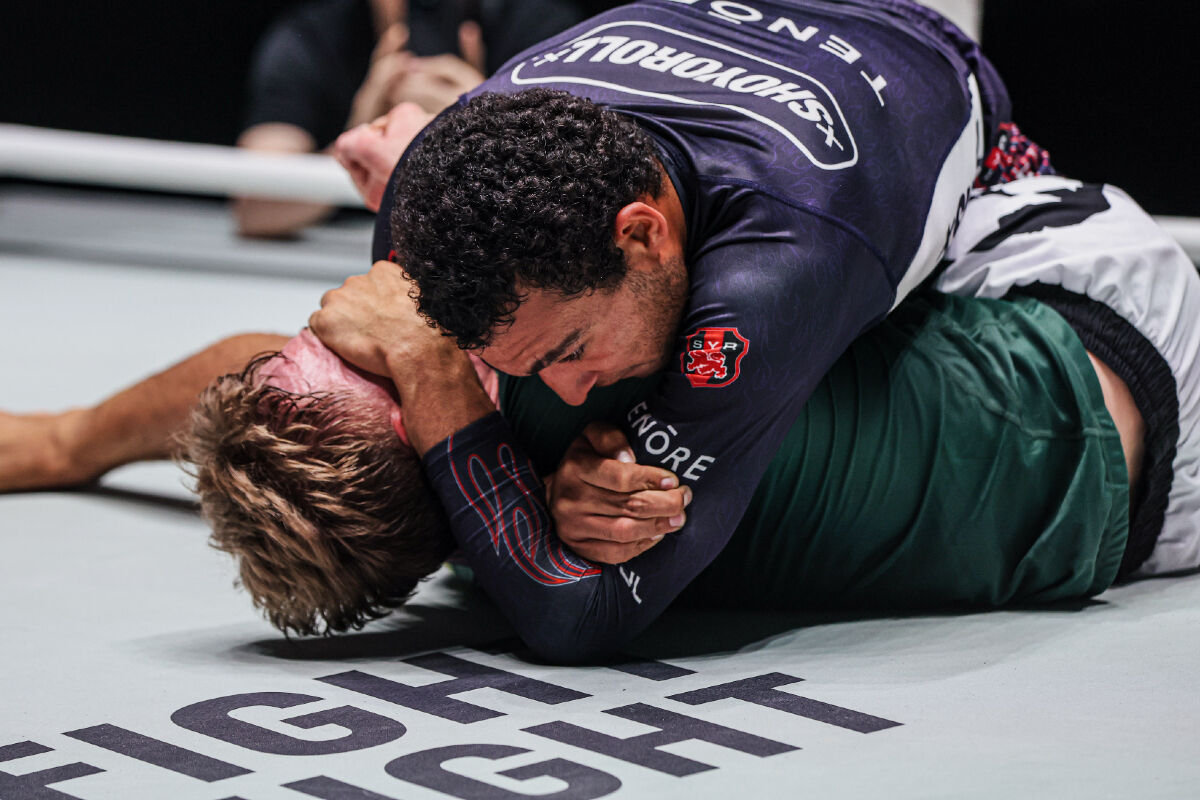
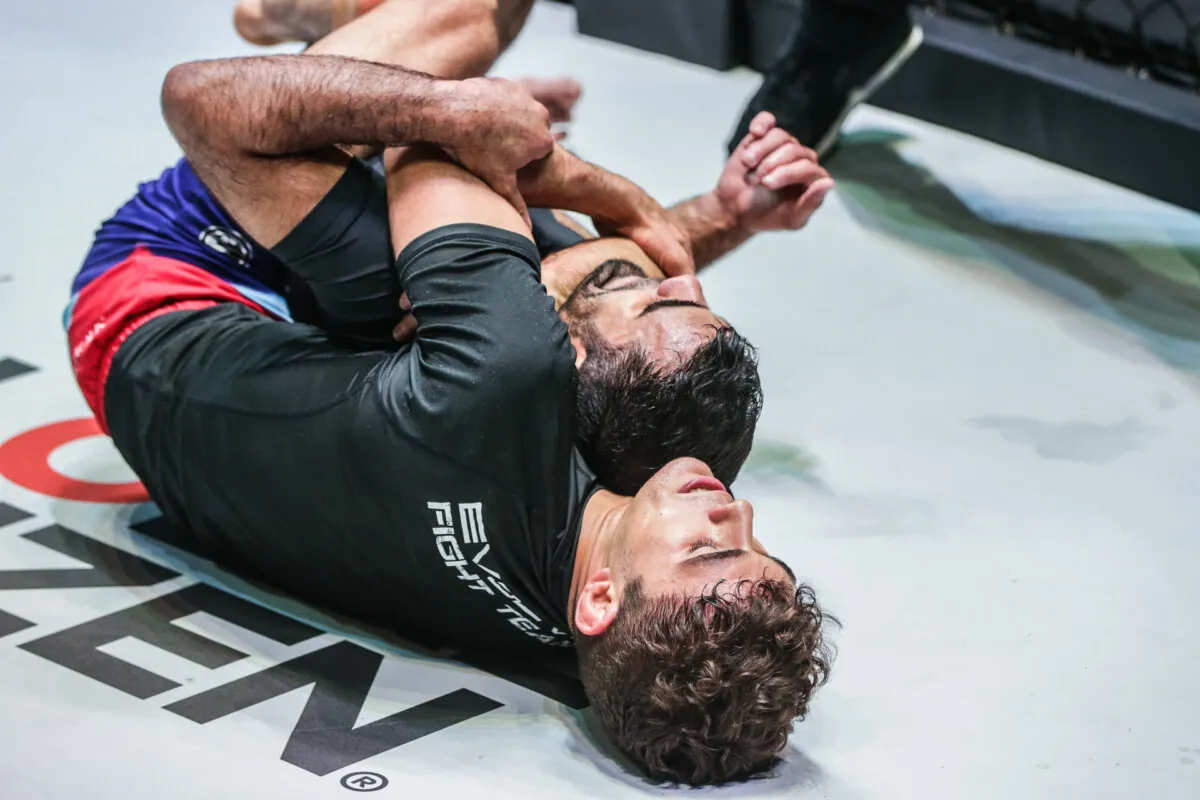
Getting stacked during a leg lock scramble or a guard pass folds the spine into deep flexion while an opponent’s bodyweight drives through it — exactly the loading pattern that produces disc injuries. Berimbolo and inversion entries that get interrupted mid-spin leave the lower back twisted with no way to finish the rotation safely. Explosive guard pulls without a grip to control the descent land the lumbar spine first. Bridging hard out of back control — the move everyone’s coach tells them to do to escape a choke — puts the lower back into forceful hyperextension right when the core is already fatigued from defending.
Red Flags That Mean You See a Doctor, Not a Trainer
Most lower back soreness after training is normal and resolves inside a week. A short list of symptoms means skip the foam roller and get evaluated the same day: numbness, tingling, or weakness running down one or both legs; any change in bowel or bladder control, which can signal cauda equina syndrome, a surgical emergency; pain that wakes you from sleep or doesn’t ease at all with rest or position changes; and a fever alongside back pain, which can point to a spinal infection rather than a mechanical injury. None of these are common, but all of them are reasons to stop guessing.
Treatment and the Return Timeline Coaches Don’t Tell You
For a straightforward muscle or ligament strain, the acute phase (the first 3 to 5 days) is about controlling pain and avoiding positions that load the injury — no closed guard, no back-mount defense, no heavy guard pulling. From there, most mechanical low back pain follows a 4-to-12-week arc: gentle mobility and walking in the first two weeks, core-focused strengthening from week two through six, and a graded return to live rounds from week six onward, starting with positional drilling before full-speed rolling.
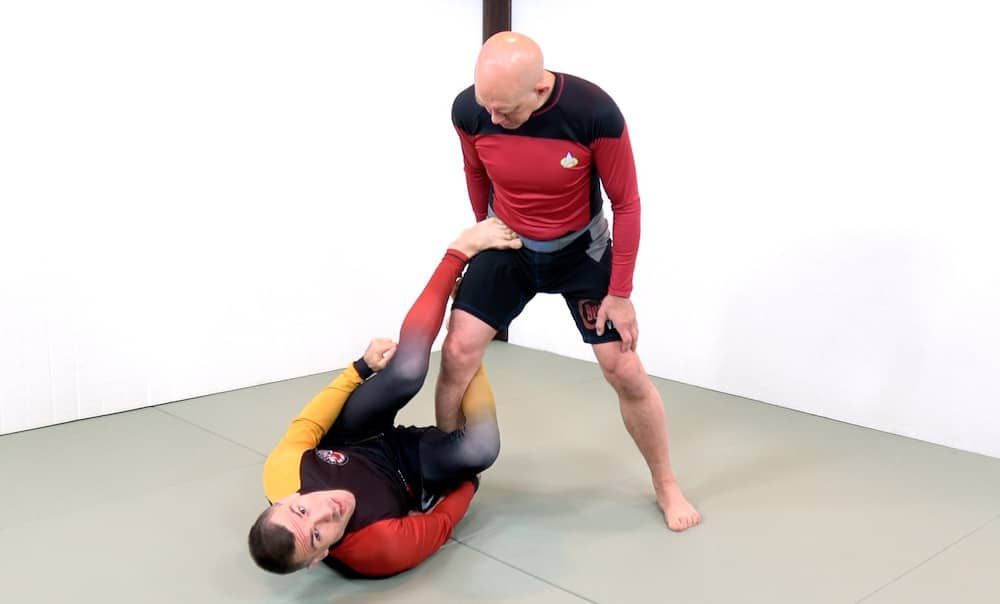
A confirmed disc herniation runs longer. Conservative (non-surgical) treatment typically needs a minimum of 3 to 6 months before a grappler is back to full live training, and that timeline assumes the symptoms are trending the right direction with physical therapy, not just time off. If a herniation needs surgery — a microdiscectomy is the most common procedure for grapplers — there’s no training at all in the early weeks post-op, and most surgeons want 6 months minimum before full-contact rolling resumes. The pace is set by how the tissue is actually healing, not by how bored you are of watching from the mat’s edge.
Building a Back That Can Take No-Gi’s Load
Core and glute strengthening is consistently the single highest-leverage thing a grappler can do for the lower back, and it doesn’t need to be complicated. The McGill Big 3 — the curl-up, the side plank, and the bird dog — is the standard low-back-friendly strength routine physical therapists give BJJ athletes, because all three build spinal stability without putting the spine through the flexion-rotation pattern that causes the injuries in the first place. Three to four sessions a week is enough to move the needle, and the same grip and core conditioning work that protects the hands also carries over to a more stable lower back.
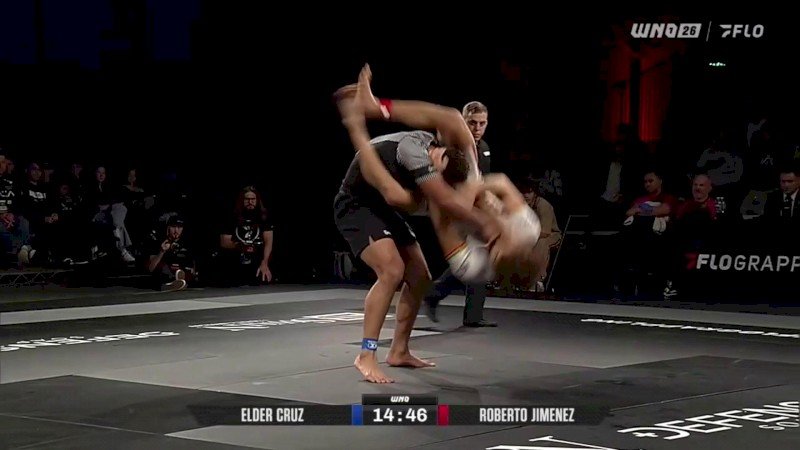
Technique matters just as much as strength. Pulling guard by sitting the hips down and controlling a wrist or collar-tie grip — instead of dropping straight down — shares the landing between the arms and the core instead of dumping it all on the lumbar spine. Drilling inversions slowly, on a compliant partner, before ever using them live gives the spine a chance to learn the rotation pattern without the added variable of an opponent fighting the spin. And a grappler who’s spent a season buried in one asymmetric guard is due for a few weeks of training the other side on purpose, just to even the hip load back out.
Sources
- Chronic low back pain and disability in Brazilian jiu-jitsu athletes — Physical Therapy in Sport (PubMed)
- An Epidemic of Chronic Lower Back Pain in BJJ Athletes — BJJ Fanatics
- How Long Does It Take for an L4-L5 Disc Herniation to Heal? — Goodman Campbell Brain and Spine
- How to Prevent Lower Back Pain From BJJ and Manage Injuries — Submission Shark