De La Riva Guard No-Gi: 7 Sweeps & Attacks That Work
Ricardo de la Riva built his namesake guard around a lapel grip and a sleeve. Strip both away and most people assume the position falls apart. It does not. The de la riva hook still steals your opponent’s base, and in no-gi you swap fabric control for a heel grip and relentless kuzushi. Marcelo Garcia and Lachlan Giles have both shown the position is alive and well without a single scrap of cloth to hold. What follows is how to build it, the seven attacks that actually finish, and the mistakes that get your knee bent the wrong way.
What Is the De La Riva Guard in No-Gi?
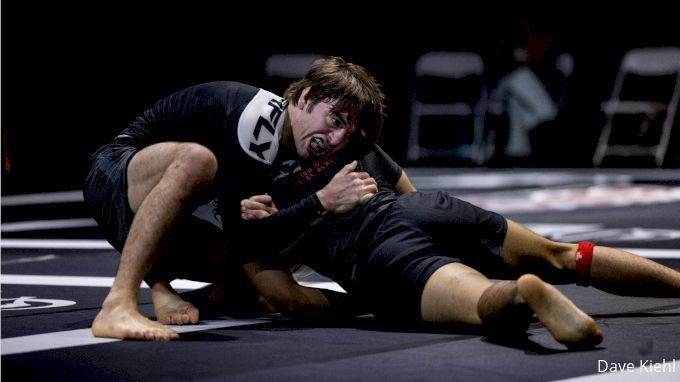
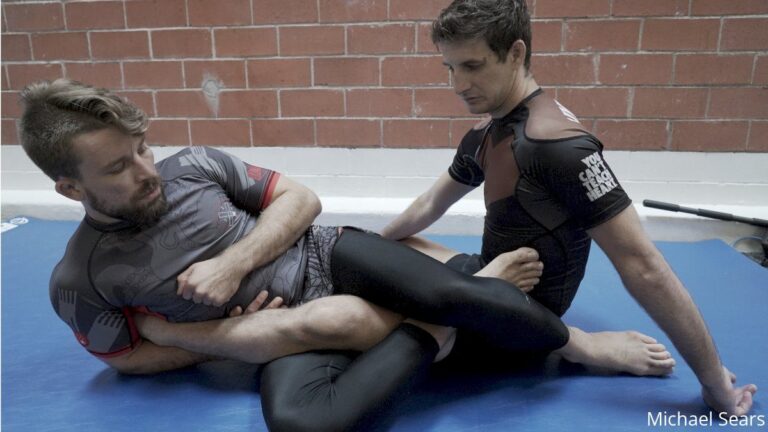
The de la riva guard is an open guard where you loop one leg around the outside of your opponent’s lead leg, hooking your foot behind their knee or thigh. That hook — the “de la riva hook” — is the anchor. In the gi you’d pair it with a same-side sleeve grip and a lapel. In no-gi the anchor stays, but your hands move to the ankle, the heel, and the far hip.
The point of the position never changes: keep the top player from squaring up and passing. As long as your hook is deep and their weight is drifting, they can’t start their own game. That’s the whole battle in bottom guard — dictate the pace before they do.
How Do You Set Up De La Riva Without the Gi?
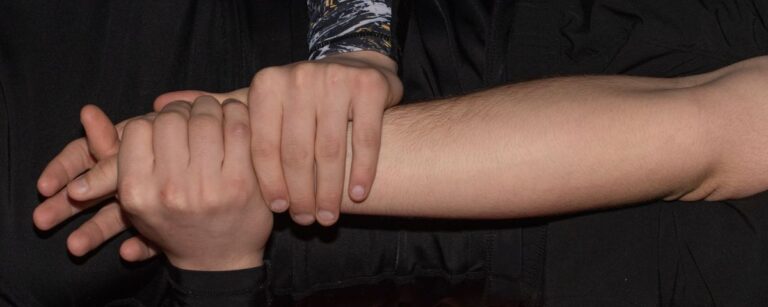
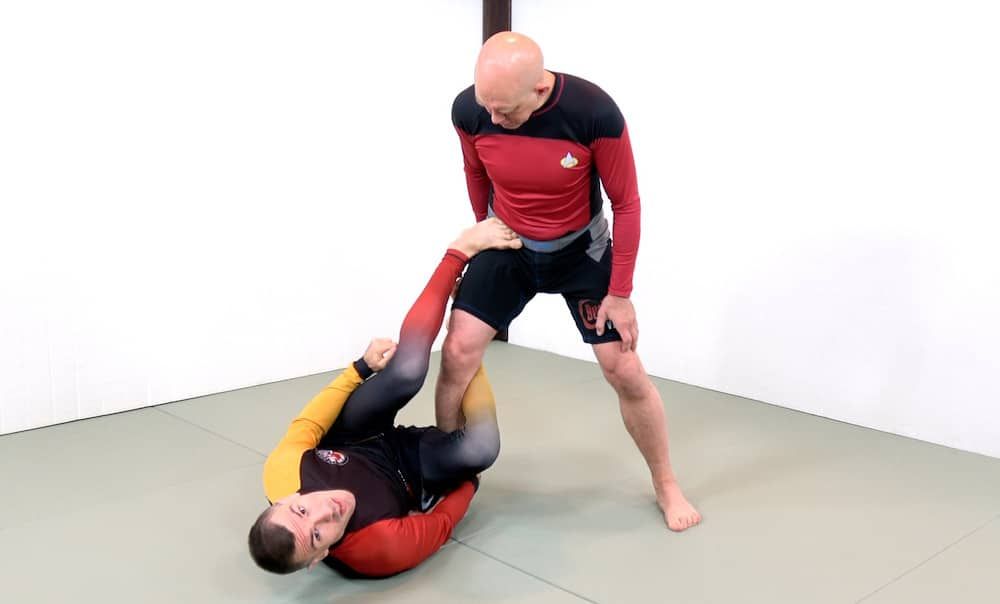
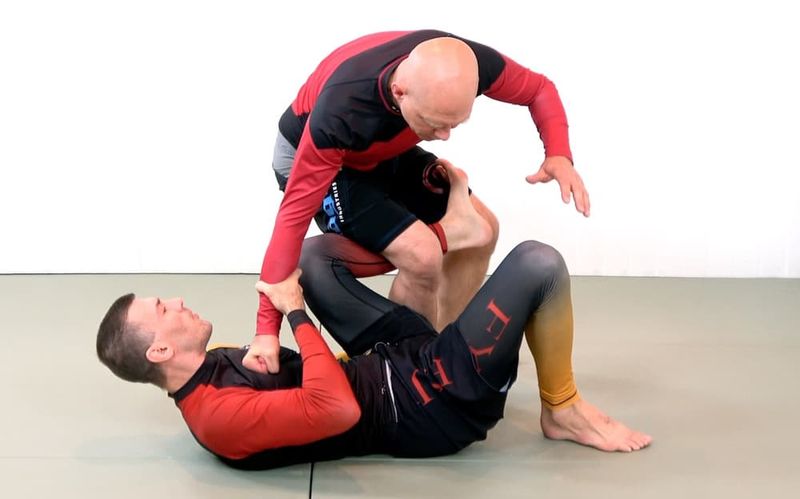
Establishing the de la riva guard no-gi comes down to two grips. First, wrap your outside leg around their lead leg and drive the hook deep behind the knee — shallow hooks slip off the moment they step. Second, grab the heel of that same leg with your near hand. Lachlan Giles calls the heel grip the no-gi answer to the sleeve: it stops them stepping back and gives you a lever to rotate their hips.
Your free hand posts on the far knee or grabs the far ankle depending on the sweep you want. Keep your shoulders off the mat and your hips mobile. A flat back is a passed guard waiting to happen. If they try to circle out, follow with your hook and reset the heel grip — you’re not holding a static position, you’re steering a moving target.
The One Grip That Makes No-Gi De La Riva Work
Kuzushi is the secret sauce, and it’s the part most people skip. Off-balancing isn’t a step before the sweep — it is the sweep. Every time you extend your de la riva hook and pull the heel toward you, their weight loads onto the posting leg. Push, pull, extend, retract. You’re a metronome, and each swing steals a little more of their base.
The truth is, most guards that get passed in no-gi aren’t lost to a slick technique. They’re lost because the bottom player went passive and let the top player settle their weight. Never stop moving their hips. A de la riva player who off-balances every two seconds is nearly impossible to pass cleanly.
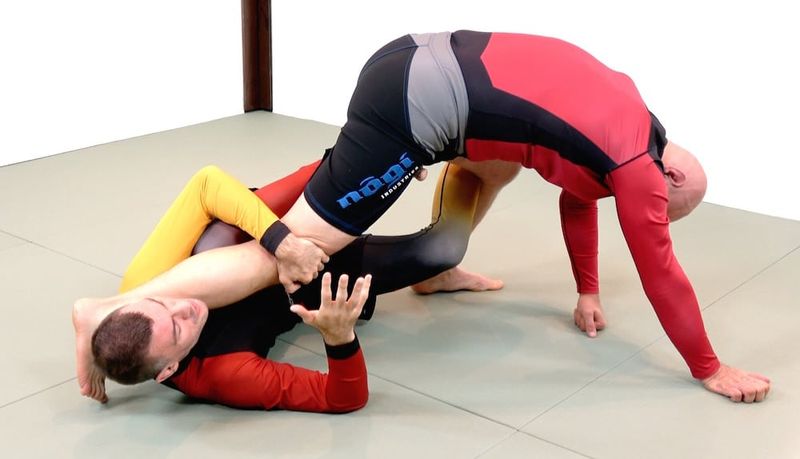
3 De La Riva Sweeps for No-Gi
Once their base is compromised, the sweeps come free. Three carry the load in no-gi:
- The tripod / mantis sweep: grab the far ankle with your free hand, extend the de la riva hook to elevate their hooked leg, and kick their posting knee. They fold backward and you come up on top.
- The elevation sweep: feed your free foot to their far hip, load both your legs under them, and roll them over the top as you pull the heel across.
- The shotgun sweep: drop the de la riva hook to their ankle, block the far foot, and drive forward through their base line to dump them onto their seat.
None of these need a grip on cloth. They run on leg dexterity and timing. Drill the tripod first — it’s the highest-percentage entry and it feeds directly into the back and into leg locks if they defend.
What Submissions Come From De La Riva No-Gi?
The guard isn’t only a sweeping position. When your opponent postures or bases wrong, the submissions open up. The triangle is the cleanest: when they reach across to fight your hook, you already have the angle to throw a leg over the shoulder and lock it. Caio Terra built an entire ankle-lock game off the de la riva, and guillotines appear any time they duck their head to smother your kuzushi.
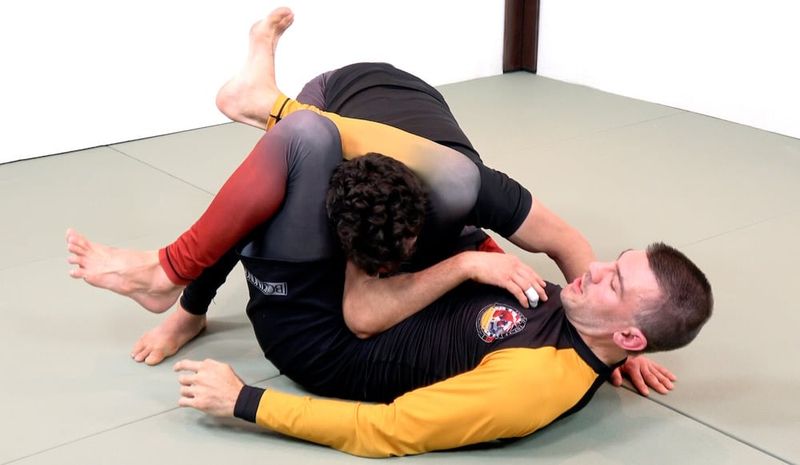
Omoplatas are on the table too when they post an arm to stop the sweep. The rule of thumb: their defense to one attack is the entry to the next. Sweep threatened, they base wide — take the triangle. Triangle defended, they posture — hit the omoplata. You’re never picking one attack; you’re running a chain.
De La Riva to Leg Entanglements: The Modern No-Gi Path
Here’s where no-gi de la riva pulls ahead of its gi cousin. The de la riva hook sits one motion away from an ashi garami. Extend the hook, swivel underneath, and you land in single-leg X with the near leg already isolated. From there the straight ankle lock and the transition to X-guard are both live.

Aggressive players go straight to the inside position — the 411 or “saddle” — where the inside heel hook lives. Lachlan Giles teaches the de la riva specifically as a gateway to the saddle while avoiding getting saddled yourself. If leg locks are your endgame, learn the ashi garami mechanics first, then let the de la riva feed you into them. This is the path modern competitors ride to the legs, and it’s the single biggest reason the position is worth your mat time in no-gi.
How Does Reverse De La Riva Work in No-Gi?
Reverse de la riva flips the hook to the inside of your opponent’s leg, and it shines against knee-cut and body-lock pressure passers. Instead of fighting a forward-driving passer head-on, you thread the reverse hook, stall their momentum, and either recover full guard or spin to their back. The arm-drag series off reverse de la riva is the cleanest back-take in no-gi bottom game — you drag the near arm, follow the hips, and take the seatbelt before they know the guard shifted.
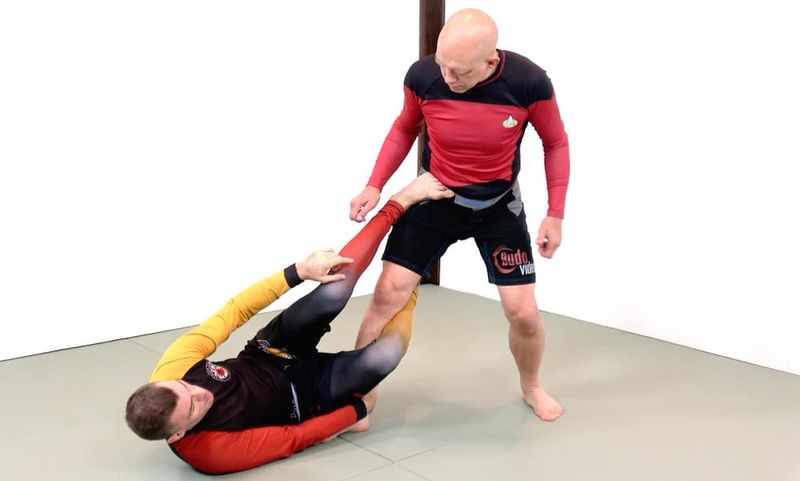
A word of caution: reverse de la riva exposes your own legs to the saddle if you get lazy with foot position. Keep your free foot framing on the hip and don’t let your knee cross their centerline until you’ve committed to the drag.
Defending the Leg Drag and Calf Slicer
The de la riva’s biggest weakness is the leg drag. A smart passer clears your hook, drags your hooked leg across their body, and moves to your hip. The counter is speed, not strength — the instant you feel the drag start, shrimp hard away from them and re-pommel the hook to the other side before they consolidate.
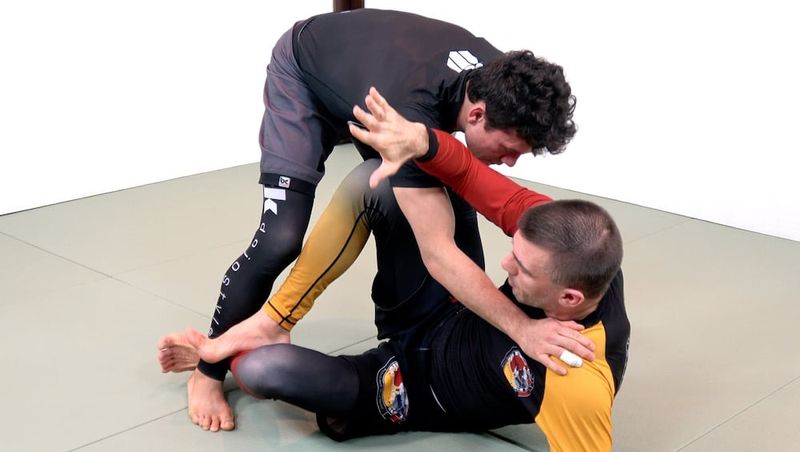
The other trap is the calf slicer. When your de la riva hook wraps too deep and they trap your foot against their thigh, they can crank a slicer on your own hooking leg. Keep your toes pointed and your hook active; a live foot rarely gets sliced. If you feel the pressure build on your calf, extend the leg to relieve it rather than fighting to keep the hook.
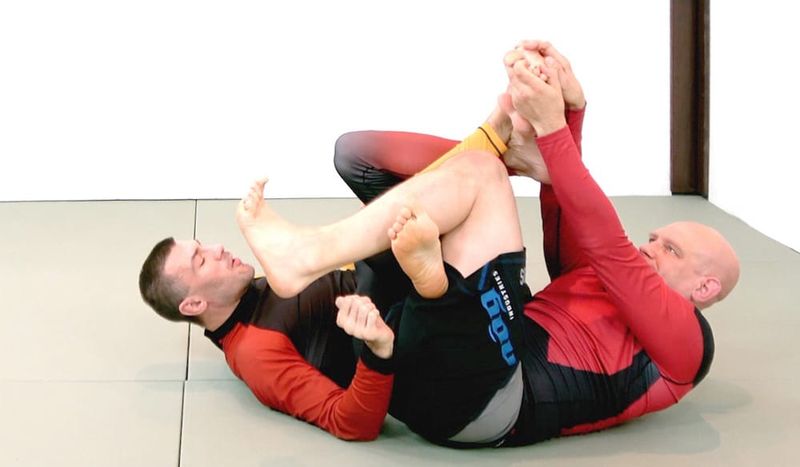
See the No-Gi De La Riva in Motion
Watching the position beats reading about it. Lachlan Giles breaks down exactly how to play de la riva no-gi while staying off the wrong end of a leg lock:
Common Mistakes in No-Gi De La Riva
Three errors sink most people. The shallow hook — a de la riva hook that only catches the ankle gives no control; get it behind the knee. The static guard — sitting still and waiting invites the leg drag; off-balance constantly. And the death grip on a heel that isn’t going anywhere — if the sweep isn’t there, transition to the legs or recover, don’t muscle a lost position. Chasing a grip you’ve already lost is how good guard players end up flattened.
One more, and it’s a mindset thing: no-gi de la riva rewards players who treat it as a launchpad, not a resting spot. Every second you spend there should threaten a sweep, a back-take, or a leg entry. Park in it and you’ve handed the pass away.
Gear That Helps Your Bottom Guard Game
Bottom guard players spend more time with their back on the mat than anyone in the room, which means friction and sweat management matter. A snug-fitting rashguard that doesn’t ride up when you invert saves you from the constant re-tuck that breaks your rhythm mid-scramble. Grippy spats help too — when your legs are the grips, sweat-slick shins cost you hooks. It’s a small edge, but bottom game is a game of small edges stacked on top of each other.
Final Thoughts
The de la riva guard no-gi isn’t a watered-down version of the gi original — it’s a faster, leg-lock-hungry evolution that fits how modern grappling actually looks. Master the heel grip and the constant kuzushi, and the sweeps, back-takes, and saddle entries stack up on their own. Start with the tripod sweep and the single-leg X entry this week, drill them until the transition is automatic, then layer the reverse de la riva on top. If you want the full leg-lock picture the de la riva feeds into, work through our single-leg X guide next — that’s where most of these finishes actually end.
Sources
- Grapplearts — The No-Gi De La Riva Guard with Rob Biernacki — breakdown of no-gi grips, kuzushi, and the mantis/reverse variations.
- Lachlan Giles / BJJ Fanatics — The Perfect Way To Use The De La Riva Guard No Gi — using de la riva as a gateway to leg entanglements while avoiding the saddle.
- BJJ Heroes — Ricardo de la Riva — origin and history of the guard’s namesake.