Headgear and the Rulebook: When Ear Protection Is Legal in Competition
Almost every grappler learns the same lesson twice. The first time is on the mat, when a training partner’s shoulder grinds against the side of your head and the cartilage starts to warm and throb. The second time is at the scale, minutes before a match, when a referee glances at the padded band around your skull and says the two words nobody wants to hear: “take it off.” Protecting your ears in training and protecting them in competition turn out to be two completely different problems, and the difference is written not in medical journals but in rulebooks. What follows is a plain-language tour of where ear protection is legal, where it is quietly tolerated, and where it is flatly banned — and why the grappling world still can’t agree on any of it.
Two Different Worlds: The Training Room and the Tournament
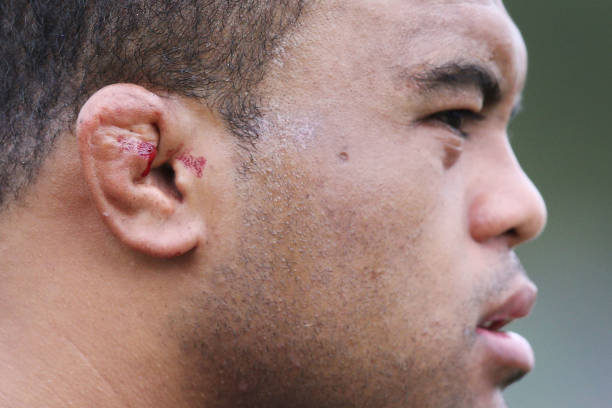
In the training room, ear protection is a personal decision. Nobody is refereeing your open mat, so if you want to strap on a set of guards to shield an ear that already swelled up once, that is entirely between you and your teammates. The friction that causes auricular hematoma — the pooling of blood between cartilage and skin that eventually hardens into the classic “cauliflower” shape — happens most often during scrambles, guard passing, and head-to-body pressure, exactly the exchanges you drill hundreds of times a week. A soft, low-profile guard worn during those reps is the single most reliable way to keep a healthy ear healthy.
Competition flips the logic. On the tournament mat you are no longer optimizing for years of joint mileage; you are being measured against an opponent under a specific ruleset, and that ruleset cares about two things headgear can affect: fairness and safety. A rigid guard can give you a slick surface to slide out of a head-and-arm control, or a hard edge that cuts an opponent during a scramble. Referees don’t evaluate your headgear on how well it prevents cauliflower ear. They evaluate it on whether it changes the contest. That single shift in priorities explains almost every rule you are about to read.
Brazilian Jiu-Jitsu: The Gray Area Nobody Likes
Traditional BJJ competition is where grapplers get the most confused, and for good reason. The major federations were built around the gi, and their equipment rules were written primarily to standardize the uniform — belt, jacket, trousers, rashguard — not to legislate protective headgear. As a result, ear guards live in an awkward space that is rarely spelled out in a single clean sentence. In practice, most gi-focused tournament rulesets treat rigid or hard-shelled headgear as prohibited equipment, on the grounds that it can injure an opponent or provide a grip-and-slip advantage, while soft compression bands sit in a discretionary zone the head referee can accept or reject on the day.
The honest answer, and the one experienced competitors give, is this: do not assume. The safest move is to email or message the organizer before the event, or ask the head referee at the rules meeting, and get a yes or no in writing. Show up with a spare, softer option in your bag in case your first choice gets waved off. Nothing feels worse than warming up in headgear all morning, building your whole game plan around head pressure you think is protected, and then being told to remove it two minutes before you bump fists.
No-Gi and Submission-Only Events: A Little More Freedom, Still No Guarantees
No-gi and submission-only formats grew up alongside a slightly more permissive culture. Because these events already accept a wider range of apparel — rashguards, spats, compression shorts — some are more relaxed about a low-profile ear guard, especially the soft neoprene-style bands that flatten against the head. But “more relaxed” is not the same as “guaranteed.” The largest submission-grappling stages tend to have their own equipment standards, and elite invitational matches are frequently contested bare-headed simply because the athletes prefer maximum feel and the promoters want a clean visual product.

Local and regional no-gi tournaments are where you’ll find the widest variation. One promotion in your city might happily wave through a soft guard; another an hour away might ban anything on the head above the eyebrows. The rule of thumb holds: the smaller and more local the event, the more likely the decision comes down to a single head referee’s judgment on the day. Read the equipment section of the event’s rules document before you register, not the night before you compete.
Wrestling: The One Sport Built Around Ear Protection
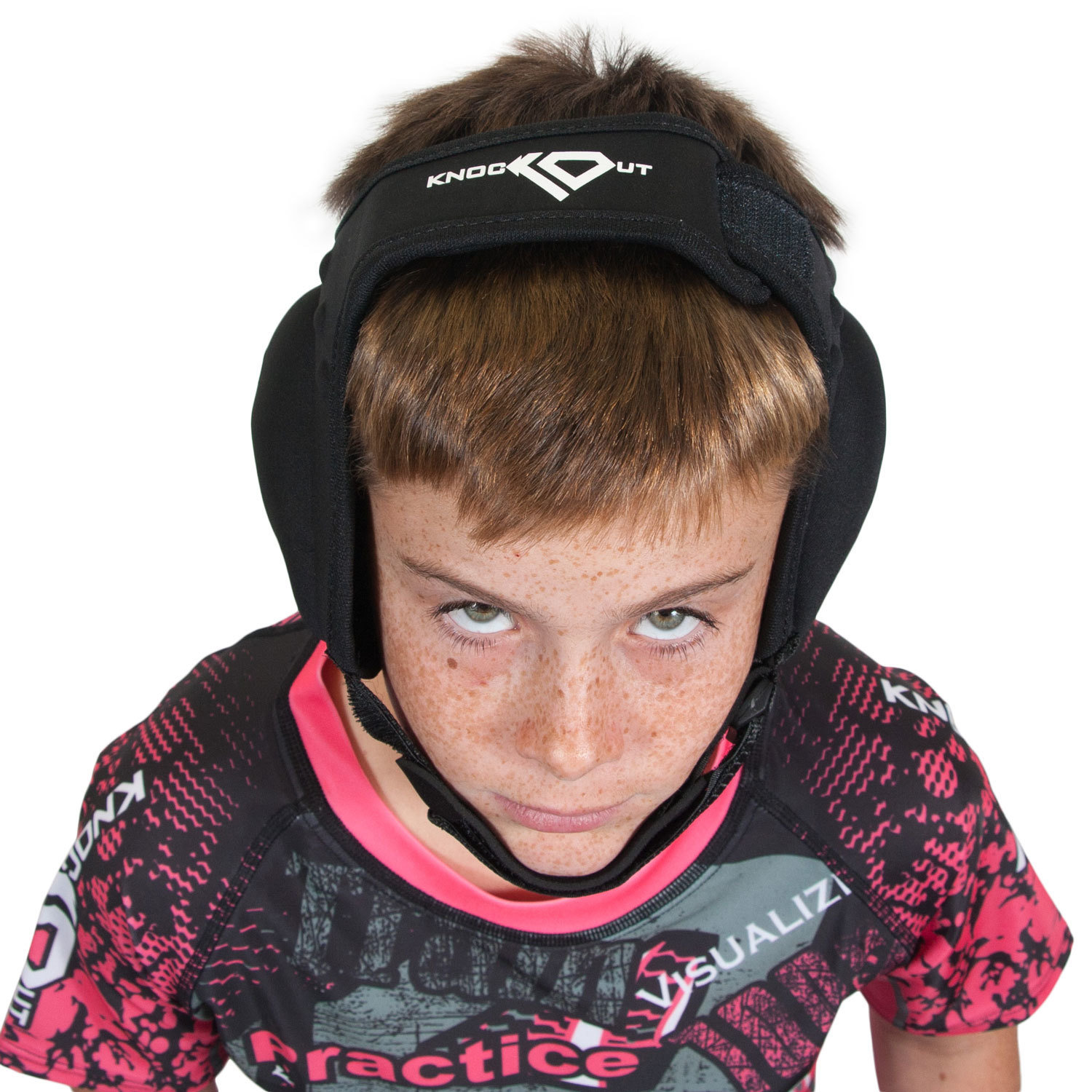
If BJJ treats headgear as a gray area, wrestling treats it as furniture. Folkstyle wrestling — the scholastic and collegiate style practiced across the United States — has long mandated protective headgear in competition. The familiar three- or four-strap cup design, with a hard-backed shell over each ear held by an adjustable chin strap, exists specifically because a sport built on head-inside pressure, sprawls, and mat returns would produce cauliflower ears at an epidemic rate without it. Wrestlers grow up competing in headgear, so for many of them the BJJ debate looks strange: why would you ever leave your ears exposed?
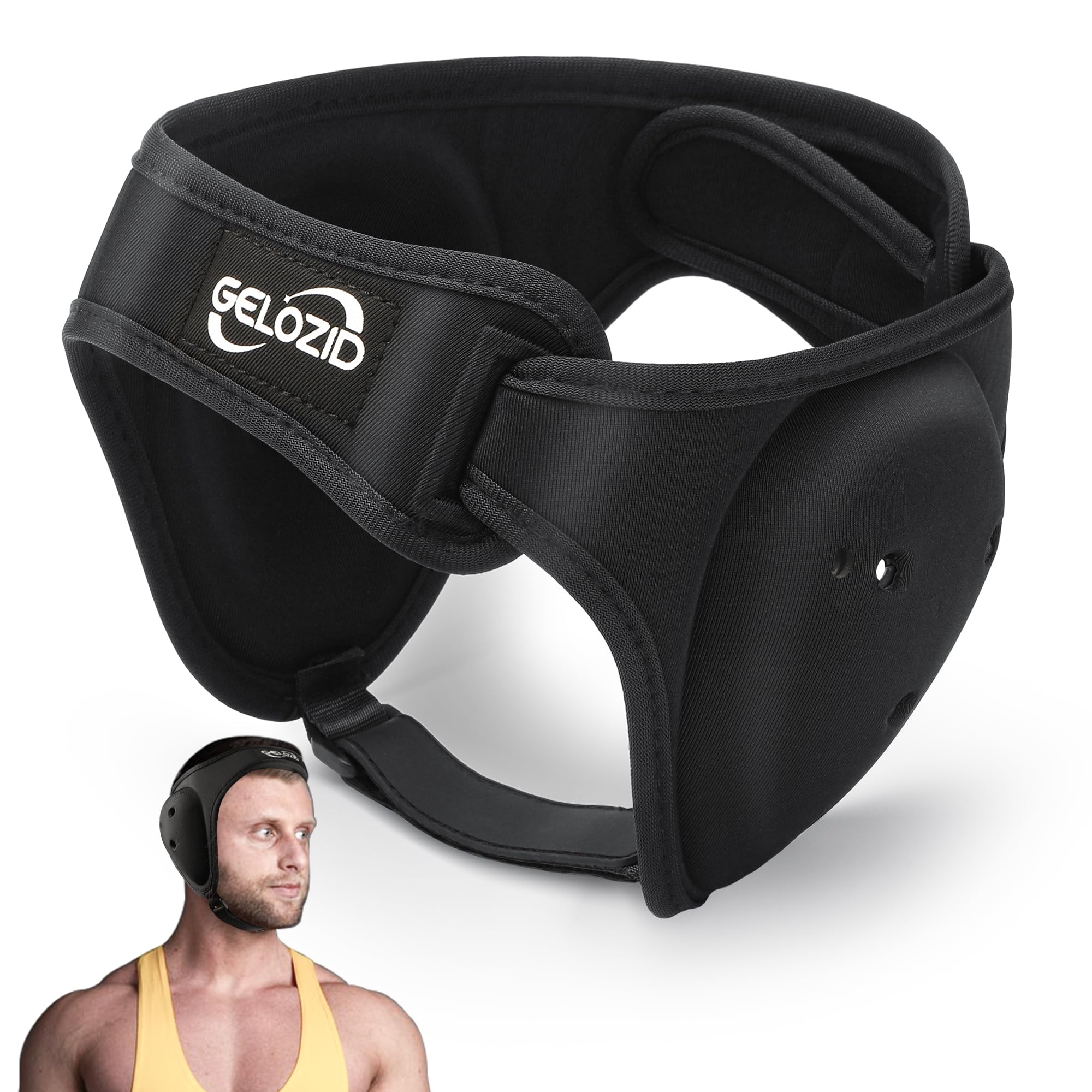
The nuance is that not all wrestling styles agree. The international freestyle and Greco-Roman codes generally make headgear optional rather than mandatory, which is why you’ll see many Olympic-level wrestlers compete bare-eared. That split — required in folkstyle, optional in the international styles — is a useful reminder that even within a single sport, ear protection policy is a choice a governing body makes, not a fixed law of the game. When wrestlers cross over into no-gi grappling, they often bring their headgear habit with them, and that hard-shell wrestling cup is a big part of why competition rulesets scrutinize headgear so carefully.
MMA and Amateur Combat: Where Your Ears Are Simply Exposed
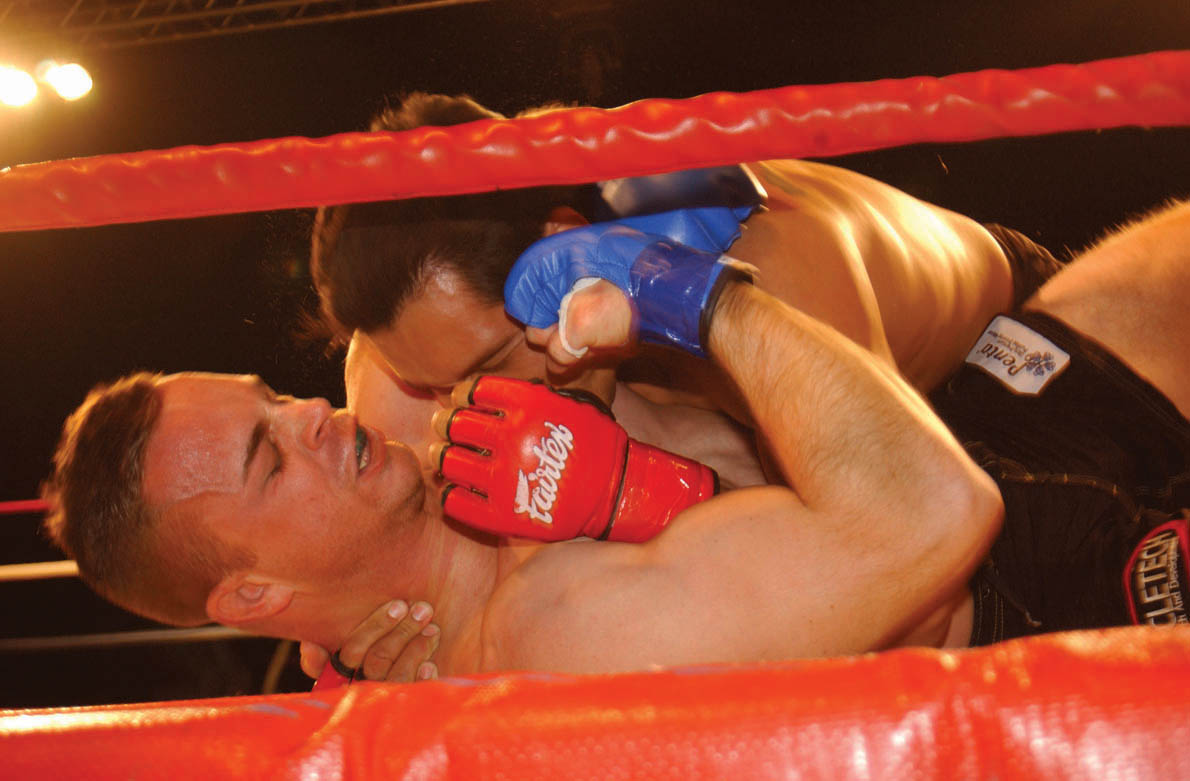
Mixed martial arts is the outlier that reveals the whole logic. Inside the cage there is no ear protection at all, and there cannot be — headgear would interfere with strikes, obstruct the fighters, and change the nature of the sport. Yet MMA involves some of the most punishing head-pressure grappling exchanges in combat sports: clinch battles against the fence, ground-and-pound, and scrambles where a skull is constantly grinding into canvas and cage. This is precisely why so many career MMA fighters carry pronounced cauliflower ears. The sport’s rules protect the contest, not the cartilage, and the athletes accept the trade.
Amateur MMA and kickboxing sometimes add more protective equipment than the professional versions — shin pads, larger gloves, occasionally headgear for striking safety — but that headgear is designed to blunt punches and kicks, not to seal the ear against friction. The takeaway for the grappler is blunt: if your competitive path runs through MMA at any level, the mat time you log will attack your ears, and the rulebook will offer you nothing to stop it. Your only defense is what you do in the training room beforehand.
Why the Rules Refuse to Agree
Step back and the pattern makes sense. Every ruleset is balancing the same three forces: athlete safety, competitive fairness, and the identity of the sport. Wrestling weights safety heavily and standardizes a single approved design, so its headgear is predictable and universal. BJJ and submission grappling weight feel, fairness, and tradition, so they tolerate soft protection while resisting anything rigid. MMA weights the spectacle and the striking game above all, so it accepts exposed ears as the cost of doing business. None of these positions is wrong; they are simply different answers to the question of what the sport is for.
This is also why chasing a single universal answer to “can I wear ear guards in competition?” is a losing game. The correct answer is always local: it depends on the organization, the style, the specific event, and sometimes the individual referee. Treat every new promotion as a fresh rulebook you have not read yet, because that is exactly what it is.
A Practical Approach for the Competing Grappler
The workable strategy is to separate your gear into two categories. For daily training, invest in comfortable, effective ear protection and wear it religiously — this is where the real prevention happens, because you spend far more hours drilling than you ever will competing. A soft, washable guard that flattens under a rashguard hood or sits low enough not to snag is the piece that actually saves your cartilage over a career.
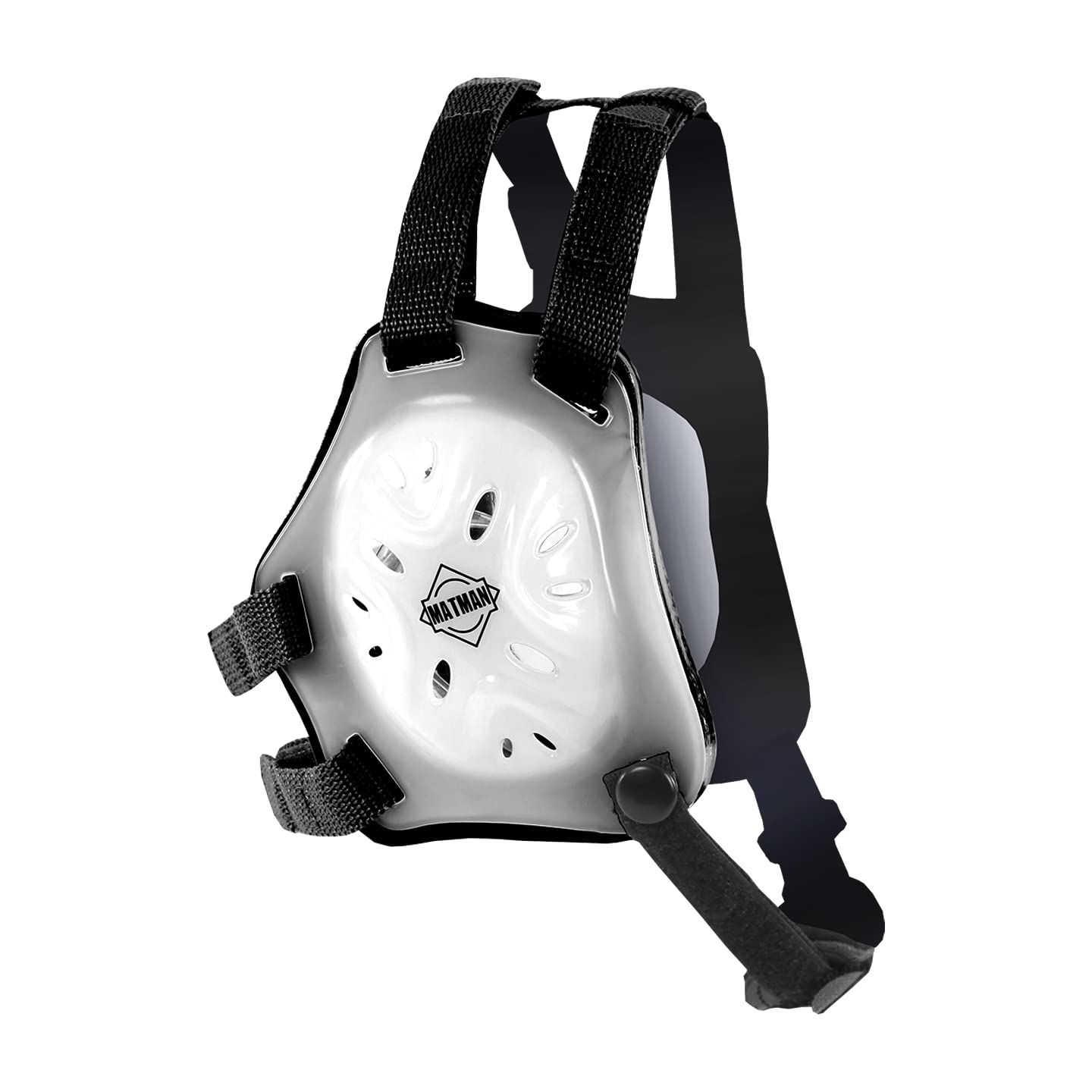
For competition, do your homework before you register. Find the equipment section of the ruleset, confirm what is permitted, and pack a legal soft option as well as the reality that you may compete bare-eared. If you already have an established cauliflower ear and are protecting it during a specific event, ask the organizer directly and get their answer on record. If you are shopping for a set to train in, an ear guards and grappling headgear search will surface both the soft compression bands ideal for daily rolls and the harder wrestling-style cups suited to sports that mandate them — match the design to where you’ll actually use it.

Cauliflower ear is permanent once it hardens, and no rulebook is going to hand your cartilage back. The competition mat can only ever be a small fraction of your training life, which means the fight to keep your ears is won or lost in the room where nobody is checking your headgear at all. Learn the rules so you’re never caught out on match day — then go protect your ears where it counts, every session, long before you ever step on the scale.
Sources
- Cauliflower ear — Wikipedia
- International Brazilian Jiu-Jitsu Federation (IBJJF)
- USA Wrestling
- Wrestling styles and rules — Wikipedia
Browse our top-rated rashguards and no-gi gear at the RashguardGuy shop →