Bulldog Choke: 7 Essential No-Gi Setups
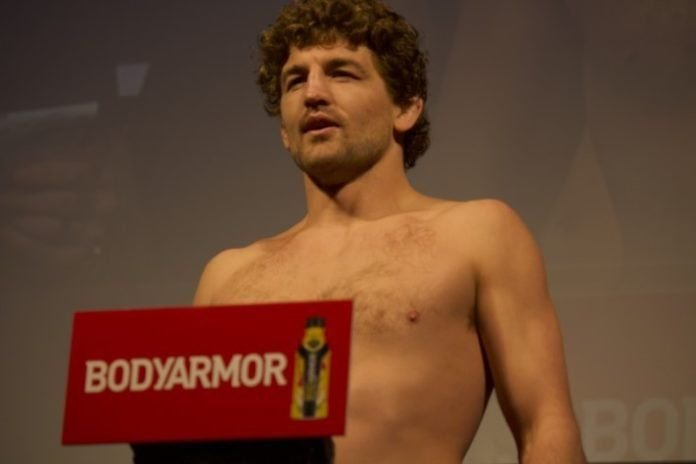
Ben Askren choked Robbie Lawler unconscious with this exact submission on March 2, 2019, at T-Mobile Arena — Askren’s first fight in the promotion, against a former welterweight champion who outstruck him badly for the first two minutes. Herb Dean waved it off at 3:20 of round one, and Lawler was furious about the stoppage for years afterward. That fight is the reason most grapplers know the name “bulldog choke” at all, even though the position long predates MMA. It’s a judo strangle repurposed for scrambles, and in no-gi it works better than almost anywhere else because there’s no collar to grab and no gi friction to slow the hands down.
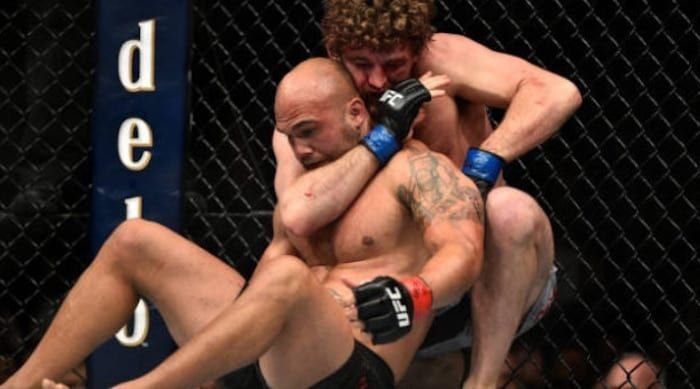
Askren’s finish over Lawler remains the fight most grapplers reference when they hear “bulldog choke.”
What the Bulldog Choke Actually Is
Strip away the MMA highlight reel and the bulldog choke is a fairly simple mechanical idea: it’s a guillotine grip applied from behind or beside an opponent instead of from the front. You crossface the far side of the head, drive the wrist blade under the jaw to lift the chin, then wrap the choking arm around the throat and lock a guillotine-style grip — knuckles down, forearm across the windpipe and carotids. No lapel required, which is exactly why it belongs in a no-gi curriculum instead of getting filed under “gi-only judo throwback.”
The three grips grapplers actually use are the Gable grip (interlocking fingers), the RNC-style grip (biceps cupping the far hand), and the S-grip (fingers hooked into a chain). Each trades a little speed for a little more crushing power, and which one you reach for usually depends on how much space your opponent has already given up.
The Judo Roots Nobody Mentions
The bulldog choke isn’t a modern MMA invention — it’s a rebranded version of okuri eri jime, a sliding collar strangle that’s been part of judo’s official technique list since Kodokan judo was codified. Judo players use it with a gi collar; no-gi grapplers and MMA fighters adapted the same body mechanics without the collar, replacing the grip with a bare-arm guillotine lock. That lineage matters because it explains why the choke works from so many entry points — turtle, scrambles, even mount — it’s not one set-piece move, it’s a strangle mechanic that fits wherever an opponent gives up their back or turns one side of the neck into open space.
Why No-Gi Favors This Choke More Than Gi Jiu-Jitsu
In a gi, most grapplers default to a lapel-based strangle the moment they get behind an exposed neck — a sliding collar choke, a baseball bat grip, something built around fabric. Take the gi away and those options disappear, but the bulldog choke doesn’t care. It’s built entirely on bare-arm contact and body weight, which is exactly the toolkit no-gi grapplers already carry. That’s also why it translated so cleanly into MMA: fighters like Askren, Pennington, and Medeiros weren’t running a jiu-jitsu set piece, they were finishing a scramble with the same grip they’d use in a wrestling room.
Sweat changes the equation too. A sweaty no-gi opponent is harder to control with pure grip strength, but a choke built on forearm-to-neck pressure and hip weight doesn’t lose much when things get slick — unlike a collar grip, which degrades fast once the gi gets damp. That’s a small detail, but it’s part of why coaches who train wrestlers transitioning into BJJ tend to introduce the bulldog choke early: it rewards the top pressure and hand-fighting instincts those athletes already have.
Every UFC Fighter Who’s Actually Finished With It
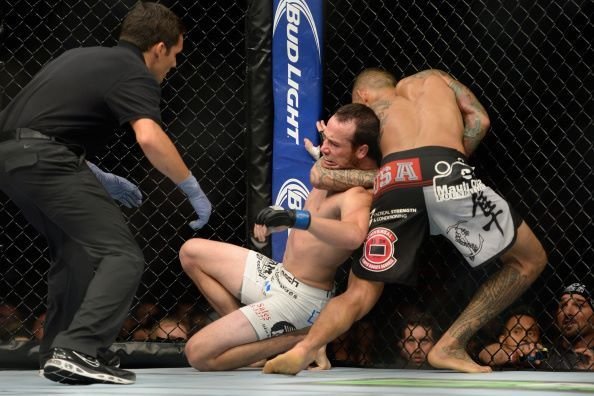
Askren gets the highlight reel, but he wasn’t first and he wasn’t the only one. Raquel Pennington submitted Ashlee Evans-Smith with a bulldog choke at UFC 181 back in December 2014, locking it in at 4:59 of round one. Yancy Medeiros pulled off a reverse variation at UFC 177, turning a stuffed standing guillotine into a modified bulldog choke that put Damon Jackson to sleep. When Askren caught Lawler in 2019, he became the fifth fighter in UFC history to win by that specific submission — not a fluke, a recurring pattern among fighters with strong wrestling and scramble instincts.
That pattern is the real lesson. Every one of those finishes came off a scramble or a stuffed shot, not a set-up drilled from a static position. If your no-gi game already involves a lot of turtle exchanges and front headlock scrambles, you already have the entries — you’re just missing the finish.
The No-Gi Setup From Turtle Position
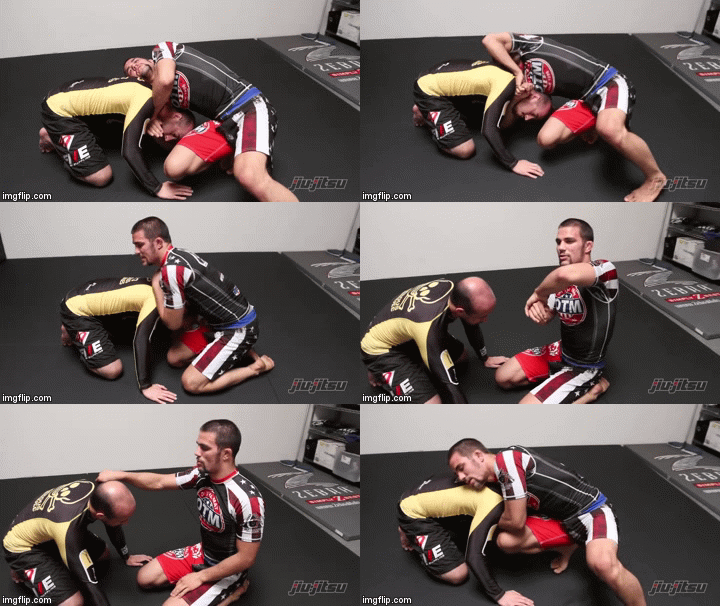
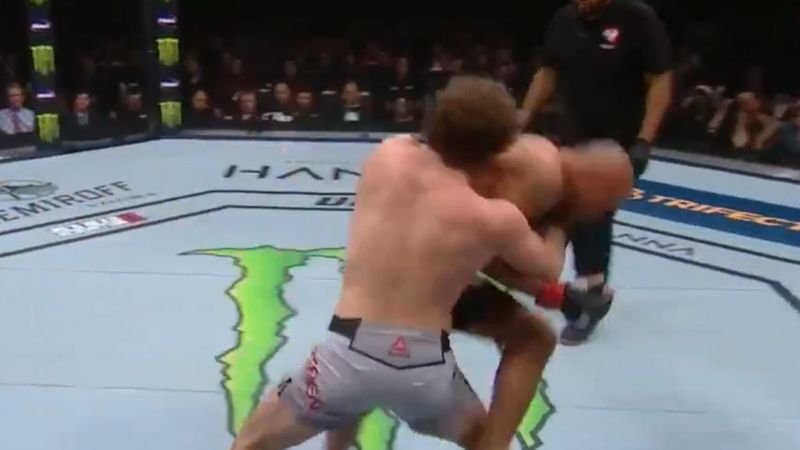
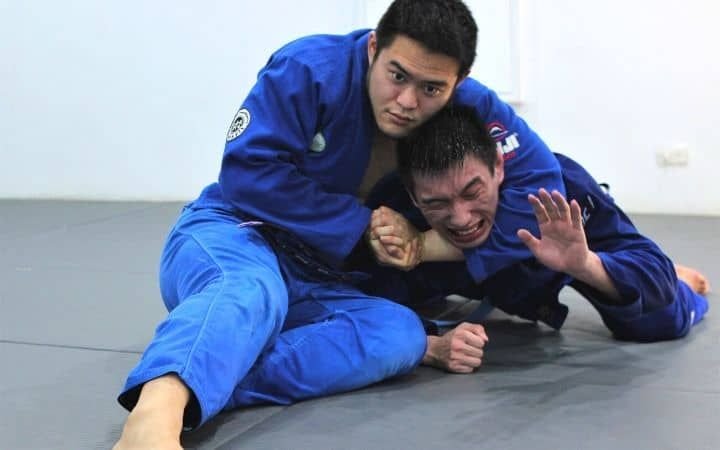
The most reliable entry for no-gi grapplers starts when an opponent turtles up to survive a pass or a takedown. From the side of a turtled opponent, crossface with your far arm and grind the wrist blade under their nose, forcing their head up and their neck out into open space. That single detail — lifting the chin instead of pushing the head down — is what separates a clean bulldog choke setup from a stalled crossface that goes nowhere.
Once the neck is exposed, wrap your other arm around the throat and lock the guillotine-style grip before your opponent can turn back into you. Sit out low, drop your hips toward the mat, and finish by squeezing your elbows together rather than pulling back — most grapplers rip up and lose the angle instead of finishing down and through.
The Crucifix Anchor That Makes It Stick
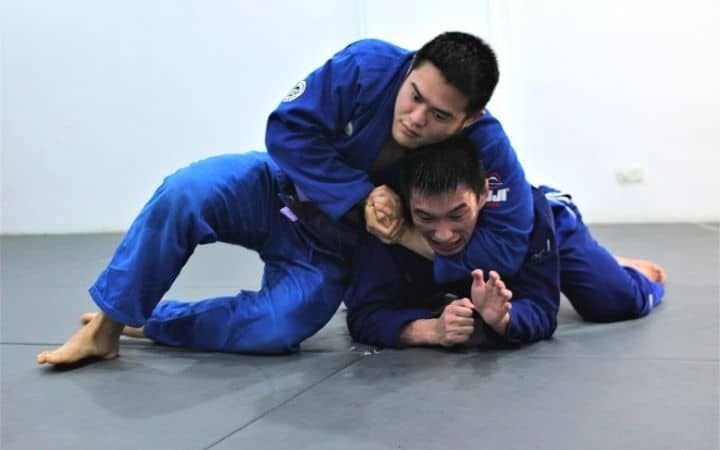
Here’s the detail that gets skipped in most highlight breakdowns: weight distribution. It’s extremely easy to fly over the top of a turtled opponent once they start to roll or scramble, which dumps your hips off to the side and kills the choke before it locks. You need an anchor point, and that anchor comes from trapping the near-side arm — a light crucifix-style trap using your far leg to pin the arm to their body. With that anchor in place you can keep your hips up and heavy without getting swept off to the side mid-finish.
Three Mistakes That Get This Choke Escaped
Even grapplers who understand the mechanics on paper tend to lose this choke live for the same handful of reasons. None of them are complicated to fix — they’re just easy to miss when you’re mid-scramble and focused on finishing fast instead of finishing correctly.
- Pulling back instead of driving down. Grapplers instinctively yank the choking arm toward their own chest, which opens space under the jaw and gives the opponent room to tuck their chin. Squeeze the elbows together and drop your weight through the choke instead of away from it.
- No anchor on the near arm. Skip the crucifix trap and your opponent rolls through you the second they feel the choke tighten, dumping you off balance and killing the position before the grip ever fully locks.
- Loose grip fighting before the crossface lands. If the wrist blade never actually gets under the chin, the “choke” is just a headlock — it’ll tire your opponent out but it won’t finish. Reset the crossface before committing the choking arm rather than forcing a submission from a half-formed position.
- Standing up too early. A common finishing instinct is to rise to your feet for leverage, but that gives a strong opponent the base to stand with you and dump the choke. Stay low, keep your hips heavy, and finish from the mat where the anchor still works.
Defending the Bulldog Choke
The counter starts before the choke ever locks. As soon as you feel a crossface driving your chin up from turtle, turn into the pressure rather than away from it — tucking your chin toward the crossfacing shoulder closes the gap the choking arm needs. If the grip does land, fight the hands before your opponent finishes the sit-out: peel at the wrist, not the forearm, since the wrist is the weakest link in a Gable or S-grip. Waiting until the choke is fully locked and sitting out is usually too late; by then you’re managing the tap, not the escape.
See the Mechanics in Slow Motion
Coach Robert Follis breaks down the no-gi version of this choke in detail below, including the grip variations covered above and how the finish differs slightly without a gi to grab.
Where It Fits Next to Your Other Chokes
If your no-gi game already leans on the d’arce choke or the guillotine, the bulldog choke is a natural addition — it shares the same guillotine-style grip mechanics but opens up a finish from turtle and scrambles where a front guillotine isn’t available. Think of it less as a new choke to learn from scratch and more as your existing guillotine grip applied to a position you’re probably already ending up in every session.
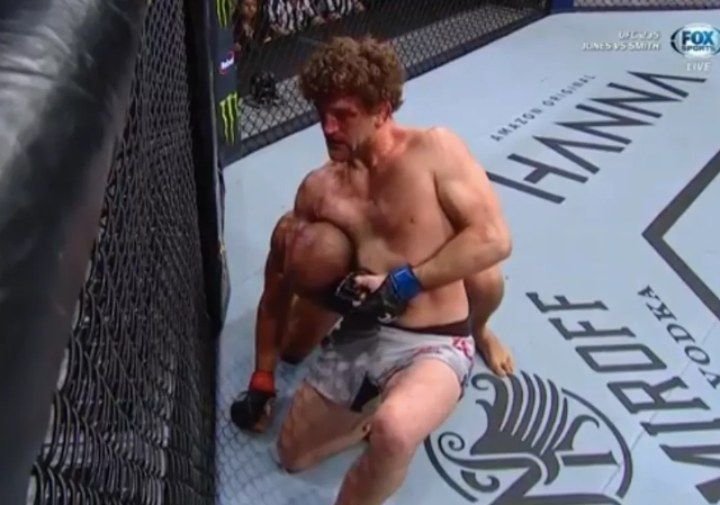
Lawler still maintains he wasn’t out when Dean stopped the fight. The tape is genuinely inconclusive, and that controversy is part of why the finish stuck in people’s memory longer than a clean, undisputed submission might have. But the mechanics behind it aren’t controversial at all — a stuffed shot, a trapped arm, and a choke that doesn’t care whether you’re wearing a gi. Drill the crossface-to-crucifix sequence a few times from turtle and it stops being a highlight-reel curiosity and starts being a live option in your scrambles.
Sources
- CBS Sports — UFC 235 results: Ben Askren submits Robbie Lawler — fight details and stoppage timeline.
- Wikipedia — Okuri eri jime — the judo strangle the bulldog choke is adapted from.
- LowKick MMA — Bulldog Choke: BJJ Technique Explained — background on Pennington and Medeiros finishes.
- Bloody Elbow — Anatomy of a controversial stoppage: Bulldog choke edition — technical breakdown of the Askren-Lawler stoppage.