What No-Gi Grappling Does to Your Ear — The Mechanism Behind Cauliflower Ear and Why Guards Work
Most grapplers who develop cauliflower ear can name the session where they first noticed swelling but cannot explain what was happening inside the tissue at that moment. That gap between recognition and understanding matters more than most people realize. Ear protection in no-gi training is not a matter of superstition or gym culture — the mechanism is documented, the biology is consistent, and what ear guards do to interrupt the damage cycle is specific. Understanding the actual process turns a stylistic debate into a structural one.
The Cartilage Problem at the Center of This Injury
The outer ear is a structure made almost entirely of elastic cartilage. What makes that medically significant is what cartilage lacks: its own blood supply. Unlike muscle tissue, which is threaded with capillaries and can repair itself after injury through direct vascular access, cartilage depends on a thin membrane called the perichondrium to deliver the nutrients it needs to survive. The perichondrium wraps tightly around the cartilage and maintains that supply relationship through consistent, close tissue contact.
When the ear takes a significant blow or sustained shear pressure, what often gets disrupted is not the cartilage itself — at first. It is the small vessels within the perichondrium that rupture. Blood pools in the space between the perichondrium and the underlying cartilage, creating what is medically called an auricular hematoma. The cartilage, now partially or fully separated from its nutrient source by that pooled blood, begins to starve.
The Stage Where Permanent Change Begins
An auricular hematoma on its own is reversible — if treated immediately and correctly. The standard treatment is aspiration: a needle drains the pooled blood, and the ear is compressed with a bolster dressing to keep the perichondrium against the cartilage while the tissue heals. Grapplers who catch hematomas early, drain them properly, and immobilize the ear through the healing window often walk away with minimal visible change to the ear’s shape.
The problem is that this window is narrow. Within hours of a hematoma forming, the body’s repair system begins sending fibroblasts — cells that deposit fibrous connective tissue — into the damaged area. Over days, that fibrous tissue hardens. Over weeks and months of repeated trauma without treatment, the fibrous deposits calcify. The cartilage, now receiving irregular or no nutrition, begins to die and is replaced by that same scar tissue. The distinctive bumpy, irregular shape of a fully developed cauliflower ear is calcified fibrous scar tissue that has reorganized the architecture of the outer ear at a structural level.
Surgical options exist for advanced cases, but no outpatient procedure reliably restores the original shape after calcification has set in. The damage at that point is architectural, not cosmetic in any reversible sense.
Why No-Gi Creates the Exact Conditions for This Injury
The mechanics of no-gi grappling do not involve the kind of explosive ear impacts that most people imagine when they think of contact sports injuries. Cauliflower ear in grappling develops less through dramatic collisions and more through accumulated low-level trauma applied precisely where the ear is most vulnerable — the soft tissue junction between the perichondrium and cartilage.
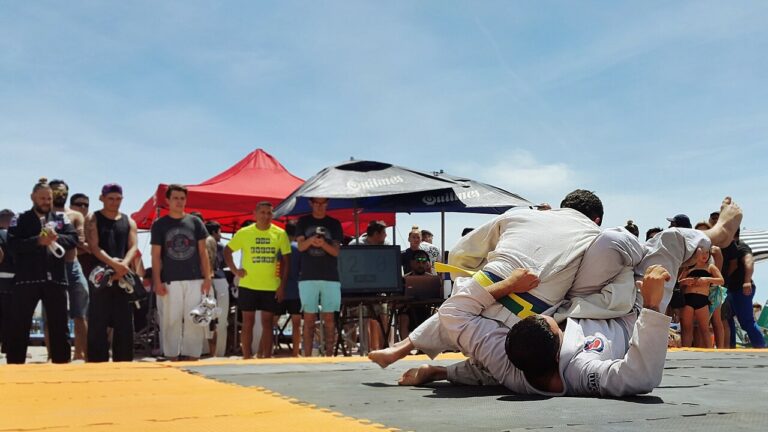
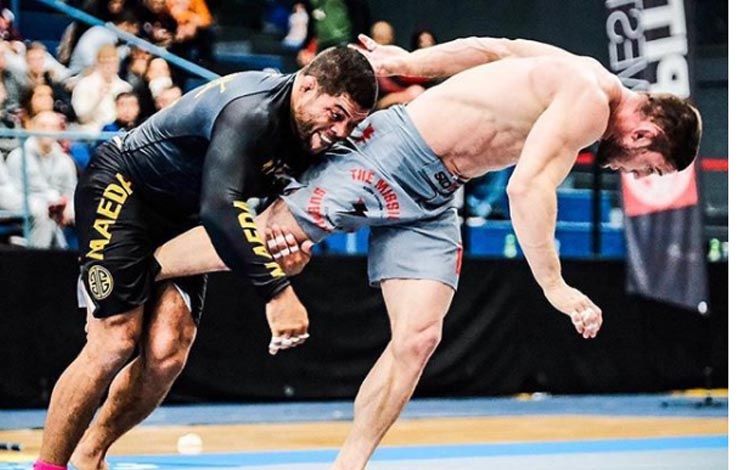
Clinch fighting is the primary driver. In the over-under position — one of the most contested positions in no-gi standup exchanges — an athlete’s ear is pressed against the opponent’s shoulder or upper trapezius for extended periods. The shear force from an opponent rotating or repositioning while the heads are locked in close proximity creates exactly the kind of vessel stress that produces hematomas. The same dynamic occurs during collar tie battles, Russian tie exchanges, and double underhook fighting, all of which involve sustained ear-to-body contact under load.
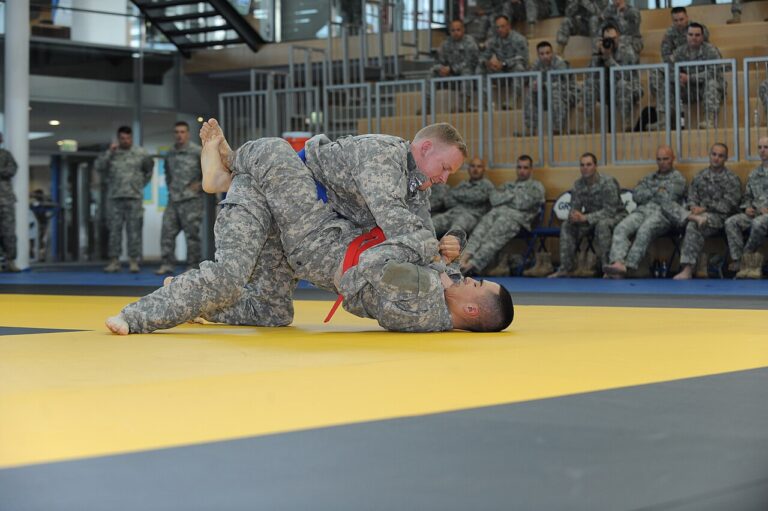
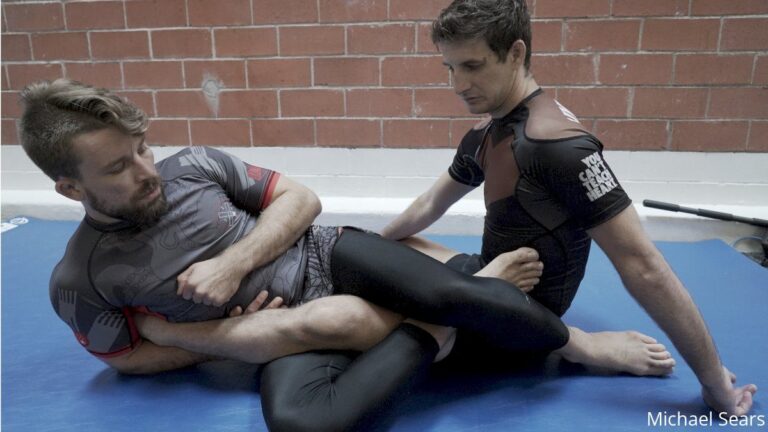
Mat contact adds another vector. During guard passing sequences and wrestling scrambles, the ear is regularly compressed against the mat with body weight behind it. Single-leg attempts, takedown defense, and turtle recovery all involve this kind of ear-to-mat pressure. None of these positions would register as an ear injury in the moment — there is no impact, no audible event, no pain that specifically localizes to the ear. But the cumulative effect across a training cycle produces the same tissue damage as a single more dramatic impact.
Competition formats accelerate this. A match with two fifteen-minute rounds generates far more total ear contact than most training sessions, because athletes are fighting at full intensity without the natural breaks and positional resets that pad training. High-level grapplers who compete frequently without ear protection experience ear damage at a rate disproportionate to their training volume.
What Ear Guards Are Actually Interrupting
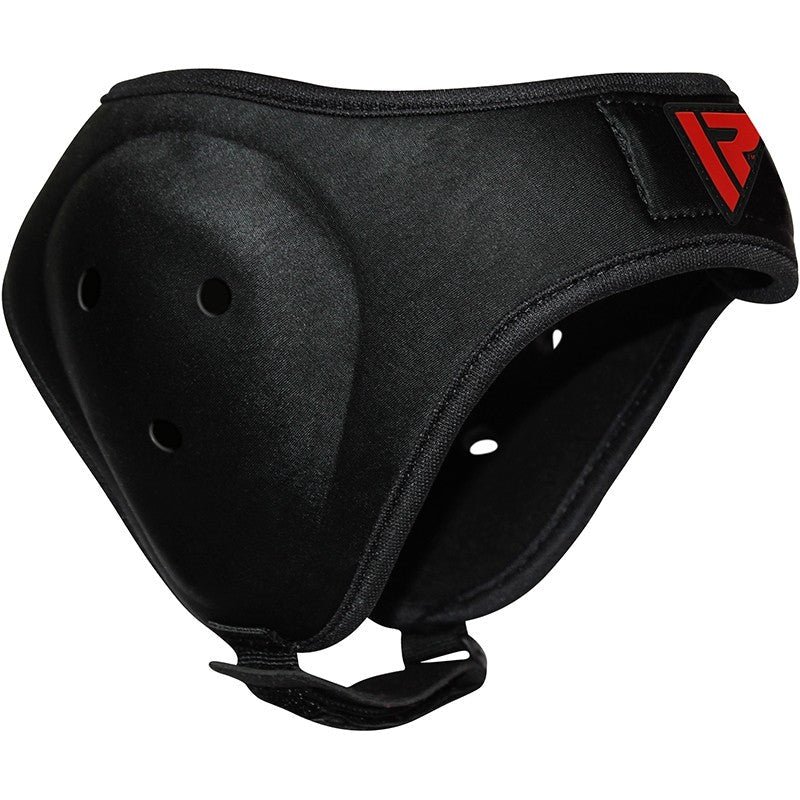
The design function of an ear guard is narrower than athletes often assume, which is part of why they are sometimes dismissed as insufficient or unnecessary. An ear guard does not prevent the ear from being contacted. It does not absorb significant impact the way a boxing headguard does. What it does is create a consistent buffer layer and — more critically — maintain gentle compression that eliminates the space where a hematoma can form.
That spatial element is the operative mechanism. A hematoma needs a gap between the perichondrium and the cartilage to accumulate blood. When the ear is held in light, even compression against the skull, the tissue layers stay in contact even after a small vessel ruptures. A smaller accumulation space means a smaller hematoma; a smaller hematoma means less fibrous tissue deposition; less fibrous tissue means the cartilage retains its normal architecture. The ear guard is not absorbing trauma so much as it is eliminating the physical space that lets the damage cycle begin.
This is also why fit determines function. A guard that is too loose or has migrated off-center during a scramble can create pressure points rather than even compression — which worsens the hematoma dynamic rather than improving it. The ear cup needs to be centered over the ear, snug enough to maintain contact across the full surface of the outer ear, and stable enough to hold that position through a live round with an active opponent.
The Strap and Fit Considerations That Matter for No-Gi Specifically
Standard wrestling ear guards were designed for a movement environment different from no-gi submission grappling. Wrestling involves more upright position fighting and comparatively less ground-based scrambling with sustained close body contact. Guards built for wrestling can shift or rotate during the more varied movement patterns of submission grappling — and a guard that rotates during a scramble is no longer delivering the even compression that interrupts the hematoma cycle.
Grapplers who wear ear protection consistently in no-gi training tend to prioritize strap systems that cross under the jaw and fasten behind the head through multiple anchor points. A single-strap system that runs only over the top of the head gives the guard freedom to rotate as the head changes angle during guard passing, scrambles, and takedown exchanges. Multi-point strap systems that include a sub-jaw component or chin strap resist that rotation significantly better, keeping the cup centered regardless of head position.
Profile depth is another practical consideration. Higher-profile ear cups provide more impact cushioning on direct blows but present more surface area for training partners to accidentally push or catch during close clinch exchanges, which can cause the guard to shift mid-round. Lower-profile designs sit closer to the skull and are more resistant to displacement in tight grappling positions, though they trade some impact absorption to get there. For athletes whose ear damage is primarily coming from sustained pressure rather than hard impacts — which describes most grappling-derived cauliflower ear — the low-profile option typically handles the training environment better.
The Cumulative Model and Why Consistent Use Is the Variable That Matters
Because cauliflower ear in grappling is driven by cumulative low-level trauma rather than single catastrophic events, the protection model needs to match that reality. Wearing ear guards only for hard sparring rounds or only during competition misses the bulk of the damage accumulation. A sustained positional round where both athletes are working technique at moderate intensity involves exactly the same ear contact mechanics as a hard competitive round — the forces are lower, but the contact duration is often longer.
Athletes who start wearing ear guards during the first months of training and maintain that habit throughout their career routinely train for many years without significant ear deformity. The protection has to be consistent across training sessions, not reserved for the sessions that feel intense enough to warrant it. The cumulative model means the damage threshold is reached across many low-intensity contacts, not just the sessions that feel rough.
Grapplers who already have developed cauliflower ear occupy a different position. Damaged cartilage is more susceptible to re-injury because the structural integrity of the perichondrium has already been compromised. For athletes managing existing deformity, ear guards reduce the likelihood of additional trauma expanding the damage — they are managing an ongoing condition rather than preventing an initial one, and the stakes of skipping protection in that context are higher, not lower.
The Grappling Culture Frame Versus the Tissue Mechanics Frame
No-gi grappling has a complicated relationship with cauliflower ear. In some training environments it is treated as a visible marker of serious training history — evidence of years on the mat. That framing is not entirely wrong; significant cauliflower ear does correlate with extensive contact sport experience. But it conflates the training volume with the ear damage, as if both are necessary components of the same outcome. They are not. Time on the mat produces skill. Ear damage is a byproduct that does not have to accompany it.
The athletes most vocal about consistent ear protection in no-gi settings tend to be those who started after their first significant hematoma, not before. The shift happens when draining becomes part of a regular routine — clinic visits, aspiration with a needle, bolster dressings, and the ongoing anxiety of knowing that one round without protection might mean permanent change. That experience recalibrates the inconvenience of wearing a guard against the inconvenience of managing an active injury.
Understanding the biology does not make the decision for anyone. But it shifts the conversation from aesthetic or cultural preference to structural mechanics: ear guards interrupt a specific, well-documented physical process. Knowing exactly what that process is — and at what point it becomes irreversible — is the baseline for making the call with accurate information rather than assumption.
Sources
- Wikipedia — Cauliflower ear
- MedlinePlus (NIH) — Ear injuries and hematoma treatment
- FloGrappling — No-gi competition coverage
Image credit: rdxsports.com