Best Rashguards for Women: How No-Gi Grapplers Make the Right Call in 2026
Five years ago the choices available to women looking for a quality no-gi rashguard fit into three categories: unisex cuts that ran awkward across the chest and hips, a small selection of purpose-built women’s gear from a handful of brands, or buying men’s smalls and making do. The market has shifted. Women’s no-gi competition — driven by events like ADCC, Who’s Number One, and Polaris — has created both visibility and commercial demand, and the brands that pay attention have responded. What hasn’t changed is how confusing the buying decision remains for anyone working through it without a clear framework.
The best rashguards for women in no-gi grappling aren’t found by scrolling affiliate roundups. They’re identified by knowing what to evaluate — cut origin, fabric construction, compression placement, competition color rules — and then applying that framework to what the current market actually offers. This guide walks through each layer of that decision.

Why Cut Is the Starting Point, Not Brand or Price
The most fundamental question when buying a women’s no-gi rashguard isn’t which brand or what price tier — it’s whether the cut was designed for a women’s body or whether it’s a men’s pattern run through a size reduction. That single distinction shapes how the rashguard performs on the mat in ways that no amount of premium fabric or good branding can compensate for.
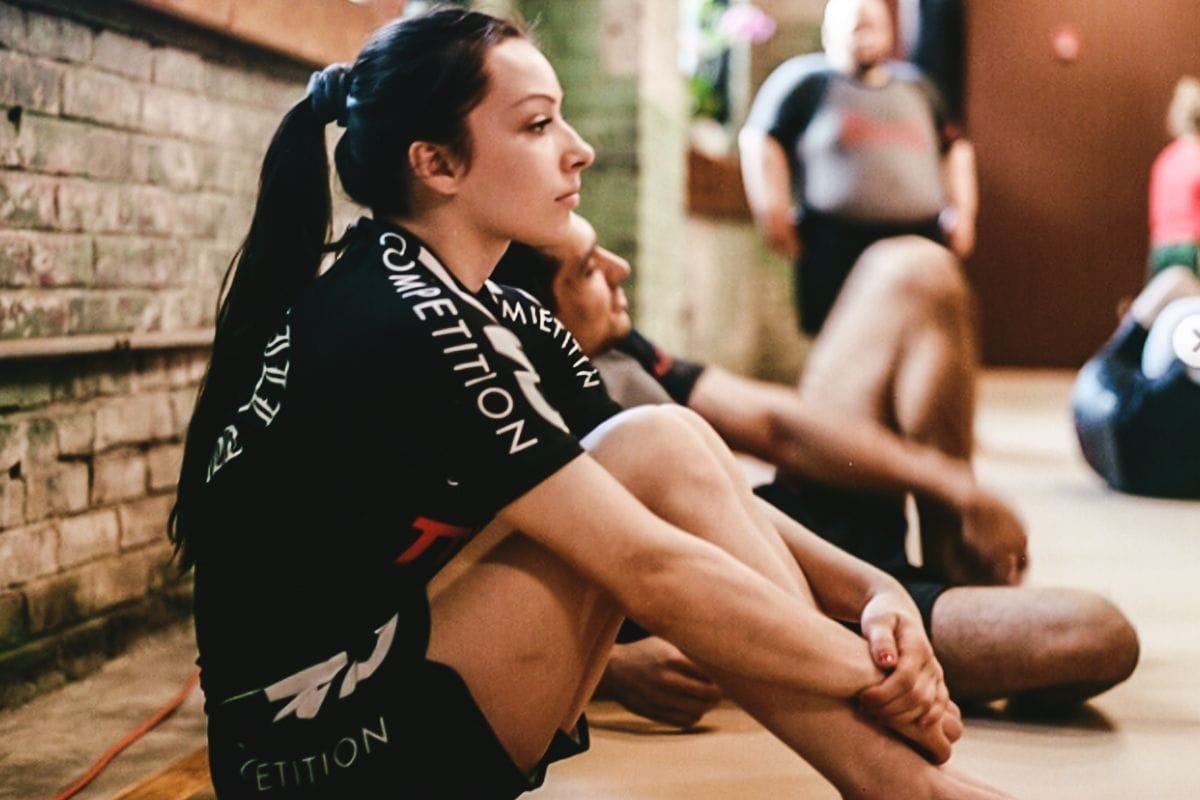
Women’s-specific rashguards account for a different torso-to-hip ratio, with adjusted chest paneling, longer torso lengths to prevent ride-up during guard work, and waistband positioning that accommodates hip extension and hip flexion. These aren’t cosmetic differences. When you’re drilling butterfly sweeps or working from x-guard, a rashguard that shifts position creates both friction and distraction. A rashguard that stays in place disappears into the background; one that doesn’t is always present in a way that compounds over a long training session.
Compression placement differs fundamentally between women’s and men’s base patterns too. A well-designed women’s rashguard applies graduated compression across the torso in a way that provides core support during extended rounds under top pressure — someone heavy in side control, for example — without the rashguard functioning like a corset that restricts the breathing cycle. Unisex cuts with uniform compression built around a men’s base often fail this test specifically because the compression isn’t placed where it’s useful for a women’s body under the loads grappling actually creates.
What Competition Color Rules Actually Require
For recreational training, competition rules are irrelevant. For anyone heading to an ADCC qualifier, a Who’s Number One event, Polaris, or any sanctioned no-gi competition, they matter considerably — and showing up in gear that doesn’t pass inspection is an avoidable problem.
ADCC rules for rashguards are relatively direct: formfitting compression rashguards are permitted, colors must coordinate with your assigned division side (dark or light, depending on your bracket draw), and graphics can’t be offensive or violate event-specific sponsorship exclusions. The specific color requirements vary by organizer within ADCC-affiliate competitions — some run strictly black versus white, others allow a broader range so long as the contrast between competitors is visually clear. The consistent enforcement point across all ADCC events is that the rashguard must be sufficiently formfitting that it doesn’t create a grip advantage through excess fabric.
IBJJF no-gi rules apply similar logic with stricter enforcement on fit. A rashguard loose enough that a competitor can gather a handful of fabric can technically be flagged — an edge case, but worth knowing if you’re competing specifically under IBJJF no-gi regulations. IBJJF also tends toward more rigid color enforcement than submission-only formats, where organizers frequently specify their own requirements. Local gym competitions are generally whatever the event organizer designates, but the baseline across nearly every format is compression fit and no performance advantage through excess material.
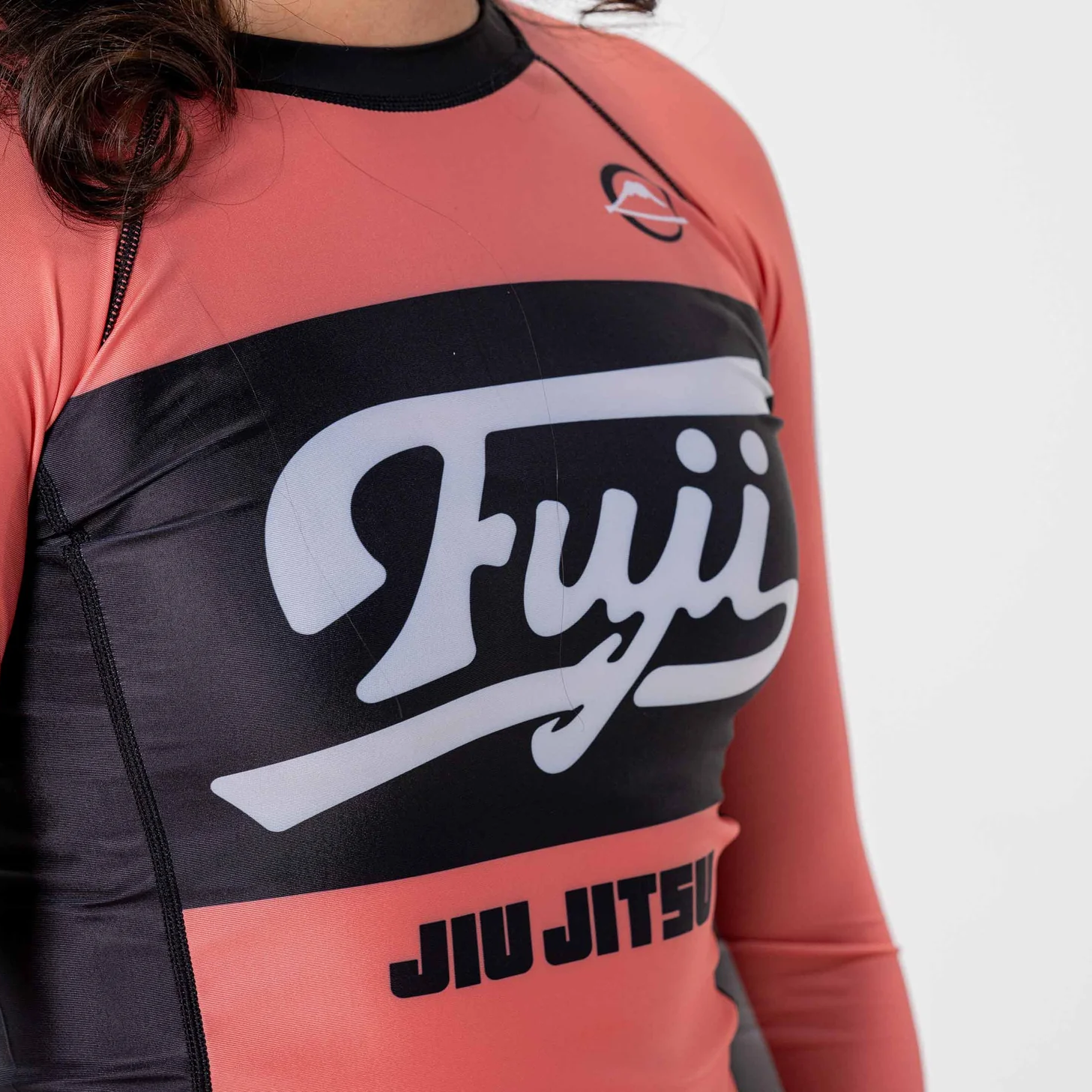
The practical implication: buy rashguards in solid black, solid white, and at least one dark color that reads unambiguously as dark. That covers the vast majority of competition scenarios without requiring you to maintain a full color inventory.
Reading Fabric Specs Without the Marketing Layer
Rashguard brands use fabric weight and fiber ratios to communicate performance, but the numbers are only useful if you understand what they indicate. Most brands include this data somewhere in their product specs — the challenge is knowing how to translate it into a training-context decision.
Fabric weight is measured in grams per square meter (GSM). Lighter rashguards in the 150–170 GSM range feel like a second skin, move without restriction, and stay cool through active drilling sessions. The trade-off is durability: lighter fabrics show wear faster, lose structural integrity sooner under heavy rolling loads, and degrade more quickly through frequent washing. Heavier options in the 200–220+ GSM range hold compression longer and resist mat abrasion better, but they add weight and retain heat in a way that becomes noticeable in long rounds or hot training rooms. High-volume grapplers often run both — lighter for drilling-heavy sessions, heavier for hard rolling and competition.
The fiber ratio matters more for longevity than most buyers initially realize. Rashguards with 15–20% spandex content move well and recover their shape through repeated laundering. Below 10% spandex and compression degradation becomes noticeable within months of regular training — the rashguard starts to feel like a regular fitted shirt rather than compression gear, which defeats the functional purpose. Nylon-spandex blends tend to be softer against the skin and hold color more consistently than polyester-spandex blends; the trade-off is cost. Premium women’s rashguards from brands like Hyperfly frequently use nylon-spandex construction specifically because the performance over two or three years of training justifies the higher initial price for high-frequency grapplers.
The Brand Landscape for Women’s No-Gi Rashguards in 2026
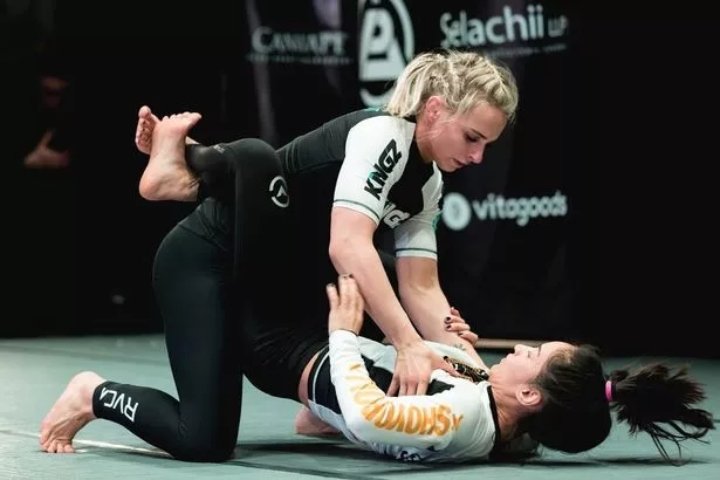
The number of brands producing genuinely women-specific rashguards — not just men’s base patterns in smaller sizes — has grown considerably since 2020, and a few have built their women’s lines with direct input from competitive athletes. The difference between those brands and the ones that haven’t made that investment shows clearly once the rashguard is on and you’re moving.
Hyperfly occupies the premium end of the market with a dedicated women’s line that addresses torso length and chest paneling in ways that translate directly to fit under grappling loads. Their construction typically uses nylon-spandex blends, and the compression holds through the kind of weekly frequency that competition grapplers push gear through. Expect to pay in the $70–90 range — that investment makes sense for anyone training four or more sessions per week where long-term durability matters. At lower frequency, it’s premium construction that won’t be fully utilized.
Tatami hits the middle ground effectively. Their women’s line uses women-specific construction, solid fabric specs, and pricing that lands in the $45–65 range across most options. Sizing runs consistent, which is particularly valuable when buying online without the ability to try before committing. For grapplers who want quality construction without the premium price tag, Tatami is the most reliable mid-tier option currently available and widely visible on competition mats at the regional level.
Scramble has built a women’s line with a stronger design identity than most — they pull from combat sports aesthetics rather than athletic wear, which makes a visible difference at events where most gear trends toward the generic. Their women’s offerings have improved substantially over the past two years and are increasingly present at submission-only events among competitors who want gear that reads as purpose-built for the mat.
At the entry level, Sanabul and Gold BJJ both offer women’s-specific options under $40 that outperform their price points for lower-frequency training. They’re not engineered to hold up under daily training volume, but for a grappler attending two sessions per week who needs something functional without significant upfront investment, they’re a legitimate starting point. The compression will degrade faster and the fabric won’t hold color as long, but at that training frequency the timeline is acceptable.
When the Investment Is Worth It — and When It Isn’t
The women’s rashguard market runs from under $30 to over $90 for a single top. Whether that price gap is justified depends almost entirely on training volume and the total wear the gear will absorb over its lifespan.
Low-frequency training doesn’t unlock premium construction. If you’re on the mat twice a week doing mostly technique work and drilling, a $25–35 entry-level rashguard will hold up adequately. The compression loss over time won’t matter because the rashguard isn’t being pushed hard enough to stress-test its engineering, and the cost savings are real. Spending $90 on gear that trains at 40% of its design capacity is genuine over-investment.
The math flips completely at high frequency. Four or more sessions per week — especially if those sessions include hard rolling — means a premium rashguard at $75–90 that holds compression for two years costs significantly less per session than a budget option at $30 that loses its shape in five or six months and needs replacing. Regular washing compounds this disparity: budget rashguards degrade faster under frequent laundering, which accelerates the replacement cycle and ultimately makes them more expensive in practice than the sticker price suggests. Competition grapplers typically maintain two or three rashguards in rotation specifically to extend the life of each piece and keep something competition-ready available at all times.
Washing and Care: The Variable Most Buyers Overlook
The fastest way to destroy a quality rashguard is heat. Machine drying on any heat setting degrades spandex fibers rapidly — compression doesn’t recover the same way after repeated exposure to high heat, and within a few months of tumble drying the rashguard starts to feel like a fitted shirt rather than compression gear. Hang-drying is the single largest controllable variable in how long a rashguard maintains its functional properties. It’s not incidental brand copy covering liability; it’s accurate.
Cold-water washing preserves both dyes and fiber integrity. A mesh laundry bag reduces mechanical stress on seams during the spin cycle — particularly relevant for flatlock-stitched seams that take repeated lateral stress during grappling and can start to separate if the fabric around them weakens. Fabric softeners coat fibers in a way that degrades moisture-wicking performance, which is one of the primary functional reasons to wear a rashguard rather than a standard fitted shirt, and should be avoided entirely.
After hard sessions, rinse the rashguard immediately if a full wash isn’t possible. Leaving a wet rashguard compressed in a gym bag for hours accelerates both odor development and fabric degradation in ways that are hard to reverse once set. A cold rinse right after training extends the gap between full washes without compromising hygiene or shortening the gear’s functional life.
Making the Final Call
The best rashguards for women in no-gi grappling are the ones that were designed for a women’s body, hold compression through the training load they’re going to carry, meet the color requirements of any events you plan to enter, and come from brands that construct women’s gear from women’s-specific base patterns rather than reduced men’s cuts. That framework narrows the field considerably.
Not every brand marketing women’s rashguards is building from a women’s base — some are running the same unisex construction in smaller sizes with different colorways and positioning it as women’s gear. The diagnostic is straightforward: if the rashguard pulls horizontally across the chest or bunches at the hips during movement, the pattern wasn’t built for the people wearing it. That’s information the price tag and brand marketing won’t tell you.
Women grapplers competing at the ADCC or Polaris level who look like their gear was made for them have usually worked through a period of trial — buying options that didn’t fit correctly, learning what failed and why, and gradually mapping which brands and specific cuts work for their body and training load. The framework in this guide is designed to compress that learning curve. Know the cut origin, understand the fabric numbers, match the investment tier to your training volume, and apply the care practices that extend gear life. The buying decision becomes straightforward once you know what you’re evaluating.
Sources
ADCC Submission Wrestling World Championship — Official ADCC ruleset and event regulations for no-gi competition.
International Brazilian Jiu-Jitsu Federation (IBJJF) — IBJJF no-gi competition rules and uniform requirements.
Women’s No-Gi BJJ Rashguards on Amazon — Current selection and pricing across all tiers for comparison shopping.