Leg Drag Pass BJJ: 5 No-Gi Details That Make It Unstoppable
The leg drag pass is one of the most reliable guard passes in no-gi BJJ — and for good reason. When executed correctly, it puts the guard passer in complete hip control while giving the bottom player almost no useful guard retention options. In no-gi, where slippery limbs and absent collar grips make many passes fall apart, the leg drag holds up because it relies on body position and leverage, not fabric. Here’s every detail that separates a clumsy leg drag attempt from a suffocating pass that scores in competition.
What Is the Leg Drag Pass?
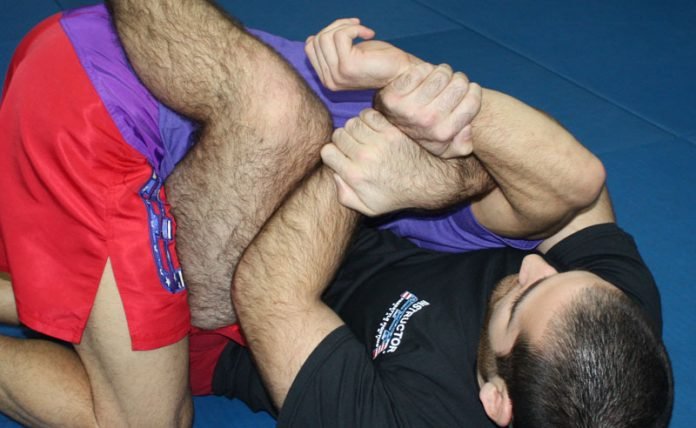
The leg drag is a guard-passing system built around hip control. Instead of going over or under both legs at once, the passer isolates one of the opponent’s legs, drags it across their own hip, and then pins the hip to the mat before clearing to side control. The result is a pass that neutralizes almost any guard — open guard, De La Riva, spider, even reverse De La Riva — because it attacks the hip rather than just the legs.[1]
Early versions of the technique appeared in competition as far back as the early 1990s, used by Fernando “Tererê” Augusto and Vitor “Shaolin” Ribeiro as an escape when toreando attempts broke down.[2] The modern leg drag, however, is the product of Gui and Rafa Mendes. The Mendes brothers systematized the pass, developed the footwork, and introduced it to the world at the highest level of IBJJF competition. Champions like Caio Terra, Mikey Musumeci, Lucas Lepri, and the Miyao brothers all incorporated leg drag systems directly attributed to this innovation.
Why the Leg Drag Works in No-Gi
In the gi, the leg drag benefits from pant grips — direct, locked-in control of the fabric above the knee and at the ankle. No-gi strips those grips away, which is why many practitioners write off the pass for grappling. That’s a mistake.
The no-gi adaptation swaps fabric grips for body-position grips. You control the ankle directly with a C-clamp grip — thumb pointing up, wrapping just above the ankle joint. The second control moves from the pant cuff to cupping just above the knee. These are friction-dependent grips, which is why footwork and hip positioning matter more in no-gi than in the gi: if your angle is off, the grips won’t hold. Get the angle right, and the leg drag is just as controlling without cloth as with it.[3]
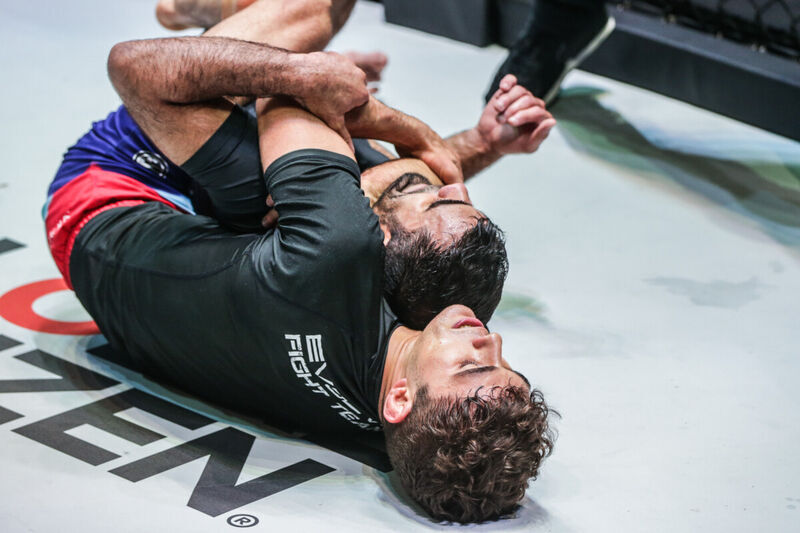
Another advantage of the leg drag in no-gi is its range. Unlike the knee slice or double-unders — which require you to commit deep into the guard — the leg drag can be initiated from the end of the opponent’s feet. You’re attacking the last line of the guard before your opponent has had a chance to set up anything. This makes it a natural opener in a passing sequence, not just a finisher.
The 5 No-Gi Details That Matter
1. The Stance Before the Grip
Most leg drag failures start before any grip is taken. The passer comes in flat-footed, weight back, and reaches for the ankle while off-balance. This telegraphs the pass and puts your head directly over the guard player’s hips — prime real estate for hip escapes and guard re-entries.
The correct stance is a low, squatted position with your weight forward and your hips low. Think of yourself as a wrestler shooting — you want your center of gravity below theirs before the pass begins. From this position, taking the ankle grip is a consequence of your body position, not a reach. Your shoulder should be at roughly the same height as their hip when you establish the grip.
2. Cross-Hip Redirection, Not Ankle Pull
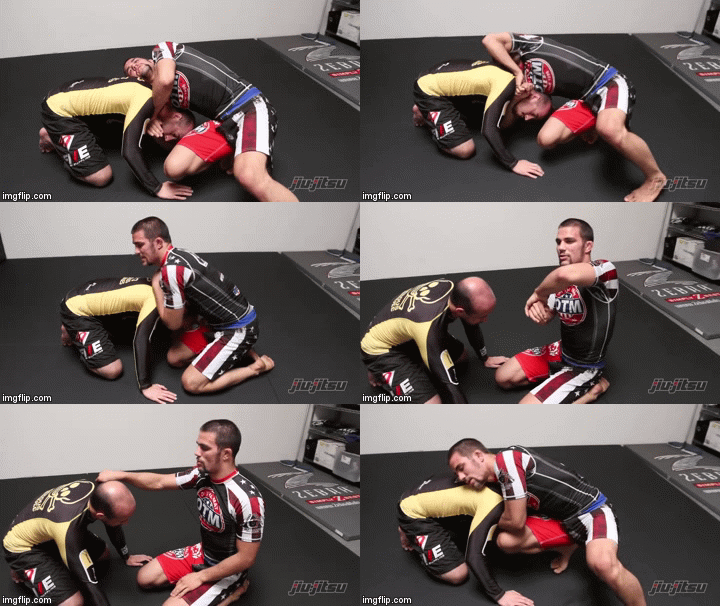
The leg drag is not a pull. Many beginners grab the ankle and tug it sideways, which allows the guard player to simply follow the drag with their hip and re-establish guard. The technique that works is cross-hip redirection: you’re not pulling the ankle toward you, you’re driving it across your centerline toward the opposite hip.[3]
The practical cue: aim the ankle at the hip pocket on the opposite side of your body. If you’re attacking the left leg, direct it toward your right hip. As you do this, your body is already stepping to the side, so the leg ends up draped across your thigh rather than in front of you. The distinction sounds minor — it isn’t. Draped across your hip means pinned. Pulled to the side means the guard player has space to recover.
3. The Knee Pin and Weight Drop
Once the leg is across your hip, the pass isn’t secured. The guard player’s only remaining option is an explosive hip escape to recover their guard. To shut this down, you need to drop your knee on the dragged leg before you commit your upper body forward.
In the gi, you typically go to your knee on the mat. In no-gi, you stay slightly higher — knee driving into the back of their thigh, not resting on the mat — because you need the mobility to chase if they hip escape. The weight of your knee pins the dragged leg long enough for you to establish your upper body controls.
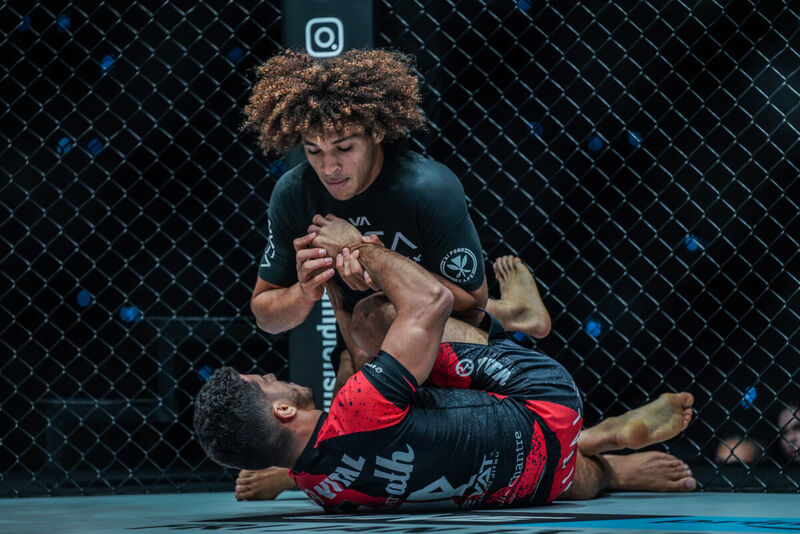
4. Head Placement and the Underhook
This is the detail most often glossed over in instructional breakdowns: where your head goes determines whether you pass or get stuck. The head goes in the center of the chest, not to the outside, and not near the hips. Center of chest.
Why? Because it prevents the triangle. If your head is to the outside, a flexible guard player can throw their free leg over and lock a triangle choke. Head in the center of the chest makes that impossible — their legs can’t close around a shoulder with a head already pressing into the sternum.
The underhook with the inside arm (the arm closest to their body, not the dragging arm) completes the upper body control. You’re not reaching for their neck or their shoulder — you’re driving the underhook deep to their back so you can follow them if they roll. JT Torres, considered one of the greatest leg drag practitioners in the history of the sport, emphasizes this underhook specifically as the piece that converts the leg drag from a pass attempt to a back take option.[4]
5. The Crossface to Finish
The final detail: the crossface. Your free hand — the one not doing the underhook — drives across their face, not their neck. This last point of control kills their frame and prevents the hip escape that would let them recover guard even from the half-trapped position. Drive the forearm across the face, keep your hips heavy, and walk to side control.
In no-gi specifically, this matters more than in the gi because you don’t have a collar to hold the head in place. The crossface is your collar substitute. Without it, any explosive guard player can bridge and shift to regenerate guard or even take your back. With it, you’re essentially shutting down the head and shoulders simultaneously while the legs are already pinned.
The Headquarters Position: Your No-Gi Setup
Elite no-gi guard passers don’t just attempt the leg drag in isolation — they enter it from a structured setup called headquarters position. Headquarters is a standing pass configuration where your inside knee is on the mat between the guard player’s legs, your outside foot is posted wide, and you’re controlling the near-side shin with both hands.[5]
From headquarters, the leg drag, knee slice, and body lock pass all become available off the same read. When the guard player pushes with their bottom shin to create space, you transition to knee slice. When they pull the shin away, you transition to the leg drag. The choice of pass becomes reactive rather than pre-committed, which is why headquarters is now the entry point of choice for most elite no-gi competitors.
Check out our guide to modern no-gi guard retention to understand what the guard player is trying to do against these setups — it will sharpen your passing instincts significantly.
Common Mistakes and How to Fix Them
Standing too tall: A high base makes the leg drag easy to counter with De La Riva hooks or foot-on-hip frames. Solution: drop your hips during the approach and stay there through the pass.
Releasing the ankle before the knee pin: If you let go of the ankle before your knee is in place, the guard player regains leg mobility. Maintain the ankle grip until you feel your knee contact their thigh.
Rushing the pass: The leg drag builds in stages. Rushing from grip to side control without establishing the knee pin, the head position, and the underhook one at a time produces sloppy passes that get reversed. Take each step deliberately, especially in drilling.
Ignoring the back take option: When the guard player rolls to escape the leg drag, they’re handing you their back. Many grapplers panic and try to hold position. Instead, follow the roll, maintain the underhook, and get the harness. Some of the most efficient back takes in submission grappling come directly off failed leg drag escapes.
The Leg Drag in Competition: What the Data Shows
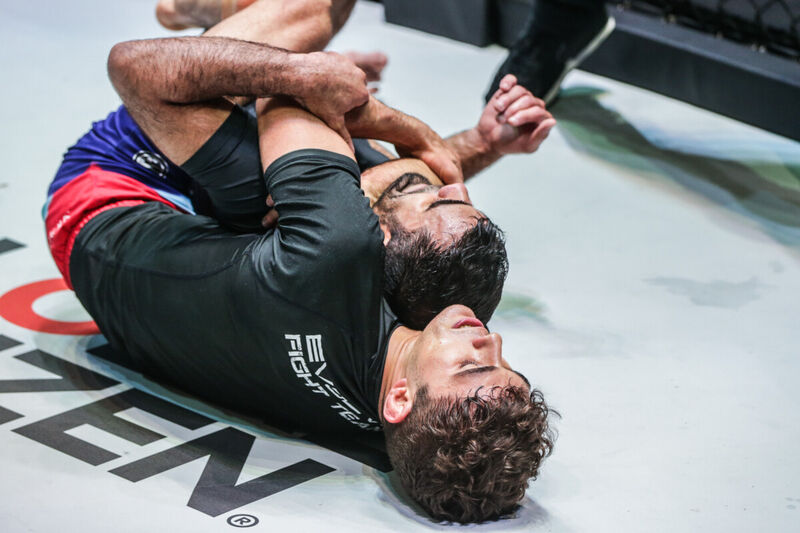
At ADCC 2024 in Las Vegas, guard passing efficiency was a defining factor in the -77kg and -99kg divisions.[6] Kaynan Duarte’s dominance in the -99kg division — winning with 7 submissions in 8 matches — was built on a passing game that consistently destabilized opponents’ guards before submission attacks were available. The leg drag system forms a core part of the Atos passing curriculum that both Duarte and his training partners use to open up submission entries.
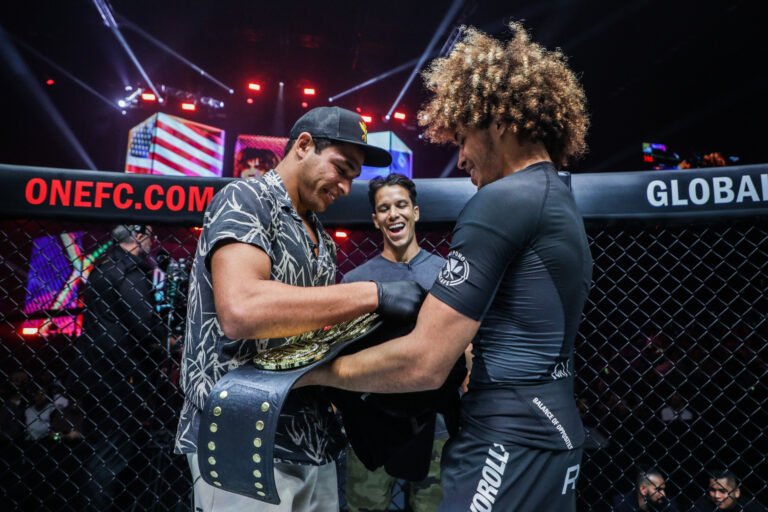
At the professional level, the pass is particularly visible at WNO and ONE Championship events, where Mikey Musumeci has used leg drag entries to navigate his way to high-percentage back takes in virtually every weight class he’s competed at. His implementation demonstrates exactly how the head-in-chest and deep underhook details discussed above translate into competition.
Combine this with your no-gi guard pulling game to understand both sides of the passing equation — what guard pullers are looking for and how the leg drag shuts those plans down.
Leg Drag vs. Knee Slice: When to Use Each
The leg drag and the knee slice are natural partners — both can be entered from headquarters, and threatening one often opens the other. The key distinction is the guard player’s response to your knee:
- Guard player pushes their shin into you: Knee slice — step to angle, drive the knee through
- Guard player withdraws their shin: Leg drag — take the ankle as it retreats, redirect over your hip
- Guard player establishes De La Riva: Leg drag — thread the grip inside the hook and redirect
For a deeper understanding of guard passing fundamentals, the Grapplearts breakdown by Rory Van Vliet covers the positional mechanics in excellent detail. And the ADCC 2024 results at Grappling Insider show how these technical distinctions play out at the sport’s highest level.
How to Drill the Leg Drag for No-Gi
Three drilling formats that build real leg drag proficiency:
Solo shadow repetitions: Practice the footwork and stance transitions with no partner. Focus on hip level through the approach, the cross-body redirection motion, and the knee-drop-to-underhook sequence. 50 quality reps before rolling.
Cooperative drilling with guard player resistance: Guard player holds De La Riva or sits to open guard. Passer enters headquarters, attacks leg drag. Guard player’s only allowed movement: hip escape. Passer must follow and finish. This builds the reactive, chasing component of the pass that competition demands.
Guard retention positional sparring: Set 3-minute rounds where the passer starts standing, guard player starts seated. Passes count as wins; sweeps count as wins. This develops reading of when the leg drag window is open versus closed, which is the most competition-relevant skill of all.
Pair this with guard retention work — see our no-gi guard retention drills — to understand what’s happening on the other side of the pass attempt and why certain footwork positions open the leg drag window.
Video: The No-Gi Leg Drag in Action
This breakdown covers the key grip and angle modifications for no-gi and demonstrates why the cross-hip redirection is the technical heart of the pass:
Building a Leg Drag System
The leg drag becomes exponentially more effective when it’s part of a system rather than a single technique. Once opponents know you’re hunting the leg drag, they start pulling their legs away proactively — which opens the ankle pick, the wrestling takedowns from standing, and back step passing entries. The threat of one creates the opening for another.
At black belt level in no-gi, the leg drag is rarely used as a surprise — it’s used as a forcing mechanism. You drive toward it knowing the opponent will react, and you’re already positioned to attack their reaction. That’s the difference between a technique and a system, and it’s what separates the grapplers who use the leg drag occasionally from those who use it to dominate entire matches.
Sources
- Evolve MMA — How to Perform the Leg Drag Guard Pass
- Evolve MMA — History of the Leg Drag
- Grapplearts — How to Do the Leg Drag Guard Pass
- BJJ Fanatics — The Pressure of the Leg Drag Pass
- BJJ Fanatics — BJJ Leg Drag
- Grappling Insider — ADCC 2024 Results
Browse our top-rated rashguards and no-gi gear at the RashguardGuy shop →