Gogoplata: 5 No-Gi Setups Most Grapplers Never Try
Every grappler has run into the armbar, the rear naked choke, and the triangle. A fraction have been caught by a gogoplata — and an even smaller fraction know how to set one up. That rarity is exactly the point. Jeff Glover, the 4x ADCC medalist who’s made a career out of unorthodox attacking from the bottom, has called the gogoplata one of the most underused weapons in no-gi grappling. Once you understand the mechanics and why it’s actually less complicated than it looks, the question shifts from “can I hit this?” to “why am I not drilling this more?”
What Makes the Gogoplata Work
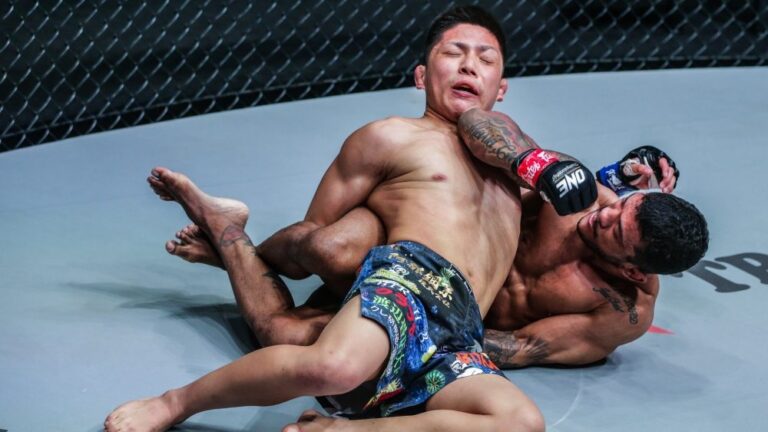
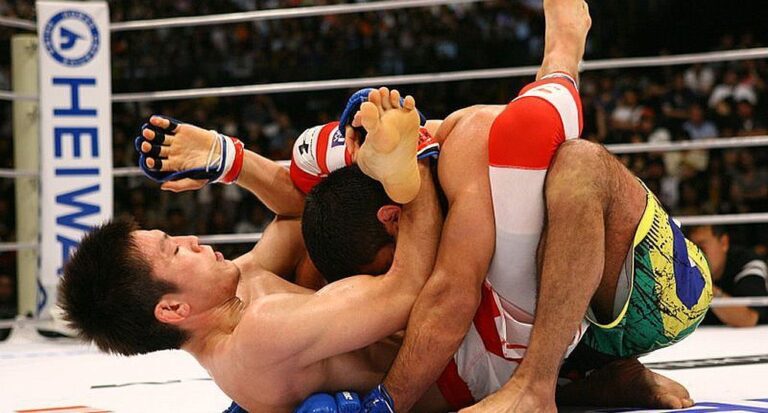
The gogoplata is a choke, not a crank — a distinction worth making upfront. You’re applying pressure to the trachea and carotid arteries using the shin bone (specifically the tibia). The opponent’s head is pulled forward with both hands while the leg drives the shin upward into the throat. Done correctly, the opponent has no answer that doesn’t involve tapping, rolling (which gives you the back), or posturing out (which gives you room for other attacks).
What sets it apart from other guard chokes is the lever system. Unlike a triangle, where the finishing pressure comes from your hips, the gogoplata uses the shin as a rigid wedge. You’re not squeezing — you’re wedging and pulling simultaneously. That’s why arm position matters more than most grapplers realize when they first start drilling it. Both hands must control the head. If one hand slips to the shoulder or arm, the choke deflates immediately.
The flexibility requirement is real but overstated in most writeups. You don’t need elite gymnast mobility. You need enough hip flexor and inner-thigh range to place your shin across the throat of someone who is actively trying to posture away from you. Two to three months of consistent hip-opening work — specifically pigeon pose, lizard pose, and butterfly stretching — gets most grapplers to the threshold.
The Rubber Guard Entry
Eddie Bravo’s 10th Planet system didn’t invent the gogoplata, but it gave the technique its most reliable entry path. The rubber guard sequence runs: Clinch → Mission Control → New York → Gogoplata. Each step removes one of your opponent’s defenses.
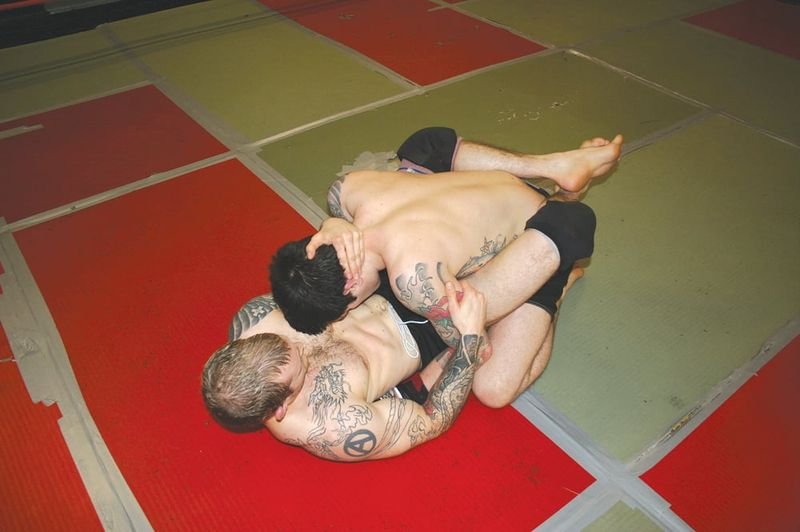
Mission Control is the high-guard position where you’re holding your own ankle with one hand, keeping your shin across your opponent’s shoulder and preventing them from posturing. From there, New York adds your second hand to the back of the opponent’s neck — both hands are now on their head, which is exactly the grip you need for the finish. At that point, you’re already two-thirds of the way to the gogoplata. Slide the shin under the chin, drive up with the leg, and pull the head down onto the shin. The opponent goes out fast if they don’t tap.
The critical detail Eddie Bravo emphasizes: the shin must be under the chin, not on the jaw or cheek. Jaw pressure is a crank, not a choke, and high-level opponents can gut through it. Throat pressure is the actual choke mechanism — it cuts off both blood and air.
5 Setups to Hit the Gogoplata in No-Gi
The rubber guard entry is the most reliable, but it’s far from the only way in. Here are five distinct setups, each coming from a different guard position.
1. From Full Rubber Guard (Classic Entry)
This is the textbook path. From closed guard, break your opponent’s posture by pulling them close with your legs. Establish Mission Control — one hand holds your ankle, leg pinned high across their shoulder. Transition to New York by releasing your ankle and grabbing the back of their neck with both hands. Drive the shin under the chin and finish.
The most common failure point is letting the opponent posture back up between Mission Control and New York. The transition must be smooth and quick. If they get a hand on your hip and push, restart from clinch rather than chasing the New York grip from a broken position.
2. From Mission Control (Direct Attack)
You don’t always need to pass through New York. If your opponent drops their chin toward their chest (a common defensive reaction to Mission Control), you can thread the shin directly under their chin from there. Skip New York, grab the head with both hands immediately, and finish. This works when the opponent is actively hunching their shoulders to escape the leg pressure — they’ve already given you the chin access.
3. The Upside-Down / Inverted Entry
From full guard, pull the opponent’s arm across and invert yourself under them — a movement similar to the entry for an Imanari roll. From the inverted position with the opponent stacked over you, shoot the shin up into the throat from below. Their weight actually helps set the choke: as they try to stack and pressure you, they’re driving their own throat into your shin. Jeff Glover has demonstrated this in live rolling and it’s become one of the signature variations associated with his game.
4. From Butterfly Guard
This setup surprises people because butterfly guard doesn’t look like a gogoplata entry. Break posture with a snap-down, then immediately go high guard by throwing one leg up over the opponent’s shoulder. If they turtle to prevent the sweep you were threatening, you’re now in a position where their head is close and dropped. From there it’s a short path to the gogoplata grip. The sweep threat is the setup — not the goal.
5. Off the Armbar Threat
Set up a traditional armbar from full guard — break posture, secure the arm, shift your hips. When the opponent defends by stacking and raising their posture (the most common armbar defense), their throat opens up briefly as they extend. That’s the window. Release the arm, use the momentum of their posture-up to get your shin across, grab the head, and finish the gogoplata. The transition is fast and counterintuitive enough that opponents rarely see it until they’re already in trouble.
Jeff Glover’s Approach to the Gogoplata
Glover doesn’t treat the gogoplata as a trick submission or a highlight-reel move. He treats it as a legitimate finishing tool that feeds off everything else in his bottom game — his donkey guard, his unusual guard jumps, his willingness to invert and go upside down. The reason his gogoplata lands in rolling is that opponents are already off-balance and confused by the rest of what he’s doing. By the time they recognize the shin under their chin, the hands are already on the back of their head.
His broader lesson for anyone developing the gogoplata: don’t drill it in isolation. Drill it as the third attack in a sequence. Set up the armbar → transition to the mounted triangle → catch the gogoplata when they defend the triangle by dropping their chin. Train opponents to defend your other attacks, then catch them with this one as the exit.
Why the Gogoplata Stays Rare — and Why That’s an Advantage
High-level grapplers don’t walk into guillotines or rear naked chokes anymore. They drill the defenses obsessively. The gogoplata doesn’t get the same treatment because most coaches don’t prioritize it as a threat worth drilling against. The defense (posture up, create space, keep the chin tucked) isn’t complicated — but training partners who apply it realistically in sparring are rare.
That creates an asymmetry worth exploiting. If you’re willing to spend 20 minutes a week drilling rubber guard entries and gogoplata setups, you’re almost certainly putting in more work on this attack than anyone in your gym is putting into defending it. The first time you land it in live rolling, watch how quickly training partners start asking questions about what just happened.
The technique also pairs well with unorthodox guard work that most people avoid — rubber guard, the inverted positions, the upside-down entries. If your entire bottom game runs through these positions anyway, the gogoplata becomes a natural conclusion rather than a detour. It’s not a technique you bolt onto a conventional guard game. It’s a technique that makes most sense inside a specific attacking philosophy.
Drilling Priorities Before You Roll Live
Three things to develop before you try to land this in a real roll:
Hip flexibility entry. Drill Mission Control 50 times each session until getting there feels automatic. You need to build the body’s memory of bringing the leg high across the shoulder without thinking about it. If you’re manually placing your leg each time, you’re too slow against a live opponent.
Head control grip. Practice breaking the opponent’s posture and getting both hands behind the head with no gap between your grip and their neck. An opponent can wait out a gogoplata if your grip isn’t fully locking the head down. Secure the grip like you mean it.
Chin placement drill. Have a partner practice tucking their chin as you try to get the shin under it — the most common defense. Learn to find the chin when it’s being actively protected. This is what separates people who occasionally catch the gogoplata from people who can finish it consistently.
The technique isn’t going to replace the bread-and-butter submissions in your game. But as a third or fourth attack in a sequence — specifically inside a rubber guard or inverted guard framework — it’s more dangerous than most grapplers give it credit for. The rarity is the advantage. Use it.
Sources
- How To Perform The Gogoplata With Jeff Glover — BJJ Fanatics — Jeff Glover’s breakdown of the gogoplata mechanics and entries from his instructional series.
- Gogoplata in BJJ: How It Works, Setups & Stats — Digitsu — Technique database entry with competition usage data and entry breakdown.
- BJJ 101: The Gogoplata — Evolve Daily — Overview of the gogoplata including Eddie Bravo’s rubber guard system and choke mechanics.
- BJJ 101: The Gogoplata — BJJEE — Historical context and notable practitioners of the gogoplata.
Image credit: taipeibjj.com