
No-Gi Training With Damaged Ears: What Ear Guards Do After Cauliflower Ear Has Already Formed
Most ear guard content is written for the grappler who hasn’t yet developed cauliflower ear and wants to keep it that way. But a large share of no-gi practitioners don’t reach that conversation until they’ve already noticed something is wrong: an ear that stays swollen after training, one that’s gone from soft and puffy to firm and irregular over a few weeks, or an asymmetry that wasn’t there six months ago. If that describes where you are, the question has shifted. It’s no longer whether ear guards prevent cauliflower ear. It’s what they actually do once damage has started — and how you train effectively around an ear that has already changed.
The Stage Most Ear Guard Articles Skip
Protective gear discussions tend to split into two lanes: the biology of how cauliflower ear forms, and the case for prevention through consistent gear use. The middle stage — where a grappler already has partial damage and is trying to figure out what to do with it — gets less coverage. Yet that’s where a significant share of no-gi practitioners actually are when they first start researching ear guards.
The typical entry point is a swelling event that doesn’t resolve the way a normal bump would. The ear is tender, noticeably puffy, and soft — the early-stage auricular hematoma. At this point, the perichondrium, the connective tissue layer that supplies blood and nutrients to the ear cartilage, has already been disrupted. Fluid or blood has begun pooling in the space between the cartilage and its overlying tissue. Whether this becomes permanent depends heavily on what happens next: how the fluid is managed, and whether the ear continues to absorb the same mechanical forces that caused the disruption in the first place.
What Continues Without Protection
If training continues without ear protection after initial damage, the injury process doesn’t pause between sessions. Each subsequent head-to-body contact, friction across the ear’s surface, or compression against an opponent restimulates the disrupted area. The body responds by sending more repair material — fibrin, platelet factors, and the cellular precursors to cartilage formation — into the space that’s already been disturbed. Over multiple cycles of injury and attempted repair, that material organizes and calcifies. The soft, intermittently swollen ear becomes consistently firm, then irregular in surface texture, then permanently deformed.
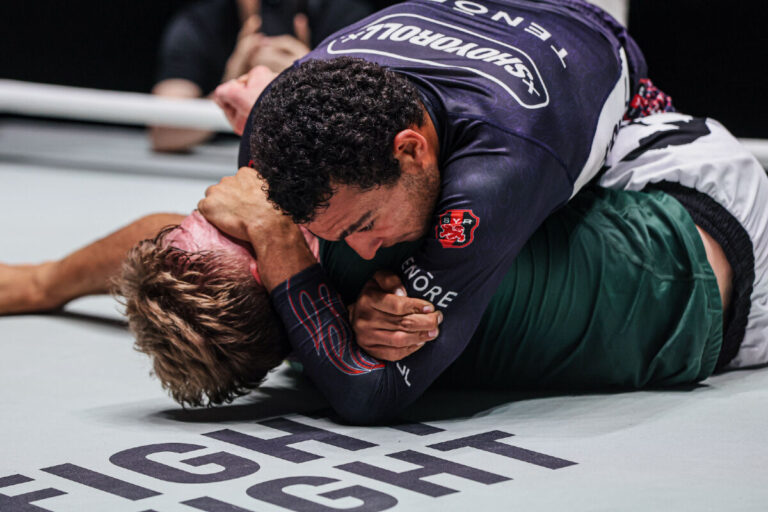
This progression isn’t uniform. Cauliflower ear develops in patches that reflect specific friction zones in your game. The outer ridge of the ear takes friction from head-and-arm ties and collar-tie exchanges. The antihelix and upper ear bowl take compression in scrambles and bodylock clinches. Grapplers who spend most of their time on top tend to develop different damage patterns than those who work from the bottom — the friction angles and pressure points differ based on position. No-gi training, with its reliance on head-to-body contact in the clinch rather than lapel and collar control, compresses the damage timeline significantly. There’s no fabric between the ear and the opponent, which means the ear absorbs more load per session.
How Ear Guards Function on Already-Damaged Tissue
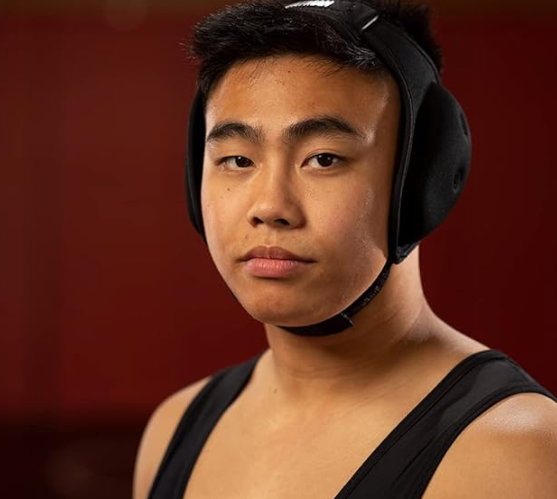
Ear guards work differently depending on the stage of damage. For healthy ears, they’re a pure prevention tool: they eliminate the mechanical forces that cause initial perichondral disruption. For ears with early-stage damage — soft, fluid-filled, not yet calcified — they shift to a management role. By keeping the ear from being compressed, sheared, or friction-loaded during training, they give the disrupted tissue the conditions it needs to heal without being re-injured each session. Grapplers who start wearing ear guards at the first signs of swelling and wear them consistently often find that puffiness reduces progressively between training sessions, and the ear stabilizes before calcification sets in. The outcome isn’t guaranteed — individual healing response, training volume, and the severity of the initial disruption all play roles — but consistent early use represents the most realistic path to containing the damage at a manageable level.
For ears where calcification has already occurred, the role shifts again. Ear guards can’t reverse cartilage that has already hardened. What they do is limit the progression. A calcified ear has an irregular, raised surface profile that distributes pressure differently than a healthy one. Pressure concentrates on the highest deposits, and the softer tissue areas adjacent to those deposits remain vulnerable to new injury cycles. Without protection, training continues to affect those adjacent zones, expanding the calcification over time. With consistent ear guard use, grapplers with already-calcified ears tend to stabilize at whatever deformity level they’ve reached, rather than continuing to compound it.
Fit on an Irregular Surface
One complication that gets little coverage is how ear guard fit changes when the ear’s geometry has already shifted. Standard ear guard cups are designed around the contours of a healthy ear — the natural bowl of the concha, the helix ridge, the relatively flat antihelix surface. When an ear has calcified deposits that raise specific areas, the same guard that fits correctly on a healthy ear may bridge those raised areas and create pressure points rather than distributing load evenly. The cup seats primarily on the highest calcified points, which happen to be the most structurally vulnerable zones on a damaged ear. That’s the opposite of what you need.
Grapplers managing existing damage typically need more experimentation with guard types than those preventing initial damage. Flexible cup designs with softer interior lining tend to adapt better to irregular surfaces than rigid plastic cups with minimal padding. The goal is full contact across the cup’s interior surface, spreading load broadly rather than concentrating it. Strap tension requires its own recalibration — on a damaged ear with a mix of hard deposits and still-soft adjacent tissue, the tension that holds the guard stable on the deposits may over-compress neighboring soft areas. Getting this right usually takes a few training sessions of deliberate adjustment rather than a one-time fit.
Drainage, Recovery, and Returning to Training
A significant portion of no-gi grapplers with active cauliflower ear go through at least one drainage procedure. The standard approach — aspiration of accumulated fluid followed by compression to prevent re-accumulation — is well established in wrestling medicine and increasingly common across submission grappling. Whether done medically or otherwise, drainage resets the fluid situation without addressing the underlying tissue vulnerability. The perichondrium that was disrupted enough to allow fluid accumulation remains disrupted after the fluid is removed. The ear is now drained, not healed.
The return-to-training phase after drainage is where ear guards take on their most active protective role. Freshly drained tissue is highly susceptible to re-accumulation — the fluid pocket that just emptied is the path of least resistance for any new bleeding or plasma the body sends to the area. Physicians who work regularly with wrestlers and grapplers typically recommend a rest period for the ear itself after drainage before any contact training resumes, commonly 48 to 72 hours. When training does resume, compression of the healing area and ear guard use together represent the most conservative approach to preventing immediate re-accumulation. The guard addresses mechanical re-injury; the compression addresses fluid dynamics. Both functions are needed, and they’re distinct.
Grapplers who drain and then return to unprotected training often find themselves in a cycle: drain, accumulate fluid again within a few sessions, drain again. Each cycle tends to make the tissue less responsive to management. Scar tissue builds around the disrupted perichondrium, the fluid composition changes, and the ear becomes progressively harder to manage through aspiration alone. Consistent ear guard use between drainage events — and at every training session afterward — is what breaks that cycle. The guard doesn’t accelerate healing, but it eliminates the repeated mechanical trigger that drives re-accumulation. Without it, the drainage becomes a recurring procedure rather than a solution.
Training Adjustments That Reduce Re-Injury Risk
Ear guards are the primary intervention, but experienced grapplers with existing damage typically make additional adjustments that reduce exposure without requiring full positional avoidance. Head position in the clinch is the highest-yield change. Positions that press the outer ear against an opponent’s chest, shoulder, or hip — head-and-arm ties, double-underhook bodylock clinches, top-pressure passing sequences — generate sustained friction across the lateral ear surface. Being deliberate about head angle during drilling, even at low intensity, reduces cumulative mechanical exposure across a training week in a way that compounds meaningfully over months.
The threshold for wearing ear guards also shifts when damage already exists. A practitioner with healthy ears might reasonably train without them in drilling or positional work at low intensity, reserving them for live rolling. For someone with active or recently stabilized damage, that threshold moves lower. A technical session that escalates unexpectedly into a hard scramble delivers the same forces that cause re-injury as full sparring. The damaged ear doesn’t distinguish between planned and unplanned intensity. Wearing guards for all mat contact, not just for sparring rounds, reflects that reality — and it’s a posture most no-gi grapplers with serious ear damage arrive at eventually, whether by choice or after one re-injury too many.
What Long-Term No-Gi Training With Cauliflower Ear Actually Looks Like
Grapplers who compete and train for years with cauliflower ear tend to describe their ear’s condition in terms of stability. Active damage is an ear that’s still swelling, still fluid-filled, still changing shape session to session. Stabilized damage is an ear that has fully calcified and no longer progresses, provided it’s protected from new mechanical insult. The goal for most long-term no-gi practitioners is to move damaged ears into that second category as early as possible, and then maintain stability through consistent gear use. That goal is achievable even when someone starts protection after the first signs of damage appear — not just for grapplers who caught it before it began.
Ears that reach severe deformity after years of training typically share a pattern: repeated injury without protection, multiple damage cycles without adequate recovery time between them, or drainage without subsequent gear use to prevent re-accumulation. Ears that stabilize at moderate levels of cauliflower ear — visible and permanent, but not structurally severe — are usually the ones where consistent protection began, even belatedly, and was maintained. The difference in long-term outcomes between those two groups is substantial, and it’s almost entirely attributable to what happens in training after the first damage event, not before it.
For no-gi practitioners currently dealing with early-stage damage, this is the most practically useful takeaway: starting ear guard use at the first signs of swelling is still early enough to influence the outcome. The damage that’s already occurred isn’t going to be reversed by a piece of headgear. But the damage that hasn’t happened yet — the continued calcification, the expansion into adjacent tissue, the next drainage cycle — is still preventable. That’s what ear guards do at this stage. Not undo what’s happened, but shape what comes next.
Sources
Image credit: everydayhealth.com