Mounted Triangle No-Gi: 5 Keys to Choking from Top
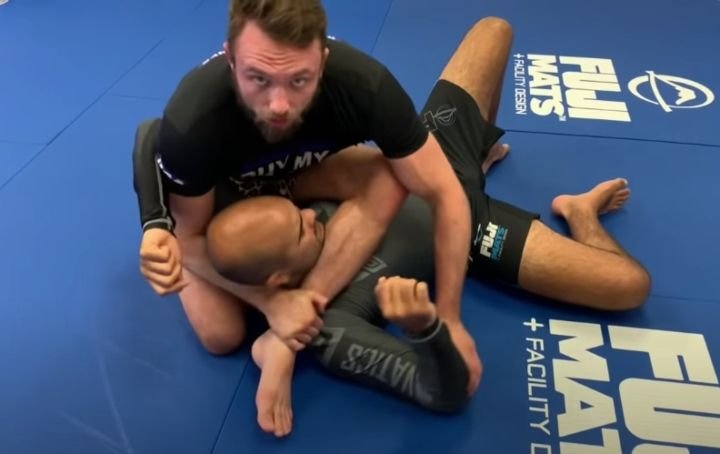
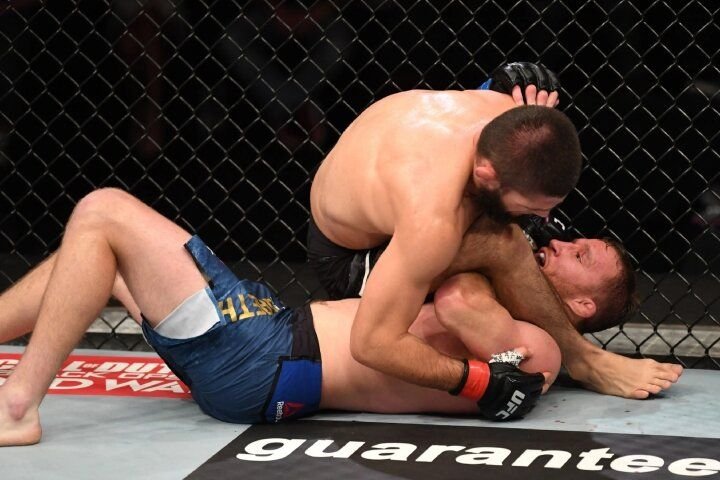
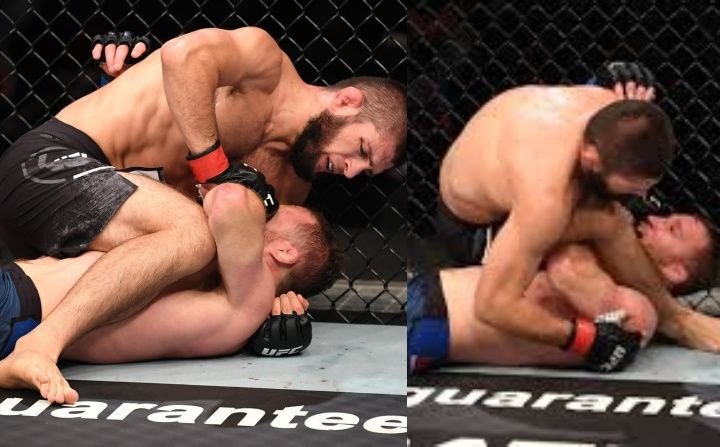
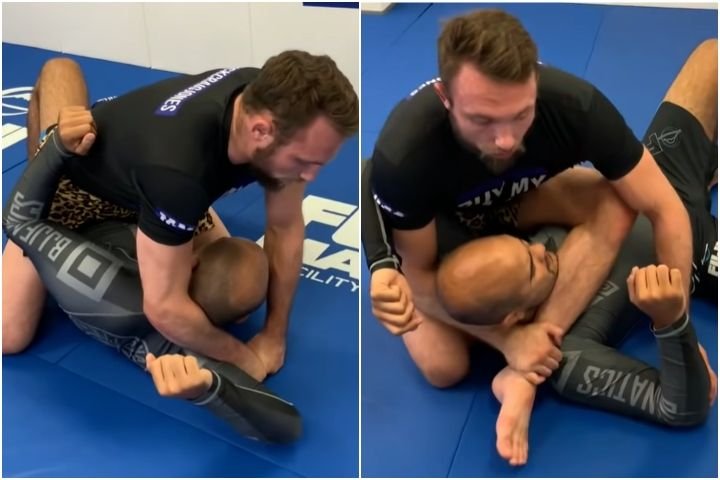
The mounted triangle shows up in MMA, submission grappling, and high-level no-gi competition far more than most recreational grapplers ever notice. Khabib Nurmagomedov set one up against Justin Gaethie at UFC 254 before finishing with ground and pound. Nicholas Meregali submitted Pedro Marinho with it at WNO 18. Craig Jones has finished it in professional grappling and built instructional content specifically around its setup from mount. This is not an exotic technique — it’s a high-percentage finish that most people simply never develop because they assume guard is the only place to run a triangle.
That assumption is a gap. When you can threaten the mounted triangle from top position, your mount becomes harder to escape. Your opponent has to worry about the choke, the armbar, and the arm triangle simultaneously. The mounted triangle doesn’t just produce submissions — it makes your entire top game more dangerous.
What Makes the Mounted Triangle Different from Guard
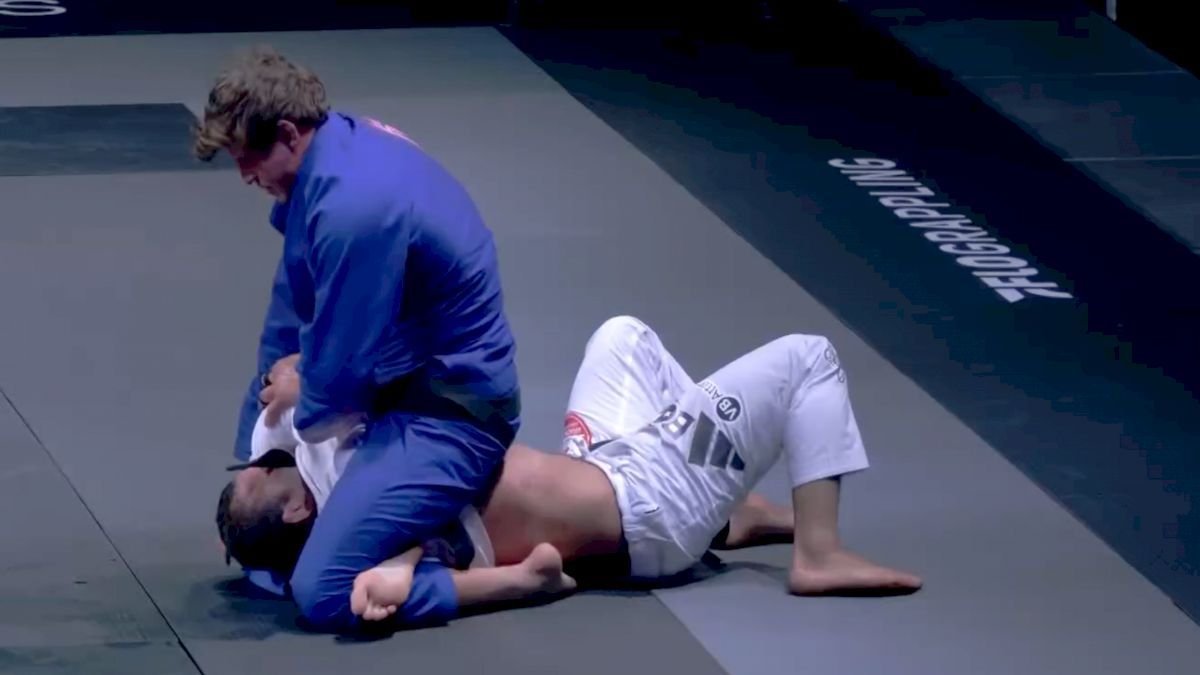
The mechanics of the mounted triangle and the guard triangle are related but not identical. Both use the same figure-four leg lock. Both target the carotid arteries. But the way you apply pressure is fundamentally different because of body position.
In guard, you pull your opponent in toward you while pulling your hips up and angling sideways. Gravity works against you — they can stack you, posture up, or drive through to relieve pressure. In mount, gravity is on your side. Your weight presses down into the position. They cannot stack you because you’re already on top. They cannot posture because you’re controlling them from above. The mounted triangle locks tighter as they try to escape, which is the opposite of most guard-based chokes.
The other key difference: arm isolation. A guard triangle requires precise leg threading to trap the arm. From mount, you can steer the arm across with an overhook or gift wrap before ever touching your legs. The arm is easier to trap from top position, which means the entry is more reliable against active opponents.
The 5 Keys to a Successful No-Gi Mounted Triangle
The mounted triangle fails in predictable ways. These five principles cover the most common points of failure and the adjustments that turn a sloppy position into a reliable finish.
1. Trap the Arm Before Setting the Triangle
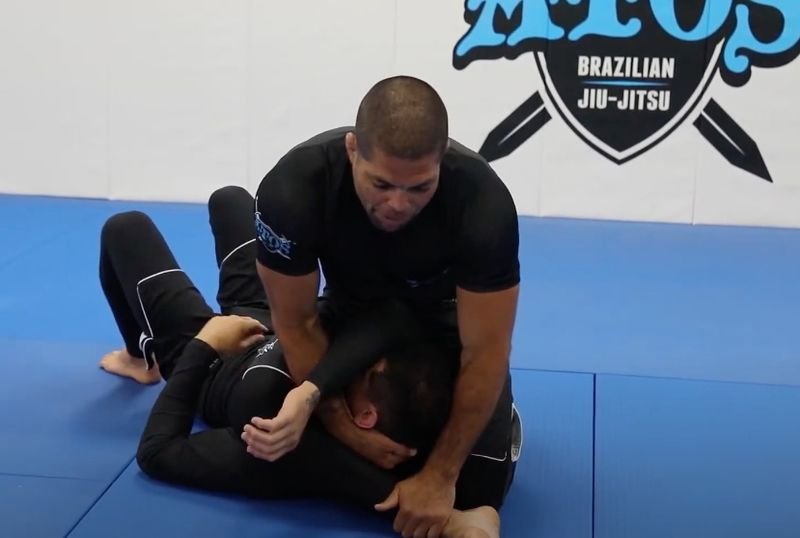
The sequence matters more than most people think. Trying to thread your leg into the triangle before the arm is secured almost never works — your opponent simply pulls the arm free while you’re shifting your weight. The correct order: get the arm across their centerline first. You can use an overhook to steer it, a gift wrap if they’re bridging hard, or just wait for them to push a straight arm into your chest. Once the arm is pinned between your bodies, then thread your shin across the back of their neck. Reversing this order is the number one entry mistake.
2. Rotate Your Hips Toward the Trapped Arm
This is the single most important technical detail in the mounted triangle. Once your legs are locked, you must angle your hips toward the side of the trapped arm — roughly 45 degrees — and drive your hip down toward the mat on that side. This positions your shin to cut into the carotid artery on the side of their neck rather than sitting flat across the front. Carotid pressure is a fast tap. Windpipe pressure is uncomfortable but slow and unreliable.
Think of it as turning sideways on top of them rather than staying square. Your body faces slightly away from the trapped arm while your hip drives toward it. Most people who fail to finish the mounted triangle are sitting perfectly square to their opponent, which gives them windpipe pressure and nothing else. Rotate the hips and the choke tightens immediately.
3. Control the Head to Stop the Bridge-and-Roll
The most common defense to the mounted triangle — especially from grapplers who’ve seen it before — is a bridge toward the trapped arm side, trying to roll you into guard and relieve the choke pressure. You kill this before it starts by controlling the head. Drive your forearm or the blade of your wrist into the back of their skull, pushing their face away from you. This kills the bridge before it generates any momentum. Some high-level grapplers also hook under the back of the neck with their free hand to fully anchor the head and prevent rotation.
4. Lock Ankle to Knee, Not Ankle to Ankle
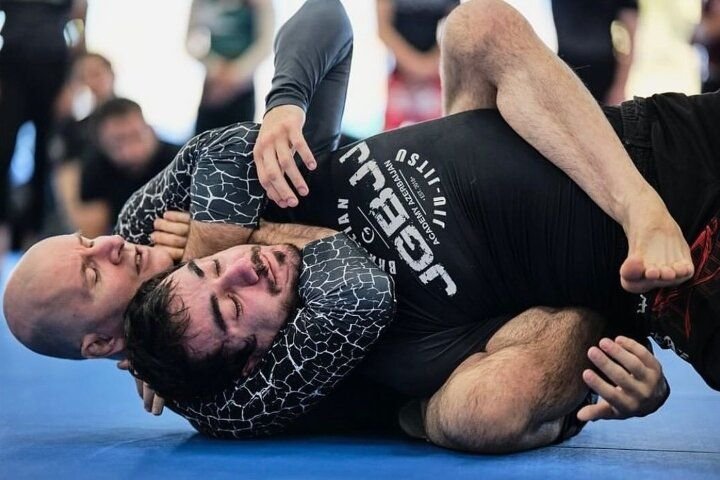
Crossed ankles in the mounted triangle is a structural mistake that costs submissions and creates an unnecessary injury risk to your own ankle against a grappler who knows the footlock counter. The correct lock is ankle-to-knee: the top leg’s ankle sits in the crook of the opposite knee, creating a tight figure-four. This lock tightens as your opponent tries to create space rather than loosening.
Also: point your top foot downward toward the mat, toes aimed at the floor. Foot position determines shin angle. Toes down creates a cutting shin position. Toes pointed up or sideways flattens the shin against the neck and reduces pressure significantly. This is a small detail that makes a large difference in finish rate.
5. Know the Armbar Exit When They Chin-Block
A chin block — driving the chin down hard to cover the carotid — is a legitimate defense to the mounted triangle. Experienced grapplers will tuck their chin and endure the windpipe pressure rather than tap. When this happens, the mounted triangle creates a perfect armbar setup: the arm is already isolated and extended. Post your hand on the mat for base, straighten your torso, and swing your leg over their face. The shift from choke defense to armbar is fast enough that it catches most opponents before they can adapt.
These two techniques make the mounted triangle position more than just one submission — it becomes a fork. They defend the choke and walk into the armbar. They defend the armbar and the choke tightens. See our no-gi armbar guide for the finish mechanics on the exit.
Who Uses the Mounted Triangle in Competition
Nicholas Meregali is one of the clearest examples of the mounted triangle as a primary submission system. His WNO 18 finish against Pedro Marinho came from the exact sequence — arm isolation, leg lock, hip angle, squeeze — covered above. What made it notable was how methodically he built the position from a neutral mount, not from a transition or scramble.
Craig Jones has covered the mounted triangle in multiple instructional releases, particularly in the context of connecting upper body submissions from top position. His approach emphasizes using the threat of the armbar and the omoplata to force the arm into the position for the mounted triangle — the same fork principle above.
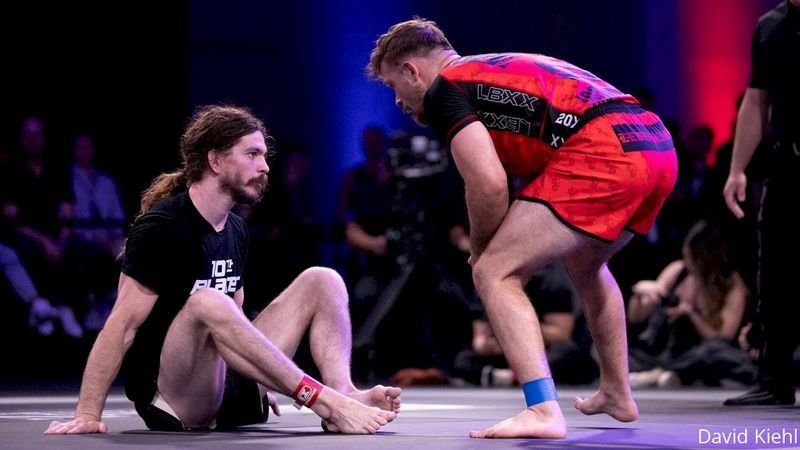
Ben Eddy submitted Josh Wyland with a mounted triangle at WNO 27 in April 2025, which drew attention in no-gi communities because Wyland is a credentialed grappler and the mounted triangle is not a submission most high-level competitors encounter regularly. The finish came from a tight figure-four with correct hip rotation — not a crank, just sustained pressure in the right position.
Common Mistakes That Kill the Mounted Triangle
The mounted triangle fails in three consistent ways.
Skipping arm isolation. The mounted triangle without a properly trapped arm is just a leg lock on someone’s neck with a gap they can exploit. If the arm isn’t across the centerline and pinned before you lock your legs, your opponent will simply pull it free and create posture. Reset and trap the arm properly before setting the lock.
Staying square. Not rotating the hips is the most common finish failure. Grapplers lock their legs, feel some resistance, and start squeezing harder rather than rotating. More force on a windpipe is not the same as carotid pressure. If you’ve been in the position for more than 10-15 seconds and they’re not reacting, rotate your hips toward the trapped arm. The response will be immediate.
Crossing the ankles. This creates a loose lock, reduces the figure-four pressure, and exposes your ankle if your opponent has leg lock knowledge. There is no upside to crossed ankles in this position. Lock ankle-to-knee from the moment you set the position, and don’t let it slip during the scramble.
How to Drill the Mounted Triangle Without a Partner
Most of the mounted triangle’s technical details can be drilled solo. Lie on your back and practice the leg lock itself: one leg extended, the other crossing over the knee to form the figure-four. Drill the hip rotation from that position — both sides. Feel where the shin angle changes as your toes point down versus up. Run this 50-100 times per session for two weeks and the body mechanics will be automatic when you’re rolling.
With a cooperative partner, drill the entry separately from the finish. Have them give you mount. Practice steering the arm across 20 times without locking your legs. Then practice locking the legs 20 times without worrying about the finish. Then combine. Separating the entry from the lock from the finish is faster than drilling the full submission from scratch every time.
Pair the mounted triangle with the armbar exit in your drilling so both paths become automatic. When your partner defends the choke, you should be moving to the armbar before you consciously decide to. For the full no-gi triangle system from both guard and mount, see our no-gi triangle choke guide.
Rashguard Fit and the Mounted Triangle
The mounted triangle is a hold-and-squeeze submission where you’re maintaining a tight body shape for 10-20 seconds against someone actively resisting. A rashguard that bunches, rides up, or restricts hip rotation creates friction exactly where you don’t want it — during the hip rotation that makes the choke work.
High-compression rashguards keep everything flush and reduce the micro-adjustments you have to make to maintain position. Long-sleeve cuts give slightly more coverage for the forearm and elbow frames you’ll use to control the head. If you’re developing your mount attack game specifically, it’s worth having at least one properly fitted compression piece. Our mount escape guide covers the defensive side — knowing both directions makes you better at each.
Sources
- Wikipedia — Triangle Choke — Technical classification of triangle variants including the mounted triangle
- BJJEE — Craig Jones Triangle Setup from Mount — Craig Jones’ mounted triangle entry and finish mechanics
- BJJEE — Khabib Nurmagomedov Mounted Triangle Setup — Analysis of Khabib’s mounted triangle entries from MMA and no-gi contexts
- FloGrappling — Meregali Submits Marinho at WNO 18 — Nicholas Meregali’s mounted triangle finish
- FloGrappling — Ben Eddy WNO 27 Mounted Triangle — Ben Eddy’s mounted triangle submission at WNO 27 (April 2025)