Ear Guard Retention in No-Gi: What Changes When You Go Live
Every no-gi practitioner who has watched a training partner develop cauliflower ear knows the story: they had ear guards, they wore them for the first few weeks, then they stopped. The guards ended up at the bottom of a gear bag somewhere between the spare mouthpiece and the knee sleeve they forgot about. The decision to protect your ears is not the hard part. The hard part is the experience of wearing ear guards during live grappling — when straps shift, cups compress at the wrong angle, and the friction of a real round makes you want to pull the whole thing off after three minutes. Fit and retention are the core problem. That is what this guide addresses.
The Fit Baseline Before You Ever Step on the Mat
Most ear guards list sizing based on head circumference — measured at the widest point around the forehead and the back of the skull. This measurement tells you which strap adjustment range you are working within, but it does not tell you everything you need to know before committing to a guard. Head circumference gets you into the right size bracket. What happens inside that bracket depends on variables that no sizing chart can capture.
Ear cup depth is the variable that matters most after circumference, and it is the one most commonly ignored. No-gi ear guards come with varying cup depths — how far the protective shell extends away from the skull. The right depth depends on the anatomy of your particular ear and how much clearance the guard needs to form a proper seal without applying direct pressure to the cartilage. A cup that sits too flat will press directly on the helix and antihelix with every contact, which becomes acutely uncomfortable once a training partner starts putting their forearm across your ear. A cup that extends too far creates an air pocket that builds suction during tight tie-up positions — noticeable every time someone drives into you from the outside.
The correct fit when you first put the guard on should feel like the cups are hovering just around the ears — slight seal contact at the rim, no point pressure on any part of the cartilage, and strap tension distributed evenly across the crown rather than pulling downward at the temples. If the strap is already pulling your ear toward your skull before you have moved, that pressure will multiply significantly under the rotational forces of actual grappling. Fit assessment at rest is only the first pass. A guard needs to be assessed in motion — turning your head sharply side to side, lowering your chin to your chest, and extending your neck — before you know whether the baseline is right. Whatever looseness exists at rest will become slippage during a scramble.
Strap Systems and What They Actually Survive
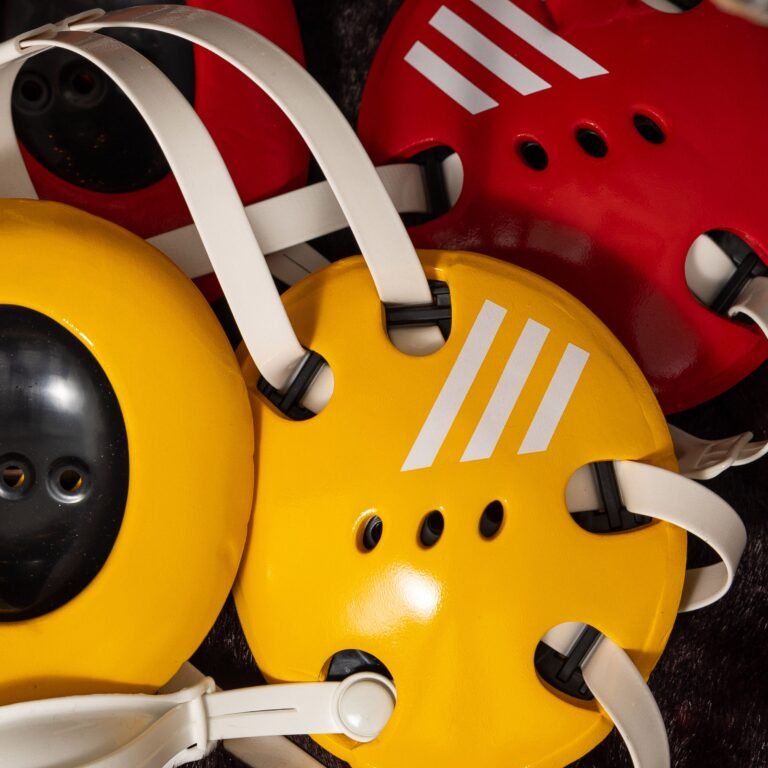
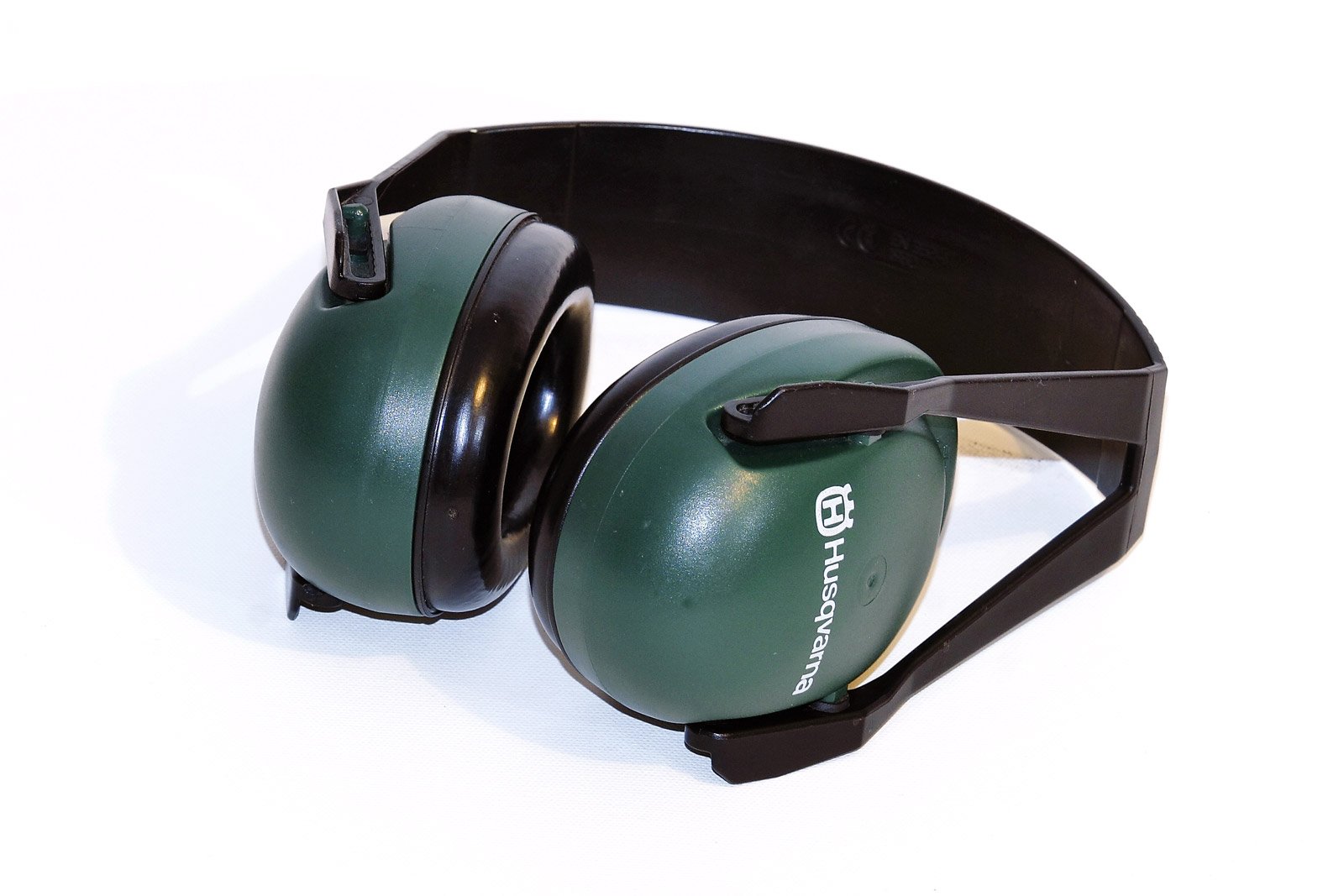
The strap system is what separates a guard that holds position from one that migrates during rolling. Most no-gi ear guards use one of three configurations: a single adjustable headband running across the crown, a cross-strap system that adds a chin strap, or a dual-band design that anchors both across the crown and behind the occiput. Each has a different performance profile under the specific demands of no-gi training, and understanding the tradeoffs matters more than brand loyalty.
Single headbands are the most common and the most prone to rotation. Under collar tie pressure or when your head is forced sideways during a scramble, a single band running straight across the crown has no secondary anchor point. When the cup pivots under lateral force, the band pivots with it. Within a few minutes of live rolling, the guard has rotated far enough that the ear cup is no longer covering the ear it was protecting. The guard is still on your head — it is simply not doing anything useful anymore. For drilling and technique work, a single-band guard is often fine. For live sparring, it is frequently not enough.
Cross-strap systems with a chin strap add a critical secondary anchor point below the jaw. This dramatically improves retention during dynamic movement — clinch work, guard pulling, defensive scrambles from turtle. The tradeoff is adjustment time. Getting the chin strap tight enough to hold without creating pressure under the jaw requires more calibration than a simple headband, and grapplers who are new to ear protection tend to err in one of two directions: too loose to matter, or tight enough to feel like the jaw is being loaded throughout the entire session. The correct tension sits between those two points — snug contact with no sensation of jaw restriction.
The dual-band design, which runs a posterior strap behind the occiput in addition to the crown band, provides the most stable platform of any configuration. It distributes load across four contact points rather than two, which means no single strap is carrying the full retention burden during a hard scramble. The tradeoff is that the rear band adds bulk and can catch an opponent’s fingers during wrestling exchanges if it is not well-recessed. It is also the configuration that requires the most careful adjustment to get right, since miscalibrating either band creates pressure at the base of the skull that becomes noticeable well before the round ends.
What Changes When Drilling Becomes Live Rolling
Drilling is a forgiving environment for testing ear guard fit. Movement is controlled, pressure is cooperative, and neither training partner is fully loading the system. A guard that seems to fit well during drilling will face a completely different set of forces as soon as intensity increases. The transition from drilling to live sparring reveals fit problems that were invisible in controlled practice — which is why so many grapplers conclude that a particular guard does not work, when the actual problem is that they never tested fit under realistic conditions.
In the clinch, your opponent’s forearm, bicep, and hand will contact your ear guard regularly. If the cup is not seated well, every contact point acts as a lever. Short, sudden rotational forces — the kind produced by a snap-down attempt, a head-fight for inside position, or a failed level change — expose strap looseness immediately. Grapplers who train a wrestling-heavy style with significant time in the clinch put more stress on lateral ear guard retention than those who play a guard-centric game, and the strap configuration that works for one may not work for the other.
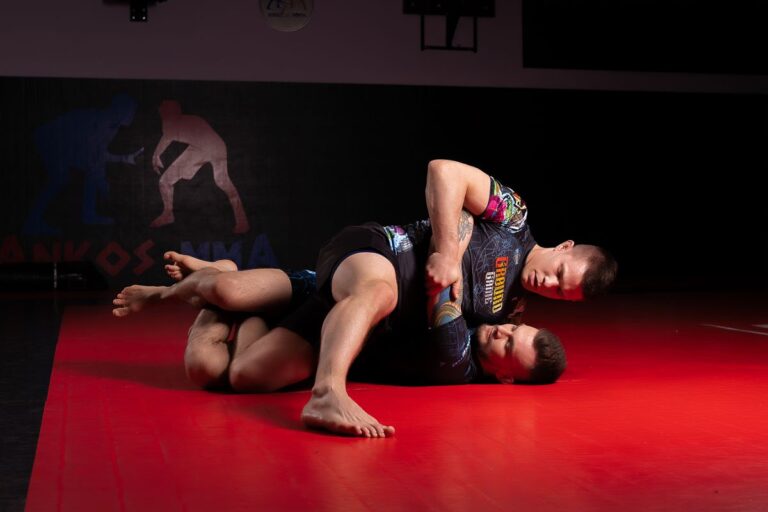
Guard positions create a separate retention problem. When you are on your back working from closed guard or half guard, your head presses into the mat during any bridging or rolling movement. The rear strap or posterior band of the guard takes load against the canvas in orientations that were never the primary design consideration for most wrestling-derived headgear. Some grapplers find a genuine conflict between a guard optimized for top work and one that is tolerable from the bottom — the geometry of the contact points is different enough that a single guard does not always solve both problems cleanly.
The Break-In Period and What It Actually Involves
New ear guards are stiffer than worn ones. The plastic shell and foam padding both soften over time through a combination of body heat, sweat, and repeated compression. A guard that feels rigid and unyielding in the first two weeks of use will feel meaningfully different by the fifth or sixth week of regular training. This adaptation timeline matters because the break-in period is precisely when most grapplers give up on the gear — and the discomfort they quit on is largely temporary.
During break-in, grapplers often do something counterproductive: they loosen the straps to compensate for the discomfort of a stiff cup. Looser straps reduce retention, the guard rotates during live rounds, and the conclusion drawn is that this particular model simply does not stay on. The actual problem is that the guard is too new and the straps are calibrated for a material stiffness that has not yet softened. A better approach is to wear the guard through the drilling and technique portions of practice for the first two to three weeks, where contact forces are lower, and gradually introduce it into sparring as the cups begin to conform. This matches the material adaptation timeline and gives strap calibration time to develop alongside the changing character of the cups.
Beyond material adaptation, there is a sensory component to break-in that rarely gets discussed. Ear guards attenuate sound — they change how you process the acoustic environment of the gym, from the slap of a takedown to your partner’s breathing. This attenuation is not significant enough to impair training, but it is novel enough to be distracting for grapplers who have never worn ear protection before. That distraction fades within two to three weeks as the auditory system recalibrates. Grapplers who quit because the guard feels acoustically strange are usually stopping right before that adaptation resolves.
How Specific Ground Positions Stress Your Ear Guard
No-gi grappling places sport-specific demands on ear protection that wrestling headgear — designed primarily for standing exchanges — does not fully account for. The range of positions encountered in submission grappling, from standing clinch down to deep guard work, inversions, and turtle defense, creates a wider retention problem than almost any other grappling context. Ear guards used in no-gi need to function across that entire range, not just in the positions the manufacturer used as the design reference.
Inversion is the most critical retention challenge for guard players. If your game includes triangles, omoplatas, or any variation that puts your hips above your head, the strap system will be tested in orientations the manufacturer never intended. Gravity now works against the guard rather than helping it settle on the skull. Single-band guards can literally slide toward the top of the head when a grappler is fully inverted if strap tension is not calibrated to account for that load direction. Guards with an effective chin strap maintain retention during inversion significantly better, since the chin strap provides an anchor point that functions regardless of the orientation of the skull.
Turtle defense creates a different set of stresses. When an opponent is riding your back from above, their chest, forearm, and head press against the side of your skull from multiple angles simultaneously. The ear guard needs to resist lateral compression from above and behind at the same time. Grapplers who spend significant time defending from turtle find that posterior strap coverage — something a rear occipital band handles better than a chin strap alone — becomes relevant to whether the guard stays functional through extended defensive scrambles. This is a position-specific consideration that most generic guidance on ear guard selection ignores entirely.
When Ear Guards Stop Feeling Like Something Extra
Grapplers who successfully integrate ear guards into their no-gi training consistently describe a threshold — somewhere between four and eight weeks of regular use — where the gear stops registering as something extra and starts feeling like a missing piece when it is absent. The sensory adaptation to attenuated sound normalizes. The proprioceptive adjustment to the added mass around the ears settles into the background. At a certain point, rolling without the guard starts to feel exposed rather than free. That shift does not happen without putting in the weeks that precede it.
Getting to that threshold requires consistency through the discomfort of the first several weeks. Treating the guard as part of a fixed gear ritual — rashguard, shorts, ear guard, in that order, every session without exception — removes the decision from the equation entirely. Putting it on before reaching the mat, rather than between rounds when you are already fatigued and less likely to fine-tune the strap adjustment, means fit is set before the session rather than corrected during it. Training partners who also wear protection normalize the gear in a way that solo adoption cannot replicate; when everyone in your training group wears ear guards, putting them on stops feeling like a statement and becomes part of the environment.
The grapplers who develop cauliflower ear through no-gi training are rarely people who never thought about protection. They are typically people who tried it, encountered the fit and retention problems of the first few weeks, and did not push through to the other side of adaptation. Getting the fit right from the start — measuring correctly, choosing the appropriate strap system for your training style, and understanding the break-in timeline — is what separates grapplers who successfully integrate ear protection from those who do not. The gear works. Getting it to stay on is the part that requires attention.
Sources
- Cauliflower Ear — Wikipedia
- FloGrappling — No-Gi Competition Coverage
- ADCC Submission Wrestling World Championship
Image credit: en.wikipedia.org