Straight Ankle Lock: 5 Steps to a Fast No-Gi Finish
Ask ten no-gi black belts which submission they landed most in their first two years of training, and a lot of them will say the straight ankle lock. It’s not flashy. It won’t show up on a highlight reel next to a flying heel hook. But it taps people at every level, from the first open mat to the ADCC trials, and it teaches you the leg-entanglement mechanics that every other leglock is built on. If you only ever learn one lower-body attack, this is the one that gives you the most return for the least risk.
What Is the Straight Ankle Lock in No-Gi?
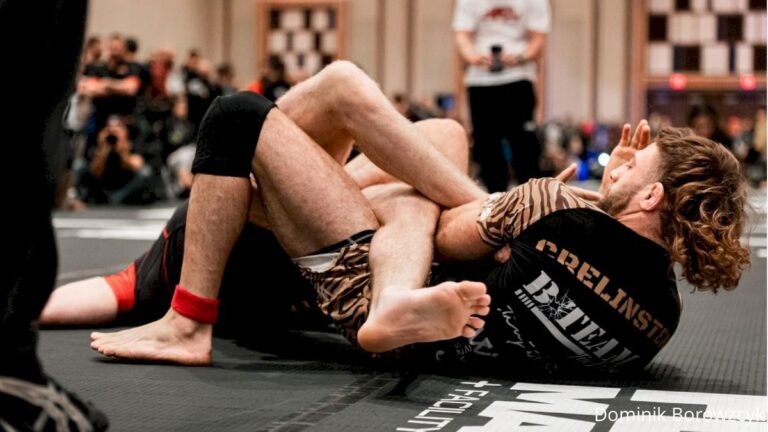
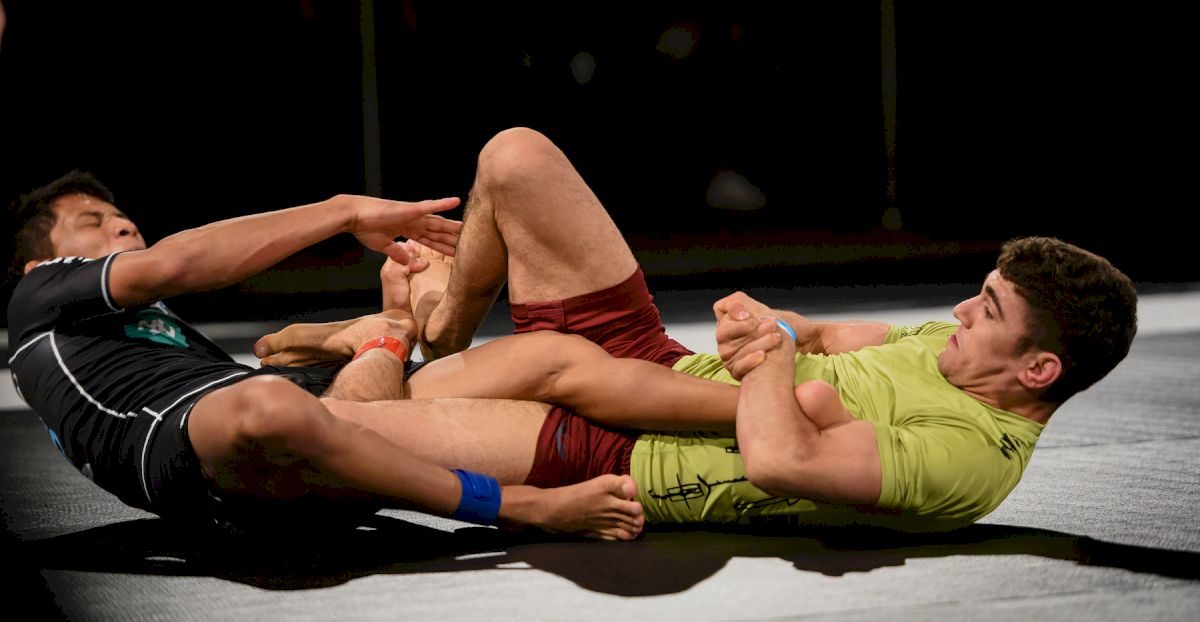
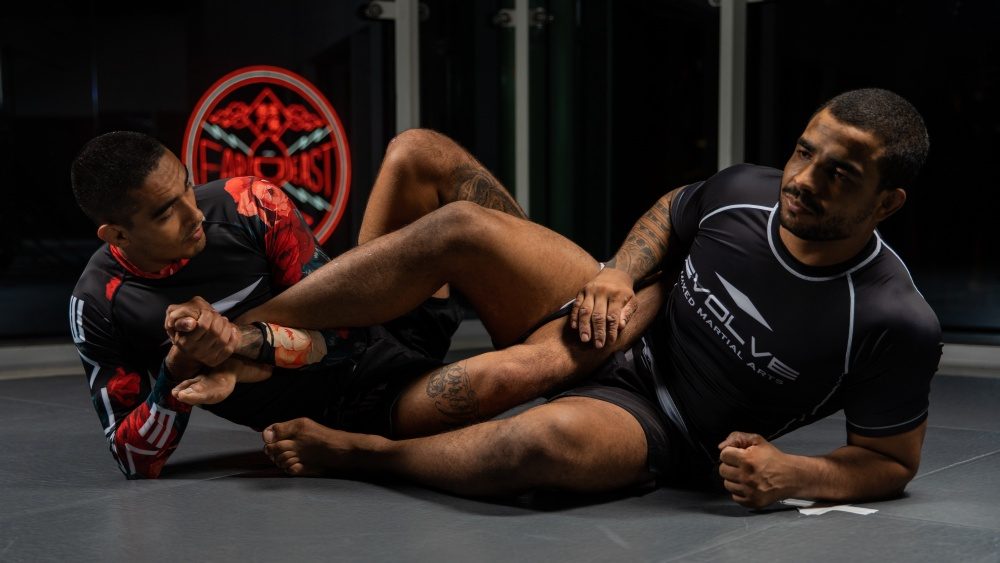
The straight ankle lock — also called the straight foot lock, the Achilles lock, or the ankle lock — attacks the ankle joint and the Achilles tendon rather than the knee. You clamp your opponent’s foot high in your armpit, wrap your forearm blade under their Achilles, and then extend your body so the front of their foot points down and the joint bends past where it wants to go. It’s plantar flexion under load, and it happens fast once the position is right.
The reason this submission matters so much in no-gi is that there’s no collar or sleeve to grip, so control comes from your legs wrapping theirs. That’s a leg entanglement, and the straight ankle lock is the finish that most entanglements funnel toward when a cleaner heel hook isn’t available. Learn the ankle lock and you’ve quietly learned how to hold ashi garami, which is the doorway to the entire leglock game.
Why the Straight Ankle Lock Is the Best First Leglock
Here’s a mild hill I’ll die on: beginners should learn the straight ankle lock before they ever touch a heel hook. The ankle lock breaks slowly and gives a clear, honest warning — your partner feels the pressure build and taps with time to spare. A heel hook attacks the knee, gives almost no warning, and can end a season. Starting with the ankle lock lets you develop the control positions and the tapping instincts you need before you ever apply a submission that tears ligaments in silence.
It’s also the highest-percentage entry for a new grappler because the rules are on your side. In IBJJF no-gi, the straight ankle lock is legal from white belt up, while heel hooks stay banned until brown and black in the gi and are only broadly allowed in no-gi at higher divisions. So the ankle lock is a submission you can actually use in competition on day one, which means you’ll get real reps against resisting opponents instead of just drilling it.
Where the Straight Ankle Lock Comes From: Single Leg X and 50/50
You don’t just grab a foot and hope. The straight ankle lock lives inside two control positions, and if you skip the position you’ll spend the whole match getting your foot yanked out. The first is Single Leg X, sometimes called ashi garami, where you’re on your back with one foot on their hip, one leg wrapped behind their knee, and their leg trapped across your body. From here you elevate them, break their base, and slide up to the foot.
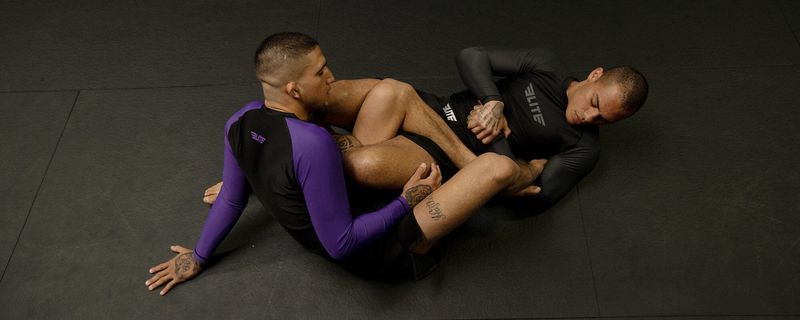
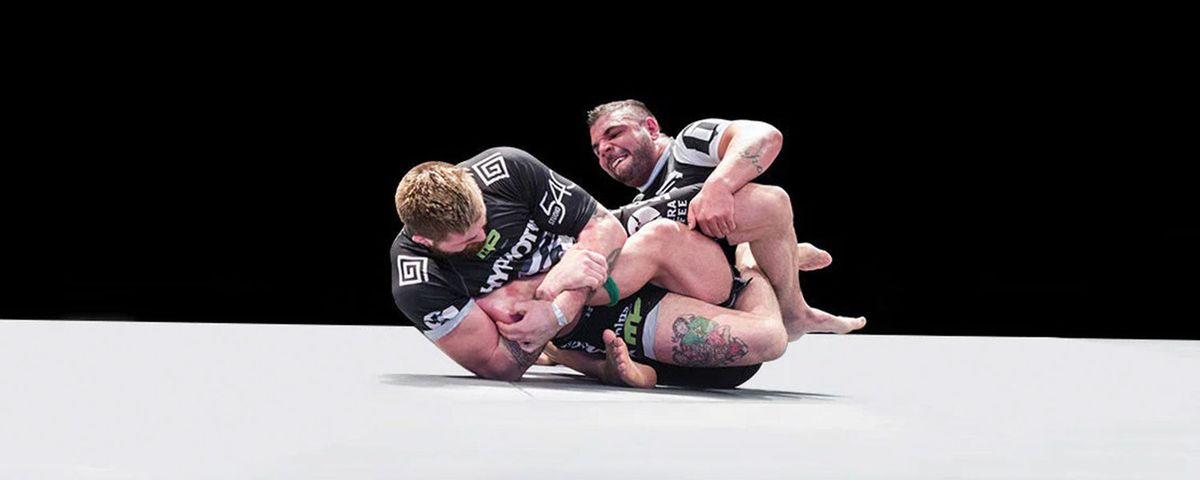
The second is 50/50, where both grapplers have a leg triangled around the other’s. It looks like a stalemate to spectators, but it’s a live position where whoever gets the inside line on the foot first gets the tap. Craig Jones and Lachlan Giles built entire competitive careers out of turning 50/50 exchanges into straight ankle locks and Aoki-style variations. If you want to go deeper on either entry, our breakdowns of the Single Leg X guard and the 50/50 guard walk through the control details step by step.
How to Finish the Straight Ankle Lock Step by Step
Once you have the foot and a stable entanglement, the finish is a short checklist. Rush it and you lose the foot; walk through it and it’s automatic.
- Trap the foot high. Their heel should sit above your collarbone, toes pointing over your shoulder. If the foot is low in your armpit, you’re attacking muscle, not joint.
- Blade the forearm. Cup your hands together with the sharp bone of your forearm (the ulna) pressed under their Achilles. A flat, soft forearm does nothing.
- Pinch your knees. Squeeze your legs to kill their ability to spin and to lock their leg to your center line.
- Walk your elbow back. Lachlan Giles calls this the single biggest finishing detail — sliding your elbow toward your hip climbs your grip higher on the foot and takes the slack out.
- Arch and bridge. The tap comes from extending your hips and arching your back, not from a bicep curl. Drive your belt buckle to the ceiling and let your bodyweight do the work.
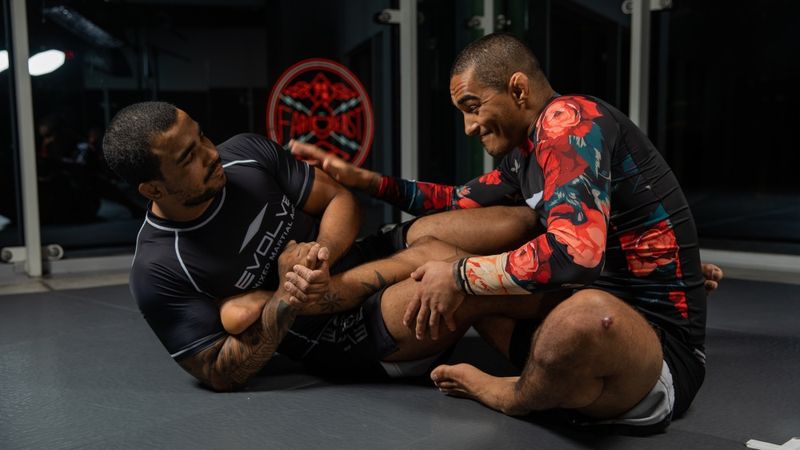
That last point is where most people leak power. They treat the ankle lock like an arm exercise and gas out their forearms while their partner calmly circles free. The strongest finish uses the whole posterior chain — hamstrings, glutes, and lower back all firing at once.
The Biggest Mistakes That Kill Your Ankle Lock
The straight ankle lock fails for a handful of predictable reasons, and every one of them is fixable in a single training session once you know to look for it.
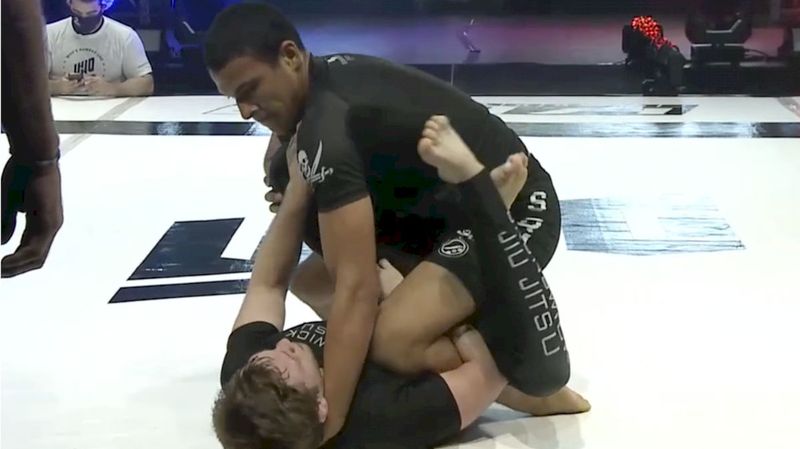
- Cross-body position. If your knees fall open and their leg drifts across your center, they can hide the heel and rotate out. Keep the entanglement tight and your knees pinched.
- Gripping too low. A grip on the mid-foot or shin gives them a hinge to peel your hands off. Climb to the ball of the foot.
- No pinch, all arms. Without leg control your opponent stands up, boot-scoots, or rolls, and your grip evaporates. Control first, submission second.
- Cranking sideways. Twisting the ankle turns a legal, slow ankle lock into something closer to a heel hook and risks hurting your partner. Extend straight, don’t rotate.
Is the Straight Ankle Lock Safe? Rules and Tapping
The straight ankle lock is one of the safer submissions in grappling when it’s applied honestly, which is exactly why it’s legal for every belt in IBJJF and most other rulesets. The joint bends in a natural plane, the pressure builds gradually, and your partner has real time to tap. Compare that to the no-gi heel hook, which attacks the knee and can blow a ligament before your training partner even registers pain.
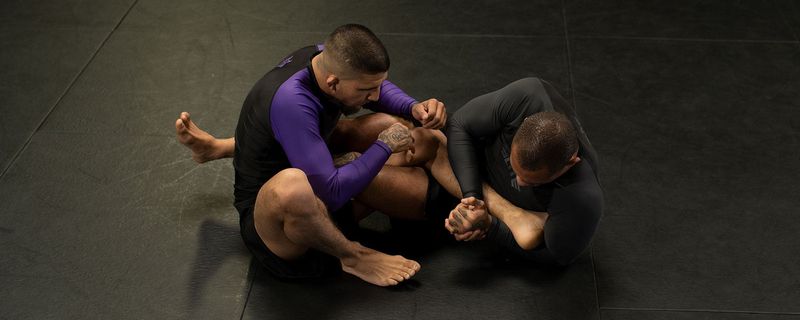
That said, “safer” is not “safe.” The Achilles and the ankle ligaments still tear if someone jumps to a fast crank or refuses to tap out of ego. Apply pressure at a rate your partner can respond to, and when you’re the one caught, tap early. There’s no glory in tearing your own ankle in a Tuesday round. The same discipline you’d bring to a toe hold or a kneebar applies here: control, communicate, release the second you feel the tap.
Straight Ankle Lock vs Heel Hook: Which Should You Learn First?
New grapplers see the heel hook winning ADCC and want to skip straight to it. That’s backwards. The heel hook and the ankle lock share the same entries — Single Leg X, 50/50, ashi garami — but the ankle lock forgives your mistakes while the heel hook punishes your partner for yours. Spend six months making the straight ankle lock a reflex, and the heel hook becomes a small grip adjustment away rather than a whole new skill.
The competitive reality backs this up. Watch any leglock specialist and you’ll see the ankle lock isn’t a lesser move they graduated from — it stays in their arsenal for the rest of their career as a constant threat that opens up everything else. When your opponent defends the ankle, the heel hook is right there. When they defend the heel, the ankle is right there. They’re two ends of the same position, and the ankle lock is the end you build first.
Drilling the Straight Ankle Lock Into Your Game
Reps beat theory. Start from a locked ashi garami with a compliant partner and run the five-point finish slowly until the sequence is muscle memory. Then add a layer of resistance where your partner tries to peel the foot — this teaches you the pinch and the elbow walk faster than any drill in isolation. Finally, take it to live rounds from a 50/50 start so you learn to hit it against real defense and scrambles.
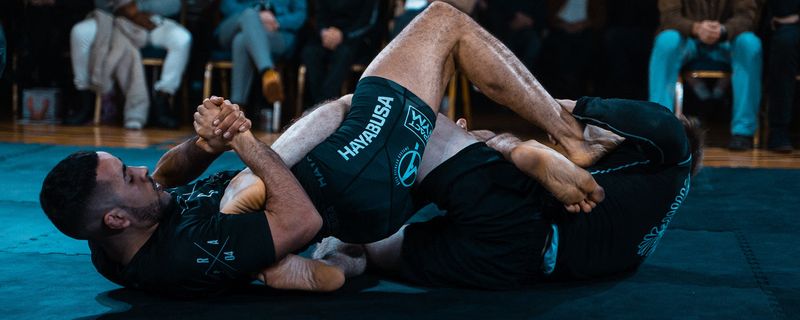
One practical note for no-gi specifically: sweat makes feet slippery, and a foot that slides out of your armpit is a lost submission. A snug rashguard sleeve gives your forearm a little more bite against a slick ankle, which is a small edge that adds up over a long roll. Whatever gear you’re in, the fundamentals don’t change — control the position, climb the grip, and finish with your hips.
The straight ankle lock rewards patience over athleticism, which is why it stays useful whether you’re 22 and explosive or 45 and technical. Build it first, keep it forever, and let it be the position that quietly opens the door to every other leg attack you’ll ever learn.
Sources
- FloGrappling — The History of Heel Hooks — context on how leglocks came to dominate modern no-gi.
- BJJ Fanatics — The Ankle Lock — mechanics and finishing details of the straight ankle lock.
- Grapplearts — Ankle Lock articles — technical breakdowns and rule context for foot locks.