Rashguard UV Protection: What UPF Ratings Mean for No-Gi Grapplers
The first time most grapplers think about UV protection in a rashguard is after an outdoor open mat leaves a sunburn line at the wrist where the sleeve ends. The chest stayed pale. The forearms turned pink. That stripe is the most direct evidence you’ll ever get that the fabric was doing real work — and that the bare skin past it wasn’t. Rashguards were never engineered as sunscreen. They were built for surfers to stop wax rash on the chest, and the BJJ world borrowed them for hygiene, friction, and skin protection on mats. UV blocking came along as a side effect of the materials. But once polyester and nylon blends took over the surf and dive market, manufacturers realized the same fabric that stopped surfboard chafe also stopped a meaningful chunk of ultraviolet radiation, and the UPF rating got slapped on the label.
For no-gi grapplers training in open-air gyms, garage setups with skylights, beach sessions, park rolls, and outdoor competitions, that UPF number on the tag is the difference between a long training day and a week of peeling shoulders. The problem is that most grapplers have no idea what the number means, whether it survives stretching and washing, or how it compares to sunscreen. The numbers look like SPF because they’re meant to. They’re not the same.
What UPF Actually Measures
UPF stands for Ultraviolet Protection Factor. It rates how much of the sun’s UVA and UVB radiation a fabric blocks before it reaches your skin. SPF, by contrast, is tested on sunscreen creams and measures only the time it takes for UVB to redden skin under controlled lab light. The two systems share a vocabulary and almost nothing else. UPF accounts for both UVA and UVB. SPF on a bottle of lotion does not, unless the label specifically says broad spectrum.
The UPF scale runs from 15 to 50 plus. The American standard, ASTM D6603, splits it into three labeling tiers. UPF 15 to 24 is good protection, blocking somewhere between 93.3 and 95.8 percent of UV. UPF 25 to 39 is very good, blocking 96 to 97.4 percent. UPF 40 to 50 plus is excellent, blocking at least 97.5 percent and as much as 98 percent or more. A rashguard rated UPF 50 plus lets only one fiftieth of the UV that hits the surface make it to your skin. The Australian and New Zealand standard, AS/NZS 4399, is stricter still. It tests the worst-case sample after stretching and wetting, which matters more for grappling than the lab dry result.
The thing to understand is that the scale stops at 50 plus on purpose. There is no UPF 70 or UPF 100, because once a fabric blocks more than 98 percent of UV, the remaining variance is within the margin of measurement error. Marketing copy that promises UPF 100 is invented numbers attached to real fabric.
How Rashguard Fabric Blocks UV in the First Place
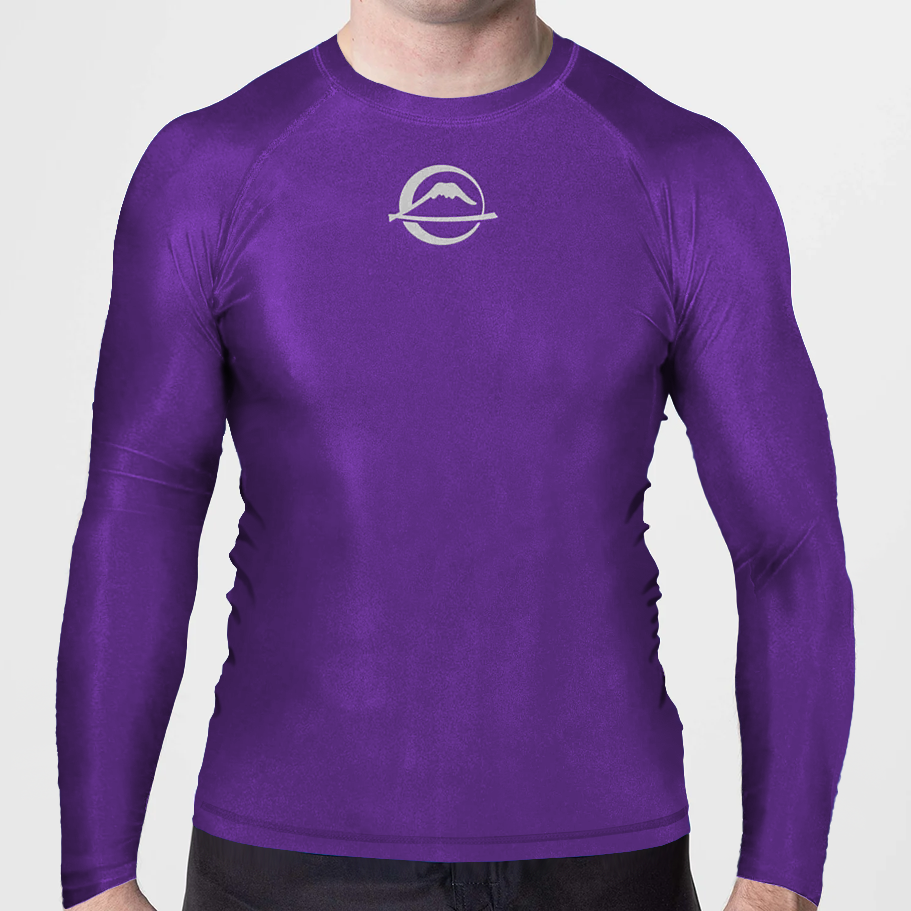
Polyester is the workhorse of the rashguard world for a reason, and UV blocking is part of it. Polyester naturally absorbs UV in the 300 to 400 nanometer range because of the aromatic rings in its molecular structure. Nylon does less of this on its own. That’s why a plain undyed polyester shirt of average weight will routinely test around UPF 30 to 50, while plain nylon hovers closer to UPF 15 unless treated. Most performance rashguards blend the two with elastane (spandex) for stretch — the 80/20 polyester-elastane mix common in BJJ-specific brands tends to land near the top of the scale.
Weave density matters almost as much as fiber. A loose knit lets UV slip through gaps between threads. A tight, compressed knit physically blocks it. This is why thin summer-weight rashguards designed to breathe sometimes test lower than thicker compression-style guards from the same brand. You can do a rough field test by holding fabric up to a bright bulb. If you can see clear pinpoints of light through the weave, UV is going through too.
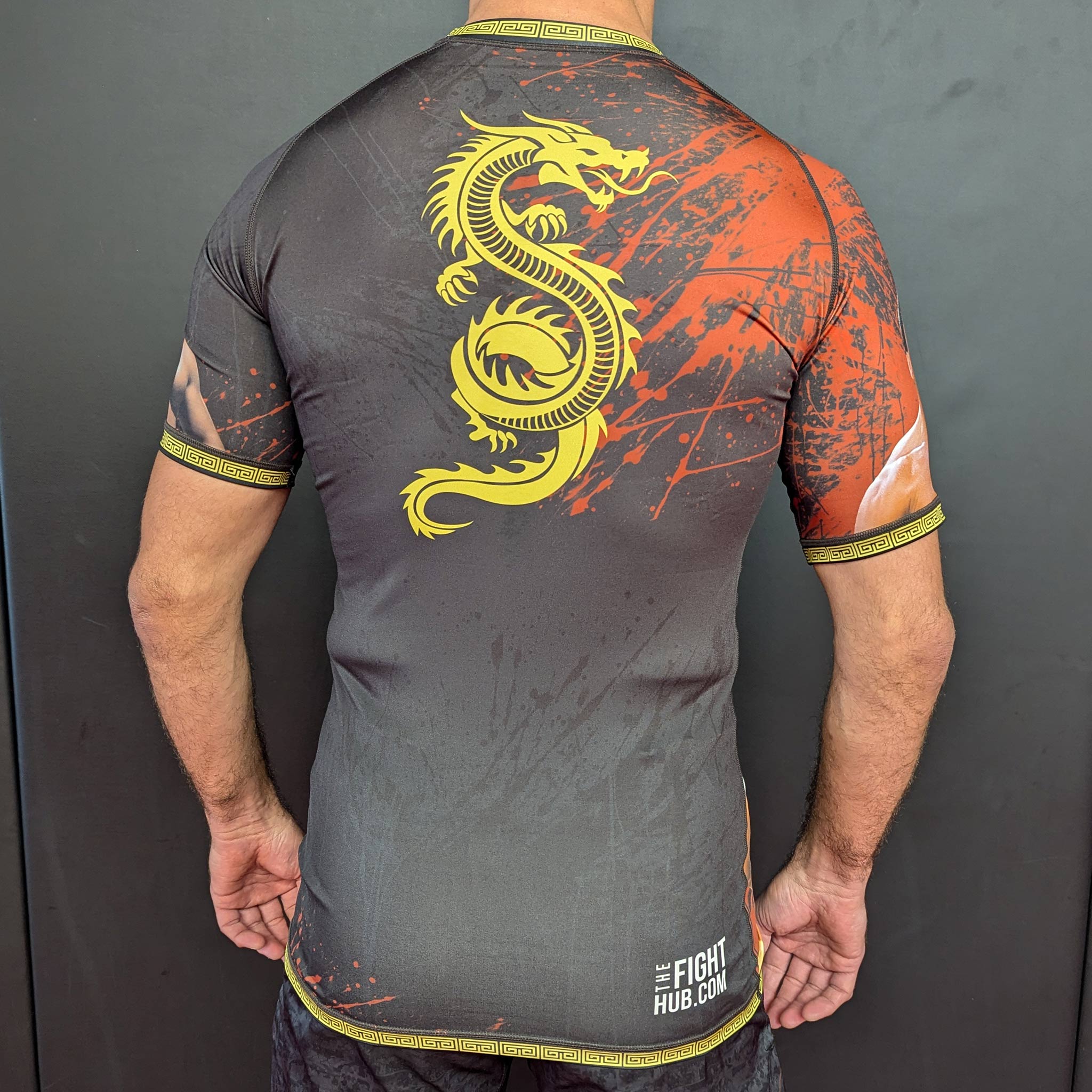
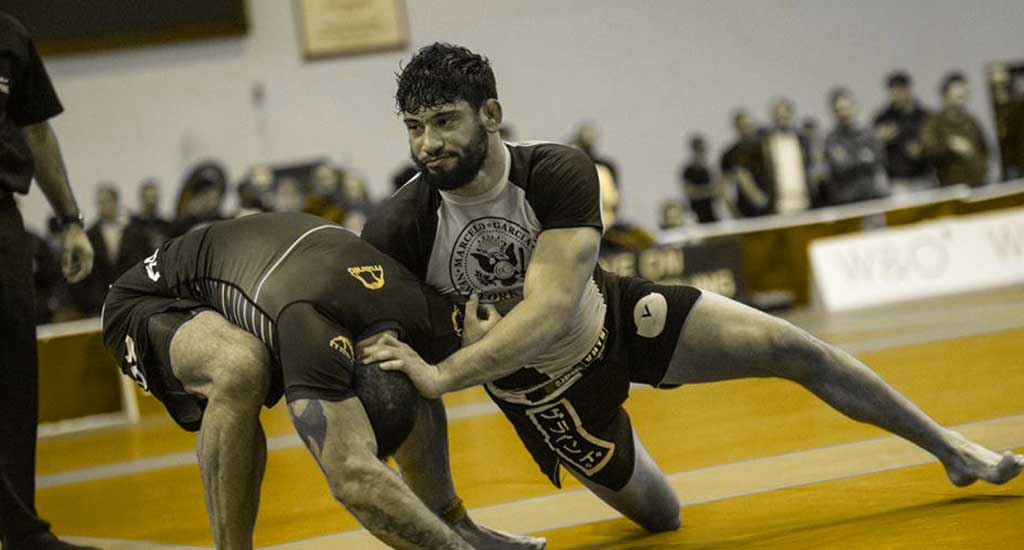
Dyes and prints also add UV blocking. Darker colors absorb more UV across the spectrum than light ones, which is why a black rashguard from a budget brand often outperforms a white rashguard from a premium one on UPF tests. Sublimation prints add another layer of UV-absorbing pigment. The fully printed sleeve panels on most modern competition rashguards are quietly doing real work — the printed sections often test higher than the white or pale base fabric on the same garment.
Why UPF Matters for No-Gi Grapplers More Than Most Athletes
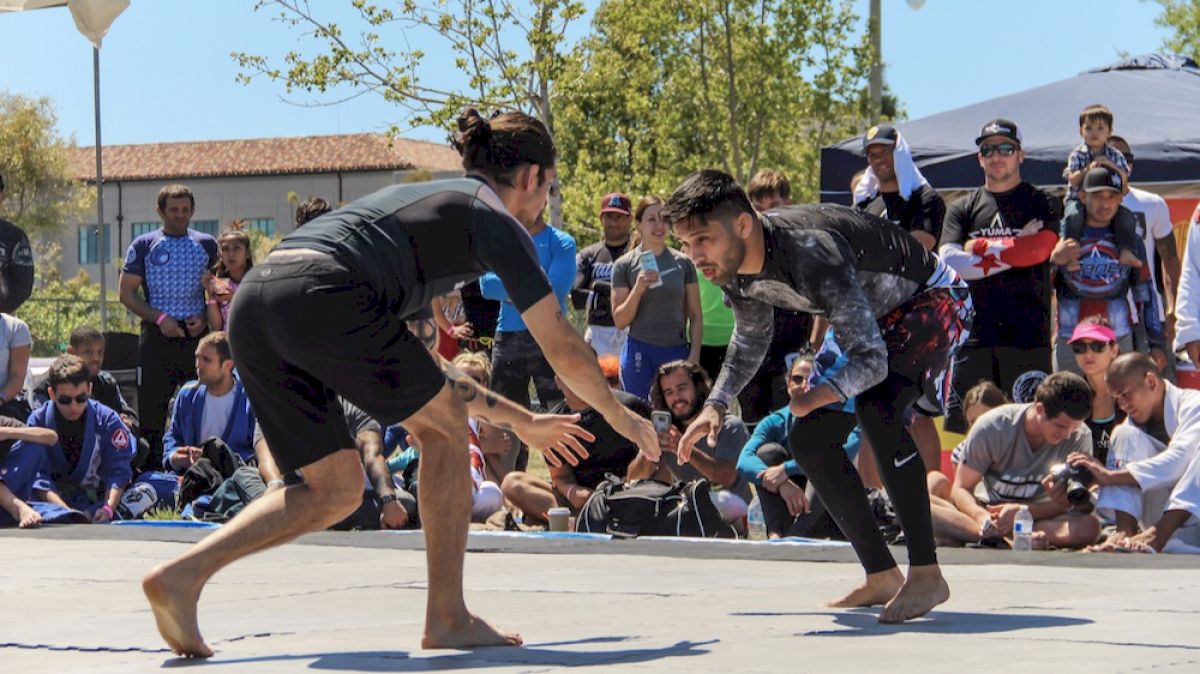
A jiu-jitsu black belt and a tennis player both spend hours under the sun, but the tennis player can reapply sunscreen between sets. A grappler who rolls outdoors cannot. Sunscreen on the chest, shoulders, and forearms gets ground off in the first thirty seconds of clinching. It mixes with sweat, transfers to a partner’s face, and stings the eyes through the rest of the round. Sunscreen and live grappling are practically incompatible. Fabric coverage is the only protective layer that survives a roll.
That makes the rashguard one of the few pieces of athletic gear where UPF is not a bonus feature but the primary sun defense. Long sleeves protect the entire arm including the back of the hands when sleeves are cut long enough to bunch at the wrist. Crew necks cover the upper chest and most of the shoulders. A high-UPF rashguard, worn for an outdoor session at a beach gym or an open-air competition, is functionally equivalent to wearing SPF 50 sunscreen on every covered inch — except it doesn’t degrade with sweat the way cream does, and it doesn’t end up in a partner’s eyes.
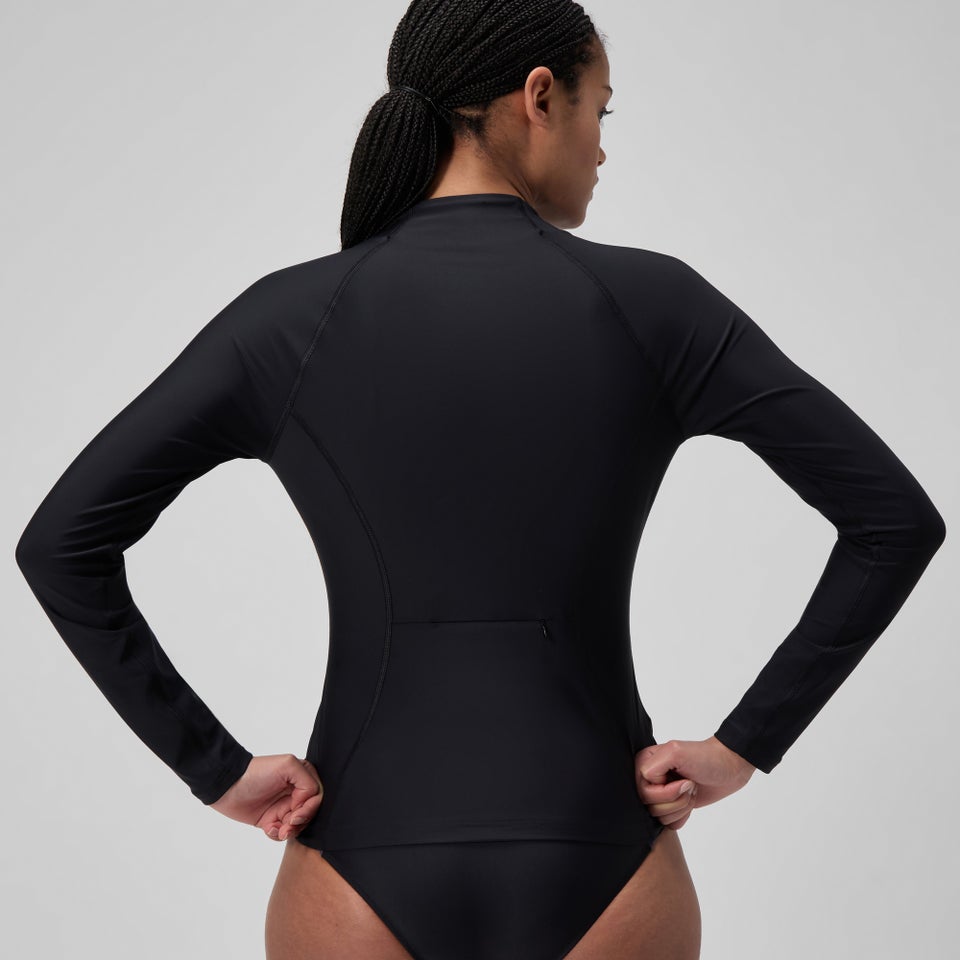
The catch is that the protection ends at the seam. Forearms past short sleeves, the back of the neck, the lower legs, and the top of the head all need separate protection. Some grapplers wear long compression spats specifically for the outdoor sessions where lower-body UV exposure adds up over a season of mat time at the beach or in the park.
Reading the Tag Without Getting Fooled
A legitimate UPF claim on a rashguard tag comes from independent lab testing. The phrase to look for is a specific number — UPF 50 plus — alongside a reference to ASTM D6603 or AS/NZS 4399. If the tag just says “UV protection” or “sun safe” without a number, the brand has not paid for the test. The fabric may genuinely block UV, but you have no quantified claim to hold them to. Most premium no-gi brands print the UPF rating directly on the inner neck label or the hangtag because it’s a feature worth paying for.
Watch for the words “up to” before the rating. A tag that says “up to UPF 50 plus” usually means the test sample, in pristine dry unstretched condition, hit that number — but the worst-case stretched-and-wet rating might be lower. The Australian standard, which tests the stretched and wet sample, is the more honest one for grappling use because that’s exactly the condition the rashguard is in twenty minutes into a sweaty roll under the sun.
When UPF Degrades
The UPF number on the tag was measured when the rashguard was brand new, dry, and flat. None of those conditions apply during training. Three things drop UV protection in the field. Stretching opens gaps in the weave. A rashguard pulled tight across the chest during a frame-and-shrimp drill can lose five to ten UPF points in the stretched zones. Wetting drops protection further. Sweat-saturated fabric blocks less UV than dry, because the water filling the gaps changes the way light scatters through the weave. Wet polyester tends to hold up better than wet cotton, but it still dips.
The third factor is wear and tear over time. Chlorine from pool training, salt from beach sessions, repeated hot washing, and direct sunlight on the fabric itself all break down the UV-absorbing properties of polyester over the course of a year or two. A rashguard that started life at UPF 50 plus may drift down into the UPF 30 range by its second summer of heavy outdoor use. The good news is that fading is a rough proxy. A heavily faded rashguard, particularly one with washed-out sublimation prints, is also probably blocking less UV than it used to. If the colors look tired, the protection has aged with them.
Picking Rashguards Built to Actually Block UV
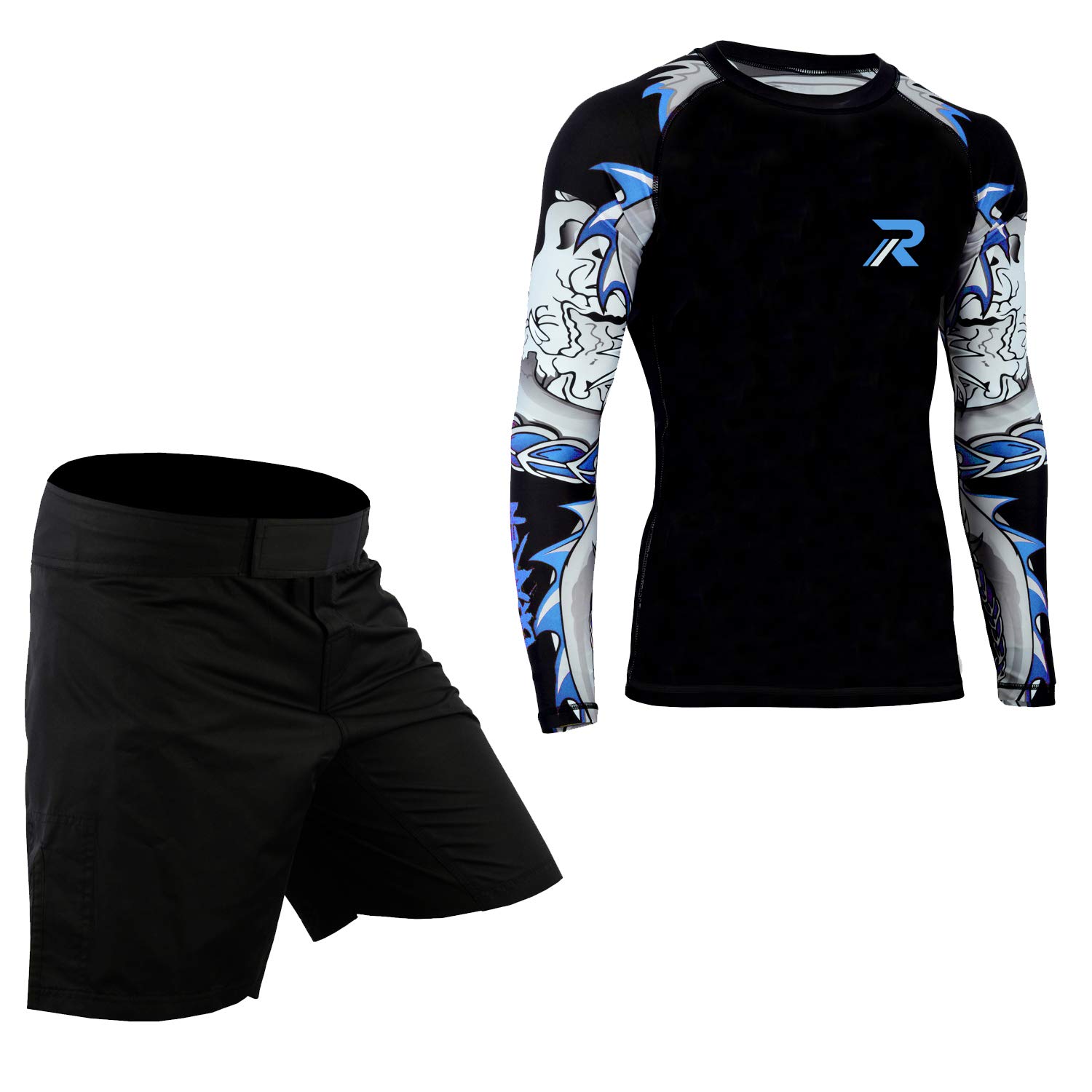
For grapplers who train outdoors regularly, a few features separate rashguards that maintain UV protection from ones that lose it after a few months. A heavier weight fabric — closer to 220 grams per square meter than the 160 of a thin summer guard — holds its UPF rating longer and through more wash cycles. Full sublimation printing across the panels rather than small chest logos on white fabric pushes the rating higher across the whole surface. Long sleeves with a thumbhole or a tight cuff extend coverage all the way down the forearm rather than leaving a gap at the wrist. Crew necks beat scoop necks for upper-chest coverage.
A practical test before a major outdoor training trip is to put on the rashguard and stand in direct sunlight against a wall. If you can see your own shadow showing through the fabric onto your skin, the weave is letting visible light through — and UV is going with it. The shadow-test is rough but immediate, and it has saved more than one grappler from showing up to an outdoor open mat with a shirt that turned out to be more decorative than protective.
The UPF rating on a rashguard is not the most exciting spec on a product page. It’s not as dramatic as a logo or a flag print. But for anyone who trains outdoors, in a garage with a skylight, at a beach session, or at an open-air competition under a midday sun, it’s quietly one of the few features that matters every single time you put the shirt on. Sunscreen washes off. The rashguard keeps working. As long as you know what the number on the tag actually means.
Sources
- American Cancer Society — UV protection and clothing guidance
- Skin Cancer Foundation — UPF clothing standards and seal program
- ASTM International — D6603 standard for UPF labeling
- Amazon — UPF 50 rashguards
Browse our top-rated rashguards and no-gi gear at the RashguardGuy shop →