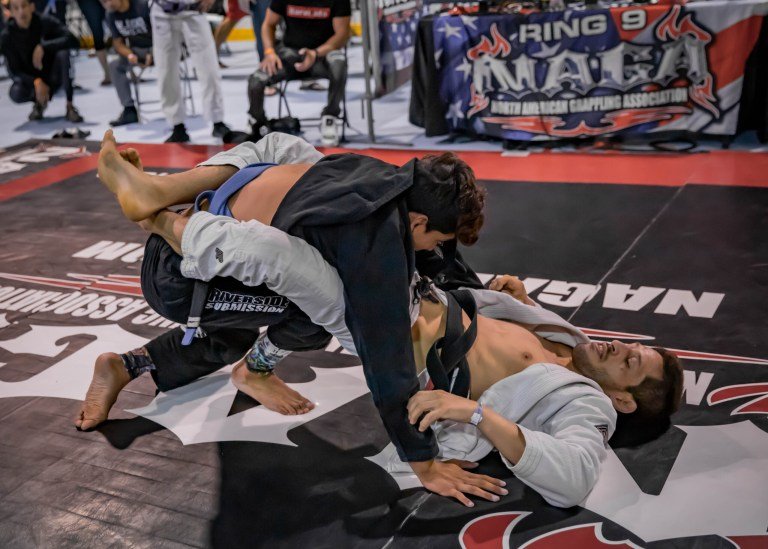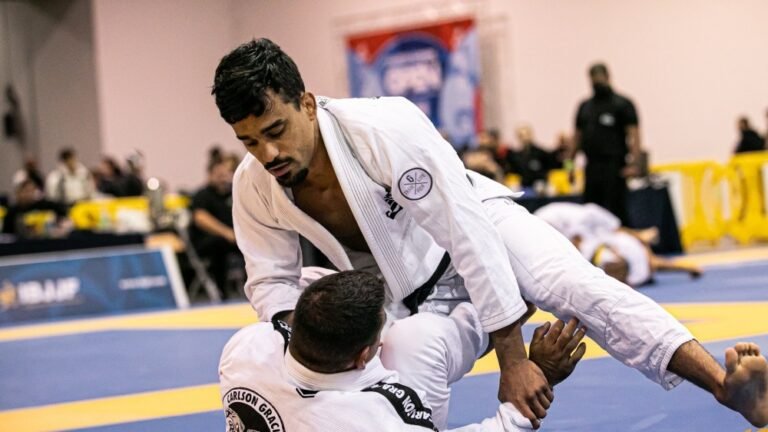
Flying Armbar No-Gi: 7 Keys That Land It
Davi Ramos won ADCC gold in 2015 by exploding off a guard-pull attempt and snatching Lucas Lepri’s arm out of the air, landing the finish before Lepri’s shoulders hit the mat. It’s one of the clips every grappler has seen and almost nobody has drilled on purpose. The flying armbar gets filed under highlight-reel nonsense — something that works for elite athletes with elite timing and nobody else. That’s mostly true of the version people picture. It’s not true of the version that actually gets taught.

What Makes a Flying Armbar No-Gi Different From the Gi Version
In the gi, a jumping armbar can lean on lapel and sleeve grips to control the fall — grab the collar, grab the sleeve, jump, and the fabric does some of the work of keeping the opponent attached to you on the way down. No-gi strips that out entirely. You’re controlling a bare head and a bare arm, which means the collar tie and the overhook aren’t optional details, they’re the entire mechanism holding the technique together. Skip either one and you’re not attempting a flying armbar, you’re just falling on someone.
That’s also why the no-gi version has a worse reputation than it deserves. Most people who try it and eat a slam were never actually gripping the head — they were gripping the arm and hoping gravity handled the rest. It doesn’t.
The Setup: Grip, Pull, Jump — In That Order
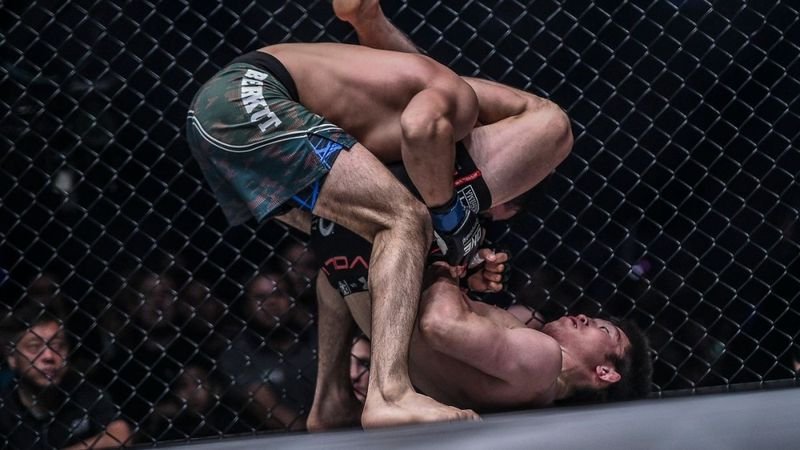
The sequence that actually works starts on the feet, usually off a collar tie or a two-on-one grip on the wrist. Pull the opponent’s head down and their arm across their body before you leave the ground — not as you jump, before it. That pre-commitment is what separates a controlled entry from a coin flip. Once the head is bowed and the arm is isolated, jump and wrap your near leg over their shoulder while your far leg swings around the back of their head, scissoring the neck and the trapped arm together in the same motion.
The opponent’s sprawl is the single biggest threat during the jump. If they post their free hand and drive their hips back while you’re airborne, you’re the one who lands badly. That’s the real injury risk in this technique — not the submission itself, but a mistimed jump into a opponent who saw it coming and simply stepped through it.

Why Most Attempts Fail Before the Jump Even Happens
Bad flying armbars almost never fail at the finish — they fail at the grip. The two most common mistakes: jumping off a loose collar tie that lets the opponent’s head slip free mid-air, and jumping without first off-balancing them forward. A flying armbar isn’t a technique you do to a stationary opponent standing square. It works when they’re already leaning into you, reacting to a different threat, or recovering from a failed shot. The jump exploits an opponent who’s already compromised, not one standing their ground waiting for it.
The other recurring error is rushing the leg placement. The top leg needs to actually trap the shoulder, not just drape over it — if it lands on the upper arm instead of the shoulder girdle, the opponent can shrug the whole structure off before you’ve secured the wrist. Slow that one detail down in drilling and the finish rate on this technique jumps considerably.

Drilling It Without Breaking Your Training Partners
Nobody should be taking live reps of a flying armbar in a room full of white belts. Drill the jump statically first — opponent kneeling, you stepping (not jumping) into the leg and head position, getting the scissor mechanics correct at zero velocity before adding any air time. Once the positioning is automatic, add the jump against a compliant partner who knows it’s coming and can post safely if the timing is off. Live, full-resistance reps come last, and only with partners experienced enough to sprawl safely instead of panicking.
Real photos of the exact mid-air moment are rarer than you’d expect — most published photography of this submission catches the landing or the finish, not the launch, which tells you something about how fast the actual jump happens relative to a camera shutter.
Defending Against It
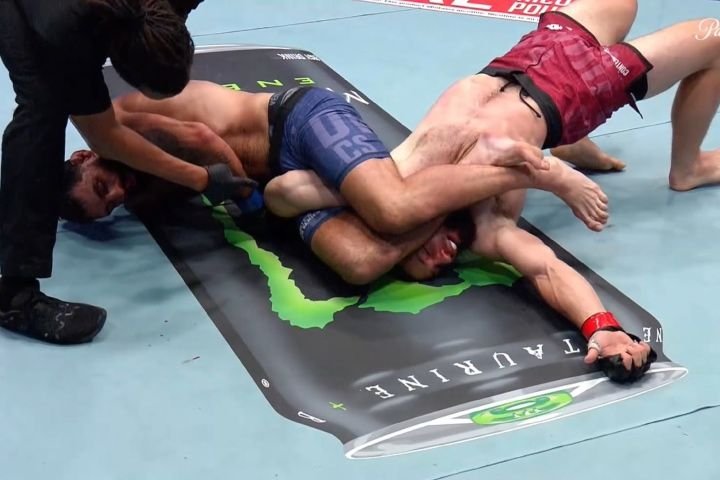
The counter most coaches teach first is also the simplest: sprawl your hips back and down the moment you feel someone load weight onto your head and arm instead of trying to catch them. A flying entry needs your hips to stay forward and your base to stay narrow — widen your stance and drop your weight back and the opponent has nothing to climb. Posting your free arm against their hip as they jump also disrupts the scissor before the legs can close around your shoulder.
The second layer of defense is positional, not reactive. Most flying armbar attempts come off a collar tie or a two-on-one wrist grip, so if you’re actively clearing those grips before they’re fully set — circling instead of standing square, breaking the tie with a sharp head movement — the opponent never gets the pre-jump control they need in the first place. Grapplers who get caught by this submission almost always let the grip sit uncontested for a beat too long before trying to deal with it.
What Your Gear Does on the Way Down
A technique that ends with you landing on top of (or next to) an opponent at speed is one place where a properly compressive rashguard actually matters beyond comfort. Loose fabric around the shoulders and ribs is one more thing that can shift or bunch during the fall, and in a technique where your base and your grip timing are already doing a lot of work, you don’t want gear fighting you on the landing too. It’s a small factor compared to drilling the mechanics, but competitors who build their game around dynamic entries tend to run tighter-fitting tops for exactly this reason — less to catch, less to think about mid-air.
Who Actually Makes This Work in Competition
The technique has a short but real list of specialists, and the pattern among them is instructive. Rumina Sato finished a flying armbar in six seconds against Charles Diaz in 1999 — a clip still circulated as one of the fastest finishes in the sport’s history. Baret Yoshida used the same submission to beat Wellington Diaz at the 1999 ADCC, years before the current leg-lock-dominated meta existed. Both built careers around aggressive, scramble-heavy grappling where opponents were rarely given a moment to set their base — which is exactly the condition the flying armbar needs to work.
Davi Ramos’s 2015 ADCC gold is the modern reference point, and it’s worth noting what actually happened in that sequence: Lepri was pulling guard, already moving his weight backward and down, when Ramos exploded forward into the opening. He didn’t jump at a stationary opponent. He jumped into one who was already falling. That detail gets lost in the highlight clip but it’s the entire technical lesson.
Is It Actually Worth Learning?
For most hobbyist grapplers, no — not as a primary weapon. The risk-to-reward ratio against a training partner who isn’t expecting it skews toward somebody getting hurt on a bad landing before anybody gets tapped. But as a counter you keep in reserve for the specific moment an opponent is already off-balance and overcommitted — chasing a failed shot, leaning hard into a scramble — it’s one of the few submissions that can end a match from a position where you had no other finish available. The standard armbar will always be the higher-percentage version of this same submission. The flying entry is what you reach for when the standard setup never presented itself and the opponent just handed you an opening anyway.
It’s also, bluntly, the kind of technique that gets people’s attention. This week’s Pan No-Gi field won medals almost entirely through patient leg-lock systems and positional grinding — nobody jumped for a finish. That’s the reality of winning at the highest level. It’s also exactly why a clean flying armbar still stops a room when someone pulls it off.
Sources
- ADCC 2015: Davi Ramos Finishes ‘Perfect’ Weekend with Flying Armbar Submission — Sherdog — details on the Lepri finish referenced above.
- How To Do A BJJ Flying Armbar — Evolve MMA — grip and setup mechanics for the no-gi entry.
- Craig Jones’ “Choi Bar” — 2nd Fastest Submission at the ADCC — BJJEE — context on modern no-gi armbar variations.