Ankle Pick No-Gi: 7 Keys to the Finish
At the 2004 Athens Olympics, Cael Sanderson — the only wrestler in NCAA history to finish a career 159-0 — beat Cuba’s Yoel Romero with a single ankle pick variation that Romero never saw developing. Sanderson built an entire international career on that one takedown, and the mechanics haven’t changed since: control the upper body, make the opponent load a foot, remove that foot. In the gi, a sleeve or collar grip slows the shot down and gives the defender something to fight for. In no-gi, there’s nothing to grab but skin, so the ankle pick lands cleaner and faster than it ever did in a kimono.
Key 1: Get the Tie-Up Before You Reach
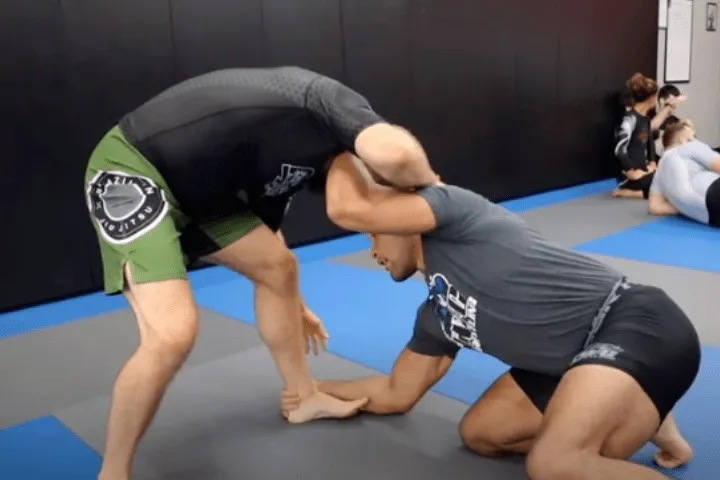
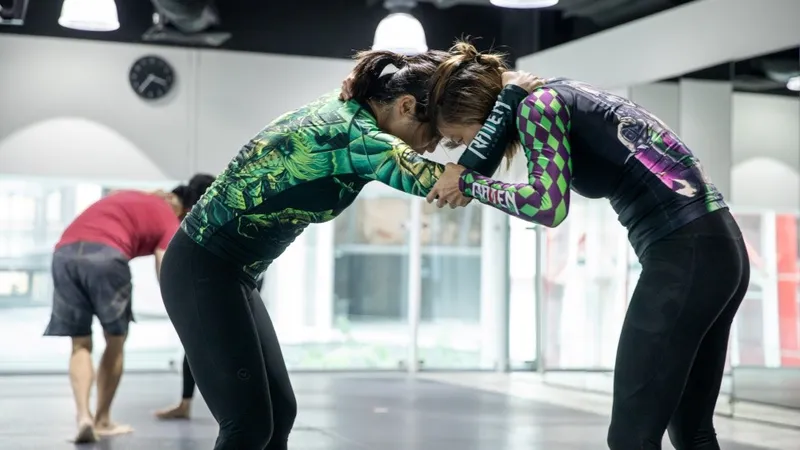
Grapplers who treat the ankle pick as a leg attack get it stuffed almost every time. It’s an upper-body technique first. Before your hand ever goes near their foot, you need a collar tie, an overhook, or a two-on-one on their wrist — something that lets you steer their head and shoulders independently of their legs. Without that grip, dropping to reach the ankle just gives a live opponent a free sprawl or a front headlock on you.
Treat the tie-up like a bicep curl: pull their head down and toward the side you’re attacking as you change levels, so their posture breaks at the same moment your hand reaches the ankle. If their head stays up, the ankle pick turns into an arm drag at best and a stuff at worst.
Key 2: Step to the Outside Angle, Not Straight In
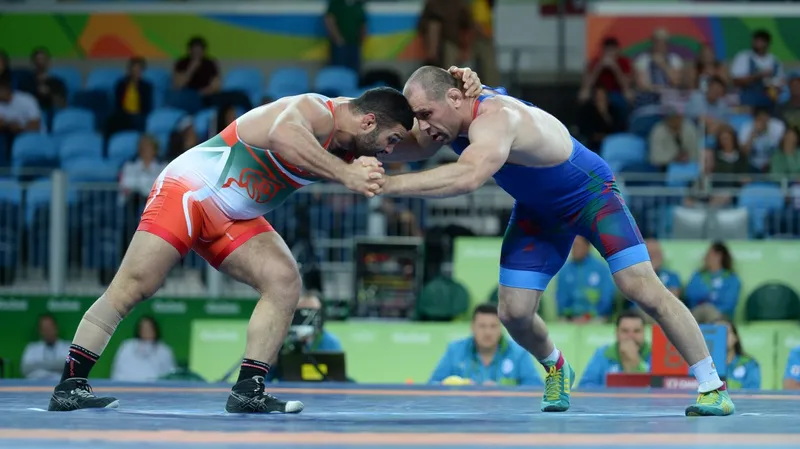
A straight-on ankle pick telegraphs itself — your opponent feels the level change and sprawls before your hand arrives. Step your lead foot outside their lead foot first. That outside angle takes away their easiest sprawl path and puts their ankle directly in your reach without you having to close distance head-on.
This is the same angle that makes a low single or a duck-under work, which is why wrestlers chain all three off the same first step. If the outside step is missing, every other detail in this list is fighting an uphill battle.
Key 3: Reach the Achilles, Not the Shin
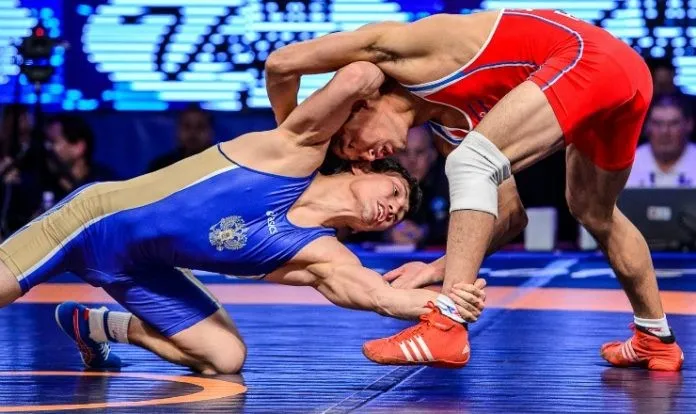
Cupping the shin or the top of the foot gives your opponent something to kick free of. Reach behind the ankle, at the Achilles, with your palm facing their heel. That grip closes around bone and tendon instead of a flat surface, so it survives the scramble instead of sliding off the moment they try to step back.
Keep your reaching arm’s elbow tucked rather than extended. A locked-out arm is easy to post on and even easier to sprawl through; a bent arm stays connected to your base so the pull comes from your legs and hips, not just your shoulder.
Key 4: Pull and Drive at the Same Time
The most common amateur mistake is sequencing the technique — pull the ankle, then push with the upper body, as two separate actions. Against anyone with decent balance, that gap is enough time to recover. The ankle has to come toward you at the exact instant your collar tie or overhook drives their shoulders the opposite direction. One hand removes the base, the other hand removes the balance, and both happen on the same beat.
Think of it as a lever, not a tug-of-war. You’re not trying to out-muscle their leg off the ground — you’re rotating their whole structure around a point they can no longer stand on.
Key 5: Time It Off Their Lead Step
The ankle pick isn’t something you can force on command. The window opens the moment your opponent steps forward and loads weight onto their lead foot — that’s the only instant the foot is light enough and close enough to pick clean. Wrestlers drill hand fighting specifically to manufacture that moment: snap a collar tie down, and most opponents instinctively post a foot forward to catch their balance. That posted foot is the target.
If you’re facing a grappler who refuses to step, don’t abandon the position — change levels and threaten a double leg instead. The threat of the double often forces the exact lead-foot reaction the ankle pick needs. Some coaches teach drilling this at quarter speed first: five reps where you and your partner pause at the setup, the step, the reach, and the finish, just to feel where your own posture or balance breaks down before adding resistance. Rushing straight to live reps is how most grapplers develop the habit of reaching before the tie-up is set, which undoes Key 1 before you ever get to Key 5.
Key 6: Chain It Off a Stuffed Double Leg or Snap Down
The ankle pick rarely needs to be your opening attack. Most high-level finishes come off a failed double leg where the opponent frees one leg but not the other — you’re already gripping above the ankle, so you commit to the pick instead of resetting to neutral. The same logic applies off a stuffed snap-down: if they yank their head free but you keep a hand on their wrist or triceps, you’ve transitioned into the ankle pick without losing the exchange. Our breakdown of the single leg takedown in no-gi covers the mirror version of this chain, and the fireman’s carry is the other common entry that dumps straight into an ankle pick when the lift stalls.
Key 7: Know What No-Gi Competition Actually Rewards
Under ADCC-style rulesets, a takedown that lands in guard scores two points once you hold three seconds of control; a takedown that clears 75% of your opponent’s back to the mat scores four as a clean takedown. The ankle pick almost never produces a clean takedown on its own — it’s a two-point tool, not a four-point one — but it’s worth using anyway because it rarely costs you anything when it fails. Compare that to a guard pull, which forfeits the takedown points entirely and starts the exchange from your back.
That risk profile is exactly why wrestlers transitioning into no-gi lean on the ankle pick early. It lets you bank points without gambling position, which matters more in a ruleset where submissions can end the match at any second but points still decide a stalled one. Some submission-only formats don’t score takedowns at all, which changes the math — if there’s no point reward for landing on top, the ankle pick is still worth drilling purely for the control it buys you before a pass, but it stops being a scoring priority on its own. Know which ruleset you’re training for before you decide how much mat time this takedown deserves in your week.
Where It Breaks: Common Mistakes
Three errors account for most failed ankle picks. The first is reaching before the tie-up is established — covered above, and still the most common. The second is standing too upright through the finish, which lets your opponent base out on their free leg and simply step over your reaching arm. Stay bent at the knees, not the waist, so your hips stay under you through the whole motion.
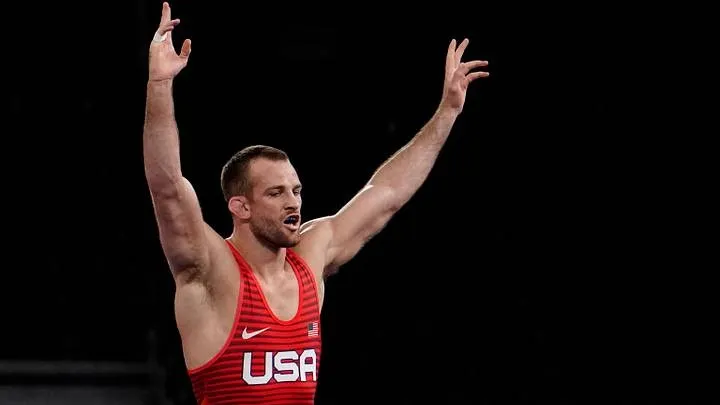
The third mistake is quitting the moment the first attempt fails. Elite finishers like David Taylor built their entire takedown offense around re-attacking from the same tie-up three or four times in a row rather than resetting to a neutral stance after every stuffed shot. Each failed attempt moves their base a little more, and the fourth attempt usually lands clean because of the first three, not despite them.
Defending the Ankle Pick
Most no-gi grapplers never drill the defense because they’re too busy drilling the attack. The counter starts the same place the setup does — deny the tie-up. If you keep your own collar tie or underhook active instead of letting your opponent control your head freely, they lose the lever they need to break your posture before the reach ever happens.
If the hand already has your ankle, sprawl your hips back and down rather than trying to yank the leg free — pulling against their grip only helps them finish the pull-and-drive combination described in Key 4. Driving your hips down and your weight forward onto their reaching arm collapses the angle they need and frequently ends with you on top instead of them.
Where the Ankle Pick Shows Up Beyond the Mat
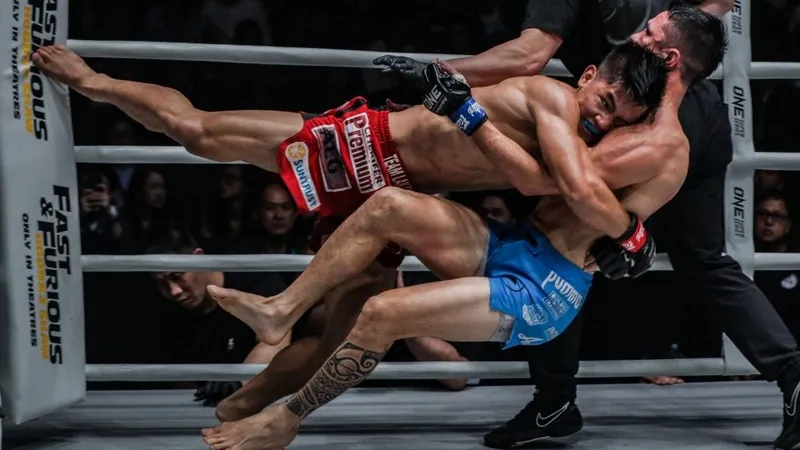
The takedown translates directly to MMA, where a caged opponent has nowhere to retreat once their base is gone — fighters with wrestling backgrounds use the same collar-tie-to-ankle-pick chain against the fence that wrestlers use in the center of the mat. A grappler who only drills this in a guard-pulling style no-gi room is leaving a tool on the table that works just as well standing against a cage as it does on open mats.
Sources
- BJJ Eastern Europe — 3x Wrestling Champion Shows a Simple & Efficient Ankle Pick Setup — Brandon Reed’s no-gi ankle pick breakdown.
- ADCC News — ADCC Rules & Regulations — official scoring criteria for takedowns and clean takedowns.
- BJJ World — How To Integrate The Ankle Pick Takedown Into Your BJJ Game — variations and finishing options.