Compression Shorts Buying Guide: Length, Seams, and Grip for No-Gi BJJ
Compression shorts are the layer most no-gi grapplers ignore until something pinches, rides up, or splits at the inseam mid-scramble. The right pair disappears under your grappling shorts. The wrong pair distracts you for the entire round.
This compression shorts buying guide breaks down what actually matters when you’re shopping for a pair to wear under no-gi shorts — length, seam placement, waistband construction, material mix, and the cup pocket question. Skip the marketing copy and focus on the fit details that separate a pair you forget about from a pair you have to keep yanking down between exchanges.
Why Compression Shorts Matter Under No-Gi Shorts
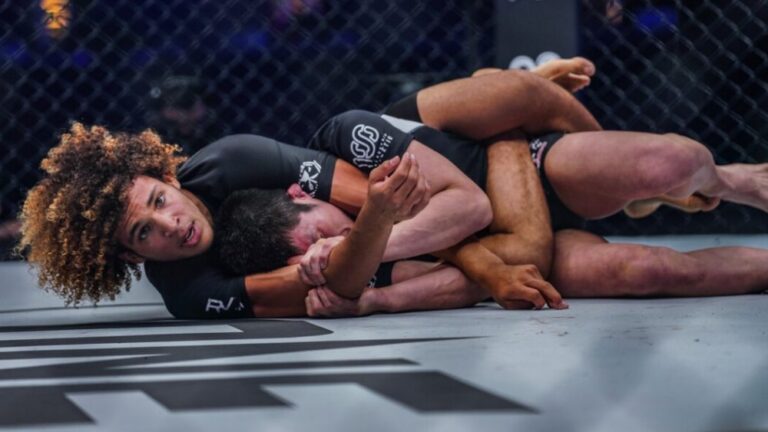
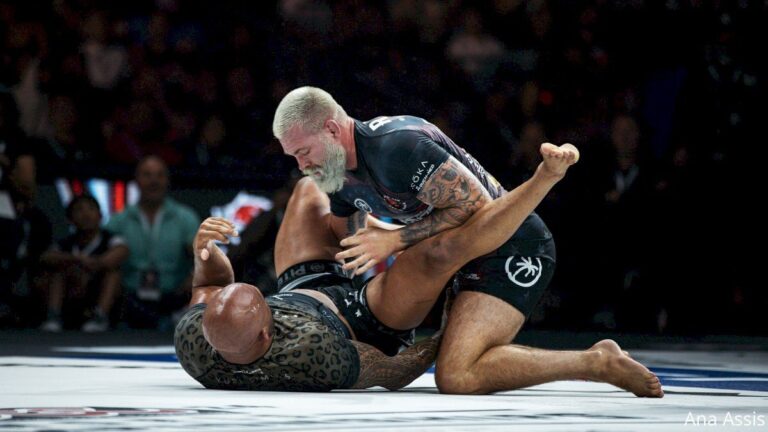
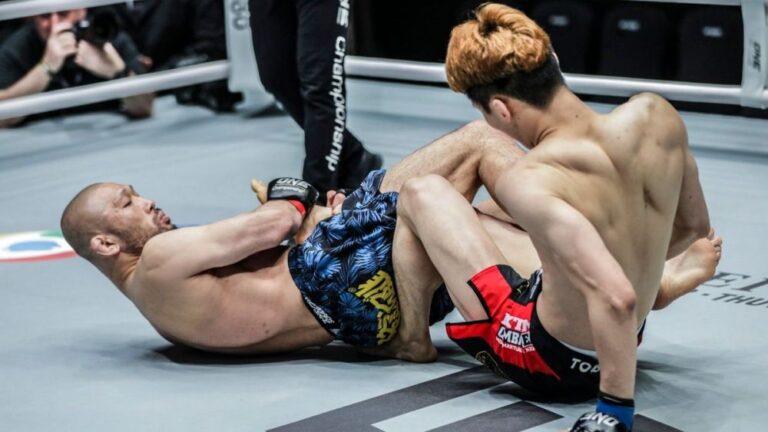
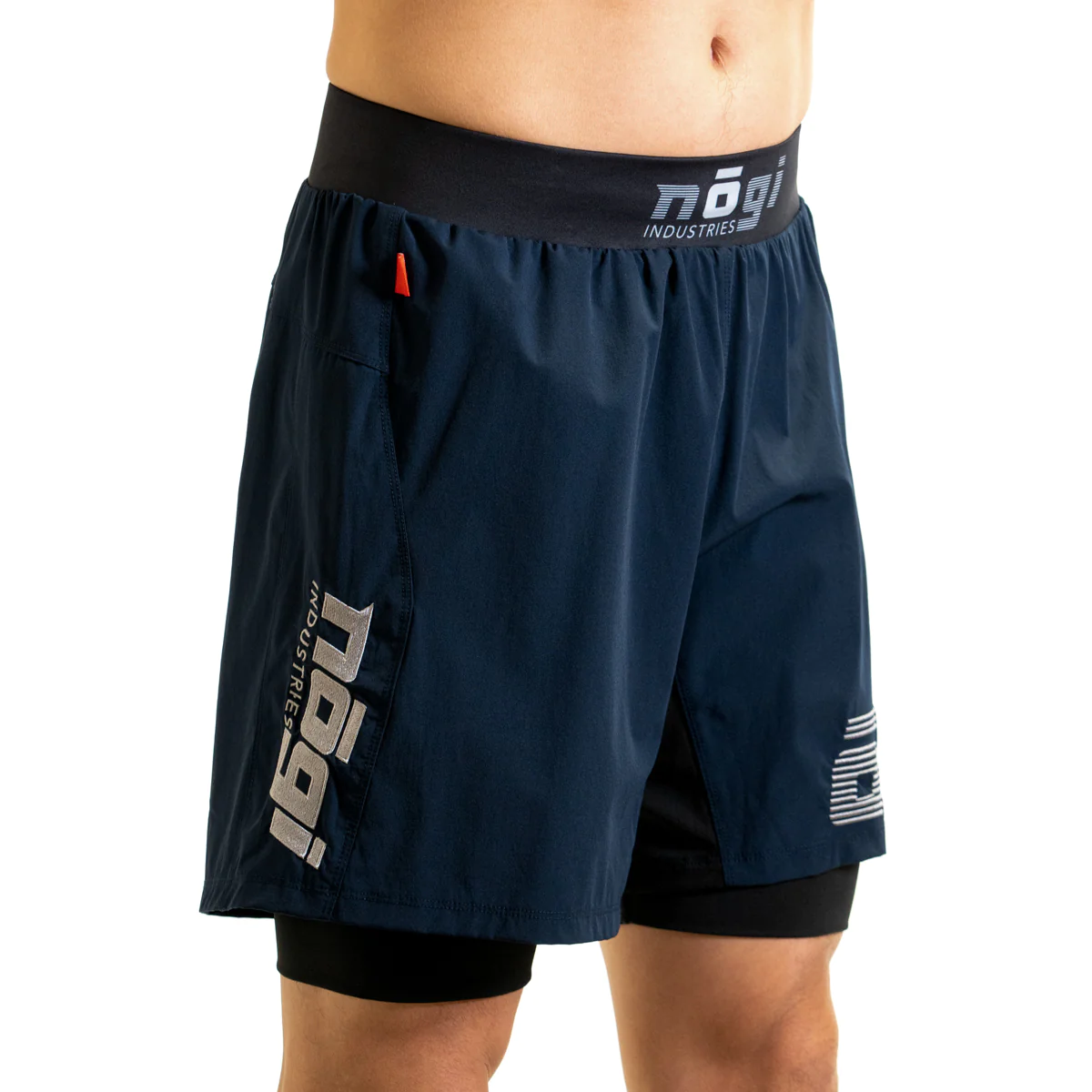
No-gi grappling shorts are loose by design. They give you room to shoot, sprawl, and invert. That looseness is exactly what makes a compression layer non-negotiable. Without compression shorts underneath, you get fabric bunching during guard work, exposure during inversions, and chafing on the inside of your thighs after a single hard round.
Compression shorts solve four problems at once: they keep your grappling shorts from twisting around your waist, they prevent thigh-on-thigh chafing, they wick sweat away from skin contact zones, and — if you wear a cup — they hold it in place. Most grapplers under-rate the second and fourth points until they’ve spent a week limping from chafe burns or had a cup shift mid-scramble.
Length: Mid-Thigh vs Knee-Length
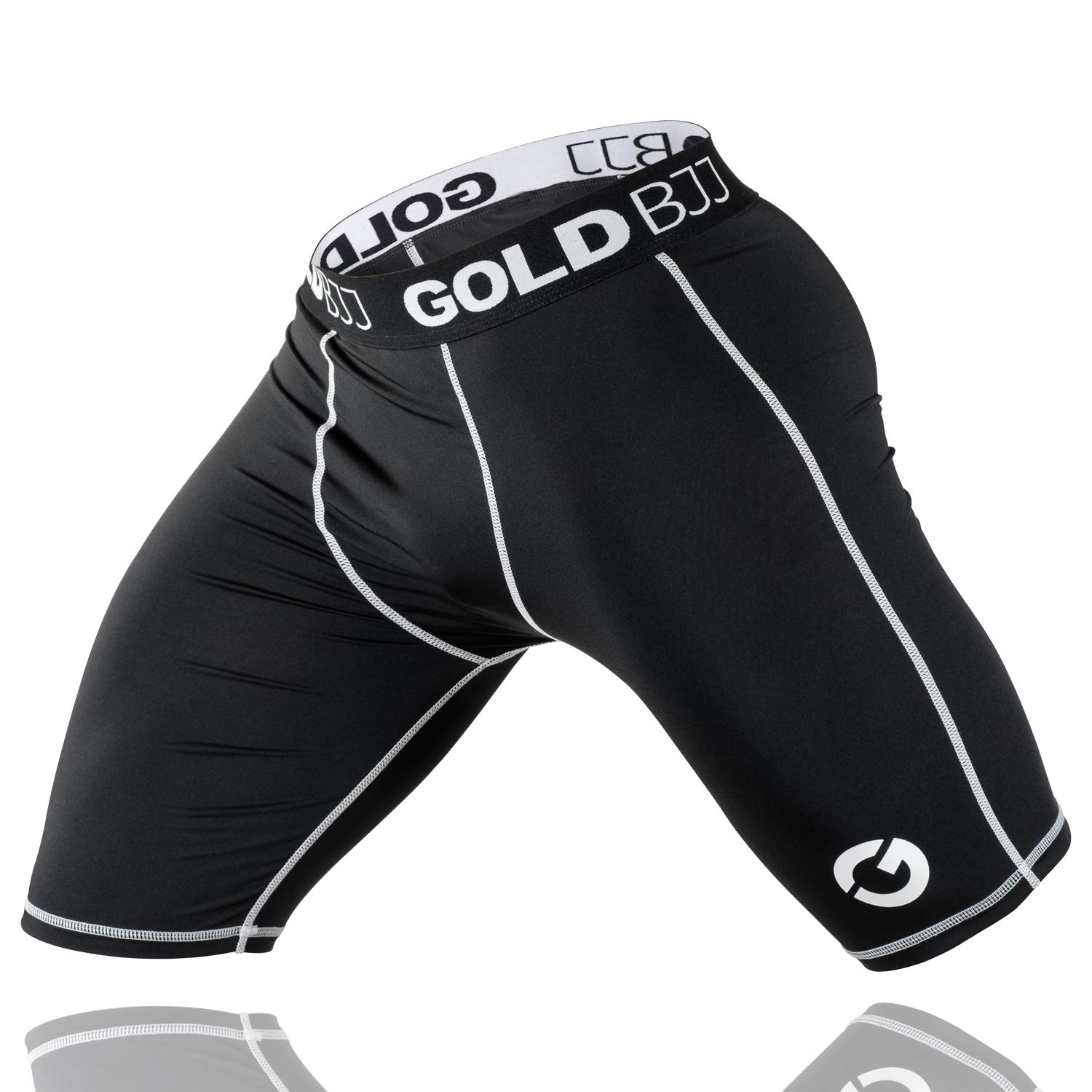
The two common cuts are mid-thigh (roughly a 7-inch inseam) and knee-length (roughly an 11-inch inseam). Both work for no-gi. The choice comes down to how much thigh coverage you want and how your no-gi shorts ride during scrambles.
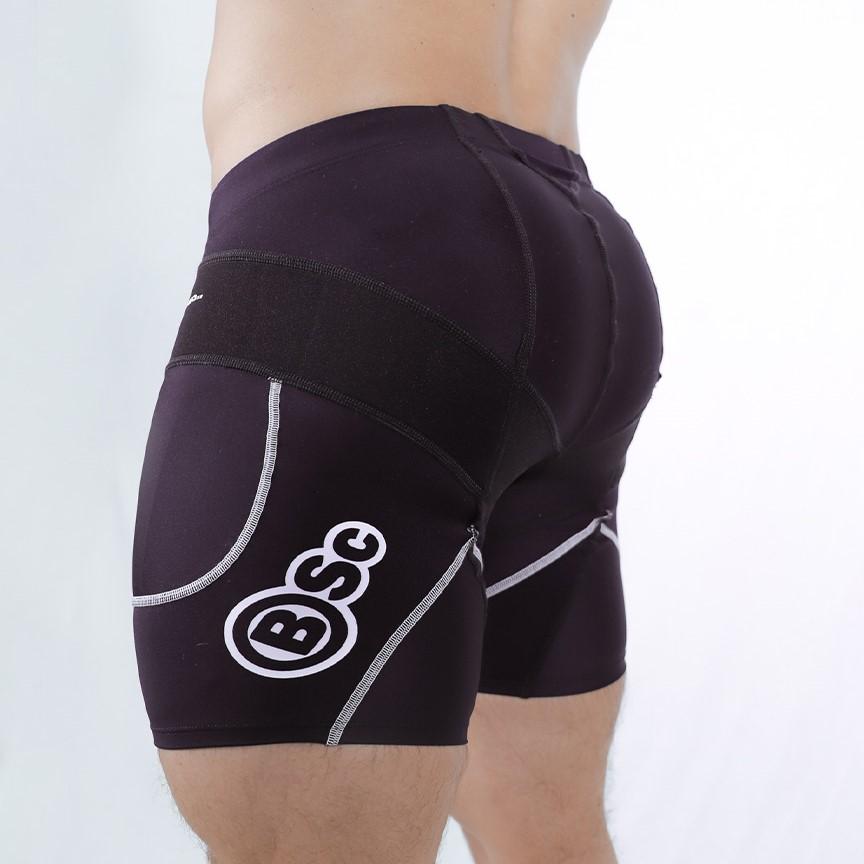
Mid-thigh compression shorts stay invisible under standard grappling shorts and breathe better in a hot gym. Knee-length compression shorts cover more skin, prevent more chafe, and stay put through deep guard work — but they can peek out below shorter no-gi shorts and add a layer of heat. If your gym runs warm or your no-gi shorts have a 7-to-9-inch inseam, mid-thigh is usually the better call. If you train in long fight-style shorts or you’re prone to inner-thigh irritation, knee-length earns its keep.
Seam Placement — the Silent Dealbreaker
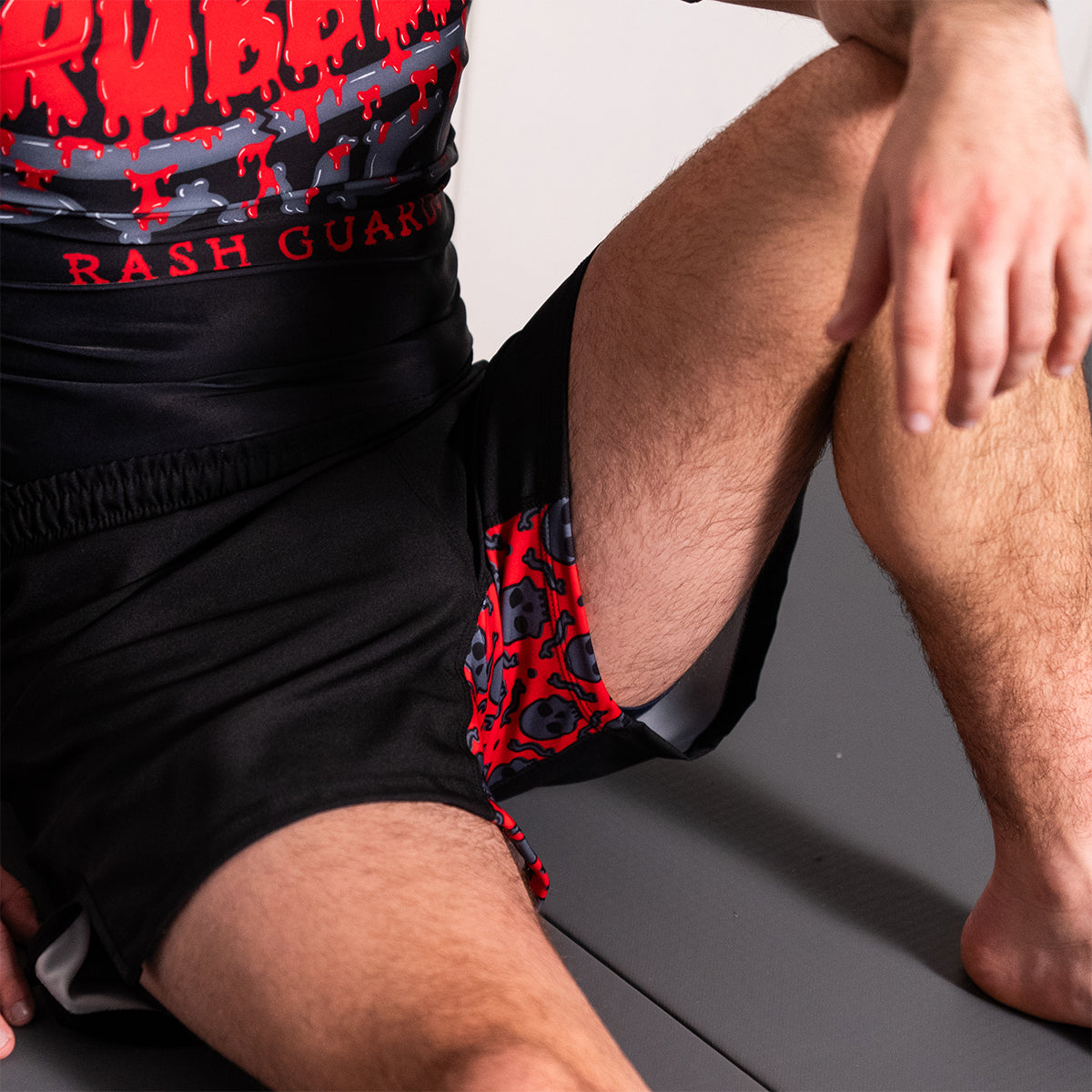
Cheap compression shorts route their inseam straight down the inside of the thigh. That seam sits exactly where your leg presses against your training partner during guard retention, knee shield, and butterfly hooks. Over a 60-minute class, the seam grinds against your skin and you walk home with a red line down each inner thigh.
Better compression shorts use flatlock or bonded seams routed slightly forward or back of the inner-thigh contact zone. When you’re shopping, turn the shorts inside out and run a finger along the inseam. If it’s thick, raised, and dead-center on the inner thigh, expect chafing. If it’s flat, smooth, or routed slightly off-center, you’ve found a pair built for grappling instead of cycling.
Waistband Construction and Grip
The waistband is the second silent dealbreaker. A thin, single-layer waistband rolls down during sit-ups, hip escapes, and any movement that bends you at the waist. A folded or double-layer waistband stays put. A waistband with a silicone or rubber grip strip on the inside is the gold standard — it locks against your skin and won’t roll even when you’re upside down in inverted guard.
Width matters too. A waistband under 1.5 inches will dig in during deep hip flexion. A 2-to-3-inch waistband distributes pressure across more skin and stays comfortable through long rolls. Avoid drawstrings on compression shorts — they create a pressure point under your no-gi shorts’ drawstring and the loose ends get caught during grip exchanges.
Material Mix — Polyester, Spandex, and Nylon
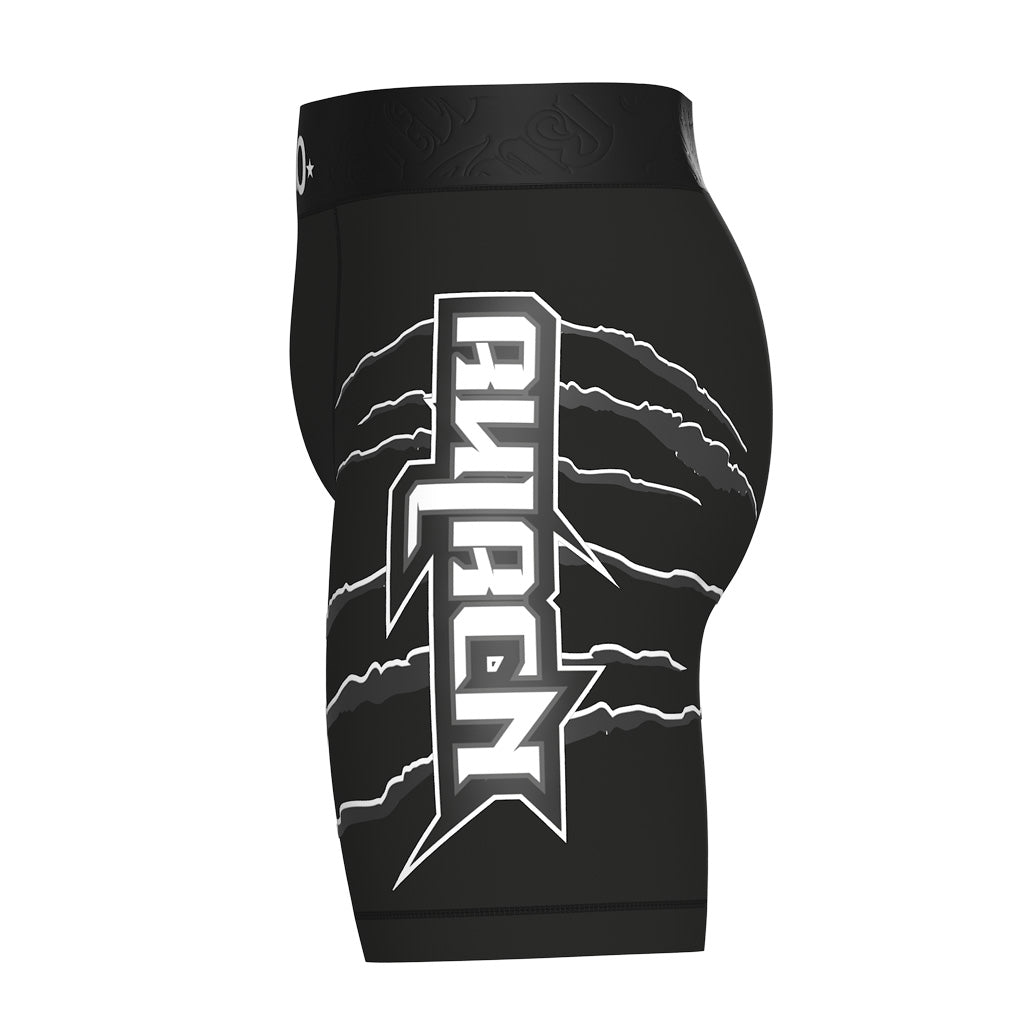
Most decent compression shorts are 80-to-90 percent polyester or nylon with 10-to-20 percent spandex (also sold as elastane or Lycra). The spandex content is what gives compression shorts their compression — under 10 percent and they feel like loose pajamas after a few washes, over 20 percent and they squeeze hard enough to limit blood flow during long rolls.
Polyester-dominant blends wick sweat fastest and dry quickest between sessions — a real consideration if you train twice a day and rotate gear. Nylon-dominant blends feel softer against the skin and resist abrasion better, which matters if your gym has rough mats or you spend a lot of time on the bottom. Avoid anything that lists cotton in the blend; cotton holds sweat, gets heavy, and ferments funk faster than synthetics.
The Cup Pocket Question
Compression shorts with a built-in cup pocket are a personal choice. Some grapplers wear cups for MMA-style sparring, scramble-heavy rolls, or when they’re returning from injury. Most pure BJJ rooms don’t require them and many practitioners find cups uncomfortable for ground work. If you do wear a cup, a dedicated cup-pocket pair holds the cup centered and prevents the shift that happens when you stuff a cup into a regular compression short.
If you don’t wear a cup, an empty cup pocket adds bulk and a hard seam right where you don’t want one. Buy without the pocket and save yourself the extra layer. If you only need a cup occasionally, keep one cup-pocket pair in your bag for those sessions and run regular compression shorts the rest of the week.
Fit Testing Before Your First Roll
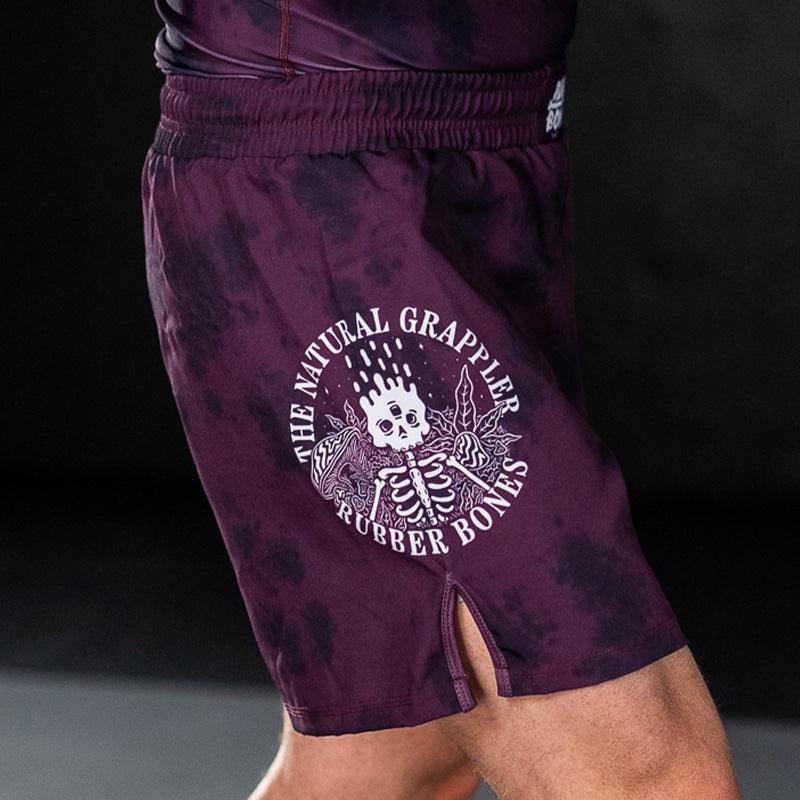
Sizing on compression shorts runs all over the map. A medium from one brand can be tighter than a small from another. Use the brand’s hip and waist measurements rather than the size label, and when in doubt size up rather than down — compression shorts that are too tight pinch the femoral artery during deep squats and triangle defense, and the resulting numbness is exactly the kind of distraction you don’t want when someone is hunting your neck.
The five-minute home test
Before you take a new pair to the gym, run this at home: put them on, do twenty deep squats, twenty hip escapes (shrimps), and a minute of high knees. If the waistband stays put, the inseam doesn’t grind, and you don’t feel numbness in the thighs, you’ve got a working pair. If anything rolls, twists, or pinches in five minutes, it’ll get worse over a sixty-minute class.
Price Tiers — Under $30, $30 to $50, and Above $50
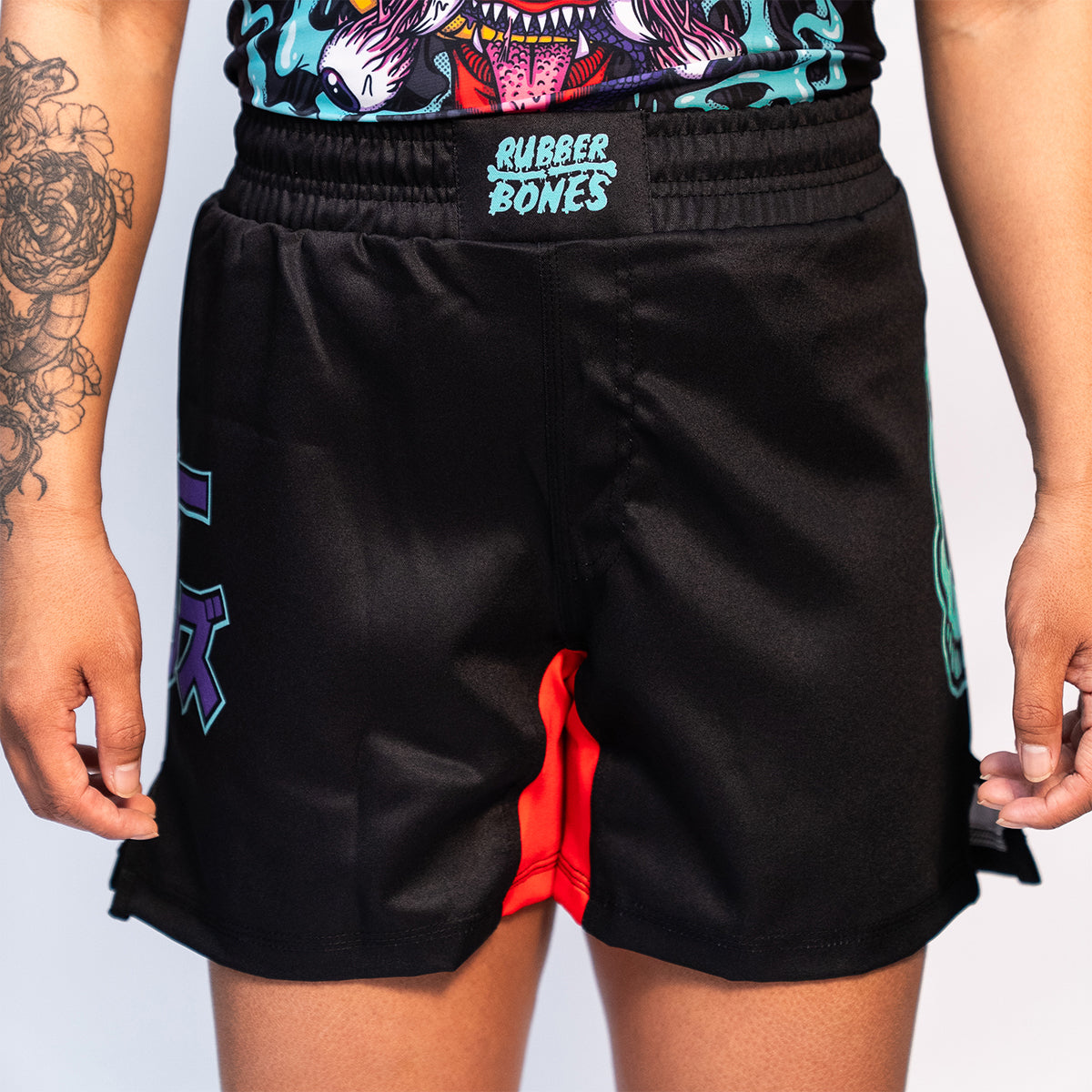
Sub-$30 compression shorts from Amazon-only brands work for occasional training and beginners. Expect thinner fabric, basic seams, and a roll-prone waistband. They’ll get you through two or three classes a week and last six to nine months with regular washing.
The $30-to-$50 range is the sweet spot for hard rollers. Brands in this tier use flatlock seams, gripped waistbands, and higher-spandex blends that hold compression through 100-plus washes. This is where most full-time grapplers should shop.
Above $50, you’re paying for branded grappling-specific cuts, premium fabrics, and sometimes anti-microbial treatments. The marginal gain over a quality $40 pair is real but small. Worth it for competitors and gear collectors, optional for everyone else.
Common Mistakes Grapplers Make
The four mistakes that come up over and over:
- Buying running compression shorts and assuming they work for grappling. They don’t — the inseam routing is wrong and the waistband rolls.
- Sizing down for “more compression.” Tight compression shorts cut circulation and numb your legs in deep guard.
- Only owning one pair. You’ll train in wet shorts at least twice a week. Get three.
- Skipping the cold wash and air dry. Hot dryers kill spandex faster than rolling does.
Building a Compression Shorts Rotation
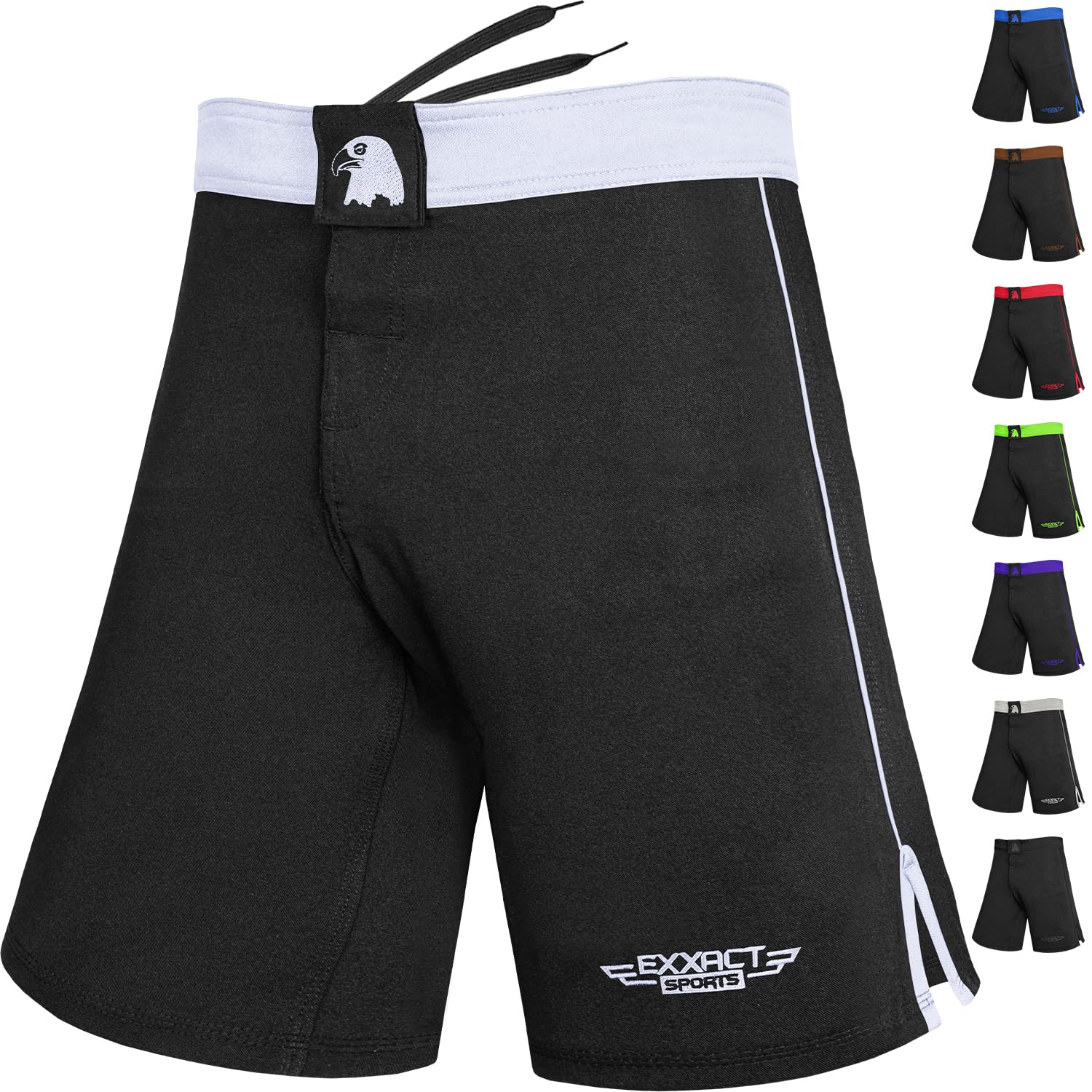
Three pairs is the working minimum for anyone training four-plus times a week. One in the wash, one drying, one in the gym bag. If you train twice a day, bump that to five. Mix lengths if your gym runs hot in summer and cool in winter — two mid-thigh for warm months, two knee-length for cooler training and inversion-heavy classes, and a fifth pair as your backup-backup for tournament weekends.
Treat compression shorts like the technical layer they are. Cold wash, air dry, and replace any pair that’s lost its snap — once the spandex stops compressing, the inseam starts migrating and the chafe problem comes back. A well-maintained $40 pair lasts eighteen months. A neglected $80 pair lasts six.
The Bottom Line
A good pair of compression shorts disappears under your no-gi shorts and lets you focus on the roll. Check the seams, demand a gripped waistband, match the length to your shorts and your gym temperature, and don’t skimp on spandex content. Spend $35 to $45, buy three pairs, and run them in a cold-wash air-dry rotation. That’s the whole compression shorts buying guide in one sentence — everything above is the why behind each call.
Sources
- Wikipedia — Compression garment
- IBJJF — official rules and uniform standards
- Amazon — search results for BJJ compression shorts
Need help ranking on Google? RankOnRepeat manages your entire blog — keyword research, writing, and publishing — so your business shows up when customers search. See how it works →
Browse our top-rated rashguards and no-gi gear at the RashguardGuy shop →