BJJ Mouthguards: 7 No-Gi Essentials
Somewhere between a stack pass and a scramble to the back, an elbow finds a face more often than most no-gi grapplers want to admit. A 2020 meta-analysis in Dental Traumatology pooling injury data across combat sport athletes found dentofacial trauma showing up in grappling disciplines at rates that rival striking sports, and separate sports-dentistry research puts roughly 80% of all dental injuries on the four front teeth — the maxillary incisors sitting right behind the lips.[1] No-gi speeds up transitions and strips away the fabric buffer gi grapplers get from grips and sleeve control, so faces close distance faster during scrambles than most people account for. A rashguard protects your skin. A mouthguard protects the teeth you’re going to need for the next thirty years of training.
Does ADCC or IBJJF Actually Require a Mouthguard?
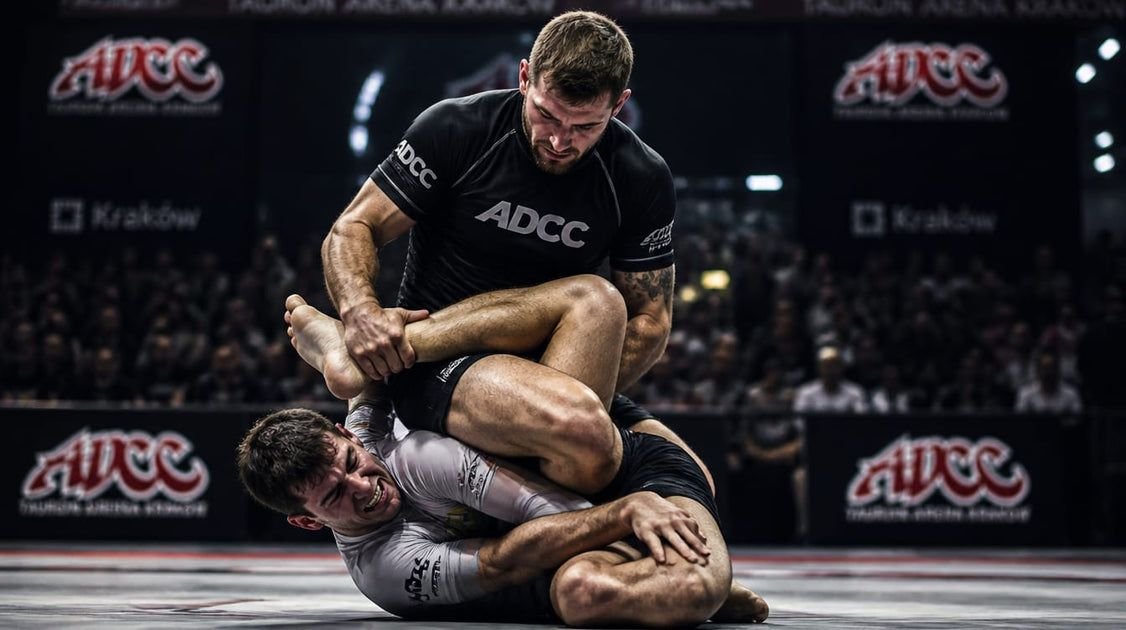
No. ADCC’s equipment rule covers exactly two items: a rashguard (or similar compression top) and shorts, with no kimono, belt, or jacket permitted.[2] A mouthguard isn’t on that list. IBJJF’s no-gi uniform requirements read the same way — mouthguards are recommended, not mandatory, and nobody is checking your mouth before you step on the mat.[3]
That gap matters more than it looks. Because no one is enforcing it, the only person deciding whether you compete or roll unprotected is you. And the two situations that actually cause grapplers to lose teeth — first-time competition adrenaline and a hard scramble against a training partner you’ve never rolled with — are exactly the settings where no official is going to hand you a mouthguard at the door.

Nobody checks for a mouthguard at check-in. That’s on you.
The Injury Numbers No One Talks About in No-Gi
Grappling gets treated as the “safer” combat sport when the conversation turns to faces, and in one narrow sense that’s true — you’re not eating a straight right. But sports-dentistry reviews estimate that oro-dento-facial injuries affect roughly 30–40% of athletes across all contact sports over a career, and lacerations plus crown fractures make up the bulk of that total.[1] In grappling specifically, the mechanism isn’t a punch — it’s a forearm crossing the face during a stack pass, a knee sliding past a frame, or a head clash during a scramble to underhooks. None of those show up on highlight reels, which is probably why the injury gets underreported relative to how often it happens.
Here’s the part worth sitting with: rolling with a brand-new training partner is statistically riskier for your teeth than rolling with someone you’ve drilled with for two years. Chaotic scrambles, mismatched control, and a partner who doesn’t know how to slow down are a worse combination than raw skill level. If you’re stepping onto a new mat, in a new gym, or into a tournament bracket full of strangers, that’s the exact moment a mouthguard earns its cost.
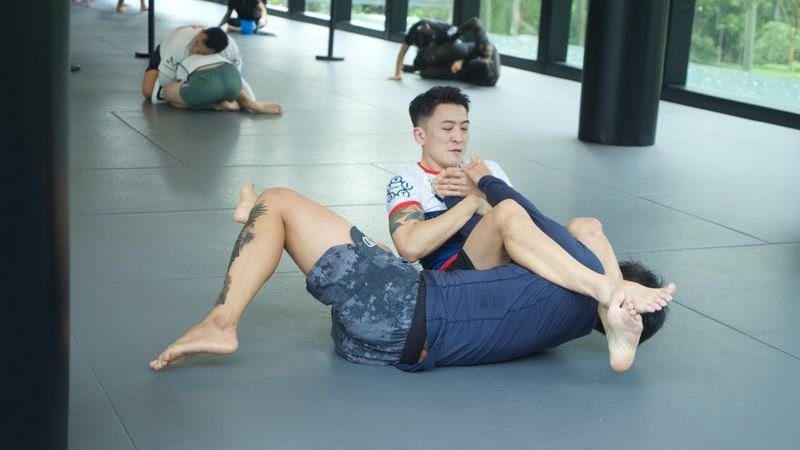
Scrambles, not clean technique, are where faces get caught.
Boil-and-Bite vs Custom-Fit: What Actually Holds Up Through a Hard Roll
Boil-and-bite guards rely on softened thermoplastic that you bite into and hold while it cools around your teeth. The appeal is obvious: a $15–25 price tag and a guard that’s ready to wear in ten minutes. The problem shows up twenty minutes into a hard round. As your jaw opens wider to breathe, the guard loosens at the back molars first, and by the third round a lot of grapplers are clenching just to keep it seated instead of actually breathing through it.
Custom-molded guards are built from an impression you take at home with a mail-in kit or at a dentist’s chair, then manufactured to that exact bite. They run $60–150 depending on the brand, take one to two weeks to arrive, and lock onto the contour of your molars well enough that you stop thinking about them mid-roll. The tradeoff is obvious too — you can’t grab a spare from a gym bag the morning of a tournament if you forget it. Most competitors who make the jump to custom do it after losing a boil-and-bite guard mid-scramble once, not before.
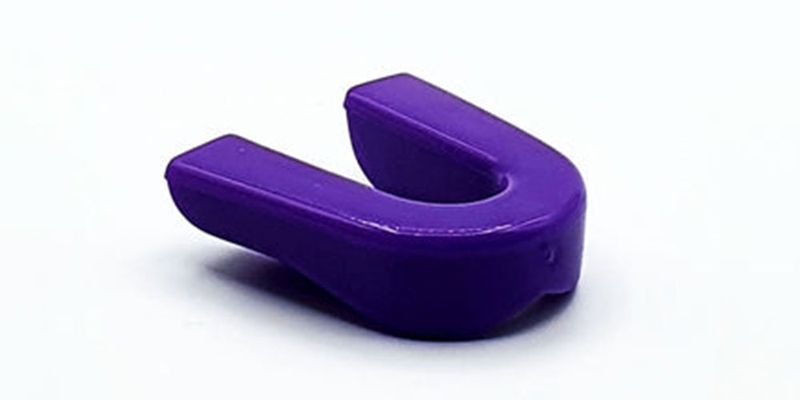
A mouth-formed boil-and-bite guard — cheap, fast, and fine for most training.
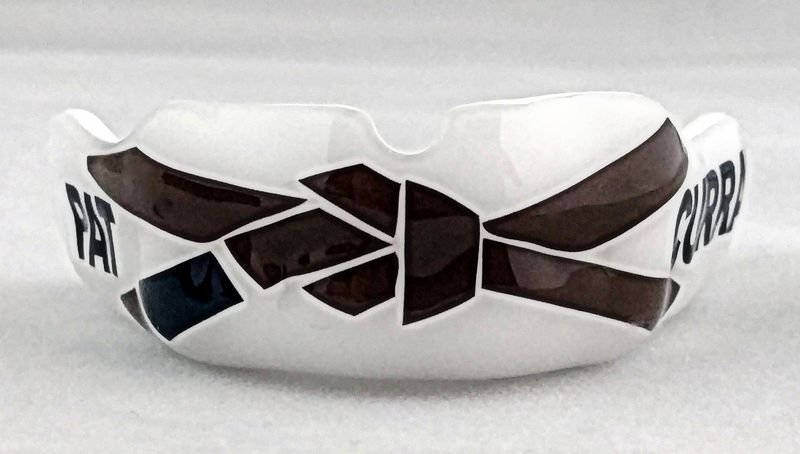
A custom-molded guard locks onto your exact bite and stays put through scrambles.
Single Mold vs Dual-Arch: Do You Need Both Rows Covered?
Most mouthguards sold for BJJ only cover the upper teeth, and for the majority of no-gi grapplers that’s the correct call. Grappling doesn’t produce the uppercut-style shots to the jaw that make boxers and MMA strikers protect both rows. Dual-arch or “double” guards matter in two specific cases: grapplers running braces on both upper and lower teeth, where the orthodontic hardware itself needs shielding from both directions, and grapplers who cross-train striking alongside BJJ. If neither applies to you, a single-arch guard is one less piece of plastic to keep track of and one less thing restricting your bite while you’re trying to breathe through a hard exchange.
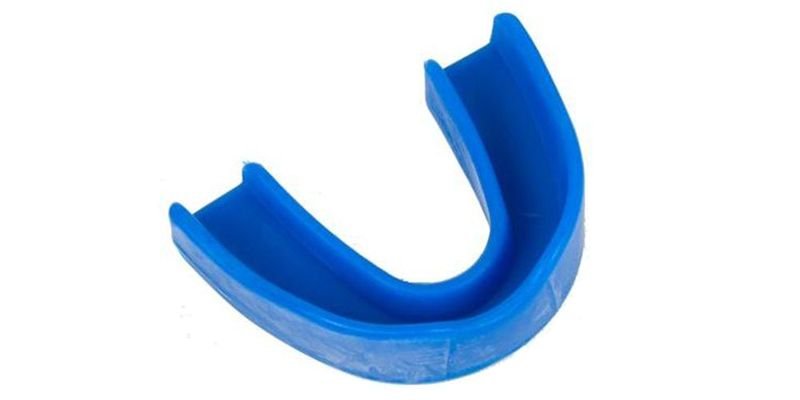
A basic single-arch mold — enough protection for most no-gi rolling.
Why Thin Wins When You’re Breathing Through a Six-Minute Round
This is where no-gi mouthguard shopping actually diverges from what a boxing gym would tell you. Boxing rounds run three minutes with a sixty-second break between them and a mouthpiece that can come out at the corner. ADCC-style no-gi matches run six to ten-minute periods with the mouthguard staying in the entire time, no break, no corner. A guard that restricts airflow costs you gas tank in a sport where gas tank decides who’s finishing the takedown in the last thirty seconds.
That’s the whole argument for ultra-thin guards like SISU’s 1.6mm line, which trades some raw material bulk for a real breathing channel, and it’s the same logic behind Venum’s gel-frame Challenger and similar designs that build an air gap directly into the mold. You’re not choosing thin because it looks better. You’re choosing it because a guard you can’t breathe through gets pulled out mid-round, defeating the entire point of wearing one.
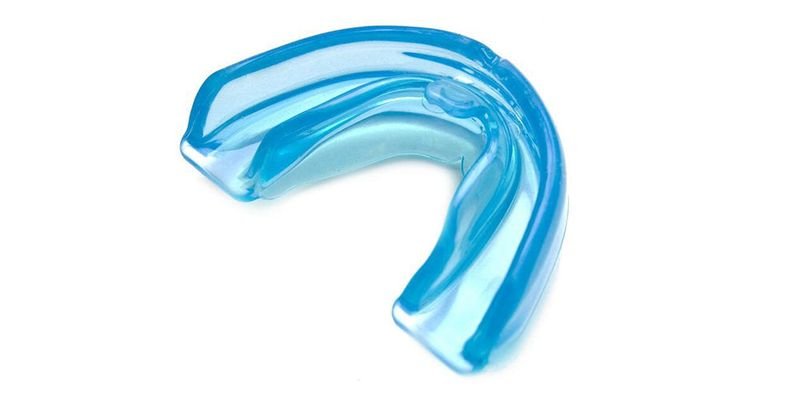
Thinner material, real breathing channels — built for rounds that don’t stop.
The Clinch and Scramble Problem: Where Guards Actually Get Knocked Loose
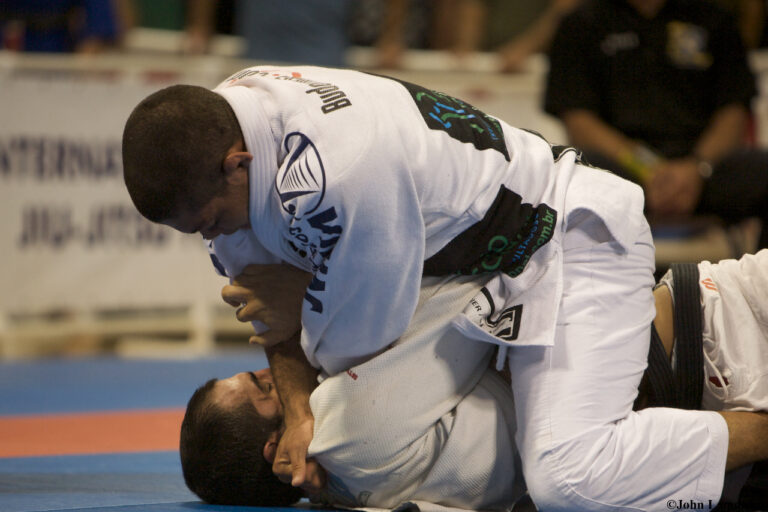
Collar ties and clinch fighting are the most underrated mouthguard hazard in no-gi. A double collar tie puts a forearm directly across the lower half of your face while both grapplers are fighting for takedown position, and that’s before either athlete has hit the ground. The same goes for the transition out of a stack pass, where a defending grappler’s frame slides up under the chin as they try to create space. None of this is dirty grappling — it’s just where hands, forearms, and skulls end up during a normal exchange for position.
If you want a fuller picture of how the clinch phase specifically loads up risk to the head and face, it’s worth reading through how the tie-up phase exposes grapplers to head contact — the same mechanics that put ears at risk put a loose mouthguard at risk too.
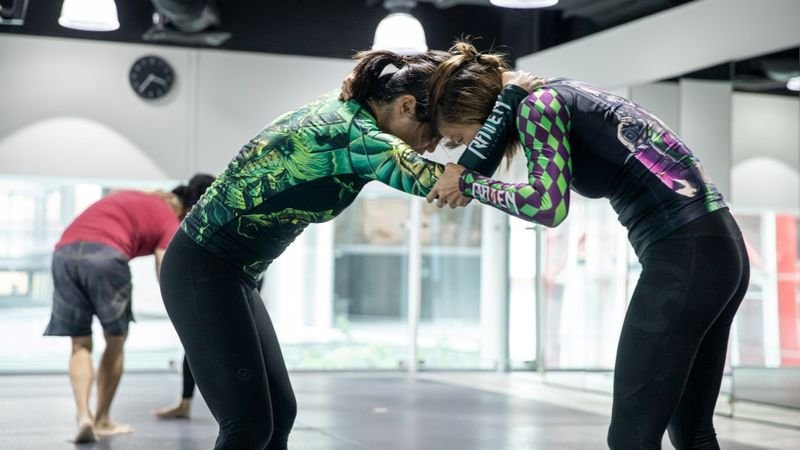
Collar ties and clinch fighting — the most overlooked mouthguard hazard in no-gi.
Fit, Hygiene, and When to Replace a BJJ Mouthguard
Rinse it under cold water immediately after every session — heat and saliva left to sit is exactly what breeds bacteria, and warm water can warp a boil-and-bite guard out of its fitted shape. Once a week, give it an actual scrub with a toothbrush and a small amount of mild soap, not toothpaste, which is abrasive enough to scratch the surface and create more places for bacteria to hide. Store it in a vented case, not a sealed zip pouch — sealing a damp guard is the fastest way to grow something you don’t want in your mouth twice a day.
Boil-and-bite guards lose their cushioning after three to six months of regular training as the plastic hardens and stops absorbing impact the way it did on day one. Custom guards last longer, typically twelve to eighteen months, but check for thin spots or bite-through marks on the molars every few weeks — once material wears through where your teeth actually clamp down, the guard stops doing its job at exactly the point of impact.
Common Mistakes No-Gi Grapplers Make With Mouthguards
A few habits show up constantly around any no-gi gym, and most of them are easy to fix once you know to look for them.
- Buying an MMA striking guard instead of a grappling-specific one. Guards built for absorbing a hook to the jaw are thicker and bulkier than grappling needs, and that extra bulk is exactly what gets in the way of breathing through a long round.
- Wearing a boil-and-bite two years past its expiration. Once the plastic goes soft and stops holding its molded shape, it’s not protecting anything — it’s just occupying space in your mouth.
- Storing it wet in a sealed gym bag pocket. That’s a humid, dark environment built for bacteria, and it’s the reason a lot of mouthguards start smelling within a month.
- Skipping it during drilling because “it’s not live rolling.” A surprising number of chipped teeth happen during supposedly controlled reps, not chaotic scrambles, because nobody’s guard is in for a drill that’s “just going through the motions.”
None of these mistakes are complicated to fix. They’re just easy to ignore until the one roll where they matter.
A mouthguard is the cheapest piece of gear in a no-gi grappler’s bag and the one most likely to get left in a gym bag pocket instead of a mouth. Before you upgrade your next rashguard or replace a worn set of competition gear bag essentials, check whether the guard you’re using is doing its actual job or just taking up space. Building out a full no-gi training kit means treating a mouthguard as required gear, not an afterthought, even when the rulebook doesn’t say you have to.
Sources
- Polmann H, et al. “Prevalence of dentofacial injuries among combat sports practitioners: A systematic review and meta-analysis.” Dental Traumatology, 2020 — pooled injury data across combat sport athletes.
- ADCC Rules Explained — Submission Wrestling, CNX BJJ — breakdown of ADCC’s no-gi equipment requirements.
- IBJJF Mandatory No-Gi Uniform Requirements, Elite Sports — confirms mouthguards are recommended, not mandatory.