Cost Per Roll: The Real Math Behind a Cheap Rashguard
Quick Answer: Cost-per-roll — total price divided by the number of hard sessions a rashguard actually survives — is a better way to compare a $25 shirt and a $90 shirt than the sticker price alone. A $25 rashguard that lasts 30 rolls costs 83 cents per session. A $45 rashguard built with real construction and lasting 200 rolls costs about 22 cents per session — the same as a $90 piece lasting 400. The cheapest shirt on the page is often not the cheapest way to train.
For the full breakdown of which construction details actually decide whether a rashguard survives 30 rolls or 300 — fabric blend, flatlock seams, gusset, collar, sublimation — see our complete guide to what your money buys under $50. This piece is just the math: how to actually run the cost-per-roll number yourself, and why the tier you land in changes with how often you train.
The Formula
Cost-per-roll is price divided by expected session count. The tricky part isn’t the division — it’s estimating session count honestly, because that number depends on construction, not price alone. A rough rule of thumb from real-world durability reports: sub-$30 rashguards without flatlock seams or a gusseted underarm tend to fail somewhere between 30 and 80 hard sessions. Rashguards in the $35–50 range with full flatlock construction, a real gusset, and 220+ GSM fabric commonly reach 120 to 200 sessions. Beyond that, you’re paying for smaller, harder-to-quantify gains — a few extra months of print sharpness, a name-brand cut — that don’t move the cost-per-roll number nearly as much as the seam and fabric jump does.
Working the Numbers
A $25 rashguard that survives 30 sessions costs roughly 83 cents per roll. A $45 rashguard that lasts 200 sessions runs 22 cents per roll. A $90 piece that lasts 400 sessions hits the same 22 cents. The under-$30 tier is rarely the cheapest path in the long run — it is just the cheapest the day you swipe the card. That math flips fast once you start training four or five times a week, which is exactly why the cost-per-roll lens matters more as your training volume goes up.
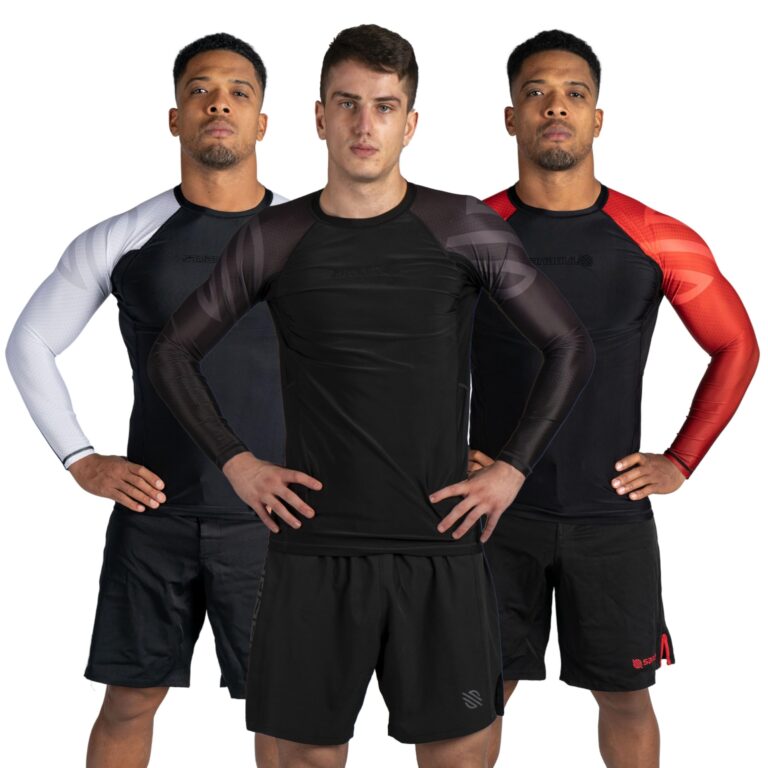
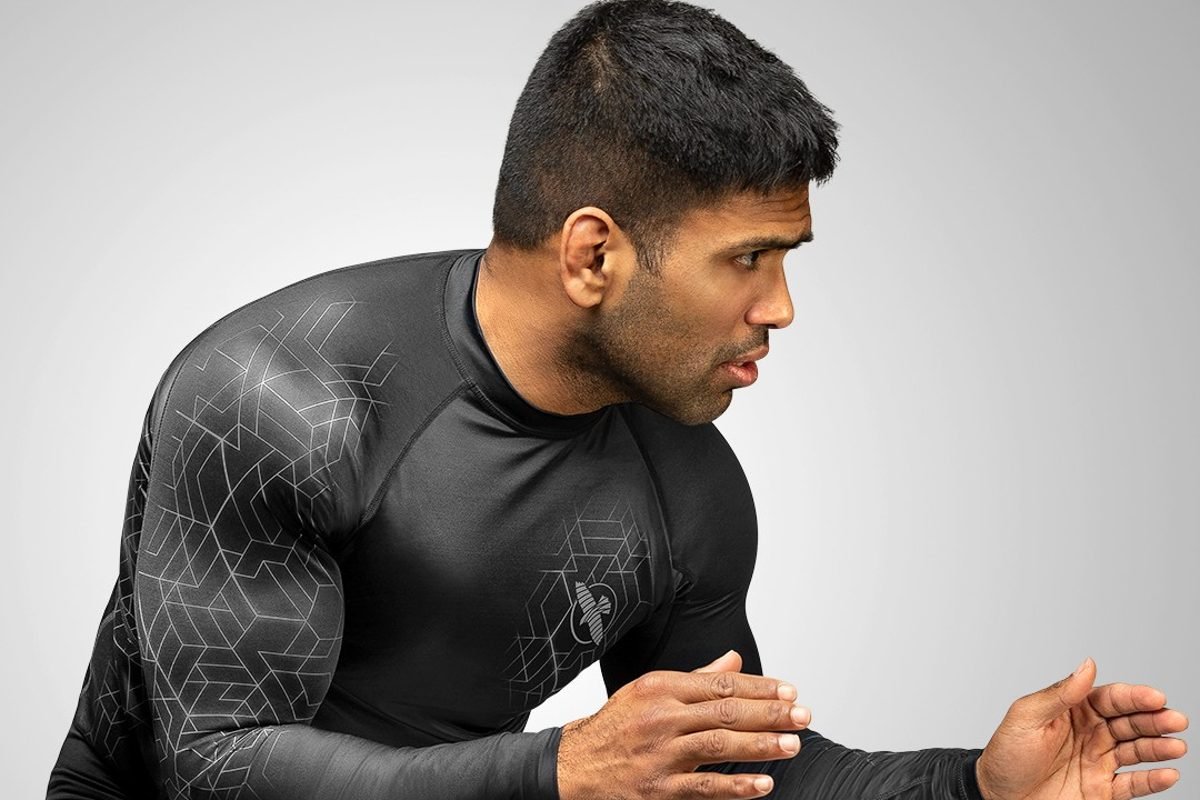
The practical use of this number isn’t to talk yourself into the most expensive option — it’s to catch the trap in the middle of the range. A $45 rashguard that skips flatlock seams and the underarm gusset is not a discount on the $90 piece; it’s the $25 shirt’s failure rate wearing a higher price tag. Before you compare price, run the construction checks — flatlock seam, gusset, bonded collar, sublimated print — because those are what actually set the session count on the bottom of the fraction.
Match the Math to Your Training Volume
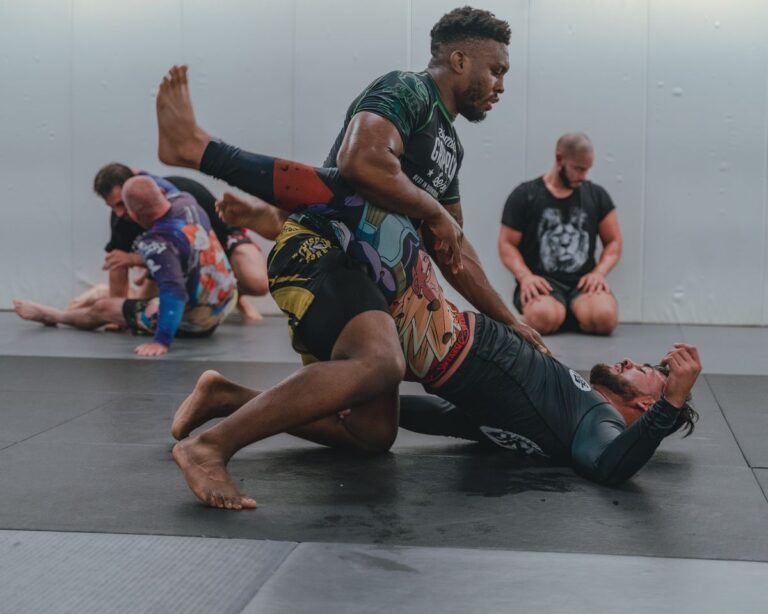
Cost-per-roll only matters as much as your training frequency makes it matter. For tournament-only use at one or two rotations a week, the under-$50 mid-tier is genuinely all you need — you won’t put enough volume through the fabric to separate a $45 shirt from a $90 one. For daily no-gi training at five or six sessions a week, a $25 to $30 piece becomes a real liability: you’ll burn through three or four a year, which adds up to more than one well-built $90 piece would cost over the same period, and you spend that year training in increasingly worn-out gear.
Match the rashguard tier to your training volume, not your aspirational budget. The best rashguard under $30 is the one you buy with eyes open about its limits. The best rashguard in the $35–50 range is the one that quietly outperforms its price because the money went into construction instead of graphics — and now you have the formula to prove it to yourself instead of guessing.
Sources
- IBJJF official uniform regulations for no-gi competition — the standards competition rashguards must meet.
- Rash guard — Wikipedia
Browse our top-rated rashguards and no-gi gear at the RashguardGuy shop →