Kneebar No-Gi: 7 Proven Keys to a Tight Finish
Rousimar Palhares built an entire UFC career on leg locks — 12 of his 16 submission wins came from attacking legs, and the kneebar was a big part of that arsenal. That number tells you something most white belts learn the hard way: the leg is a joint like any other, and hyperextending the knee ends a match just as fast as an armbar ends it. The kneebar no-gi game rewards timing and hip drive over strength, which is exactly why smaller grapplers keep tapping bigger, sweatier opponents with it. This guide breaks down how the submission actually works, the entries worth drilling, the rules that decide when you can use it, and the seven details that separate a tap from a slip-out.
What Is a Kneebar in No-Gi?
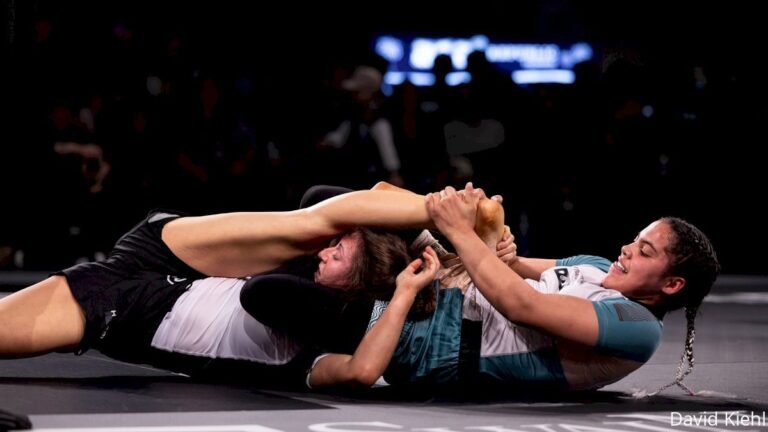
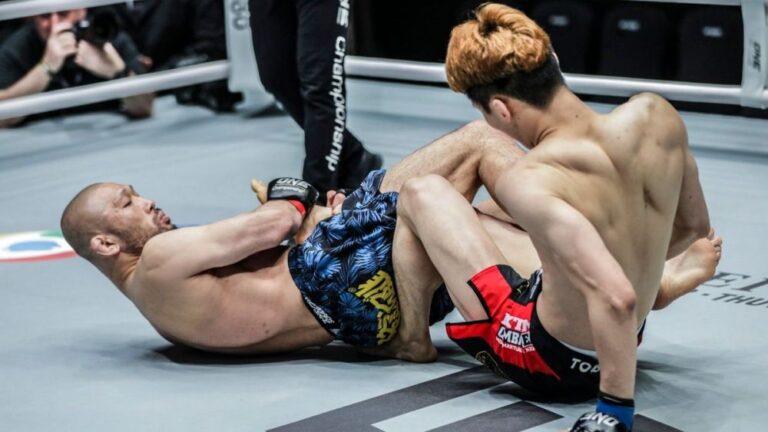
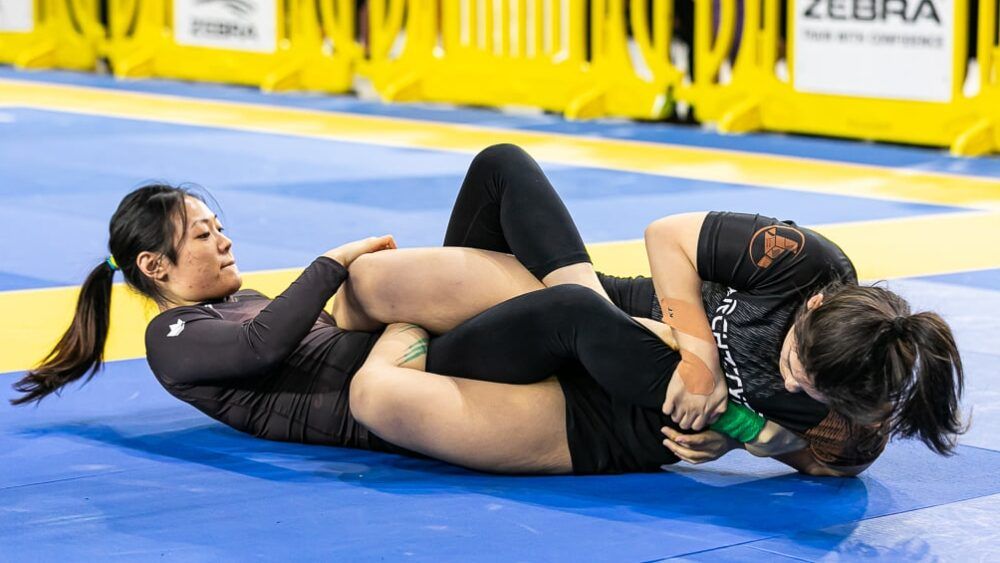
A kneebar attacks the knee by forcing it past its natural range of extension. You control your opponent’s foot and ankle high against your torso, clamp both of your legs around their thigh to lock the hip in place, then arch your hips into the back of their knee. Because the knee only bends one way, that arch has nowhere to go but into the joint. Tap or damage — those are the two outcomes, and good partners tap early.
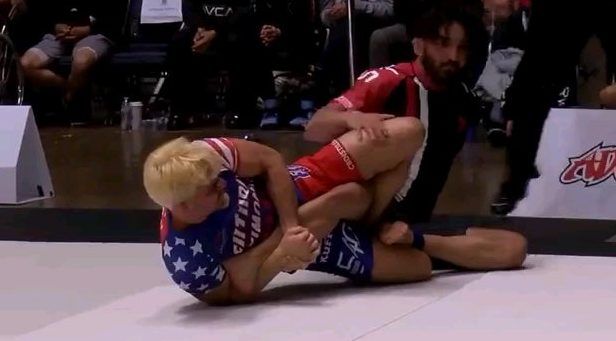
Leg attacks decide more no-gi matches than any other submission family at black belt.
Mechanically it mirrors the armbar. On an armbar you pinch the elbow and bridge into it; on a kneebar you pinch the knee and bridge into it. The difference is that the leg is stronger, so control matters more than power. If your opponent can bend their knee even slightly, they buy space and the finish evaporates. Everything in a tight kneebar exists to kill that bend.
Why the Kneebar Works So Well Without a Gi
Strip the gi away and defense gets harder, not easier. In the gi, a defender can grab their own pant leg, frame on your collar, or stall from inside a leg entanglement while they wait out the clock. None of that exists in no-gi. Sweat makes grips slide, and there’s no fabric to anchor a defensive frame. Once you weld their foot to your chest and clear their free leg, the kneebar is genuinely hard to escape.
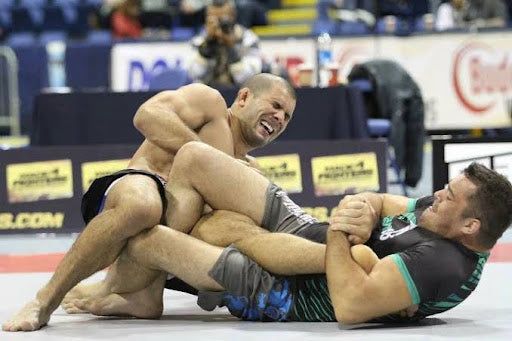
There’s a second reason it thrives in no-gi: it chains. A kneebar that stalls out flows straight into a toe hold, a straight ankle lock, or an inside heel hook without giving up position. Attacking the leg is rarely one submission — it’s a menu, and the kneebar is one of the safer items on it because it targets a hinge joint rather than the rotational vulnerability of the knee that makes heel hooks so dangerous.
Are Kneebars Legal? IBJJF, ADCC, and NAGA Rules
The short version: it depends entirely on who’s running the tournament and what belt you wear. Under IBJJF rules, kneebars are banned for white, blue, and purple belts and only become legal at brown and black belt, in both gi and no-gi. That restriction is why most hobbyists never drill them seriously until years into training — and why they get caught by them.
Submission-only and no-gi-specific rulesets are far more permissive. ADCC allows kneebars for every competitor in the bracket, alongside heel hooks and reaping. EBI and most local submission-only events do the same. NAGA sits in the middle: a strong kneebar attempt that forces a full defense can even earn you points on the scorecard. If you compete, read the specific ruleset before you step on the mat — assuming your gym’s rules match the tournament’s is how people get disqualified.

The 7 Keys to a High-Percentage Kneebar
Plenty of people can find the position and still lose the finish. These are the details that decide it.
- Weld the ankle to your chest. The single most common reason a kneebar fails is the foot drifting away from your body. Hug it like you’re protecting it. Any gap lets the knee bend.
- Pinch your knees. Your legs are the clamp that isolates their thigh. Loose knees mean their hip rotates out and the extension misses the joint.
- Point their kneecap up. The finish only works when the back of their knee faces your hips. If their leg is turned, you’re extending into muscle, not the joint.
- Kill the free leg first. Their other leg is their engine for spinning out. Staple it with a leg, an underhook, or a wedge before you commit to the arch.
- Finish with your hips, not your arms. Bridge your posterior chain into their knee like an armbar. Pulling with your arms is weak and slow; a hip bridge is unstoppable.
- Control the angle. A perpendicular angle to their body gives you the mechanical advantage. Square up and you’re arm-wrestling a much stronger joint.
- Have the next attack ready. If they hide the knee, transition to a toe hold or heel hook without releasing the trapped leg. The threat of the follow-up is what forces the tap.
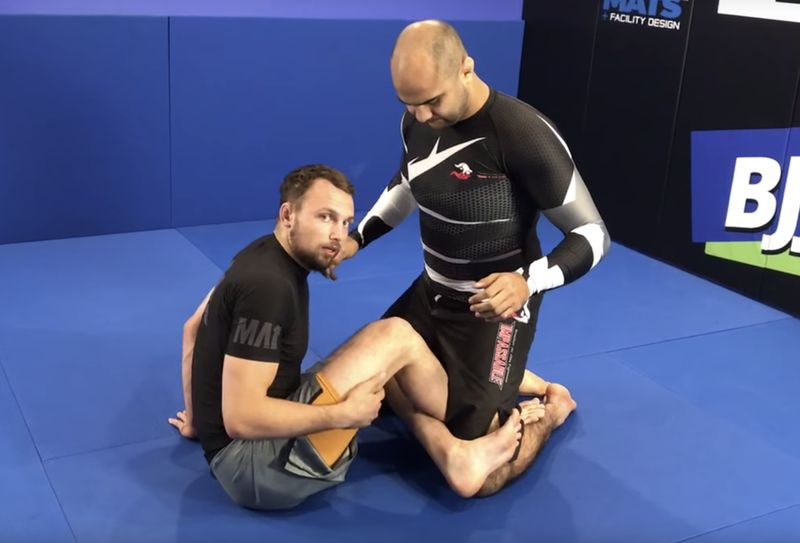
Control the foot and the thigh before you ever think about extending — the finish is the last step, not the first.
Best Kneebar Entries in No-Gi
The submission is only as good as your ability to get to it. Four entries carry most of the load in modern no-gi.
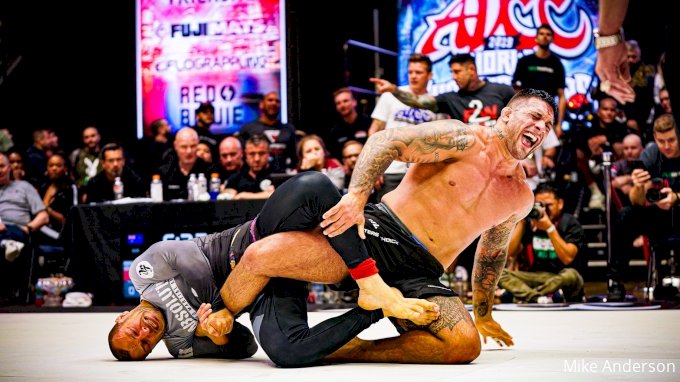
The 50/50 kneebar is the highest-percentage of them all. From that symmetrical entanglement you can grab their leg high, trap the foot under your armpit, and rotate belly-down into the finish. Gabriel Arges made a name innovating kneebars specifically from 50/50, and it pairs perfectly with the heel hook threat from the same position.
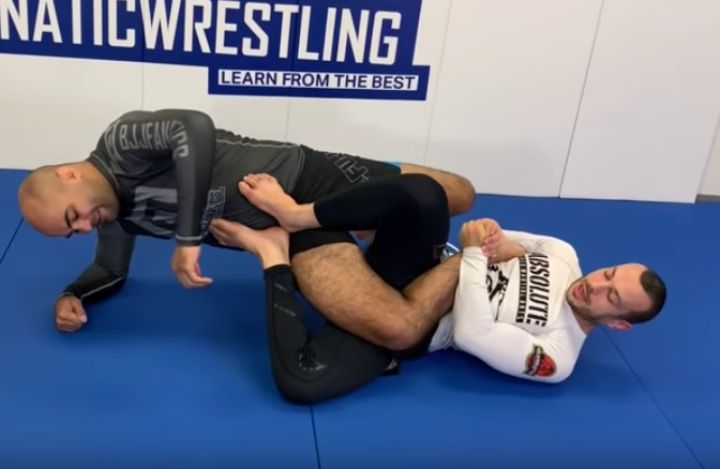
The ashi garami and saddle family is the other main highway. Once you’ve built the leg entanglement, exposing the knee for a kneebar is often just a matter of switching your hips. If you want to build this base, our breakdown of ashi garami leg entanglements covers the control positions that feed straight into it. The back-step counter comes off passing: fake or commit to a knee-cut, and when your opponent frames to stop it, back-step over their leg and drop into the kneebar. Finally, the double-leg counter shows up when you shoot, they sprawl, and you keep hold of the near leg — spin under and the kneebar is right there.
Kneebar vs. Heel Hook: Which Should You Learn First?
The honest answer most instructors avoid: learn the kneebar first. The heel hook finishes faster and hurts less on the way in, which is exactly what makes it dangerous to drill — training partners don’t feel the damage until the knee is already torqued. The kneebar gives clearer feedback. Your partner feels the stretch building and taps to pain, not to structural failure. That makes it a safer submission to develop timing and control with before you graduate to the heel hook.
They also live in the same neighborhoods. If you understand ashi garami and 50/50 well enough to threaten a heel hook, you already understand the positions the kneebar comes from. Treat them as two finishes off one control system rather than two separate techniques to memorize.
How to Defend and Escape the Kneebar
Defense starts before the finish, at the entry. The moment you feel someone isolating a leg and hunting the entanglement, your job is to keep your knee bent and your foot pointed toward them. A bent knee can’t be hyperextended, full stop. Grapplers call it the “boot” — flex the ankle, curl the leg, and deny the straight line the attacker needs.
If they’ve secured the position, the escape is rotation. Turn toward your trapped leg to unwind the pressure and chase their exposed leg for a counter — leg entanglements are frequently a race, and the counter-kneebar is real. Hand-fighting to strip their grip on your foot buys the space to spin free. What you should never do is stand and try to rip the leg out by force; that straightens the knee for them and hands them the finish.
The Leg-Lockers Who Made the Kneebar Respectable
For decades, leg locks carried a stigma in Brazilian jiu-jitsu — “dirty,” “cheap,” a shortcut that “real” grapplers avoided. Dean Lister punctured that thinking with a famous line to John Danaher: why would you ignore half the human body? Danaher took the question seriously and, with the Danaher Death Squad — Gordon Ryan, Garry Tonon, and the Ryan brothers — systematized leg attacks into the sport’s most feared game.

The proof landed at ADCC 2019, when Lachlan Giles — under 77 kg — submitted three world-class heavyweights in the absolute division, all by inside heel hook from 50/50, on his way to a bronze medal. That run did more to legitimize leg attacks than a decade of arguing. In MMA, Rousimar Palhares and Masakazu Imanari had already shown how brutally effective the kneebar and its cousins are when defenders don’t respect them. Today, if you train no-gi and skip leg locks, you’re the one giving up half the body — and reading our look at Gordon Ryan’s no-gi legacy shows just how far that shift has gone.
Watch: Kneebar Step-by-Step
Reading mechanics only takes you so far. This walkthrough shows the control-to-finish sequence in real time.
Add the Kneebar to Your No-Gi Game
Start where the reps are safe: drill the 50/50 and ashi garami entries with a partner who taps early, and obsess over welding the foot to your chest before you ever bridge. Get those two habits right and the kneebar becomes one of the most dependable finishes you own — no grip strength required, no gi required, and no easy way out for the person on the wrong end of it. When you’re ready to widen the leg-lock menu, the toe hold is the natural next chain off the exact same positions.
Sources
- Evolve Daily — Kneebar Explained: How To Do A Kneebar In BJJ — mechanics, entries, and finishing details.
- BJJ Fanatics — Leg Entanglement BJJ — 50/50 and ashi garami control positions.
- BJJ Eastern Europe — Lachlan Giles’ ADCC 2019 Heel Hook Run — the absolute-division upset that legitimized leg attacks.
- Wikipedia — Rousimar Palhares — leg-lock submission record in MMA.
- NAGA Fighter — What Is a Kneebar in BJJ? — ruleset and scoring notes.
Browse our top-rated rashguards and no-gi gear at the RashguardGuy shop →