No-Gi Paper Cutter Choke: 7 Keys to the Tap
The no-gi paper cutter choke (bread cutter choke) finishes without a collar grip — here’s the palm-to-palm setup, the S-grip upgrade, and the elbow angle that makes or breaks it.

The no-gi paper cutter choke (bread cutter choke) finishes without a collar grip — here’s the palm-to-palm setup, the S-grip upgrade, and the elbow angle that makes or breaks it.

A grappling dummy no-gi routine works for anything you can drill without a reaction: finishing mechanics on leg locks, chokes, and armbars, guard-passing footwork, and takedown entries. It does not replace a training partner for grips, scrambles, or timing, because a dummy never fights back. Buy one between 45 and 85 pounds depending on whether…
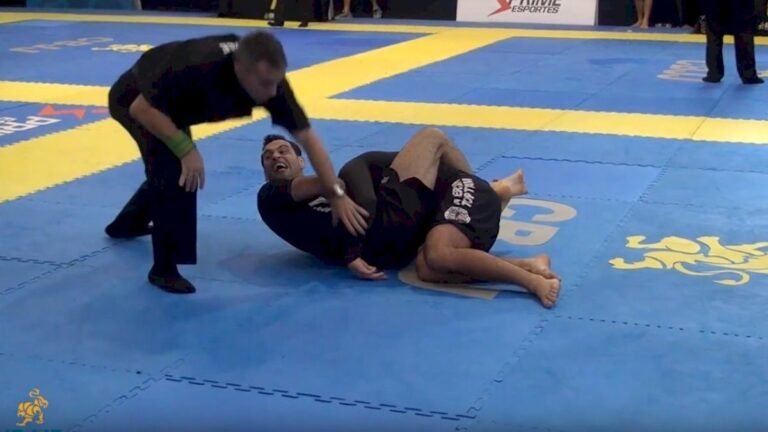
The near-side pass is the foundation of guillotine choke defense in no-gi: drive your hips into the choking arm’s side, shoulder across their centerline, and walk to side control on that same side. Passing away from the choke tightens it — passing into it compresses their own arm and kills the angle. Most escapes fail…
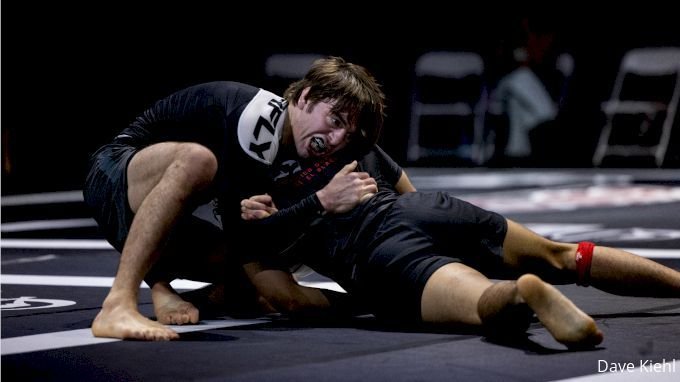
The turtle position in no-gi grappling is when a grounded opponent is on all fours with their back exposed — and it is one of the highest-percentage back-take positions in submission wrestling. Attacking from the top requires understanding five core entries: the seat belt to hooks, the tilt roll, the anaconda choke, the arm drag,…
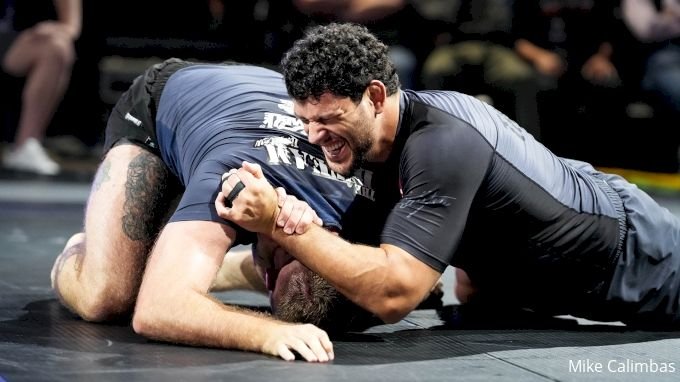
The no-gi guillotine choke traps the opponent’s head after a failed takedown or scramble, applying a forearm blade against the throat or carotid arteries until the submission or tap. The three variations that finish at elite level are the classic front headlock guillotine, the arm-in version, and the high elbow finish — all built on…

Quick Answer: The 7 submissions that consistently work from top mount in no-gi grappling are: the arm bar from S-mount, the kimura, the Americana, the Ezekiel choke (no-gi variation), the mounted triangle, the back take into a rear naked choke, and the arm triangle transition to north-south. The difference between finishing from mount and just…
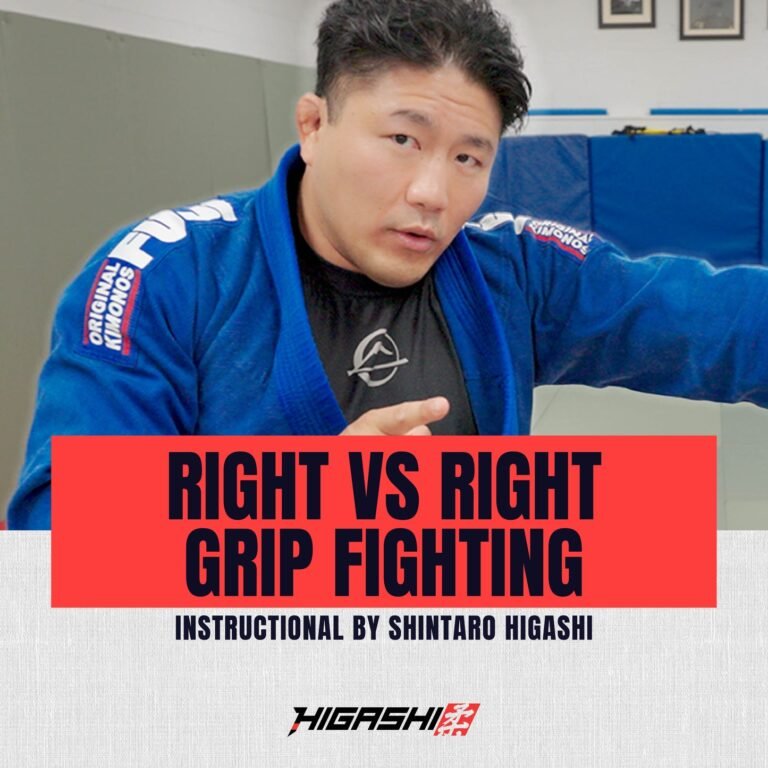
Quick Answer: No-gi grip fighting is the battle for dominant hand and body position before a takedown or guard pull is established. The key positions — underhook, collar tie, arm drag, and wrist control — each create a different attack pathway. Winning the grip exchange determines who dictates the match, not who has the better…
Quick Answer: The body triangle in no-gi is a back control variation where you replace one hook with a leg triangle locked around your opponent’s torso. It eliminates the most common back escape (rolling to the free hook side), forces a constant rib squeeze that drains energy, and sets up the rear naked choke more…
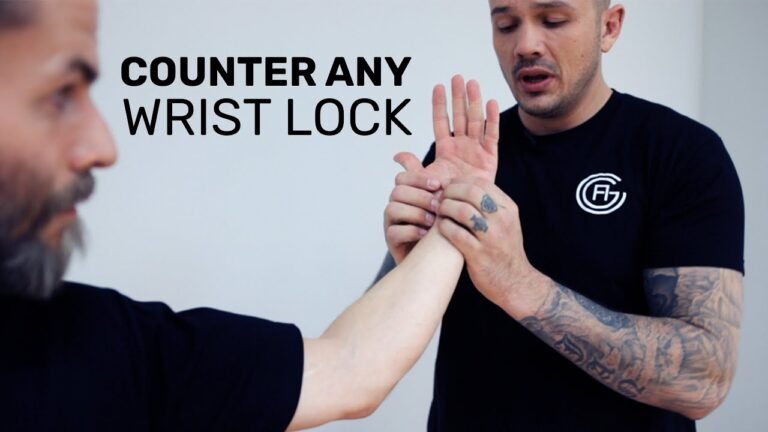
Quick Answer: Wrist locks in no-gi work by isolating the wrist joint and applying rotational or bending force beyond its natural range. They fire from guard bottom, mount top, side control, and front headlock — any moment your opponent posts a hand to create space. Legal in most no-gi rulesets including ADCC and IBJJF No-Gi…

Most women’s rashguard reviews focus on brand and price. This guide breaks down fabric composition, seam engineering, and panel construction—what actually separates the best rashguards for women from gear that fails after thirty sessions.

Most men’s rashguard guides stop at brand names. This one explains what actually separates gear that performs in no-gi grappling from gear that just looks the part — covering fit mechanics, compression, and durability that brands rarely discuss.
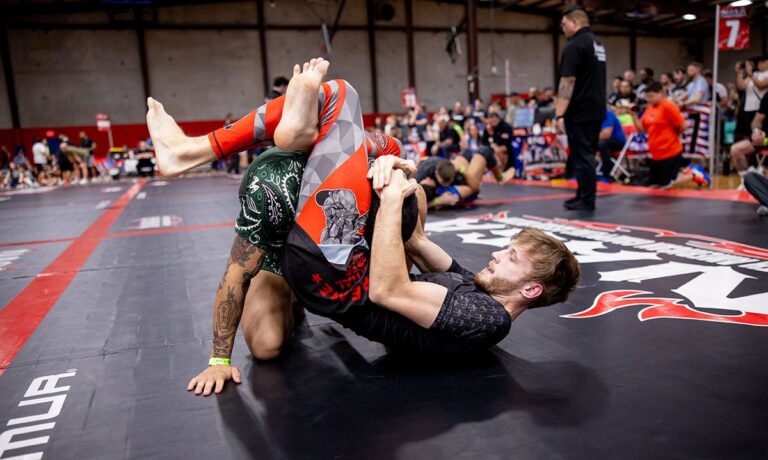
Quick Answer: The reverse triangle choke is a no-gi submission where you trap your opponent’s head and one arm between your legs facing away from them, then use their own shoulder to apply neck pressure. It works from side control bottom, scrambles, and half guard, and has been finished at the highest levels of ADCC…