Sublimation vs Screen Print: The Rashguard Ink That Lasts
Pull two rashguards off a shelf and they can look like twins: same cut, same weight in your hand, same aggressive graphic across the chest. Train in both for six months and one still looks like the day you bought it while the other has gone chalky, gray at the shoulders, and blurry where the print used to be sharp. People blame the wash, the sun, or the sweat — and those matter — but the single biggest reason two rashguards age so differently is a decision made in a factory before you ever saw them: how the color got onto the fabric in the first place.
If you understand that one thing, you stop guessing. You can look at a product listing and predict, with decent accuracy, whether a rashguard will hold its color through a hard year of no-gi rounds or fade into a rag by spring. This is a guide to reading that signal — and to protecting the print once you’ve bought the right one.
Three ways the color got onto your rashguard
Almost every rashguard on the market gets its graphics one of three ways, and the difference is physical, not cosmetic. Two of the three put pigment on top of the fabric. The third puts color inside the fiber. That distinction is the whole story of fading.
Screen printing sits on the surface
Screen printing pushes a layer of plastisol or water-based ink through a stencil and onto the fabric, then cures it with heat. It’s cheap, it’s fast, and on a cotton t-shirt it lasts for years. On a stretchy polyester rashguard it’s a different animal. The ink forms a film that sits above the weave, and every time the fabric stretches over your back during a bridge or a sprawl, that film has to stretch with it. It can’t, not forever. Micro-cracks form, the print stiffens, and eventually flakes lift away. That gray, peeling logo on an old rashguard is almost always a surface print that lost its grip.
Heat transfer and vinyl are a patch, not a bond
Heat-transfer vinyl (HTV) and transfer prints are even more clearly a layer laid on top — think of an iron-on decal. They look crisp out of the bag and often photograph beautifully, which is why budget brands love them for a hero graphic. But they trap heat, they don’t breathe, and the edges are where they die: peel starts at a corner, catches on a training partner’s grip, and lifts. If you’ve ever seen a rashguard with a sleeve logo curling up at one edge, you’ve seen HTV reaching the end of its short life.
Sublimation dyes the fiber itself
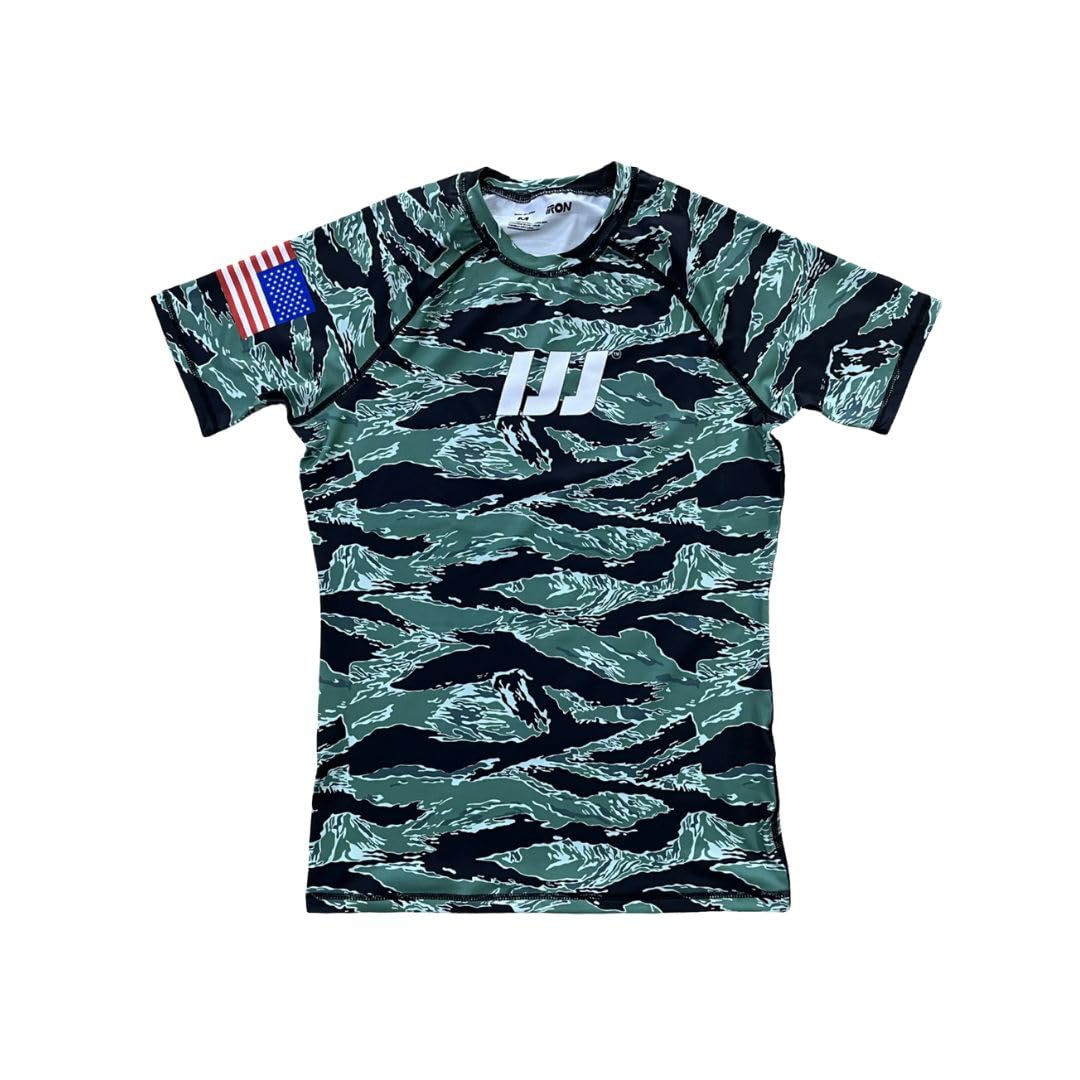
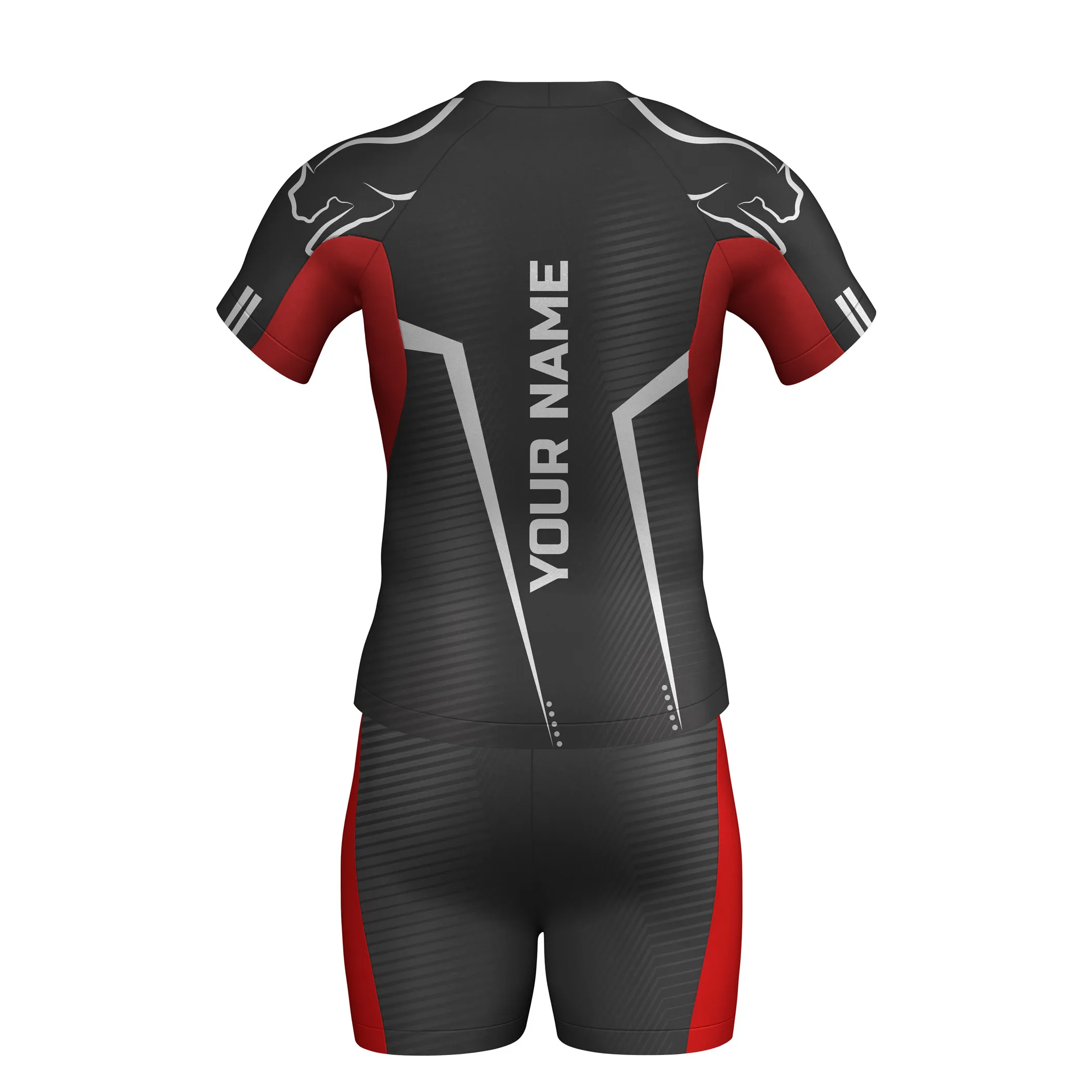
Dye sublimation is the outlier, and it’s why premium no-gi gear is built the way it is. The design is printed onto transfer paper with special inks, then pressed against polyester fabric under high heat. At that temperature the ink skips the liquid stage and turns straight to gas — that’s the “sublimation” — and the gas bonds with the polyester fibers, cooling into a permanent part of the material. There is no layer on top. Run your fingernail across a properly sublimated rashguard and you feel fabric, not print. The color is the fiber now.
This is the reason a sublimated rashguard can survive hundreds of washes without the graphic degrading. There’s nothing sitting on the surface to crack, peel, or flake, because the pigment moved into the thread. It’s the same process behind team jerseys and cycling kit — anything that has to take abuse and keep its color.
So why does fading still happen?
Here’s the honest part: sublimation resists print failure, but it doesn’t make a garment immortal. A sublimated graphic won’t peel, but the overall color can still shift over a long life, and understanding why keeps your expectations realistic.
Polyester is remarkably colorfast, but ultraviolet light slowly breaks the bonds in any dye molecule. Leave any rashguard drying on a balcony rail in direct Taipei sun day after day and the exposed face will lighten over months. Sweat plays a role too — it’s mildly acidic and full of salts, and when it’s left to dry into the fabric between sessions it works on the fibers and any residual finish. Chlorine, if you cross-train in a pool, is aggressive with dyes of every kind. None of these peel a sublimated print off, because there’s nothing to peel; instead they gently mute the whole panel over time. That’s a slow, even fade — very different from the sudden, blotchy failure of a surface print, and far easier to slow down.
There’s also a quieter culprit that has nothing to do with ink at all: body oils and detergent residue building up in the fabric. A rashguard that looks dull isn’t always fading — sometimes it’s just carrying a film of half-rinsed soap and skin oil that dulls the color and traps odor. That one you can actually reverse, which we’ll get to.
How to tell what you’re buying before you order
Most listings won’t hand you the print method in plain English, so you learn to read around it. A few reliable tells:
- Look for the word “sublimated” or “sublimation.” Brands that use it advertise it, because it costs more and lasts longer. Its absence on a graphic-heavy budget piece is a hint the design is screen-printed or HTV.
- Watch how the graphic wraps. Sublimation can run edge-to-edge, across seams, all-over. A single crisp logo floating on a plain panel — especially on a very cheap rashguard — is often a surface print.
- Check the fabric blend. Sublimation only bonds to polyester. A high-polyester body (commonly 80–88% polyester with the balance spandex/elastane for stretch) is a prerequisite. A cotton-heavy blend can’t be sublimated at all.
- Feel is the giveaway in person. Surface prints have a plasticky hand you can feel with a fingertip; a sublimated area feels identical to the blank fabric next to it.
- Read the fade reviews. Buyers mention peeling and cracking by name. “Logo cracked after a few washes” is the signature of a print sitting on top.
If you’re shopping and want to filter fast, a search like sublimated bjj rashguard surfaces the pieces built for longevity, and you can cross-check the blend and reviews from there.
Protecting the print you already own
Buying sublimated is the biggest lever, but care still decides whether you get two years or five out of a good rashguard. The routine is simple and it’s the same whether your graphic is dyed-in or printed-on — it just matters more for the printed kind.
The first rule is speed. The most damaging thing you can do is stuff a sweat-soaked rashguard into a gym bag and leave it to marinate overnight. Salt and bacteria go to work on the fabric for hours in the dark and warm. Rinse it in cold water the moment you’re off the mat if you can’t wash it right away, and never let it sit balled up and damp.
When you wash, turn it inside out to shield the graphic face from abrasion in the drum, use cold water, and use a normal dose of mild detergent — not extra. Too much soap is a leading cause of that dull, filmy look, because the excess never fully rinses out and builds up wash after wash. Skip fabric softener entirely; it leaves a coating that seals the weave, traps odor, and kills the moisture-wicking that a rashguard exists to provide. Skip chlorine bleach without exception — it strips dye from any print method.
Drying is where surface prints get killed and where even sublimation slowly loses ground. Heat is the enemy on both counts: a hot dryer softens plastisol and vinyl and accelerates the cracking, and it stresses elastane so the whole garment loses its stretch and shape. Hang it to dry instead. But hang it in the shade — indoors, or under cover — not pinned to a sunny railing, because that direct UV is exactly what mutes a sublimated color over time. Shade-drying costs you nothing and removes the two biggest long-term threats at once.
If a rashguard already looks dull and you suspect buildup rather than true fading, do a reset wash: run it inside out on cold with no detergent at all, or a splash of white vinegar in the rinse, to strip out accumulated soap and oil. A good number of “faded” rashguards brighten noticeably after that, because they were never faded — just coated.
The bottom line
Fading feels like something that happens to a rashguard, out of your control. It mostly isn’t. The largest single factor is a manufacturing choice you can screen for before you buy: sublimation puts the color inside the polyester where nothing can peel it off, while screen print and heat transfer lay it on top where mat friction, stretch, and heat slowly tear it apart. Buy the dyed-in version, wash it cold and gentle, dry it in the shade, and don’t let it fester wet in a bag — and the rashguard you train in next winter will look a lot like the one you unboxed.

None of this requires special products or a complicated ritual. It requires knowing which lever actually moves the needle — the print method — and then not undoing that advantage with a hot dryer and a scoop of fabric softener. Get those right and “why do my rashguards fade” stops being a question you have to ask.
Sources
- Dye-sublimation printing — Wikipedia
- Polyester — Wikipedia
- Spandex (elastane) — Wikipedia
- Screen printing — Wikipedia
Training BJJ in Taipei? TaipeiBJJ.com has training resources and gym guides for the Taipei BJJ community.
Browse our top-rated rashguards and no-gi gear at the RashguardGuy shop →