
UFC BJJ 13 Results: 2 Historic Title Wins
Two vacant belts went into UFC BJJ 13, and two new champions walked out of Meta APEX with them. William Tackett needed 86 seconds to finish a man he’d already beaten twice before, and that win put two Tacketts on top of the promotion’s rankings at the same time. A few fights earlier, Jalen Fonacier spent three full rounds picking apart Kleber Barbosa to collect the bantamweight belt Mikey Musumeci walked away from in September. For an organization that’s not even two years old, that’s two legitimate storylines and a scoring overhaul in one Thursday night. Here’s the full UFC BJJ 13 results breakdown, fight by fight.
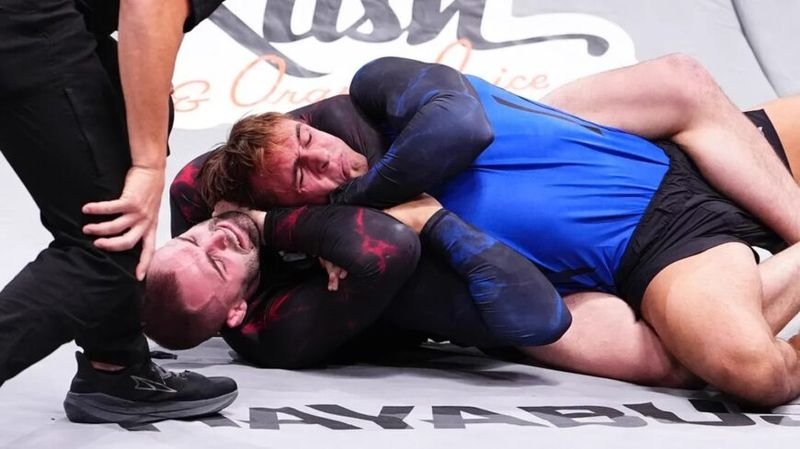
William Tackett Submits Jay Rodriguez to Make History
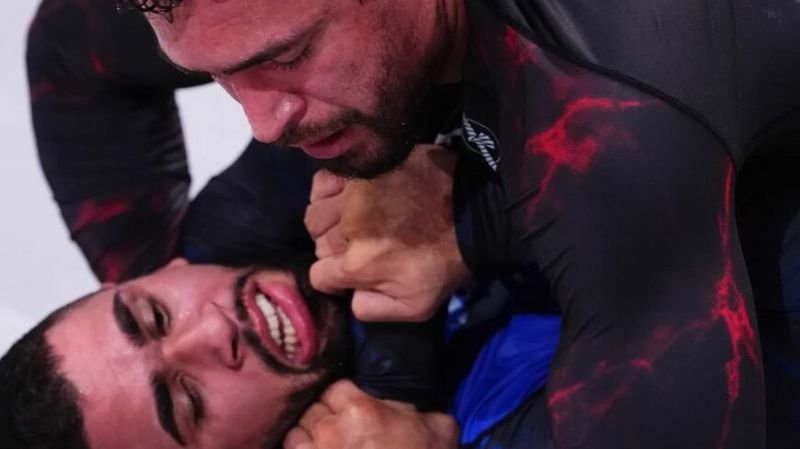
Rodriguez came out firing, landing an explosive double-leg takedown in the opening seconds that had the Meta APEX crowd on its feet. It didn’t matter. Tackett scrambled back to his feet, worked his way to Rodriguez’s back, and had the rear-naked choke sunk in before Rodriguez could reset his base. The tap came at 1:26 of round one. It was Tackett’s third win over Rodriguez — he’d already beaten him twice on smaller cards before either man had a UFC contract — and this one came with a middleweight belt and a Submission of the Night bonus attached.
Before the fight, Tackett’s own framing of it was blunt: take the chance, get the sub, or die trying. That’s not the kind of thing a fighter says when he’s planning to play it safe for 15 minutes and lean on a decision. He backed it up. Rodriguez’s takedown attempt was the only moment of the fight where the outcome was genuinely in doubt, and once Tackett scrambled out of it, the finish felt inevitable in a way title fights rarely do. A rear-naked choke in 86 seconds against a durable, well-rounded opponent isn’t luck — it’s a gap in skill level that the judges never got the chance to paper over.
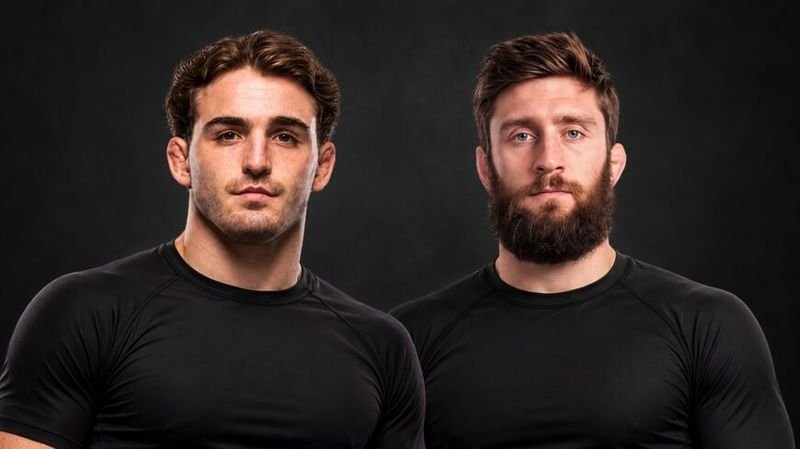
The bigger story is the last name. Andrew Tackett has held the UFC BJJ welterweight title since mid-2025, and William’s win at middleweight makes the brothers the first pair of siblings to hold UFC BJJ gold at the same time. That’s not a coincidence of two talented guys who happen to share a last name — both came up through the same wrestling-heavy no-gi program, and both fight the same way: forward, heavy top pressure, finish-or-nothing. Andrew’s already booked for UFC BJJ 14 on December 3 against Chris Wojcik, so the Tackett name is going to be attached to two title fights in the same calendar year. If he wins again, the obvious question — a Tackett-vs-Tackett superfight, weight classes willing — stops being a hypothetical and starts being a promotional inevitability.
Jalen Fonacier Becomes UFC BJJ’s First Filipino Champion
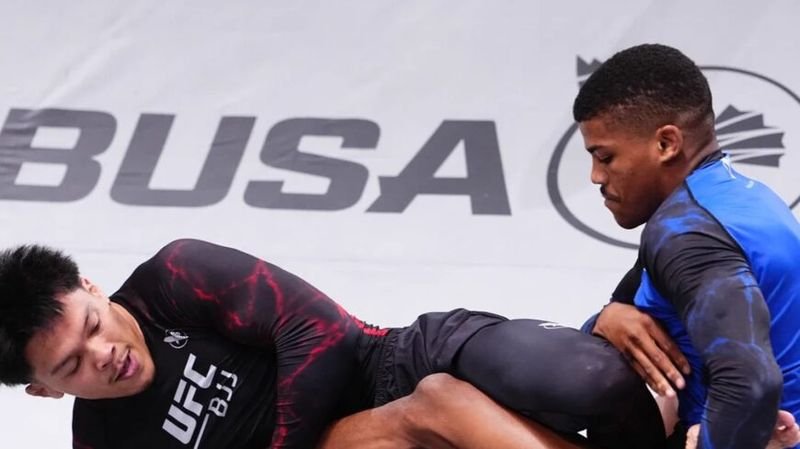
The co-main event didn’t end in 86 seconds — it went the full three rounds, and it needed to. Fonacier spent most of the fight hunting for a finish, pulling guard and threatening leg entries while Barbosa tried to slow the pace down and win on positional control. The judges gave it to Fonacier by unanimous decision. Two-time IBJJF world champion Fonacier had actually lost to Barbosa once before, in a gi match years earlier, which makes the revenge angle as real as the history-making one: he’s now UFC BJJ’s first Filipino titleholder.
That matters more than a single line in a record book. The Philippines has a real competitive BJJ scene — it’s sent competitors to IBJJF Worlds and ADCC qualifiers for years — but it’s never had a name at the top of a promotion with UFC’s reach attached to it. Fonacier’s win gives a whole region’s grappling community a champion to point to, the same way Ffion Davies’ run gave Welsh grappling one a few years back on a smaller stage. That’s not a small thing for a sport that still spends most of its marketing budget on American and Brazilian storylines by default.
The belt itself has a short but strange history. Mikey Musumeci held it until September, when he outlasted Bryce Mitchell in a fight widely read as his last UFC BJJ appearance before shifting his focus toward MMA. Vacating a title that fast, barely a year into a weight class, isn’t normal — but Musumeci has never run his career by normal rules, and his exit opened the door for exactly the kind of fresh storyline UFC BJJ needed at bantamweight. Barbosa, for what it’s worth, didn’t get a gift-wrapped opponent either; Fonacier came in with two IBJJF world titles and a specific grudge, and he fought like it for three full rounds.
Why UFC BJJ Title Fights Can’t End in a Draw Anymore
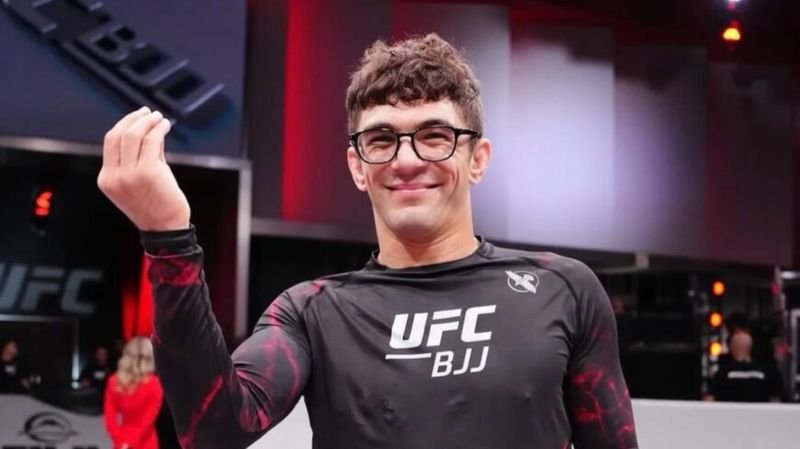
Buried in the UFC BJJ 13 announcement was a scoring change that matters more than either title fight: championship bouts can no longer end in a draw. If the scorecards are tied after three rounds, the fighters now get a three-minute sudden-death overtime round to settle it. The rule exists because of exactly one fight, and everyone covering the sport knew it the second the announcement went out.
At UFC BJJ 11 in September, light heavyweight champion Mason Fowler and challenger Nick Rodriguez fought what most of the people in the building — including the commentary team calling it live — scored two rounds to one for Rodriguez. The judges returned a split draw instead, and Fowler kept the belt on a technicality nobody outside the scoring table seemed to agree with. It was the kind of result that makes a sport look amateur on a night it’s trying to prove it isn’t, and UFC BJJ apparently agreed. A title shouldn’t change hands — or fail to change hands — on a split decision nobody can defend. Sudden-death overtime is a blunt fix, but it’s the right one.
The mechanics are simple on purpose: three minutes, no judges needed unless nobody finishes it, next man to get a clean advantage or a tap wins the belt outright. Wrestling and jiu-jitsu’s own gi circuit have leaned on overtime periods and sudden-score formats for years precisely because draws satisfy nobody — not the fighters, not the crowd, and not the broadcast partner trying to sell a decisive result. UFC BJJ waited eleven events to borrow the idea, which is a long time to leave a title fight’s outcome in the hands of three people with clipboards. Rodriguez, for his part, still hasn’t gotten the rematch most fans think he’s owed. A new rule doesn’t retroactively fix the Fowler fight. It just makes sure the next one doesn’t need fixing after the fact.
The Full UFC BJJ 13 Results Card
Both title fights sat on top of a loaded card that the UFC BJJ 13 preview flagged as one of the deepest in the promotion’s short history, and the undercard mostly delivered. Nick Rodriguez — still owed a rematch after the Fowler draw, in the eyes of most fans — submitted Nata Tenca with an arm-triangle choke in round three, a reminder that he’s not waiting around for a title shot to be handed to him.
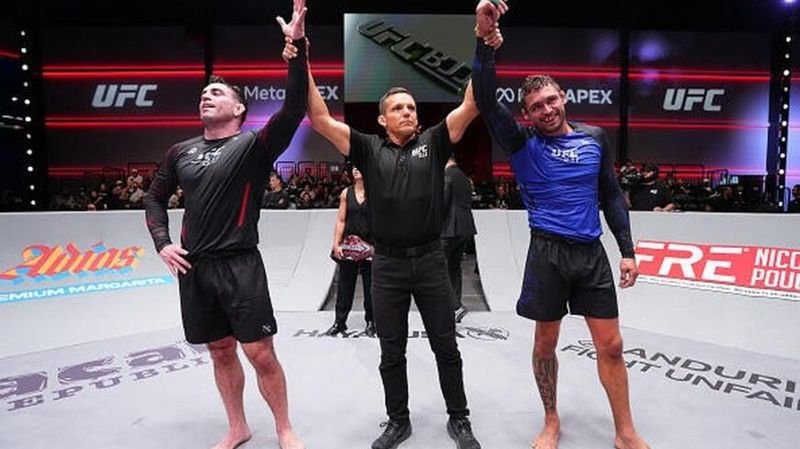
- Middleweight title: William Tackett def. Jay Rodriguez — rear-naked choke, R1, 1:26
- Bantamweight title: Jalen Fonacier def. Kleber Barbosa — unanimous decision
- Nick Rodriguez def. Nata Tenca — arm-triangle choke, R3, 3:07
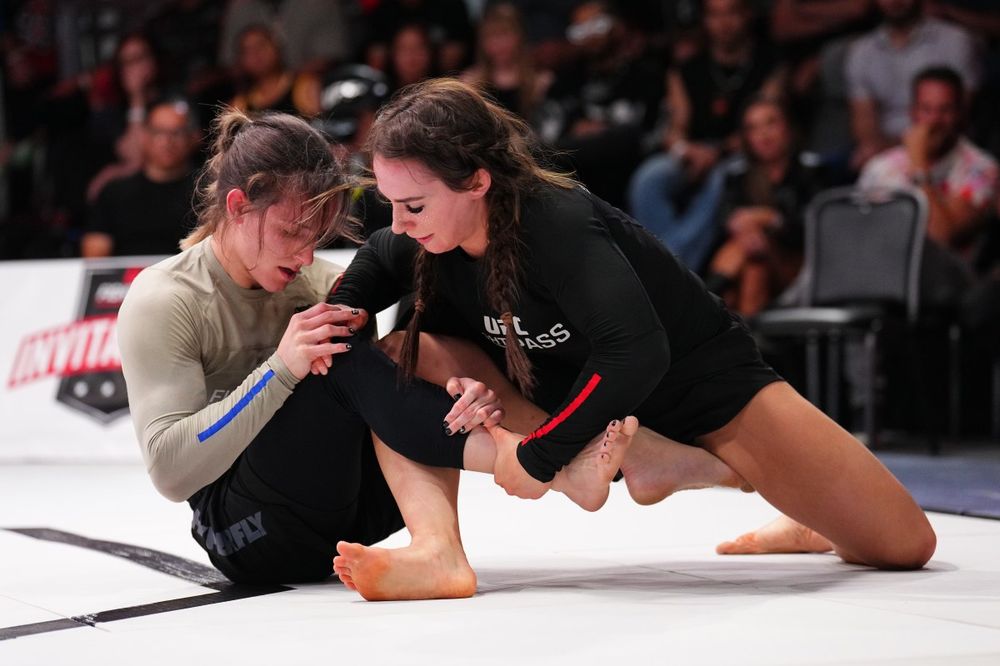
- Ffion Davies def. Jaine Fragoso — submission, R1, 2:07
- Jasmine Rocha def. Karen Antunes — armbar, R1, 0:38
- Pat Downey def. Ian Daube — unanimous decision
- João Nicolite def. Martin Gonzalez — unanimous decision
- Liam Crelinsten def. Seilkhan Bolatbek — heel hook, R2, 1:26
- Tristan Sainz def. David Weintraub — rear-naked choke, R1, 4:53 (Sainz’s UFC BJJ debut at 19)
Nine fights, seven finishes. That finish rate is the real selling point for a promotion that’s still fighting for attention against the UFC’s own cage product on the same nights. Nineteen-year-old Tristan Sainz choking out David Weintraub in his promotional debut is the kind of result that gets buried on a card with two title fights, but it shouldn’t be — a teenager finishing a grown opponent on this stage, on his first try, is exactly the pipeline UFC BJJ needs if it wants to still be relevant in five years. Liam Crelinsten’s heel hook over Seilkhan Bolatbek was the other finish that stood out, a clean, fast entry that didn’t give Bolatbek any time to defend once the hook was set.
What Two New Champions Mean for No-Gi Grappling
UFC BJJ has now crowned champions in every one of its weight classes at least once, and the promotion is starting to generate its own history instead of borrowing credibility from ADCC or the gi circuit. The Tackett brothers holding two belts simultaneously is a marketing gift nobody had to manufacture — it happened because two guys from the same gym turned out to be two of the best grapplers in their respective divisions. Fonacier’s run does something different: it gives the promotion a title story outside the usual American and Brazilian pipeline, in a sport where the Philippines has produced serious grappling talent for years without a stage this big to show it on.
The draw rule is the quieter change, but it’s the one that protects the product long after this card is forgotten. Combat sports live and die on clean finishes to arguments. A sudden-death round doesn’t guarantee a crowd-pleasing result, but it guarantees a result — and after Fowler-Rodriguez, that’s worth more to UFC BJJ than another highlight-reel submission.
What happens next matters almost as much as what just happened. Andrew Tackett’s December 3 title defense against Chris Wojcik is the obvious follow-up storyline, and a second Tackett win sets up talk of a joint appearance that UFC BJJ would be foolish not to promote hard. Fonacier, meanwhile, inherits a bantamweight division with no obvious number-one contender yet — Musumeci’s exit left a vacuum at the top that nobody has filled, which means Fonacier’s first title defense is still an open question. Add in Nick Rodriguez still waiting on the rematch most of the sport thinks he earned at UFC BJJ 11, and the next two or three cards already have more built-in stakes than most of this promotion’s first year did combined.
Sources
- UFC BJJ 13 Results: Tackett, Fonacier Claim Vacant Titles — Combat Press — full card results and fight details
- William Tackett Submits Jay Rodriguez In 86 Seconds To Win UFC BJJ Title — MiddleEasy — main event breakdown
- Mason Fowler Keeps UFC BJJ Title After Split Draw With Nick Rodriguez — MiddleEasy — background on the draw that triggered the rule change