No-Gi Ear Guards: What a Full Year of Consistent Protection Actually Teaches You
Most no-gi grapplers who try ear guards have the same first experience: the cups sit strangely over the ears, the straps pull at the back of the head, and suddenly you’re aware of sounds you weren’t before — muffled conversation, shifted resonance in your own breathing. Three sessions in, the hardware stops demanding your attention. A month in, you forget you’re wearing them. And somewhere around the six-month mark, something subtler happens: you start to notice things about your training that were invisible before.
That progression — from awkward tool to invisible habit to diagnostic instrument — is what a full year of consistent ear guard use actually looks like in practice. Most writing about ear guards focuses on the case for wearing them. This is about what happens after you’ve already made that decision and stuck with it.
The Adjustment Window Nobody Talks About
The first two to four weeks are the real test. Ear guards change more than just what’s touching your ears. They shift your awareness of head position, muffle audio cues from partners, and add a layer of contact resistance during scrambles. Grapplers coming from folk-style or freestyle wrestling often find the adjustment harder than expected — their previous training conditioned them to tolerate gear at the head, but no-gi scrambles are faster and change direction more abruptly than wrestling takedown exchanges, and the ear guard can catch at odd angles mid-transition.
Drilling during this window is usually manageable. Movement is controlled, the guards stay in position, and nothing is dragging your head across a partner’s shoulder for sustained periods. The hard part comes in live rounds. Scrambles shift the cups. Underhook-to-overhook transitions rotate them. Head-to-chest pressure during sprawls can displace the guards enough that you’re stopping mid-roll to readjust. This is the moment most grapplers quit — they say the guards are uncomfortable, poorly fitting, or getting in the way. Some of those things are true. But the discomfort window is finite, and grapplers who push through it consistently come out with calibrated knowledge of how the gear behaves under real training conditions.
The ones who quit usually do so during week two or three. They’ve had enough sessions to feel the frustration but not enough to feel the payoff. If you ask experienced grapplers who wear ear guards consistently when they started, the answer is almost never “I tried them and they worked immediately.” The answer is usually something like “they were annoying for a while and then they just became part of training.”
What Consistent Wear Reveals About Your Ear Risk
There is a self-diagnostic function to wearing ear guards that most grapplers miss because they never maintain consistency long enough to notice it. Once you have worn them for a couple of months straight — every session, not just when you remember — you start picking up patterns in when and where they shift, get compressed, or take real impact. Those patterns are a map of your personal ear risk profile.
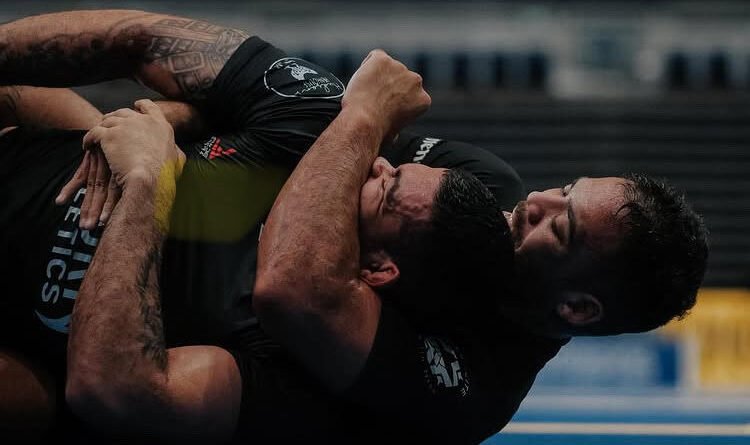
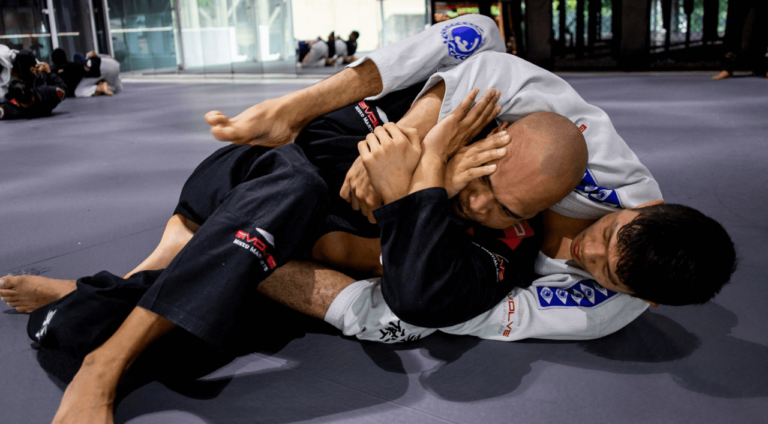
For most no-gi grapplers, the gear tells a predictable story. Underhooks and overhooks during wrestling tie-ups generate direct lateral pressure against the side of the head. Inside control with head-to-shoulder contact creates sustained friction. Sprawling on a single-leg produces the kind of grinding side-of-head compression that drives a significant portion of training-related cauliflower ear cases — three to five seconds of rotational pressure repeated across a full round. Double-leg defense is often worse still: your ear ends up against a shoulder or chest, and the scramble to separate adds rotational friction on top of vertical loading.
Without ear guards, all of this is invisible until the ear is already swollen. With them on, you feel the gear respond. You notice which training partners drive into your head more aggressively during wrestling exchanges. You notice which positions generate the most compression. Over months, you develop body-sense for your personal ear risk that is nearly impossible to build any other way. The gear becomes a data source, not just a protector.
The Drilling-vs-Rolling Distinction
One thing that surprises new ear guard users: the risk is not concentrated where the drilling is. It lives in the transitions. A properly drilled double-leg has a predictable arc — partner shoots, you sprawl, the rep ends cleanly. Live wrestling does not look like that. The shot comes at an angle, you sprawl slightly off-axis, your partner’s head rotates into the side of your face before you separate. That two-second friction event is what damages ears. It does not feel dramatic. It happens again four minutes later when neither of you is tracking it.
Ear guards make these moments visible by being present for them. After a few months of consistent use, you stop needing the guards to flag the risk — you have developed proprioceptive awareness of those positions on your own. That awareness stays with you even when you compete without ear guards or train in contexts where they come off.
How the Gear Affects Your Head Game Over Time
The second thing a year of ear guards teaches is more technical and takes longer to surface: your head positioning changes. Not dramatically, and not through any deliberate effort. But over months of wearing a slight additional profile on each side, proprioception adjusts. You start accounting for the guards the way a climber accounts for chalk — unconsciously, through repetition, until the absence of them creates a noticeable gap in tactile feedback.
What this looks like in practice: some head-placement habits tighten up. Grapplers who were not precise about head position during wrestling shots often find that wearing ear guards makes them more deliberate — the gear provides a tactile reference for where their head is going relative to a partner’s shoulder and chest. The effect is subtle enough that it is hard to isolate, but coaches who work with wrestlers transitioning to no-gi submission grappling have observed it informally: athletes who wear ear guards from the start tend to develop cleaner positional habits at the head faster than those who do not.
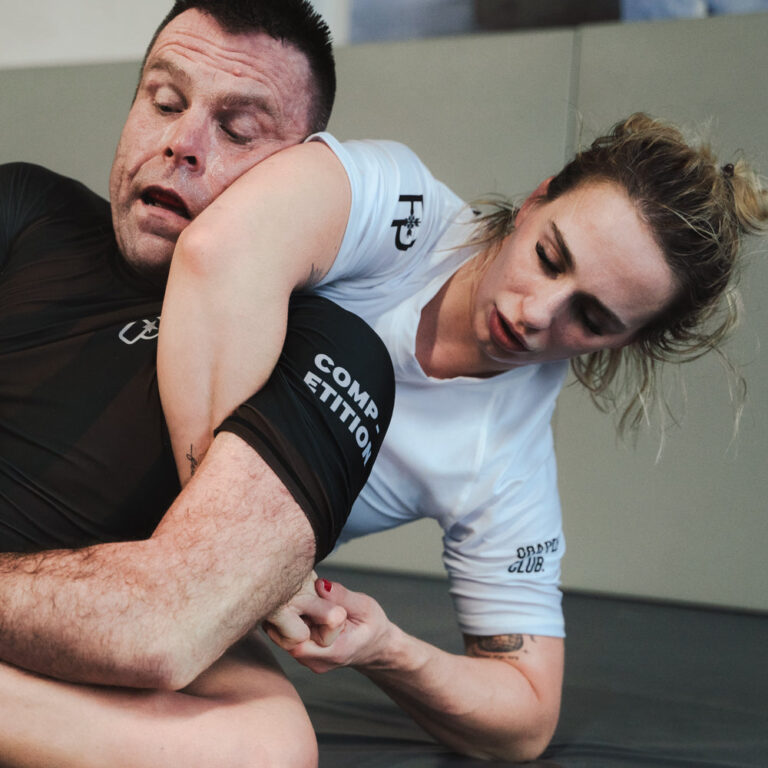
The flip side shows up in sparring with partners who are wearing them. The profile of their head changes slightly at the cup edges. Pulling head control during guard work can feel like gripping around something that was not there in training. Wrapping the head during a guillotine setup feels different at the forearm contact point. New ear guard users find this disorienting when their partners are wearing them. Experienced ones stop noticing it — the adjustment happens automatically within the first few months.
What Your Training Partners Learn About You
There is an underrated social dimension to consistent ear guard use that becomes visible after a few months. Your regular training partners start reading your habits. In the informal culture of open mat and gym rotations, grapplers who consistently wear ear guards signal something about their training approach and their orientation toward long-term health decisions. This is not a judgment on those who do not wear them — it is observation. Gear is visible, and patterns around gear get noticed.
There is also a practical feedback loop that develops over time. Partners who habitually drive their shoulder into the side of your head during scrambles will sometimes ease up when they feel the additional layer. It is not intentional courtesy — it is tactile feedback changing their pressure calibration unconsciously. This effect is inconsistent and should never be relied on as primary protection. But it is observable over enough training sessions with enough partners.
What does not adjust: partners who are not wearing ear guards will occasionally grab yours during head control attempts. This is a documented technical disruption. After a year, you know which specific training partners do this and how to adjust your own head positioning to minimize it. That is granular, partner-specific knowledge that only accumulates through repetition. It is not in any guide. You learn it from training.
The Point Where Grapplers Wish They Had Started Earlier
There are two types of no-gi grapplers who reach the one-year mark with consistent ear guard use. The first group started wearing them before any ear damage had occurred. They train without thinking about their ears. Their ear profile is unchanged. They have never sat out a week because of acute swelling, never had a conversation with a doctor about fluid drainage, never felt that specific low-grade pressure that tells you something went wrong during the last session. They know what they are avoiding only in the abstract.
The second group started after their first cauliflower ear. They know exactly what they were protecting against because they already experienced the alternative. Their ear guards now serve a different function — not primary prevention but structural support, compression management, and ongoing damage control. When you ask either group whether they would make the same choices again, the first group says they are glad they started when they did. The second group almost universally says they wish they had started a year earlier, before the first flareup made the decision for them.
The difference between these two groups is not information. Both groups know ear guards exist before they make the decision. The difference is that the first group decided before discomfort forced the issue. That is the entire practical argument for early protection, and it does not get simpler than that.
Building the Routine That Actually Sticks
After a year, most grapplers who have maintained consistent ear guard use have developed a routine that took about six months to fully solidify. The critical insight — and the one that takes the longest to learn — is that ear guard consistency is a bag-preparation problem, not a training-floor decision.
If the guards are in the bag every time you leave the house, you wear them. If you are making the decision at the gym — already warmed up, first round about to start — you skip them more often than you intend to. Inertia on the training floor is powerful. The kitchen table or the gear hook by the door is the right place to overcome it. Grapplers who have built lasting habits put the guards back in the bag immediately after every session, clean. Not on top of the gear, not in a side pocket where they get overlooked — in the main compartment, with the mouthguard and the rashguard, where they appear automatically the next time the bag opens.
Cleaning matters more than most grapplers expect at the outset. After several months of daily use, the foam backing on most ear guards starts to compress and degrade in a way you can feel against the ear without seeing it from the outside. Velcro on strap-based systems picks up mat lint and hair over weeks, which reduces adhesion each time you fasten in. A rinse after each session and a monthly hands-on inspection for foam compression — press the padding with your thumb and notice whether it springs back or stays depressed — extends the functional life of the gear by months and keeps the protection profile consistent.
Replacement timing is the final thing the first year teaches. Most grapplers underestimate how often they need to replace ear guards. The plastic shells hold up well under training stress; the padding, foam inserts, and adjustment systems degrade faster and less visibly. A year of daily training sits at or near the outer edge of reliable function for budget-tier models. Performance-grade guards last longer, but all of them eventually lose enough structural integrity that the protection profile changes without the gear looking obviously worn. After a year of consistent use with a single pair, you develop an intuitive sense of your specific model’s wear curve — when the fit starts feeling slightly different, when the foam stops springing back, when the velcro starts catching inconsistently. That is knowledge you cannot shortcut. You get it from time spent inside the gear.
Sources
FloGrappling — No-gi competition coverage and athlete profiles
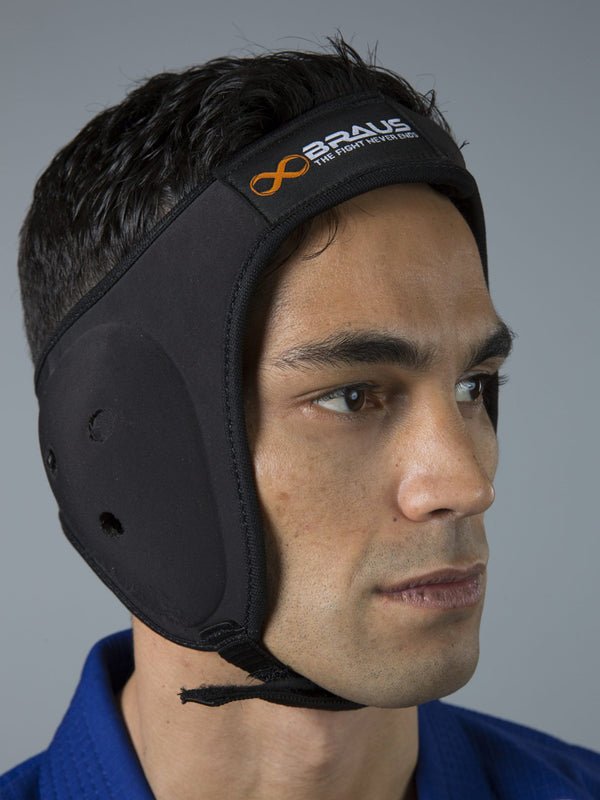
Image credit: brausfight.com