Best Rashguards Under $30: First-Year No-Gi Picks
A first-year grappler will sweat through, wash, and abuse a rashguard roughly 150 times before their one-year mat anniversary. At $20 a top that is about 13 cents per session. At $65 it is four times that, for a shirt you are still learning to appreciate. The math is the whole argument for shopping in the sub-$30 tier when you start — and the good news is the floor for quality has moved up a lot. A cheap rashguard in 2026 is not the sandpaper-seamed disaster it was a decade ago.

What You Actually Get in Rashguards Under $30
The phrase “you get what you pay for” is only half true here. A rashguard under $30 and a $70 one are usually cut from the same family of fabric — that 85/15 polyester-spandex blend is close to universal because it stretches four ways and dries fast. What your money buys past the $30 mark is not better protection. It is trim: heat-pressed logos instead of printed ones, silicone waistband grippers, mesh vent panels, and sublimated art that will not crack. Useful eventually. Unnecessary on day one.
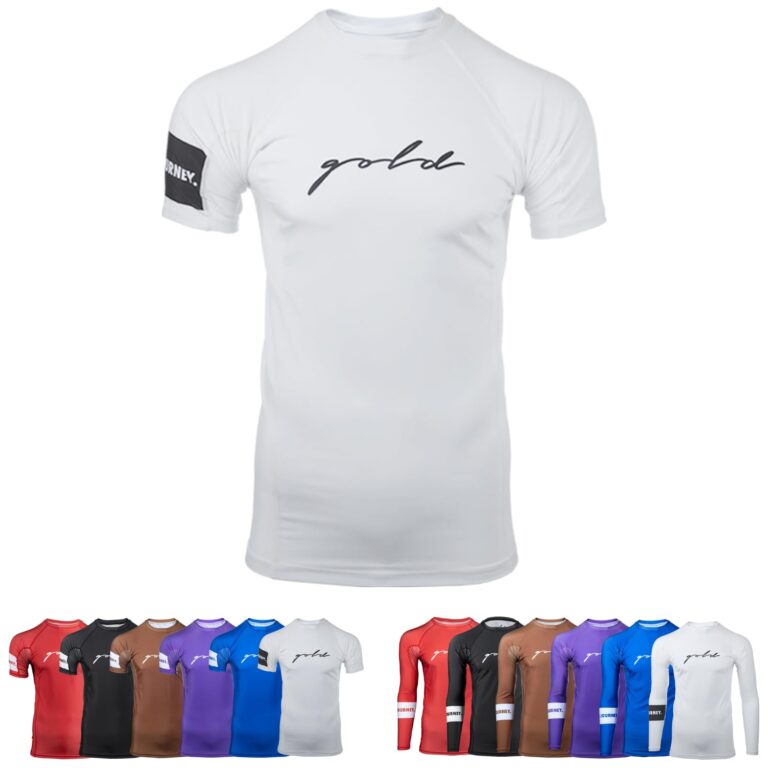
At the budget end you should still demand three things and refuse to compromise on them: a snug athletic fit, flatlock stitching that lies flush against your skin, and a polyester-heavy blend that wicks instead of soaking. The Sanabul Essentials nails all three for roughly $20. Reviewers who bought and tested it on the mats call it “an epic budget rashguard” precisely because it delivers the non-negotiables and skips the garnish.
Why a Rashguard Under $30 Beats a Cotton Shirt
Plenty of beginners try to dodge the purchase entirely by rolling in an old gym tee. It is a false economy that lasts about one class. Cotton holds sweat like a sponge, stretches out under grips, and rubs your skin raw during scrambles — the exact “rash” a rashguard exists to guard against. A $20 synthetic top solves all of that on the first day.
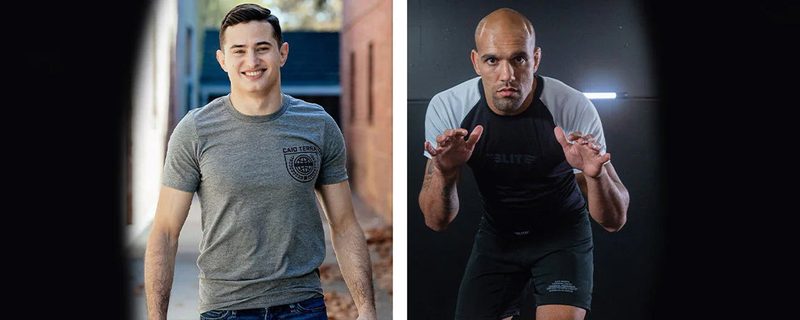
There is also a hygiene case, which matters more than new grapplers expect. A snug synthetic top is a physical barrier between your skin and the mat, and between your skin and your partner’s. It is a real line of defense against ringworm and staph, both of which spread fast in a warm training room. If you want the full breakdown, we covered how a rashguard stacks up against a plain compression shirt — the short version is that a purpose-built grappling top wins on seam placement and coverage.
The Best Rashguards Under $30 for First-Year Grapplers
These are the tops that actually clear the price line and survive real training. Prices drift, so treat the numbers as launch points and check the color you want — plain black almost always runs cheapest.
- Sanabul Essentials (~$20) — the default first rashguard for a reason. IBJJF-legal, moisture-wicking, mesh underarm venting, and true to size. Its one weakness is a loose waistband with no silicone gripper, so it rides up during hard rolls. At twenty dollars, forgivable.
- Elite Sports Standard (~$25) — a slightly more compressive cut than the Sanabul, which some beginners prefer for the locked-in feel. Durable stitching and a plain aesthetic that will not embarrass you at a new gym.
- Fuji Basics Rashguard (~$28) — Fuji has made grappling gear for decades, and the Basics line carries that construction knowledge down to an entry price. Long-sleeve options at this tier are rare and welcome.
- Meister Rash Guard (~$22) — an Amazon-friendly workhorse. Not exciting, but the flatlock seams and tight neckline hold up past the fifty-wash mark that kills lesser budget tops.
- Venum Contender (~$30, on sale) — sits right at the ceiling and dips under it during sales. You are paying a little for the brand, but the fabric hand is a genuine step up.
Notice what is missing from this list: any long-winded “premium” pick. That is deliberate. Spending $60 as a white belt is not an upgrade, it is a bet on a hobby you have not tested yet. Buy cheap, train for six months, and let your own preferences — sleeve length, compression tightness, art — tell you where to spend next.
Short Sleeve or Long Sleeve for Your First Year?
Short answer: long sleeve, if you can only afford one. Long sleeves cover more skin, which means less mat burn on your forearms and one less patch of exposed skin for ringworm to find. In a rough training room that coverage is worth more than the marginal extra heat.
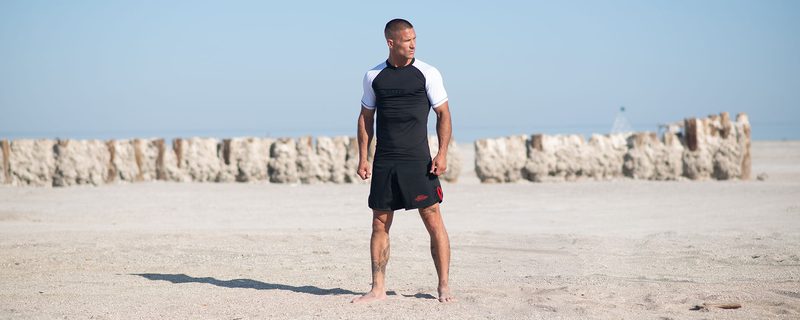
That said, short sleeves are cooler in a hot gym and usually a couple dollars less, which is why many beginners start there. The honest move at this budget is to own one of each — a long sleeve for the sketchy open-mat sessions and a short sleeve for humid summer classes. Two sub-$30 tops still cost less than one mid-tier one.
Fit: The One Thing Cheap Rashguards Get Wrong
If a budget rashguard is going to fail you, it fails on fit — not fabric. Too loose and it bunches, rides up, and lets your partner’s grips grab cloth instead of sliding off. Too tight and it restricts your breathing during a hard round. The target is snug like a second skin but with full shoulder range.
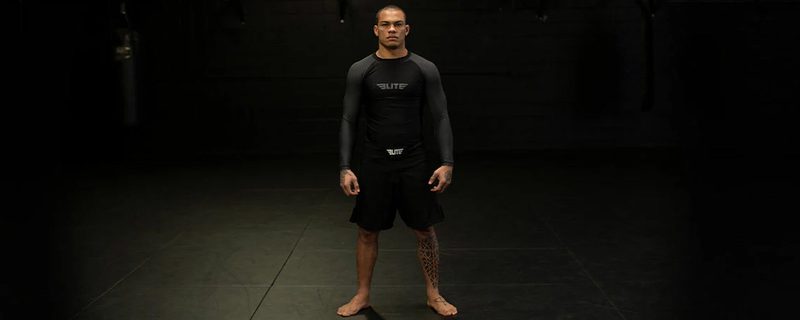
Cheap tops most often miss on the waistband and the length. Without a silicone gripper, the hem creeps up when you invert or shrimp. The workaround is simple: size down if you are between sizes, and tuck the hem into your shorts. Sanabul’s own reviewers flag the loose waistband as the Essentials’ main flaw, so go in expecting it rather than surprised by it.
What $30 Can’t Buy You
Being straight about the trade-offs: a rashguard under $30 will show its price in three places. The printing is usually a screen print or heat transfer that can crack after a year of hot washes, not the sublimated ink that is fused into the fabric on premium tops. The waistband gripper is often absent. And the fabric, while perfectly good, tends to pill a little sooner.
None of that affects how the top protects you or how it grapples. It affects how it looks in month eighteen. The construction details that genuinely decide longevity — seam type, neckline reinforcement, blend ratio — are things you can spot before buying, and our complete guide to what your money buys under $50 walks through all of them. Read that before you check out and you will dodge the genuinely bad budget tops.
How Many Rashguards Should a Beginner Own?
Two, minimum, if you train more than twice a week. A rashguard has to be fully dry and freshly washed before it goes back on your body — wearing a damp one from yesterday is how skin infections start. One top forces you to either wash after every single session or risk it. A second top breaks that cycle for another $20.
Three is the comfortable number for anyone training three-plus days a week, and it is the point where buying cheap pays off hardest: three $20 tops cost less than two $40 ones and give you a full week of rotation. We mapped out exactly how many rashguards a no-gi rotation needs based on how often you actually roll.
Making a Rashguard Under $30 Last
The single biggest thing you control is the wash. Turn the top inside out, use cold water and a fragrance-free detergent, and never — this is the one that kills cheap rashguards — put it in the dryer. Heat destroys the elastane and warps the fit, turning a snug top into a baggy one in a month. Hang dry every time. Skip fabric softener too; it clogs the moisture-wicking fibers that make the top worth wearing.
Do that consistently and a $20 rashguard will comfortably outlast its price several times over. The grapplers who complain that budget tops “fall apart” are almost always the ones tumble-drying them on high.
The Bottom Line for Your First Rashguard
Spend $20 to $30, buy two, wash them cold, and put the $80 you saved toward mat fees or your first real competition top a year from now — when you actually know what you like. The beginners who overspend on gear before they can shrimp are solving the wrong problem. Get on the mats cheaply, train enough to develop a preference, and let that preference guide your next purchase. Your first rashguard’s only job is to get you rolling without a rash. A twenty-dollar one does that perfectly.
Sources
- Sweet Science of Fighting — Sanabul Essentials Rash Guard Review — hands-on testing of the leading sub-$30 rashguard.
- Elite Sports — BJJ Rash Guard Buyer’s Guide — fabric blends, fit, and sleeve-length guidance.
- Hayabusa — How to Choose a Rash Guard for No-Gi Training — construction and coverage for grappling.
- IBJJF Rule Book — official uniform requirements for competition-legal rashguards.