Grappling Dummy No-Gi: 7 Keys to Train Solo
Century Martial Arts sells its GUS dummy at 47 pounds and 59 inches for $299.99, and the Submission Master, built by a small Cordura-and-webbing shop out of the Pacific Northwest, runs $597 at 80-85 pounds. That 35-pound gap isn’t a pricing gimmick — it’s the difference between a dummy that moves fast enough for toreando reps and one heavy enough to sit through a slow pressure pass without sliding across the mat. Most no-gi grapplers who buy a dummy and then stop using it within a month bought the wrong weight for what they actually wanted to drill.
What a Grappling Dummy No-Gi Routine Actually Replaces
A dummy replaces repetition volume, not a training partner. Volume is the thing most grapplers are short on — a 90-minute no-gi class gives you maybe six to ten live rounds, and inside those rounds a specific submission setup might come up twice. A dummy gives you forty reps of that same setup in fifteen minutes, with zero risk of your partner tapping early or defending in a way that short-circuits the rep before you finish the mechanics.

What it can’t replace is anything reactive. Grips, frames, off-balancing, scrambles, the half-second read on whether your opponent’s hips are turning into or away from a heel hook — none of that exists against a dummy, because a dummy’s limbs only move where you put them. Aaron Ross, the black belt who’s written some of the clearer troubleshooting breakdowns on the over-under pass, makes the same point about guard retention drilling: a bag teaches your body the shape of the position, but it can’t teach you to feel resistance change mid-technique. Skip dummy reps if you’re trying to fix a live-rolling problem that’s fundamentally about timing. Use them for everything else.
How Much Weight and Height Your No-Gi Dummy Should Be
Three weight classes cover almost every use case. At the light end, the Century GUS sits at 47 pounds and 59 inches — light enough to drill upright guard passes like toreando and long-step without the dummy anchoring itself to the mat, but still heavy enough to hold a leg-lock position once you’ve secured it. At the heavy end, the Submission Master sits between 80 and 85 pounds, built from 1000-denier Cordura with doubled seams, and it’s designed to take full-weight pressure passing and mount work without buckling. In between, most “legged” dummies from Combat Sports and similar brands ship pre-filled around 70 pounds, which is the workhorse weight you’ll see in most academy corners.
If your main goal is leg locks — heel hooks, kneebars, toeholds — go heavier. A light dummy skids across the floor the second you load a heel hook grip onto the foot, which teaches you nothing and wastes the rep. If your main goal is guard passing footwork or takedown entries, go lighter; you need to be able to move the dummy’s hips and shift its weight the way you’d shift a live opponent’s, and 80+ pounds of inert vinyl doesn’t cooperate.
There’s a fourth option if $300-600 feels steep before you know you’ll actually use it: unfilled canvas shells like the ones Jendila sells run $27-50 on Amazon for a 60-72 inch frame, and you stuff it yourself with old clothes, fabric scraps, or raw cotton to whatever weight you want. The tradeoff is time and mess — stuffing a shell evenly enough that it doesn’t bunch at the joints takes a couple of tries — but it lets you test two different weights (light for passing, heavier for leg locks) for less than the cost of one pre-filled dummy.
Leg Lock Entries You Can Drill at Full Force

This is where a dummy earns its price tag fastest. Leg locks are the one submission family where full-force finishing mechanics are genuinely dangerous to drill on a living training partner at anything beyond slow motion, which means most grapplers never get real reps on the actual snap of a kneebar finish or the exact hip angle that turns a loose heel hook grip into a fast one. On a dummy, you can load the position, strip the slack out of the grip, and finish at full pressure as many times as you want.
Start with ashi garami entries from a scramble — step over the near leg, secure the far-side underhook on the ankle, and practice rotating your hips perpendicular to the dummy’s leg before you ever touch the grip. Then move to kneebar finishes specifically: most grapplers finish kneebars by pulling with their arms instead of extending their hips, and a dummy lets you feel the difference immediately because the leg won’t move unless your hip extension is doing the actual work. Heel hook entries from the saddle are the third rep worth prioritizing — load the figure-four, then practice the short, controlled rotation that finishes the lock without needing a huge range of motion, since a huge range of motion is usually a sign you’re missing the grip.
Guard Passing Reps That Actually Transfer to Live Rolling

Passing drills on a dummy only transfer if the dummy is light enough to move like a real opponent’s hips. On a 47-pound dummy, toreando passes are the best return on time: grip both pant legs (or, no-gi, both shins), step the dummy’s legs to one side, and drill the footwork of clearing the hip and dropping into side control before the legs swing back. Do this slowly for the first ten reps, focused purely on foot placement, then speed up once the pattern is automatic.
Pressure passes like the stack pass or a heavier long-step entry need the 70-85 pound range to feel honest — a light dummy folds instead of resisting, which trains bad habits around how much weight you actually need to drive through someone’s hips. If you only own a light dummy, use it for the footwork-heavy passes and save the pressure-pass reps for a drilling partner who can actually push back.
One video worth watching before your first passing session:
Submission Finishes You Can Drill at Full Pressure
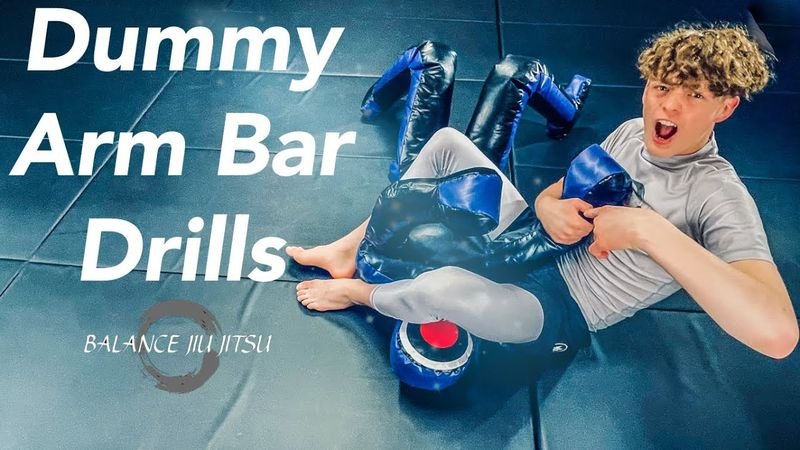
Yes, you can submit a grappling dummy, and you should — the finish mechanics on an armbar, a rear naked choke, or an Americana all depend on isolating a joint or the neck and applying pressure through a specific angle, and none of that requires a resisting opponent to practice correctly. For the armbar, work the detail that actually matters: hip position directly perpendicular to the dummy’s shoulder before you ever pull the arm, because a correct hip position finishes the armbar with almost no arm strength at all. For the rear naked choke, drill the seatbelt grip and the exact moment you switch from a body triangle to figure-four leg control, since most grapplers rush that transition and lose the choking arm’s position in the process.
The Americana is the easiest of the three to get wrong in a way a dummy won’t correct — the dummy can’t tell you when you’ve crossed the line from “shoulder lock” into a position that would injure a real shoulder’s rotator cuff at that angle. Drill the motion slowly and trust the mechanics you already know from live rolling rather than cranking harder because the dummy isn’t tapping.
Back Takes and Turtle Attacks You Can Drill Alone
Back control is mostly a grip-and-hip-pressure problem, which makes it one of the more underrated positions to drill solo. Set the dummy in turtle, then work the seatbelt entry from both sides — one arm deep under the far armpit, the other grabbing the near-side collar area of a rashguard or shirt, chest glued to the dummy’s back the entire time. Most grapplers lose back control live because their hips drift away from their opponent’s spine the moment the opponent starts to turn, and a dummy lets you groove the habit of following that rotation with your hips instead of your hands.
Once the seatbelt is locked, practice inserting both hooks without letting your base widen — narrow hips and tight hooks are what keep a real opponent from rolling you off during a scramble. Chain that directly into the rear naked choke finish from the submissions section above, and you’ve drilled the entire back-take-to-finish sequence without needing a single live round.
Grappling Dummy vs Training Partner: What Each One Actually Teaches You
The honest answer is that they teach almost entirely different things, and treating a dummy as a training-partner replacement is the single biggest reason people get bored with theirs after three weeks. A training partner teaches you grips, frames, and timing — the reactive skills that only exist when someone is actively trying to stop you. A dummy teaches you mechanics and reps — the non-reactive skills you need before you’re fast or precise enough to apply them against resistance.
Use the dummy to groove a new submission’s finishing mechanics the week you learn it in class, then take that same submission into live rolling once the motion feels automatic instead of deliberate. Grapplers who skip the dummy step tend to take months longer to finish new submissions live, because they’re still thinking through the mechanics mid-roll instead of executing them. Grapplers who only drill on a dummy and never test the technique live develop beautiful mechanics that fall apart the instant someone defends.
A Simple Weekly No-Gi Dummy Drilling Schedule
Fifteen to twenty minutes, three times a week, beats an hour-long session once a week, because finishing mechanics are built through frequency more than duration. A workable split: Monday, leg lock entries — ten reps each of an ashi garami entry, a kneebar finish, and a heel hook rotation. Wednesday, passing footwork — toreando and long-step reps focused purely on foot placement, not speed. Friday, submission finishes — armbar, rear naked choke, and Americana, five slow reps each followed by five at full speed.

Add a fourth day for takedown entries if your dummy has stable legs for standing work — single-leg and double-leg shots, plus the sprawl you’d use to defend one, both drill cleanly against a dummy because neither depends on your partner’s reaction. Fifteen minutes of shot-and-sprawl reps before a wrestling-heavy no-gi class sharpens the exact pattern you’ll need twenty minutes later against a live opponent.
Common Mistakes That Waste Your Reps

The most common mistake is going fast before the movement is correct. Speed hides bad habits on a dummy the same way it hides them on a live partner, except a dummy won’t tap and tell you the mechanics were wrong — it just sits there while you reinforce the error forty times in a row. Slow the first ten reps of anything new down to half speed, check the specific detail you’re trying to groove, and only add speed once that detail holds up every single rep.
The second mistake is buying the wrong weight for your actual goal, which is the single fastest way to end up with an expensive dummy gathering dust in a garage. The third is skipping maintenance — vinyl dummies crack at the seams under repeated hyperextension work, and a dummy that’s lost structural integrity in one limb teaches you worse habits than no dummy at all, because you start compensating for a joint that moves wrong.

If $300-600 is more than you want to spend before you know whether dummy drilling fits your training habits, a DIY version built from an old rashguard and a pair of spats stuffed with pillows or foam scraps works for submission finishes and light passing reps. It won’t survive heavy leg-lock pressure the way a Cordura-built dummy will, but it’s a real way to test the habit for the cost of gear you probably already own.
Sources
- Century Martial Arts — GUS Grappling Dummy — official specs: 47 lbs, 59 inches, vinyl, $299.99
- Grappling Dummy Net — Submission Master — official specs: 80-85 lbs, 1000-denier Cordura, $597, made in USA
- BJJ World — Solving the Over-Under Pass — Aaron Ross’s breakdown of drilling mechanics versus live resistance