High Crotch Takedown No-Gi: 7 Keys
Yuri Simoes won two ADCC world titles without ever relying on a conventional single leg — his entire standing game runs through the high crotch, and he’s said directly that he doesn’t even use the grip to elevate opponents, just to stay glued to their upper body while he works the finish. That’s the detail most gyms skip when they teach this takedown: it’s not a leg-lift, it’s a control position that happens to end in a takedown.
Most no-gi grapplers learn the double leg first and treat the high crotch as an afterthought — a single leg you fall into when the double leg stalls out. That’s backwards. The high crotch solves the exact problem that makes single legs risky in no-gi: without a gi jacket to anchor a headlock, your head is already safer, but the high crotch grip makes it nearly untouchable, and the elevated thigh control gives you finishing options a standard single leg never offers.
What Separates a High Crotch From a Standard Single Leg
A standard single leg hugs the knee. You penetrate, wrap the leg low, and from there you’re fighting a defender who can sprawl, whizzer, or simply hop away because your grip sits below the center of their mass. The high crotch moves that same entry up the thigh, close to the hip joint, and that six-inch difference changes the entire exchange.
Once your arm is wrapped high and your head is driven into the opponent’s sternum or armpit, sprawling stops working — there’s no leg left for them to kick back because you’re already controlling the hip, not the ankle. The elevated grip also puts your head on the inside of their body instead of exposed on the outside, which is the exact position that used to get single-leg shooters caught in a guillotine or headlock. bjjee.com’s breakdown of the entry is blunt about why this matters competitively: most grapplers never drilled a real defense against it, because most gyms only teach the low single.
There’s a durability angle here too that doesn’t get talked about enough. A low single leg puts your head down near your opponent’s hip, which means every scramble out of that position runs you straight into a knee, a hip bump, or a stray elbow — common sources of the exact ear trauma and facial cuts that fill up a hard training week. Keeping your head up and tucked against the opponent’s torso in a high crotch isn’t just technically sound, it’s one less scramble where your head is the thing taking impact.
The No-Gi Entry: Collar Tie Into the Shot
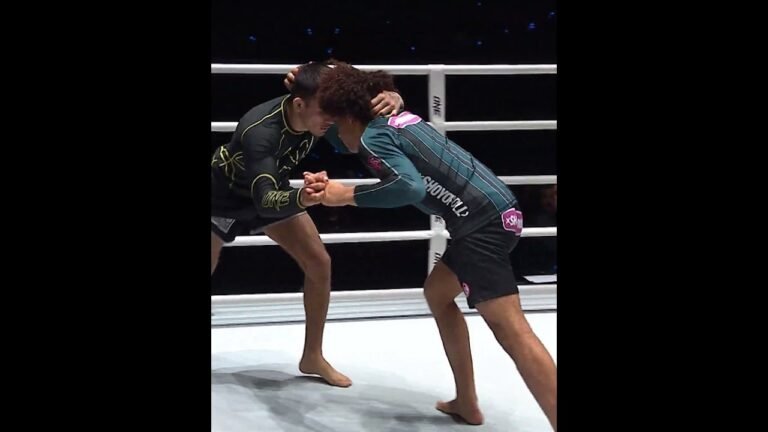
Gi players grab pants and skirt to build the high crotch grip. No-gi strips that option away, so the setup has to come from upper-body control instead. A collar tie is the standard starting point — one hand behind the head or neck, the other hand fighting for a wrist or bicep tie on the far side. The collar tie does two jobs at once: it controls distance so your opponent can’t back straight out of range, and it opens the angle you need to change levels without eating a sprawl before you’ve even shot.
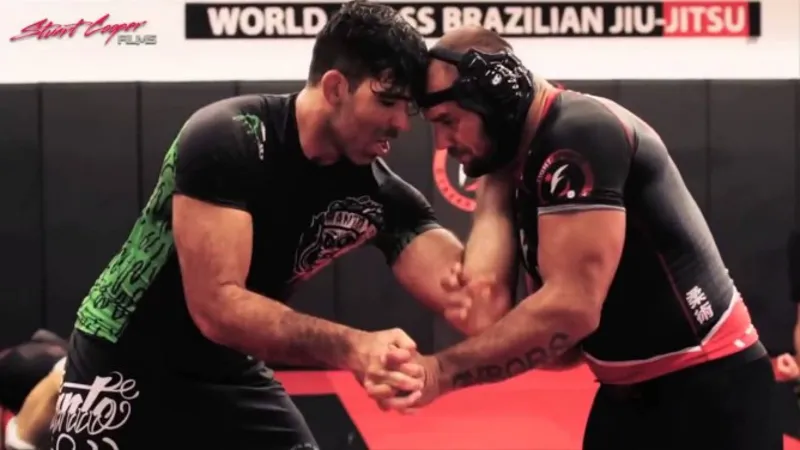
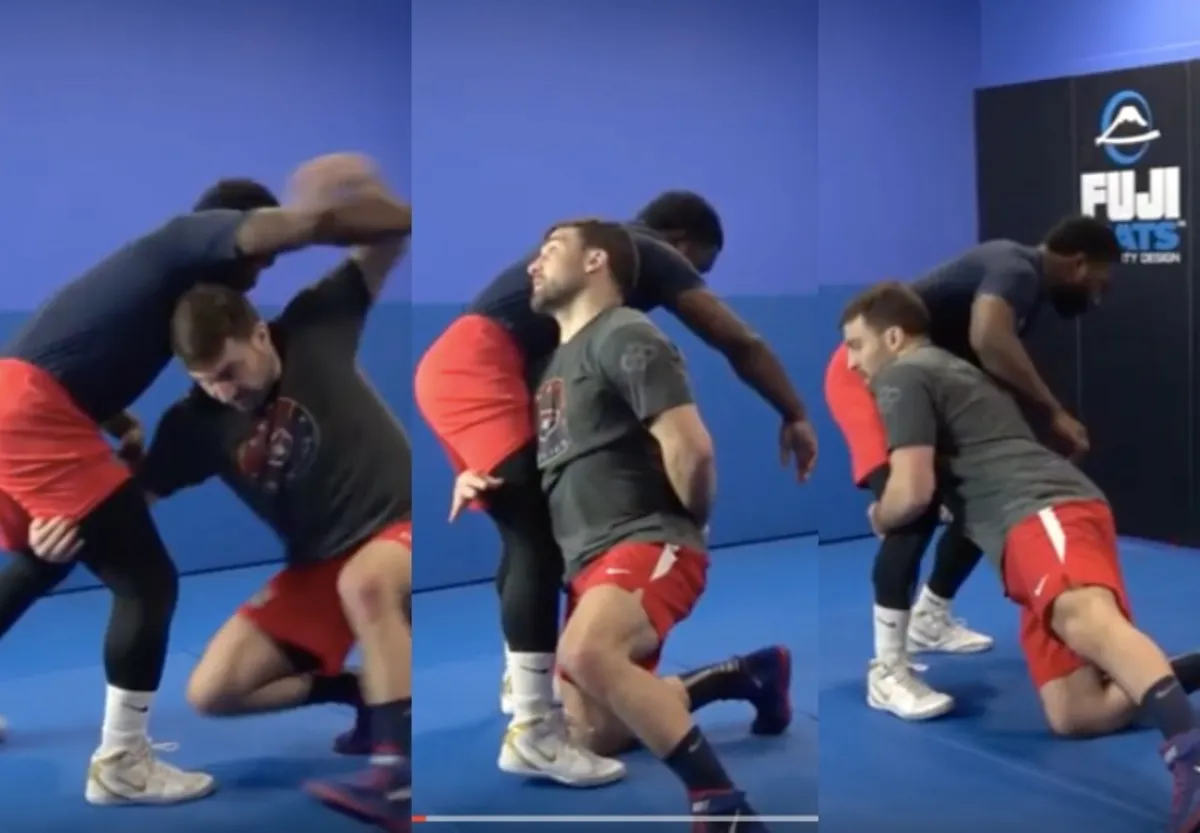
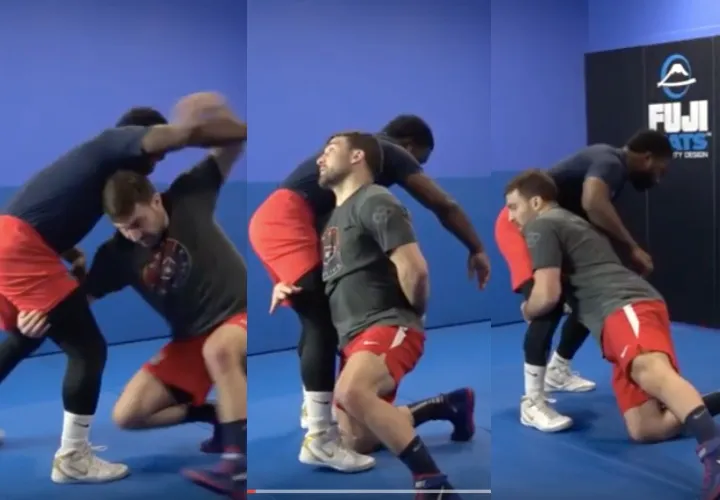
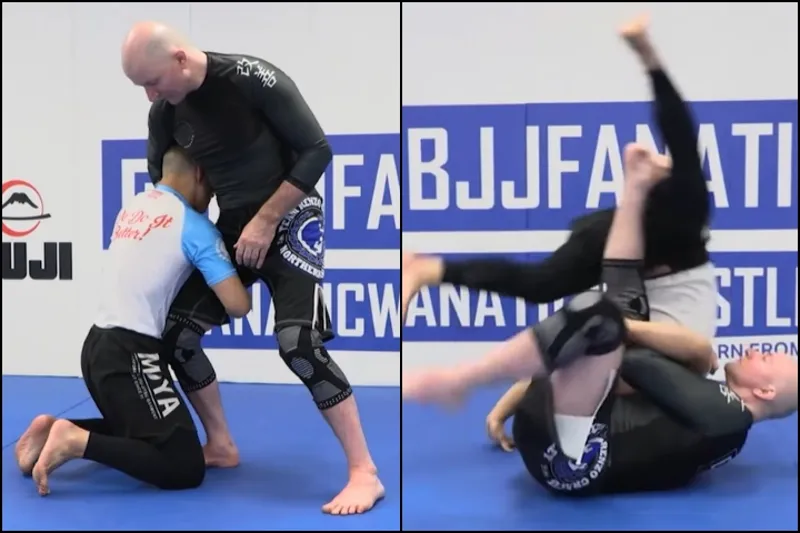
From the tie, the shot itself breaks into four moving parts. You take a short step with your lead foot to close distance without telegraphing, then drive a deeper penetration step with the opposite leg as you change levels. Your head goes to the inside — same side as the leg you’re attacking — not buried low by the hip like a traditional single leg. Your lead arm wraps high on the thigh near the hip crease, and your trail hand meets it once you’ve cleared the opponent’s own arm out of the way. Posture stays upright through the whole sequence; dropping your head or hunching forward is what turns a clean shot into a stuffed one.
Finishing From the High Crotch
The grip gives you more exits than a standard single leg, and knowing all of them is what makes the position dangerous instead of just a stalling spot. The most direct finish is a lift — drive up through the hips, elevate the trapped leg, and run your opponent in a circle until their base collapses. “Running the pipe” is the chain-wrestling option: instead of lifting, you drive forward along the line of the captured leg, forcing your opponent to hop backward until they run out of room and go down.
If neither finish is there, the high crotch converts cleanly into other attacks without you losing the leg you already have. Drop your far hand to the remaining ankle and you’re in a textbook single leg takedown — a smoother transition than shooting a fresh double from scratch, since your opponent is already off-balance and defending one leg. You can also finish directly into a leg entanglement, trading the takedown for an immediate saddle position or outside ashi garami if your opponent sprawls hard enough to expose the leg you’re already holding.
The Kimura Counter — and Why Most Shooters Eat It
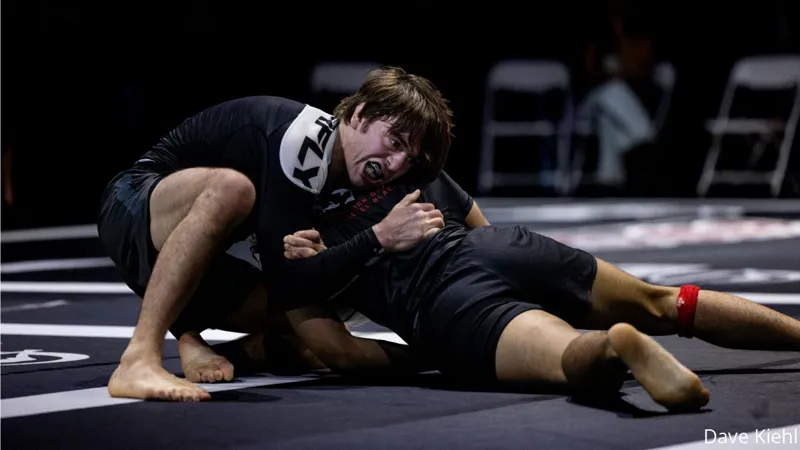
The high crotch has one counter that ends more exchanges than every sprawl and whizzer combined: the Kimura. It’s illegal in folkstyle and freestyle wrestling, which means wrestlers transitioning into no-gi grappling have never had to defend it and get caught by it constantly. The setup is simple from the defender’s side — as the shooter’s arm wraps the thigh, the defender overhooks that same arm, traps the wrist, and rotates into a shoulder lock before the shooter ever gets their hips underneath for the lift.
The fix isn’t complicated, but it has to be automatic. Keep your wrapping elbow tight to your own ribs instead of letting it float away from your body, and keep your grip high and tight rather than loose and searching. A high crotch where your arm drifts out to the side is a Kimura waiting to happen; a high crotch where your elbow stays pinned against your opponent’s leg almost never gets caught, because there’s no space for the overhook to find.
Beyond the Kimura, expect four defenses on a loop: the whizzer, where your opponent overhooks your shooting arm and uses the leverage to spin away from the attack; the crossface, which turns your head away from their body and breaks the tight positioning the high crotch depends on; the sprawl, which matters less against a true high crotch than a low single but still disrupts a late or sloppy shot; and the simple hip-away, where a flexible opponent just rotates their trapped hip out of your grip before you’ve locked it down. None of these are mysteries — they’re the same four answers wrestling coaches have taught for decades — but very few no-gi grapplers have drilled defending against them specifically, because very few BJJ gyms teach the high crotch as its own technique instead of a single-leg afterthought.
Drilling It Until It’s Live-Ready
The gap between knowing the steps and actually hitting the high crotch under resistance is entry timing, and that only closes with repetition that isn’t static. Start with dead drilling — a cooperative partner lets you walk through the collar tie, penetration step, and grip placement at zero resistance until the sequence stops feeling like four separate moves and starts feeling like one. Once that’s automatic, add a partner who sprawls on a delay, forcing you to recognize the window between the collar tie and the shot instead of shooting on a fixed count.
The next progression is live entries from the clinch only — fifteen or twenty seconds of hand fighting before either partner is allowed to finish a takedown, which builds the setup instincts that most gyms skip entirely because they’re less visually satisfying than drilling finishes. Last comes full live wrestling rounds where the high crotch is just one option among several, which is the only setting that actually tells you whether the position holds up when your opponent is trying to counter it, not just survive it.
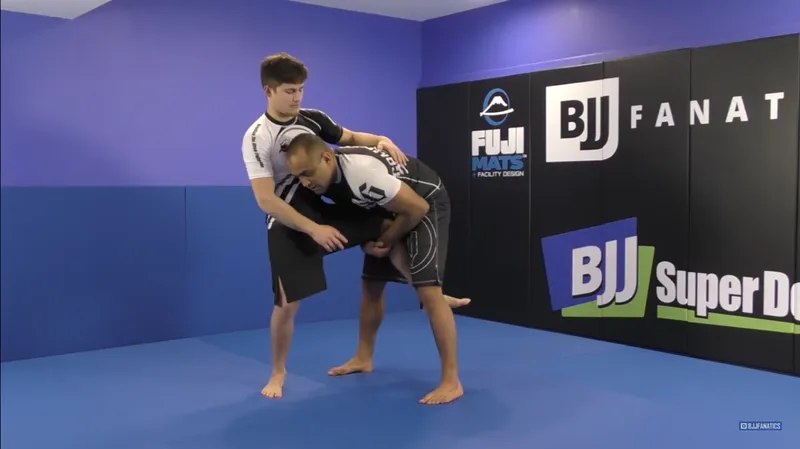
Watch the entry closely and the collar-tie-to-penetration-step sequence looks almost identical to a snap down until the final grip placement — that overlap is exactly why drilling this takedown doesn’t require relearning your hand fighting from scratch. It only requires changing where your wrapping arm ends up once you’re already past the opponent’s front line.
Where This Fits in a Modern No-Gi Game
Wrestling exchanges have become the deciding factor at the highest levels of no-gi competition, not an undercard to the submission game. FloGrappling’s breakdown of recent ADCC trials technical trends noted that takedown scrambles are now one of the most reliable ways elite competitors get to the back, ahead of flashier guard-pulling sequences. A takedown that’s hard to sprawl, hard to headlock, and chains directly into a leg attack or back take fits exactly where the sport is heading — it’s not a wrestling-room curiosity, it’s a standing option that converts directly into the positions no-gi matches are actually won from.
If your current takedown game starts and ends with the double leg, the high crotch is the single cleanest addition you can make without rebuilding your entire standing arsenal. It shares the same collar-tie setup you already use for a snap down or an ankle pick, which means you’re not learning a new entry — you’re learning a new finish off an entry your hands already know.
Sources
- BJJ Eastern Europe — High Crotch to Double Leg — breakdown of the entry mechanics and grip placement.
- Fanatic Wrestling — Hit the High Crotch with Yuri Simoes — two-time ADCC champion’s approach to the position as control, not just a lift.
- FloGrappling — ADCC Trials Technical Trends — data on takedown scrambles deciding matches at elite no-gi trials.