Back Escape No-Gi: 7 Keys to Get Out
ADCC scores back control with both hooks or a body triangle at three points — the single highest value position in the entire ruleset, worth more than a takedown that lands in guard or a standard sweep. That number alone tells you how hard the position is to get out of once it’s locked in. A generic bridge doesn’t do anything once someone has both hooks and a seatbelt grip, and clawing at hands that are already secured under your chin wastes the ten seconds you actually have. Most white belts throw the same panicked shrimp no matter what grip is being used against them, which is why they get choked in the same six seconds every single roll.
Why the Back Is the Worst Position to Get Stuck In
You can’t see what’s coming. That’s the entire problem with back control — your opponent reads your hands, your hips, and your breathing while you’re guessing at grips you can’t watch develop. In guard or side control you at least have a visual read on the next attack. From the back, the first warning you get is often the choke already tightening. Competitors who are excellent everywhere else on the mat still panic here, because the position removes the one sense grapplers rely on most.
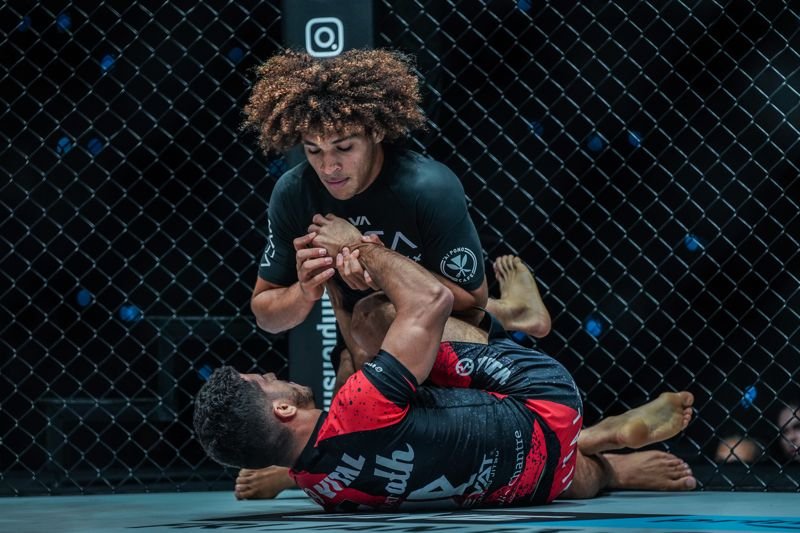
The same scramble instinct that saves a leg attack is what gets you out of the back before it’s too late.
Protect Your Neck Before You Try to Escape Anything
Tuck your chin and pin the choking-side wrist to your chest with both hands before you move a single other body part. This isn’t a technique so much as a rule: no escape sequence works if you’re already being choked while you attempt it. Once the arm is trapped flat against your sternum, you’ve bought yourself the two or three seconds needed to actually assess which hook is loose and which side is open. Skip this step and every other key on this list becomes irrelevant, because you’ll tap before you finish your first frame.
Kill the Bottom Hook Before You Touch the Top One
Grapplers who try to strip both hooks simultaneously almost always fail, because it splits their attention and gives the top player two separate limbs to fight with. Work the bottom hook first — it’s the one anchoring their hips to yours, and once it’s gone their whole base shifts. Reach down with your same-side hand, pry the ankle or foot loose, and trap it against the mat with your own leg. Only then turn your attention to the top hook, which is far easier to peel once the bottom one is no longer resetting it every time you move.
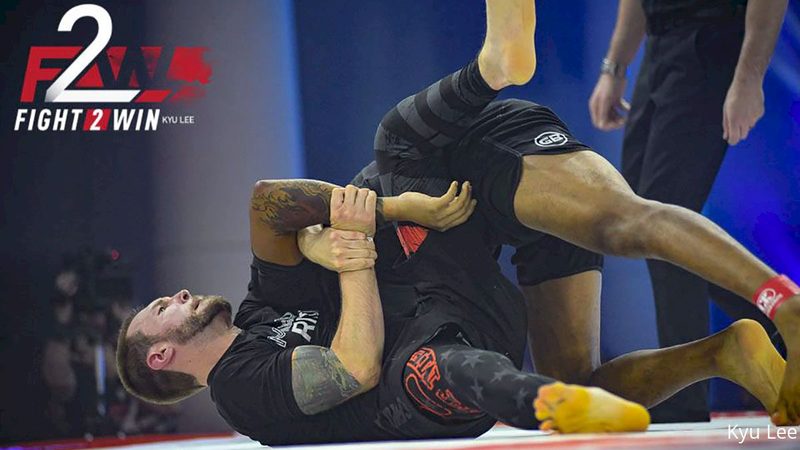
Neck protection comes first — everything else in a back escape no-gi sequence depends on buying that extra second.
Figure Out Your Good Side Before You Rotate Anywhere
Every back control grip has a “good side” and a “death side,” and they’re decided entirely by which arm is closest to your neck. Fall or rotate toward the arm that’s not attacking — if their right arm is digging for the choke, you turn to your right, carrying that arm across your body so it loses angle instead of gaining it. Turn the wrong way and you hand them a finished rear naked choke for free. This single decision, made in under a second, separates grapplers who escape clean from grapplers who get finished mid-escape.
The Hip Escape That Actually Turns You In
Once the bottom hook is dead and you know your good side, drive your hips away from your opponent while keeping your shoulders tight to the mat — the same shrimping motion used to escape mount, just aimed at rotating your hips out from under theirs instead of your legs out from under a knee. The goal is to create a 45-degree angle between your spine and theirs. From there you’re either close enough to recover half guard against their trapped leg, or you’ve opened enough space to spin all the way through to a reversal.
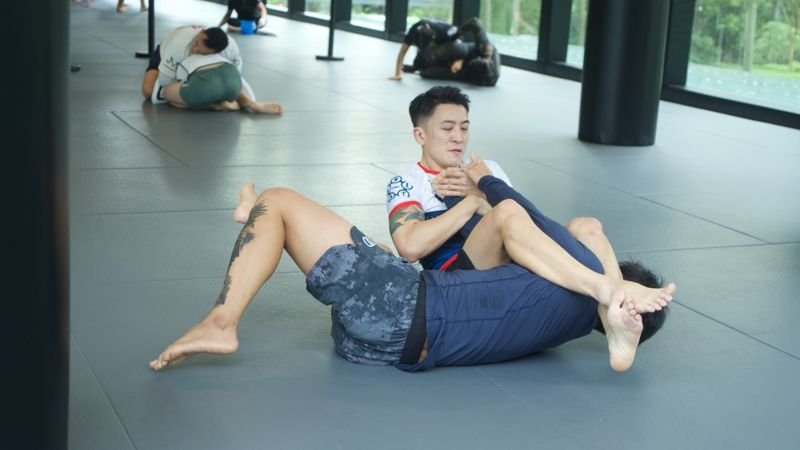
The hip escape angle in a back escape no-gi sequence is drilled the same way as any other positional escape — slow, then fast.
The Seatbelt Break and Roll When Both Hooks Are Already In
If you’re too late to kill the bottom hook and both are locked with a full seatbelt grip, stop trying to peel anything and go to the roll instead. Grab the wrist of the arm across your chest with both hands, tuck your chin hard into your shoulder, and roll toward your good side in one committed motion, dragging their grip apart as your shoulder blades pass through the mat. This works because it uses your entire body weight against a single grip connection rather than your hands against their whole upper body. It fails if you hesitate halfway through — commit to the full rotation or don’t start it.
How Long You Actually Have Before It’s Too Late
In a real roll, the gap between “hooks just landed” and “choke is tight” is closer to eight seconds than the thirty a lot of instructionals imply. That’s not enough time to run through a mental checklist — it’s enough time for one clean movement, executed on reflex. This is why the order matters more than any single technique on this list: neck protection buys the time, the bottom hook kill buys the space, and the good-side rotation buys the angle. Skip a step or do them out of sequence and the eight seconds are gone before you’ve committed to anything.
Watch a No-Gi Back Escape Breakdown
Turtling Up When Guard Recovery Isn’t There Yet
Sometimes the hip escape and the seatbelt roll both get shut down, and the only real option left is to get to your knees and turtle. It’s not a great place to live — you’re still giving up back exposure — but it beats staying flat with hooks in, and it gives you a base to start wrestling for a single leg or standing up entirely. Keep your elbows glued to your knees the entire time you’re turtled. Grapplers with wrestling backgrounds tend to treat turtle as a launching pad rather than a resting spot, which is exactly the right instinct.
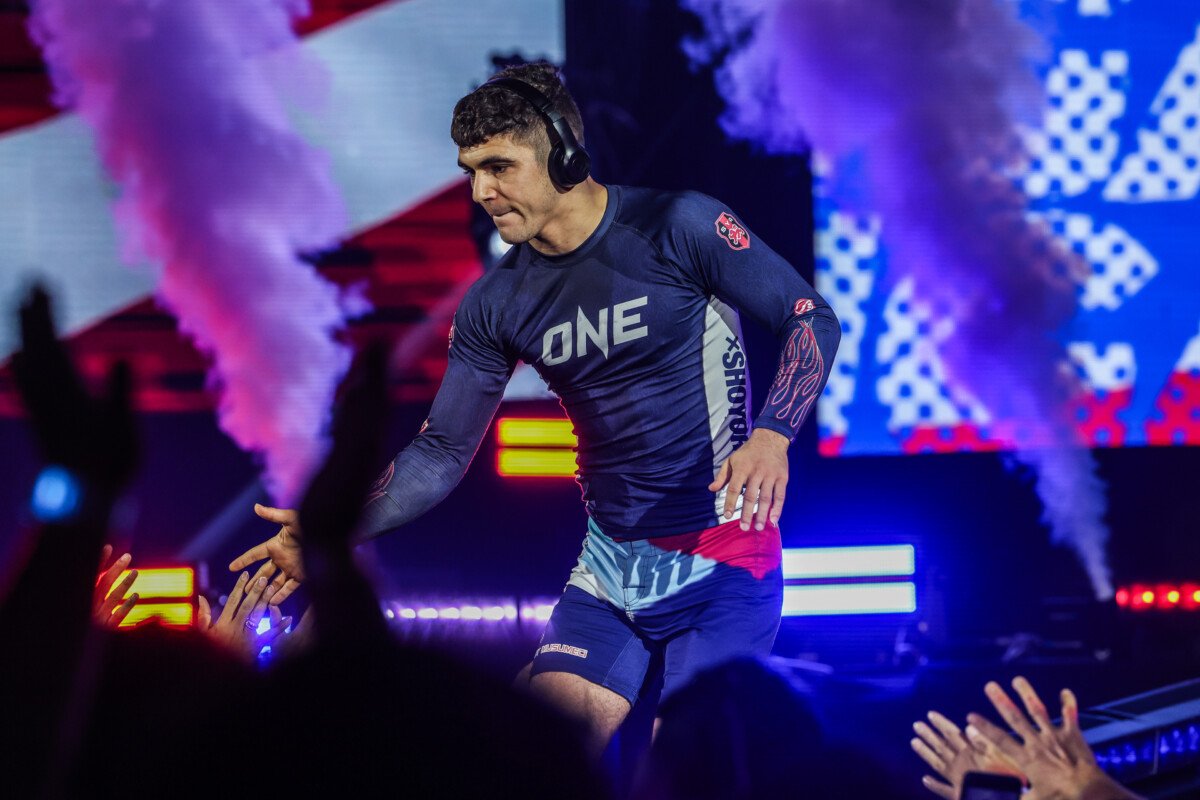
Elite competitors like Mikey Musumeci treat every scramble position, turtle included, as a transition rather than a place to stall.
Why Wrestlers Clear the Back Faster Than Most BJJ Grapplers
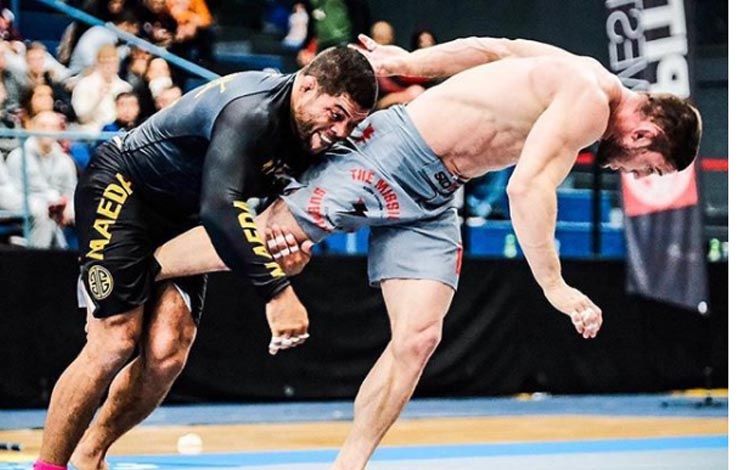
Anyone who’s rolled with a former collegiate wrestler has felt this: they get taken to the back and they’re already turning before the second hook is in. Folkstyle wrestling drills escapes from bad positions constantly, and freestyle scores back exposure the same way ADCC does, so wrestlers arrive with thousands more reps of hip-driven escapes than most blue belts ever get. That’s not a knock on jiu-jitsu — it’s a scheduling problem. Most gyms spend eighty percent of live rolling time on offense and treat escapes as an afterthought taught once and never drilled again.
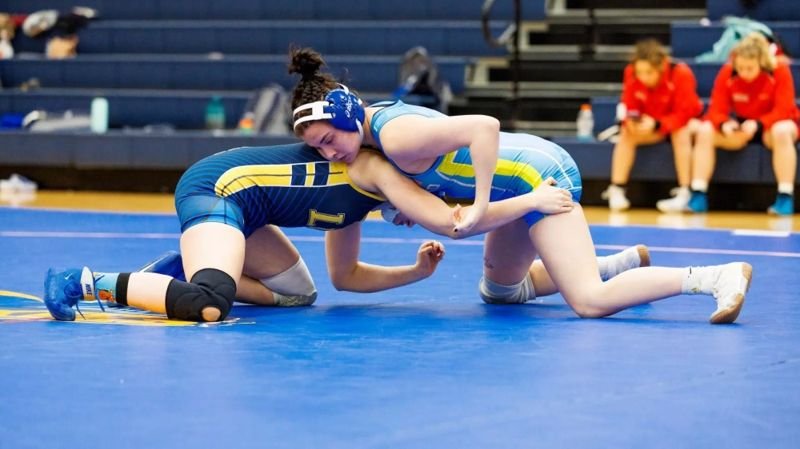
The hip-first scramble instinct wrestlers build over years of live matches transfers directly to escaping back control.
Drilling the Escape Until It Stops Being a Decision
Thirty hip escape reps per side before training, done cold with no partner, builds the exact motor pattern this whole sequence depends on. Add partner reps starting from bad position specifically — ask a training partner to just take your back and hold it, then reset and go again, ten times, without ever attacking back. Grapplers who treat escapes as a live-rolling afterthought are the ones still getting caught by the same grip a year later. Gordon Ryan, who’s arguably done more damage from back control than anyone in the sport’s history, has said publicly that he drills the defensive side of every position he attacks, specifically because knowing the escape makes his own attacks sharper.

Even grapplers famous for their back attacks put real training time into the escape side of the position.
Mistakes That Get You Recaptured
Watch enough no-gi matches and the same four errors show up over and over:
- Peeling both hooks at once instead of clearing the bottom one first, which lets the top hook reset every time
- Turning into the choking arm rather than away from it, handing over a finished submission mid-escape
- Standing straight up with a hook still in, which just lifts your opponent onto your back for a body-lock takedown
- Fighting the hands instead of the hips — grabbing at fingers and wrists burns the exact energy that should be going into the hip escape angle
Any one of these turns a clean escape attempt into a reset for your opponent, and most grapplers make at least one of them every time they get taken down. The fix for all four is the same: slow the position down in training specifically to notice which mistake you default to under pressure, because you almost certainly favor one of them without realizing it.

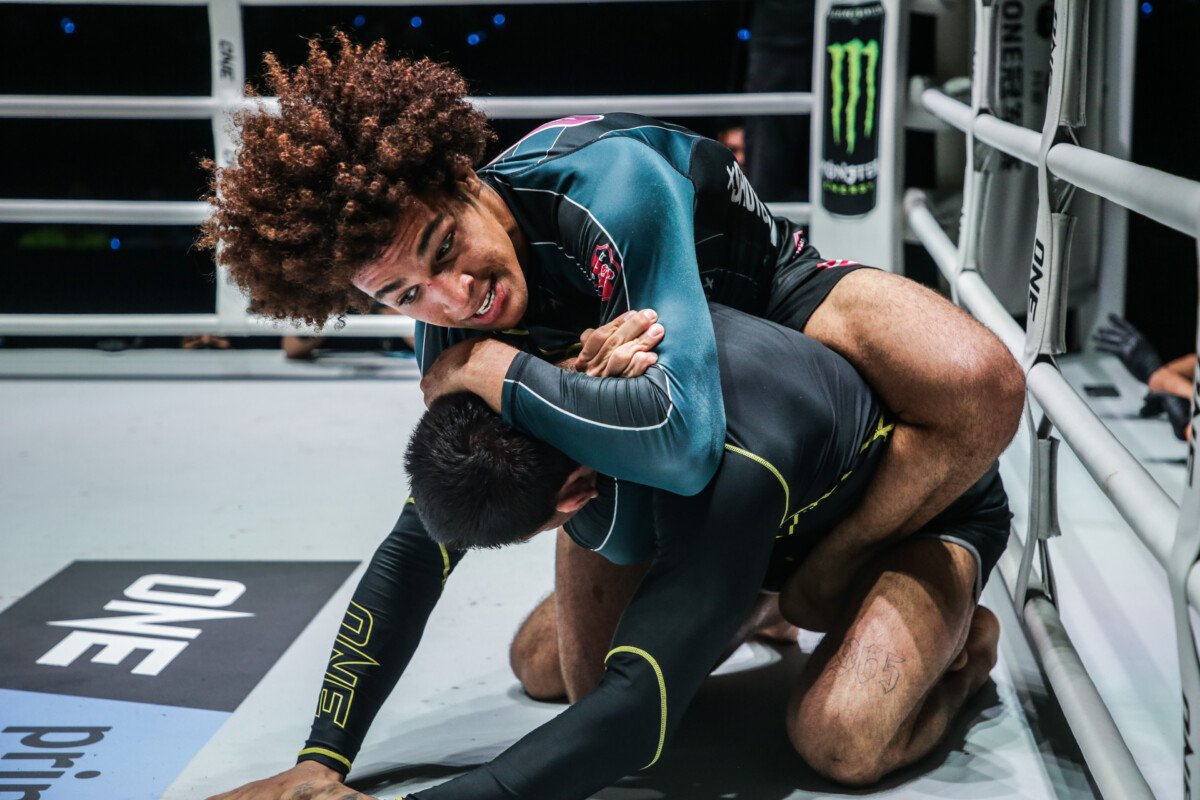
Back control decides a huge share of matches at every level of competition, including in ONE Championship’s submission grappling division.
Make the Escape Automatic, Not Improvised
None of this replaces mat time, but it gives you the order of operations most grapplers never get taught explicitly: protect the neck, kill the bottom hook, pick your good side, then choose between the hip escape, the seatbelt roll, or the turtle based on what’s actually available in that exact moment. If you’re working on the position that leads into this one, our guide to taking and keeping back control shows you what the person on top is trying to do to you. And if the back isn’t your only weak spot, the same hip-escape principles carry straight over into our breakdowns of escaping mount and escaping side control.
Sources
- ADCC Rules 2026: Scoring, Points, Time Limits & Legal Techniques – Grappler HQ — back control with hooks scoring breakdown
- The Three Most Important Back Mount Escapes – Grapplearts — escape sequencing and grip-break principles
- Kade Ruotolo’s Perfect Run in ONE Championship – ONE Championship — competitor background