Single Leg Takedown No-Gi: 7 Essential Keys
At ADCC 2019, the single leg was the takedown competitors attempted most often on the feet — and it was also the one they finished least. Of the 17 total takedowns that scored points that entire tournament, seven came from double legs. Only two came from single legs, despite being attacked far more frequently.1 That gap is the whole story of this technique: grapplers know how to shoot a single leg, but most of them never learn what to do once they’re holding the leg.
This is a breakdown of the single leg for no-gi — the entries that get you to the leg, the three finishing mechanics that actually put someone on the mat, and the defensive side most guides skip entirely. No gi to grip means no gi to hide behind. Everything here has to work on skin.
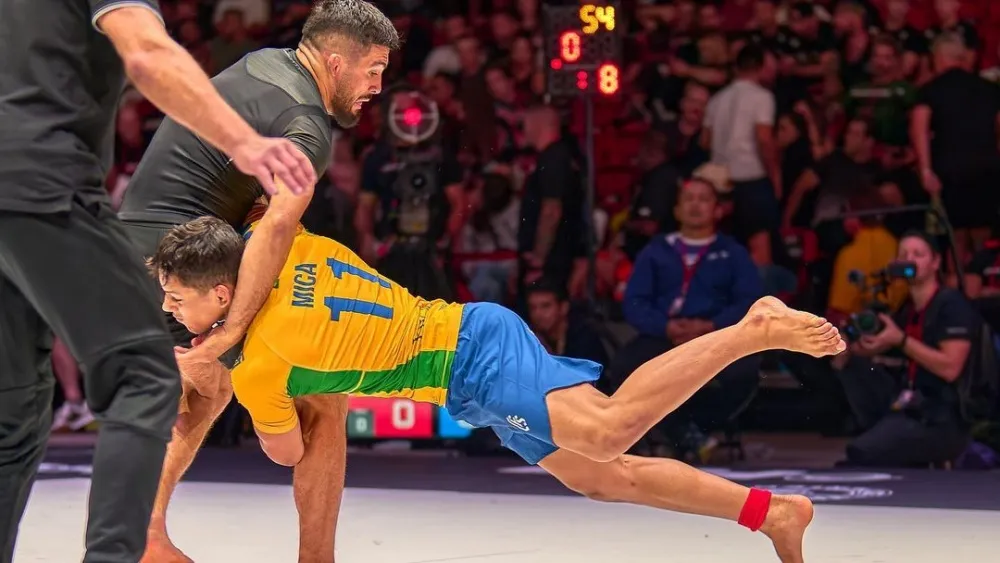
What Is a Single Leg Takedown?
A single leg takedown attacks one of your opponent’s legs instead of both. You change levels, step in close, and wrap your arms around a single leg — usually behind the knee, at the thigh, or down at the ankle depending on the variation — while keeping your head and chest tight to that side of their body. Because you’re only controlling one post instead of two, your opponent still has a free leg to hop, sprawl, or kick away with, which is exactly why the finish mechanics matter more here than in a double leg.
The trade-off is speed and safety. A single leg needs less penetration than a double leg, so it’s harder for your opponent to time a guillotine or a sprawl-and-spin counter. Wrestlers coming into no-gi grappling default to it for that reason, and it’s the entry most front headlock and turtle exchanges trace back to when you rewind the tape.
Key 1: Enter Off a Collar Tie, Not a Cold Shot
Shooting a single leg from a standing start with no hand-fighting first is how most beginners get sprawled on instantly. The better entry starts with a collar tie or a two-on-one grip fight, breaking your opponent’s posture forward before you ever change levels. Once their head is down and their weight is loading onto their lead leg, that leg becomes the target — you’re not guessing which side to attack, they’ve told you.
Hold the tie for a beat longer than feels natural. Grapplers who shoot the instant they touch a collar tie are predictable and easy to sprawl against. Grapplers who wait for a real reaction — a flinch, a weight shift, a hand coming up to fight the tie — are shooting on an opponent who’s already off balance before the level change even starts.
Key 2: The High Crotch for Distance Control
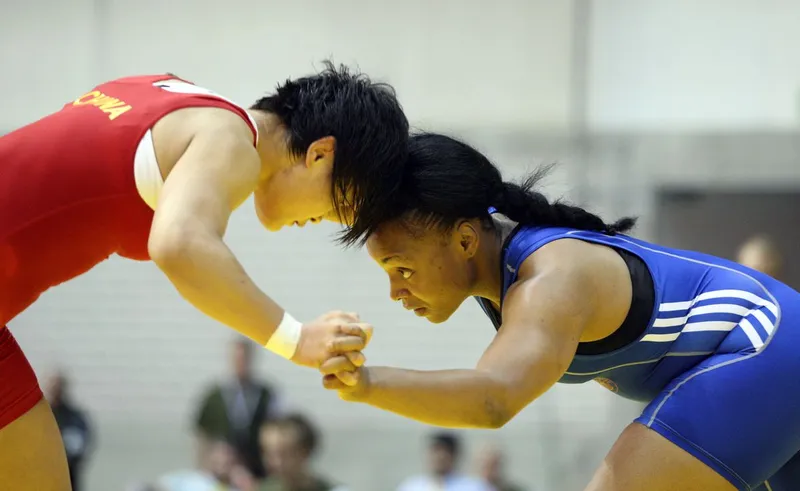
The high crotch is a single leg run through the top of the thigh instead of the knee, and it borrows part of the double leg’s penetration step to get there. You drive your head to the outside of your opponent’s hip, wrap the near-side leg high and tight against your shoulder, and use your far-side hand to control their hip or far leg. Because the grip sits higher up the leg, you get more leverage to lift and less distance for your opponent to hop away on their free leg.
This is the variation that translates best from folkstyle wrestling backgrounds, and it’s a staple at the NCAA level for a reason — the high grip makes it much harder for a taller opponent to simply straighten their leg and pull it free. In no-gi grappling specifically, the high crotch also sets up a direct path into a body lock if the finish stalls, since your arms are already wrapped around the hip.
Key 3: The Low Single for a Long-Distance Shot
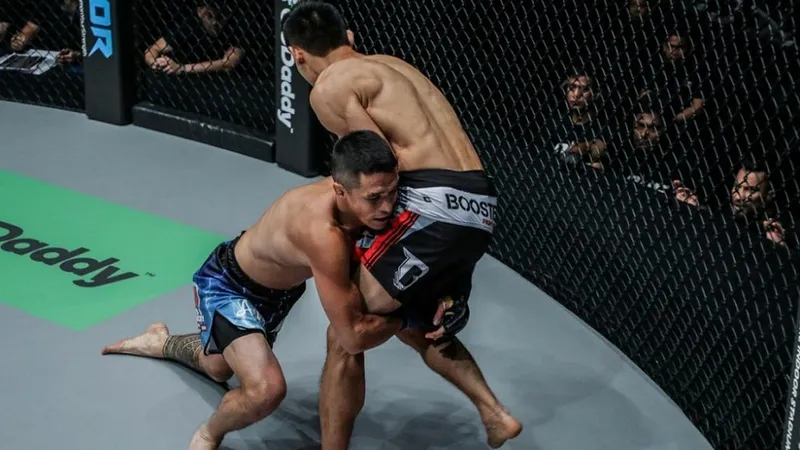
Where the high crotch works up close, the low single is built for distance. You shoot from farther out, dropping your level hard and snatching the ankle or lower shin before your opponent has time to react to the penetration step. It’s the entry of choice when your opponent still feels safe standing at range — the low single closes that gap before they can hand-fight or sprawl.
The mechanical key is keeping your head up and your back straight as you drop, not folding at the waist to reach the ankle. Reaching down with a bent spine puts your head in guillotine range and kills your ability to drive forward once you’ve caught the leg. Drop your hips, not your head.
Key 4: Finish by Running the Pipe
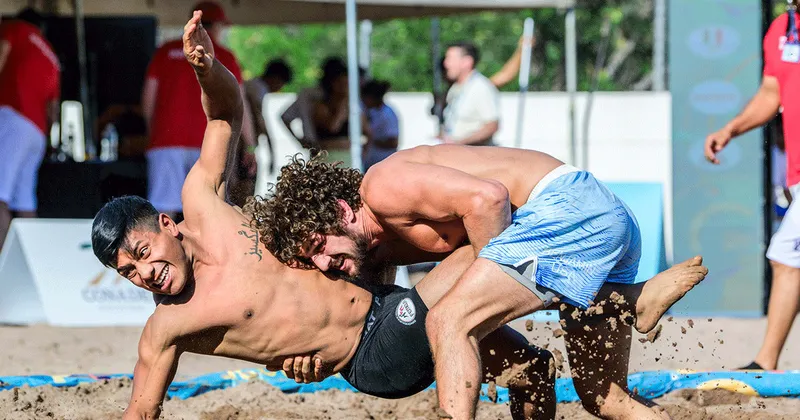
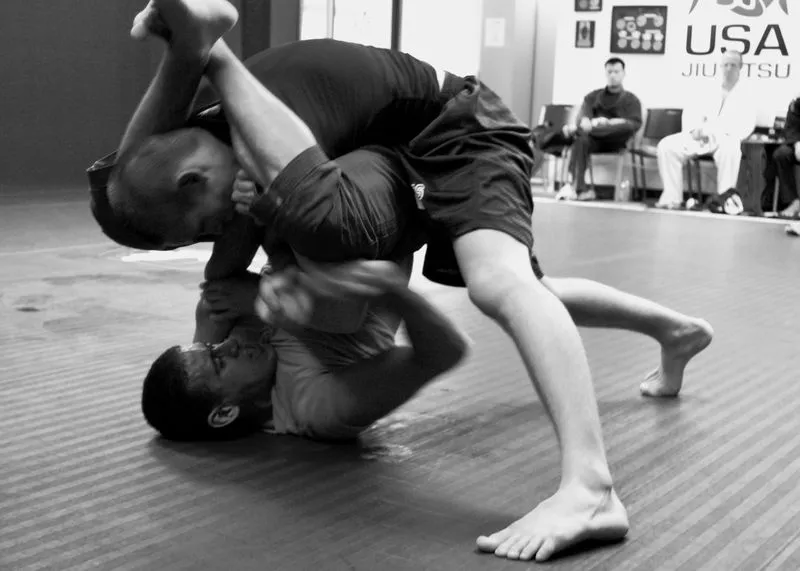
Running the pipe is the standard finish when your opponent sprawls their weight backward to defend. Instead of trying to lift a heavy, backward-leaning opponent, you circle around the captured leg while keeping your head driving into their hip, forcing them to hop on their free leg to keep up. Eventually their planted foot crosses behind the other, their base collapses, and they fall flat without you ever needing to out-muscle them.
The finish depends on patience, not speed. Grapplers who try to sprint the circle usually lose their grip on the leg because they’ve stopped driving their head into the hip. Keep the pressure connected through the whole rotation and let the geometry do the work — their own two legs get tangled long before your arms give out.
Key 5: Finish by the Dump or Knee Tap
When your opponent leans their weight forward instead of sprawling back, running the pipe stops working — there’s no backward lean to circle around. This is where the dump comes in: you drive the captured leg out to the side and slightly across their other leg, using it as a lever to take their base out from under them while your head stays glued to their chest.
A cleaner cousin of the dump is the knee tap, where you simply tap or push the back of their free knee at the exact moment they’re posting weight on it. No lift, no rotation — just removing the one post holding them up. It’s a lower-risk finish for smaller grapplers going against a much heavier opponent, since it relies on timing instead of strength.
Key 6: Chain It Off a Failed Double Leg or Ankle Pick
The single leg rarely needs to be your first attack. Most high-level finishes come from a failed double leg where your opponent manages to free one leg but not the other — you’ve already got a grip on that leg, so you simply commit to the single instead of resetting. The same logic applies coming off a stuffed ankle pick: if your opponent yanks their foot free but you’re still holding above the ankle, you’ve transitioned into a single leg without ever losing contact.
This is worth drilling specifically, not just hoping it happens live. Set up a double leg shot with a partner who’s told to defend by stepping one leg back, and practice recognizing the moment to abandon the double and commit to the single that’s already in your hands. Grapplers who only drill the single leg from a cold start miss the version of it that shows up most often in an actual live round.
Key 7: Know Where It Leads in No-Gi Scoring
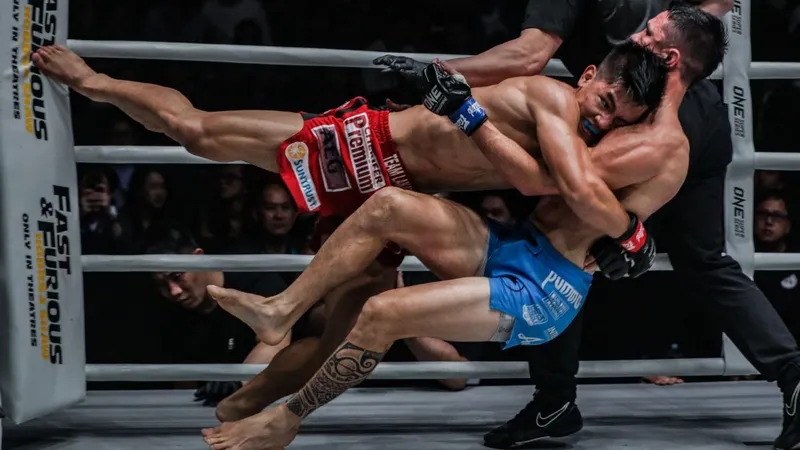
A finished single leg in most no-gi rulesets lands you in a mixed position — not quite side control, not quite the top of turtle — because you’re often still holding the leg when your opponent hits the mat. The highest-percentage follow-up is to ride the leg straight into a knee slide toward top position rather than releasing the grip early and letting your opponent scramble to their base. Keeping one hand on the leg through the landing buys you the extra half-second most opponents need to recover guard.
If your opponent turns away from you as they fall, that’s usually your signal to ride to their back rather than fight for a square top position — the same principle that makes the grip fighting that started the exchange worth mastering in its own right. A takedown that ends in a stalemate scramble is only half the technique.
Defending the Single Leg
The single leg’s biggest defensive weakness is that it commits your opponent’s head and both arms to one side of your body, leaving your far-side hip and far-side hand completely free. The moment you feel a leg get caught, sprawl your hips back and down rather than trying to muscle the leg free — a sprawl removes the platform your opponent needs to finish, and it costs you far less energy than a strength contest you’re unlikely to win from a compromised position.
From the sprawl, your best exit is a spin to the back or a whizzer on the near-side arm, using the space your opponent’s own commitment created. Grapplers who panic and try to hop away on the trapped leg almost always fall into the exact rotation running the pipe is designed to exploit — the defense has to be positional, not evasive. For a deeper look at controlling grips before the shot even starts, see our breakdown of double leg takedowns no-gi, since the same hand-fighting principles decide both exchanges before either takedown is attempted.
Common Mistakes That Kill the Finish
Most failed single legs share the same three errors. Grapplers bend at the waist instead of dropping their hips on entry, which puts their head in range of a guillotine and stalls their forward drive. They release their grip too early once the opponent starts to fall, giving up the ride to top position that the takedown was supposed to earn. And they try to force one finish — usually running the pipe — regardless of which way their opponent actually leans, instead of reading the reaction and picking the dump or knee tap when the pipe isn’t there.
The fix for all three is the same: slow the shot down in training until the mechanics are automatic, then let speed come later. A technically sound single leg at half speed beats a fast, sloppy one that dies the moment a real opponent resists it. For grapplers building out a complete standing game, our guide on judo throws for no-gi covers the other side of the standing exchange — what to do when your opponent won’t let you get low enough to shoot at all.
Sources
- FloGrappling — ADCC 2019 Point-Scoring Analysis — takedown attempt and scoring breakdown by type
- Evolve Daily — Everything You Need to Know About the Single-Leg Takedown
- Wikipedia — Takedown (grappling) — general takedown classification and terminology