Judo Throws No-Gi: 7 Proven Setups
Wrestlers win ADCC. That data point has been consistent since the early 2000s, and the throws they use — outside trips, inside trips, shoulder throws — are all judo techniques rebranded with wrestling grips. Travis Stevens, the 2016 Olympic judo silver medalist and BJJ black belt, makes the case bluntly: if you’re competing in no-gi and your standing game is limited to the double leg, you’re giving up half the takedown map.
The common objection is that judo needs a gi to work. That objection is thirty years out of date. Every throw on this list has been hit at ADCC, WNO, and submission wrestling competitions by grapplers wearing rashguards and spats. The grip changes — sleeve grip becomes wrist or tricep control, lapel grip becomes underhook or overhook — but the throws themselves translate. Here’s how to make seven of them work.
Why Judo Throws Work in No-Gi Grappling
Judo throws function on three mechanical principles that have nothing to do with fabric: kuzushi (off-balance), tsukuri (positioning), and kake (execution). The gi grips are one way to achieve kuzushi, but not the only way. Head ties, body locks, underhooks, and wrist controls all create the same off-balance when applied correctly. The gi grip is a delivery mechanism, not the throw itself.
What changes in no-gi is the margin for error. Gi grips are grippy and slow the action down. No-gi grips are slippery and require faster commitment. A throw initiated but not completed in the gi might still result in a controlled finish because the grip holds. In no-gi, half-committed throws become scrambles. The solution isn’t to avoid throws — it’s to develop sharper entry timing so you’re committing fully once the window opens.

Throw 1 — Osoto Gari (Major Outer Reap)
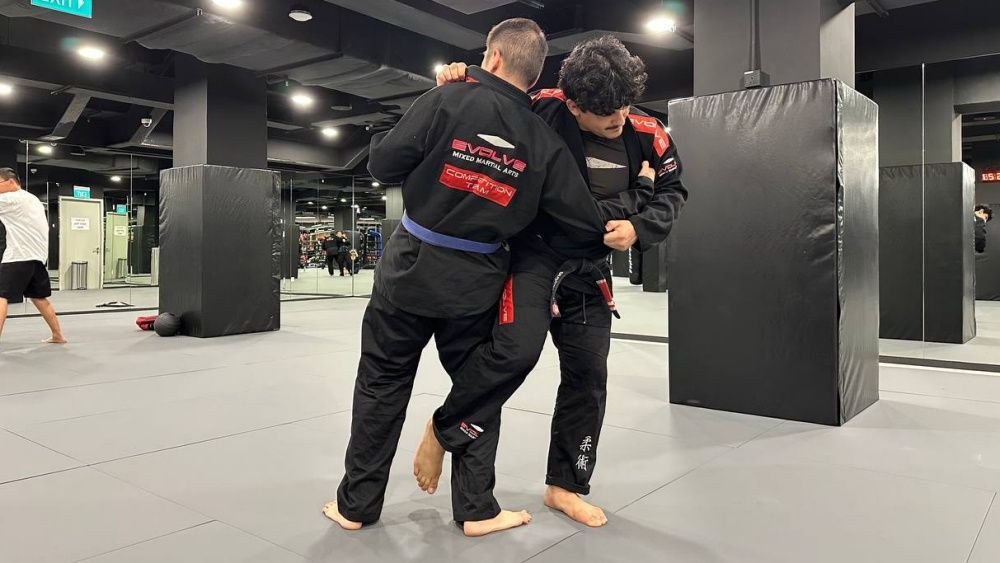
Osoto gari is the most naturally transferable judo throw to no-gi because it doesn’t require a sleeve grip. The standard setup uses a collar tie on the same side as the reaping leg and a pushing/pressing action with the other arm (often an overhook or push on the chest). You off-balance the opponent backward and to the outside, then drive your leg behind theirs and reap through.
In no-gi, the collar tie is your primary grip. Your thumb goes behind the neck, fingers grip the base of the skull. Your reaping leg swings through the opponent’s leg — shin-to-shin contact on the way in, then the leg drives through as your body commits forward. The throw fails when grapplers lean forward with their torso instead of committing their hips. The hip drives through; the torso follows. Not the other way around.
Osoto gari works especially well off a snap-down or anytime the opponent’s weight shifts to their heels. Head control plus off-balanced weight equals a clean entry window.
Throw 2 — Ouchi Gari (Major Inner Reap)
Where osoto gari trips the outside leg, ouchi gari attacks the inside. You step in close, hook one leg behind the opponent’s inner knee, and reap it out while driving your upper body forward. In gi judo, this is often done with a sleeve-and-collar grip. In no-gi, it works cleanly from a standard pummeling position — one underhook, one overhook — or from a body lock.
The key detail for no-gi is chest contact. Ouchi gari requires your chest to stay connected to the opponent’s chest as you drive forward. Losing that chest contact before the reap completes lets the opponent recover their base and step out. Once your reaping leg is hooked, your driving motion comes forward and slightly to the side of the trapped leg — not straight back, which is too easy to step around.
Ouchi gari chains naturally with osoto gari. Fake the outside trip (osoto) and when the opponent shifts their weight to defend it, their weight transfers to the inside leg — which is exactly where ouchi gari attacks.
Throw 3 — Kouchi Gari (Minor Inner Reap)
Kouchi gari is the low-risk entry point for grapplers new to judo throws. Instead of a full reap, you hook the opponent’s ankle or lower shin and flick it while pulling their upper body forward. The throw doesn’t require deep penetration or close body contact — it works from the outside, which makes it safer to attempt in scrambles where you haven’t established inside position yet.
In no-gi, kouchi gari works off the collar tie with a level change. Pull the opponent forward slightly with the collar tie to get them onto their front foot, then hook the ankle as their weight is loaded and flick outward. The motion is a quick hook-and-flick, not a sustained reap. This is a combination setup throw more than a primary finisher — it disrupts balance and creates the entry window for a follow-up osoto or double leg.
Throw 4 — Drop Seoi Nage (Drop Shoulder Throw)
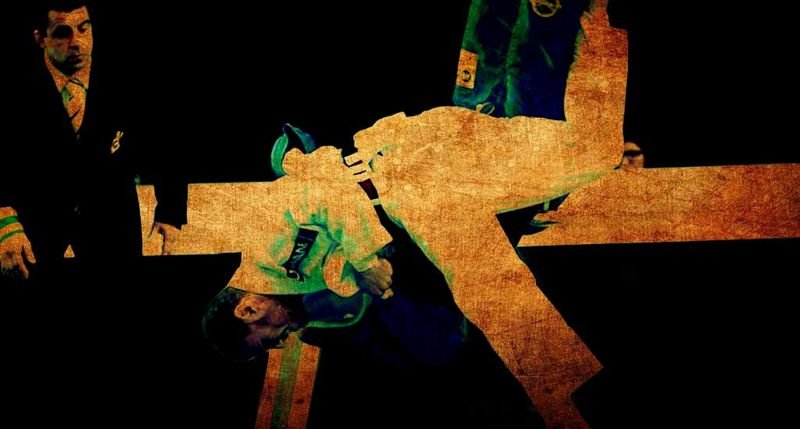
Drop seoi nage is the judo throw most commonly seen in no-gi competition, partly because it doesn’t require a collar grip and partly because the drop motion works even when you don’t have clean underhook position. You turn your back to the opponent, drop to both knees simultaneously, and drive your hips under theirs while pulling their arm over your shoulder.
The no-gi grip variation replaces the sleeve grip with a tricep or elbow grip. Your near hand grabs behind the elbow; your far hand grabs the wrist. As you drop and turn, you pull that arm forward across your body. The throw works when your hips are lower than the opponent’s hips at the moment of kake — if you drop shallow and your hips are at their knee level instead of their thigh level, the throw stalls.
Drop seoi nage is also one of the more dangerous throws to attempt against a leg-lock-heavy opponent, because the drop to the knees creates an ashi garami entry for someone who knows what they’re looking for. Use it when you have a secure arm grip and commit completely — don’t drop halfway and reconsider.
Throw 5 — Tai Otoshi (Body Drop)
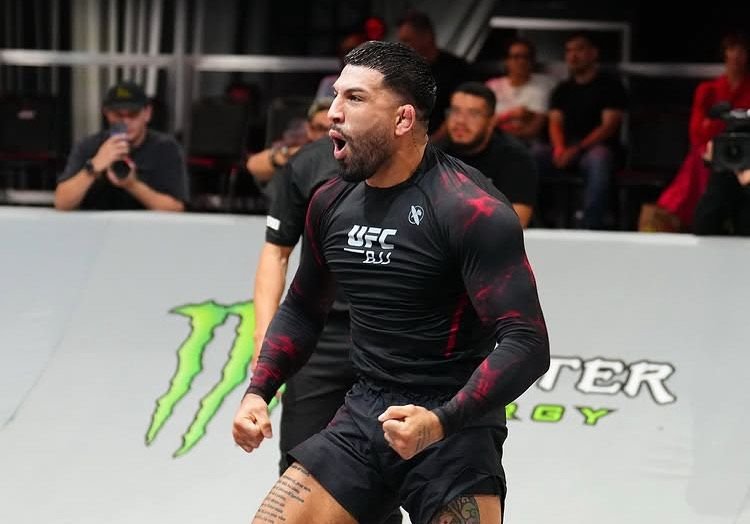
Tai otoshi doesn’t reap or sweep the leg — it blocks it. You step your leading foot outside the opponent’s foot, creating a barrier, then rotate your body while pulling their upper body forward and down. Their foot is blocked; their momentum continues. They go over.
In no-gi, tai otoshi works from a collar tie with the same-side elbow grip, or from an overhook. The footwork is the critical element: your blocking foot needs to be in the right position before the rotation. Too close and the opponent steps around it. Too far and there’s no barrier. The blocking foot plants outside and parallel to the opponent’s foot, creating a wall they rotate over.
This throw is effective against opponents who have a wide, low base — the type that makes double legs difficult. Their wide stance becomes a liability when you introduce a side rotation instead of a forward attack.
Throw 6 — Uchi Mata (Inner Thigh Throw)
Uchi mata is a timing throw more than a strength throw. You sweep the inside of the opponent’s thigh upward as you pivot, creating a lift that takes them off their base and rotates them over your body. In gi judo, this is typically done with a high collar grip and sleeve control. In no-gi, the upper body connection is an underhook or body lock while the sweeping leg does the work.
The timing window is when the opponent’s weight shifts to the leg you’re sweeping. That moment — usually during a step or a defensive readjustment — is when the sweep launches. Attempting uchi mata against a stationary, planted opponent rarely works. You’re not moving their leg off the mat; you’re sweeping it when it’s already in motion, amplifying what’s already happening.
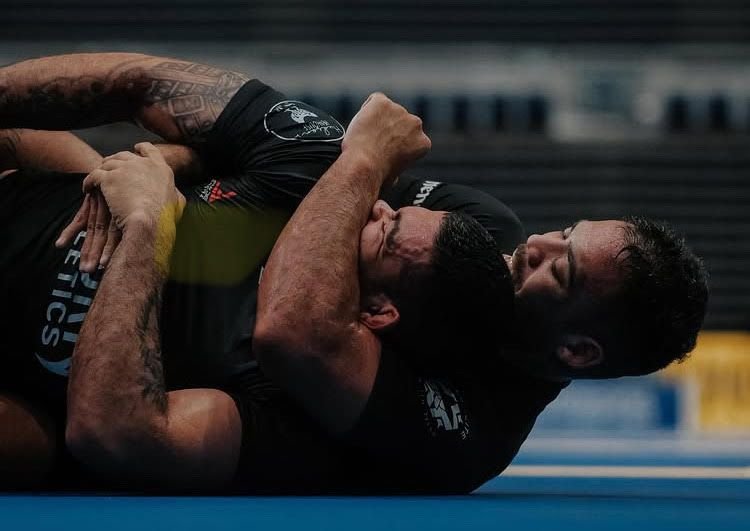
Uchi mata chains well with kouchi gari: the kouchi hooks the ankle and shifts weight, and uchi mata catches the weight-loading leg as it comes forward to recover.
Throw 7 — Tomoe Nage (Sacrifice Throw)
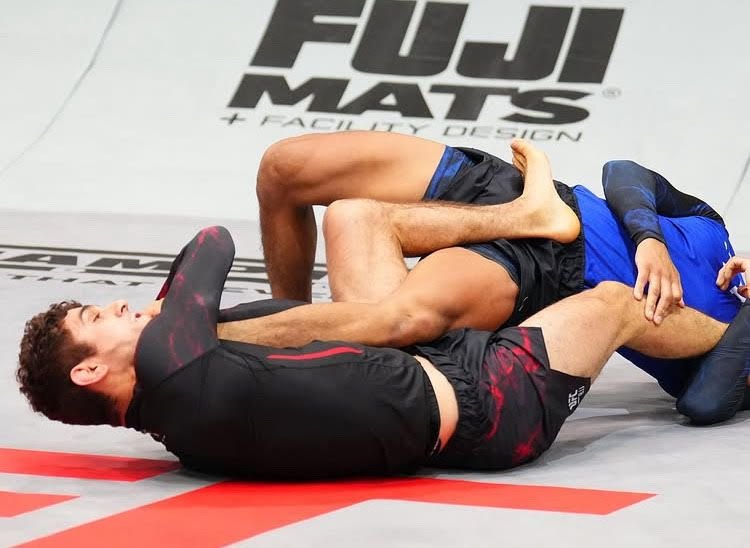
Tomoe nage is the exception on this list: you go to the ground intentionally. You fall backward, place your foot on the opponent’s hip or inner thigh, and use their forward momentum to throw them over your body. Done well, you end in guard — done against the wrong opponent, you end in passed guard.
In no-gi, tomoe nage works as a counter to a hard-driving opponent who is pushing into you. You step into them, grip the upper body (underhook or double collar tie), fall backward with one foot planted on the hip, and extend your leg as they come over. The throw requires the opponent to have forward momentum — attempting it against someone pulling back or sprawling is the wrong read.
The guard-ending position is what makes tomoe nage controversial in competition: you end up on the bottom, and referees sometimes award takedown points to the opponent even when you initiated the throw. Know the ruleset before deploying it in competition.
No-Gi Grip Adjustments for All Seven Throws

Every throw on this list requires a specific no-gi grip modification. The collar tie (hand behind the neck, thumb pointing toward the ear) handles most of what the collar grip does in judo — it controls the head, creates off-balance, and provides the pull needed to set up the entry. Underhooks replace lapel grips for establishing inside position. Wrist and tricep grips replace sleeve grips for controlling the arm in seoi nage and tai otoshi.
The pummeling game — the constant inside-position battle between two grapplers in the clinch — is where judo grip work starts in no-gi. If you’re losing the underhook battle, most of these throws become harder to set up because your upper body positioning is compromised before you even attempt the entry. No-gi grip fighting and judo throw setups are the same skill — the pummeling and the throw are one sequence, not two separate things.
Combination entries work better than single-throw attempts in no-gi. Osoto-to-ouchi, kouchi-to-uchi-mata, and tap-to-double leg are all examples of pairing a setup throw with a finishing throw. The setup throw doesn’t need to score — it creates a defensive reaction that opens the finishing attack. This is how judo is practiced at the elite level and why it transfers cleanly to high-level submission wrestling. The double leg takedown and these seven throws aren’t competing approaches — they’re complementary parts of a complete standing game. The wrestling-for-BJJ framework that ties them together is where most grapplers should spend their standing game development time.
Sources
- BJJ Heroes: Is Wrestling the Key to ADCC Success? — Data analysis of wrestling vs. other grappling arts in ADCC competition results.
- BJJ Fanatics: No-Gi Judo Throws — Overview of kouchi gari, tai otoshi, and uchi mata adaptations for no-gi grappling.
- BJJ Eastern Europe: Understanding The Osoto Gari In BJJ — Technical breakdown of osoto gari grip modifications for the no-gi context.
- BJJ Fanatics: Judo Takedowns For No-Gi by Valdir Araujo — ADCC veteran’s instructional covering the full no-gi judo throw system.
- Grappling Insider — Ongoing competition coverage of high-level no-gi grappling events where these throws appear regularly.