No-Gi Takedowns and Ear Risk: What the Shot Phase Does to Your Ears
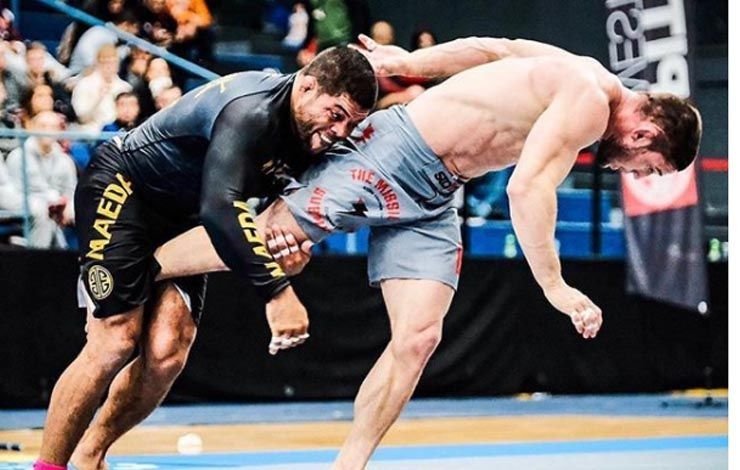
The discussion around cauliflower ear in no-gi tends to cluster around two phases of a round: the guard and the clinch. Ground positions get attention because pressure accumulates slowly and you can feel it building. Clinch work gets covered because the tie-up creates prolonged head contact against your opponent’s arm and shoulder. But the takedown phase — the shot, the sprawl, the scramble that follows — receives far less analysis, and it probably generates more uncontrolled ear contact than both of those phases combined. In the two to three seconds of a real takedown attempt, your ear goes places you weren’t planning for it to go, at speeds that make any individual rep feel minor. That specific exposure is what this article addresses.
The Geometry of a No-Gi Shot
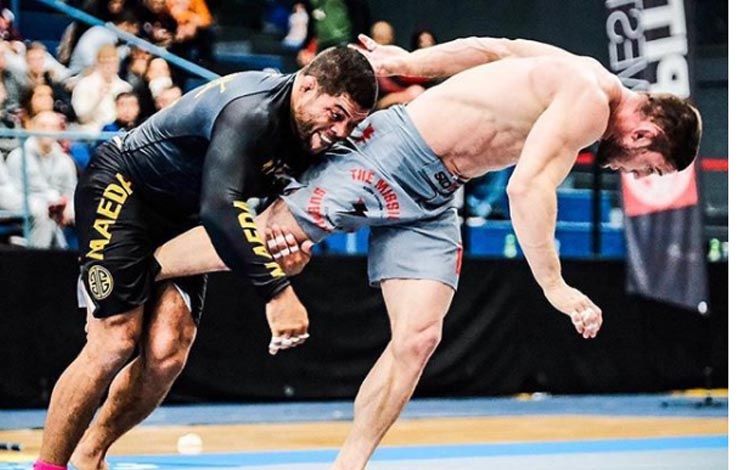
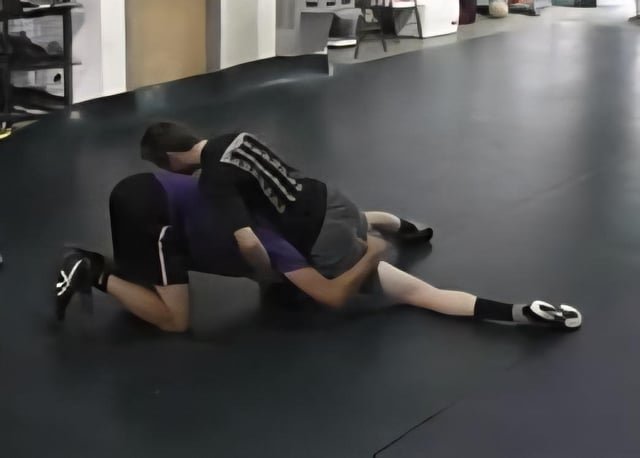
When you drop your level and shoot for a double leg, your head is driving toward your opponent’s midsection or outside hip. That’s the target you’re tracking. Where your ear actually ends up depends on what your opponent does in response. A defender who sees the shot coming will base out, rotate their hips, and try to change the angle — in the process, their hip bone, thigh, or dropping body can come across the side of your head with real force. This isn’t the slow grinding pressure of someone sitting in top half guard. It’s impact. A committed sprawl can drive their hip directly across your ear in a direction you had no reason to anticipate when you initiated the shot.
The single leg creates a different exposure pattern. When you’re working from outside the leg — driving your head into their hip, trying to clear their knee and turn the corner — your ear is positioned against their leg and their crossface attempts. A proper crossface isn’t just a posture break; it’s a forearm driving hard across your face and ear. For grapplers who rely heavily on single legs, the crossface is probably the primary source of cumulative ear trauma in their game, and it happens every time the defensive sequence works the way it’s supposed to.
Sprawl Defense: The Defender’s Ear Problem
On the defensive side, the risk shifts but doesn’t disappear. When you sprawl on a shot, you’re driving your hips down and back while throwing your weight across the attacker’s upper back. Effective sprawls involve chest-to-back contact, hip pressure, and often a crossface or whizzer. As the defender, your ear sits close to the attacker’s shoulder and their driving arm. A shooter who’s still driving hard when you sprawl can crunch their head — and in doing so, your ear — into your chest or shoulder with significant force.
Athletes who do a lot of scramble work experience this most acutely. When a shot doesn’t finish cleanly and both competitors are fighting for position on the way down, head position becomes whatever it needs to be rather than whatever keeps your ears safe. The defender’s crossface attempt, the attacker’s head fighting for position, the momentum of two people moving through space together — these factors combine to create contact patterns that are almost impossible to predict or avoid. The variable you can control is whether that contact lands on foam and plastic, or directly on cartilage.
Head Position in Wrestling Is Not Ear-Neutral
Wrestling coaching emphasizes head position for leverage and control. The ear problem is a byproduct of that emphasis, not a separate issue you can coach around. When you shoot, you’re trained to drive your head to the outside of the opponent’s leg for a single, or push it through to their hip for a double. Both positions create ear exposure as an inherent consequence of correct technique. The mechanics that make the shot effective are the same mechanics that put your ear in proximity to impact surfaces.
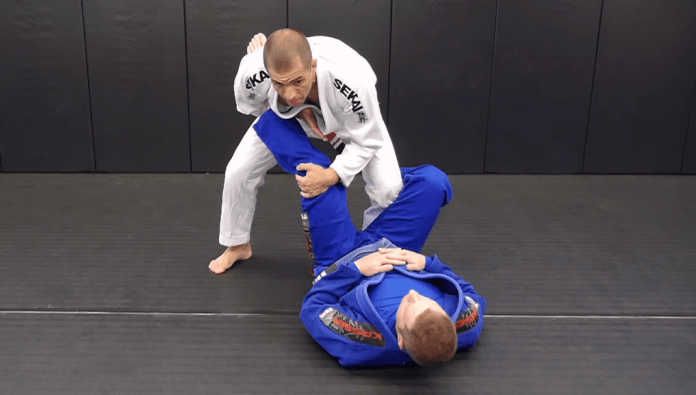
This is fundamentally different from what happens in the guard. In half guard or closed guard, there’s usually some spatial awareness of where your ears are relative to knees and elbows — the pace is slow enough to register the proximity. In a takedown entry, you’re tracking the target, not your ear. The shot demands your attention be on the level change, the penetration step, the drive-through. Ear guards don’t change that focus. They mean that when unexpected contact happens, the impact distributes across foam and a cup rather than concentrating directly on cartilage.
Trips, Throws, and High-Velocity Contact
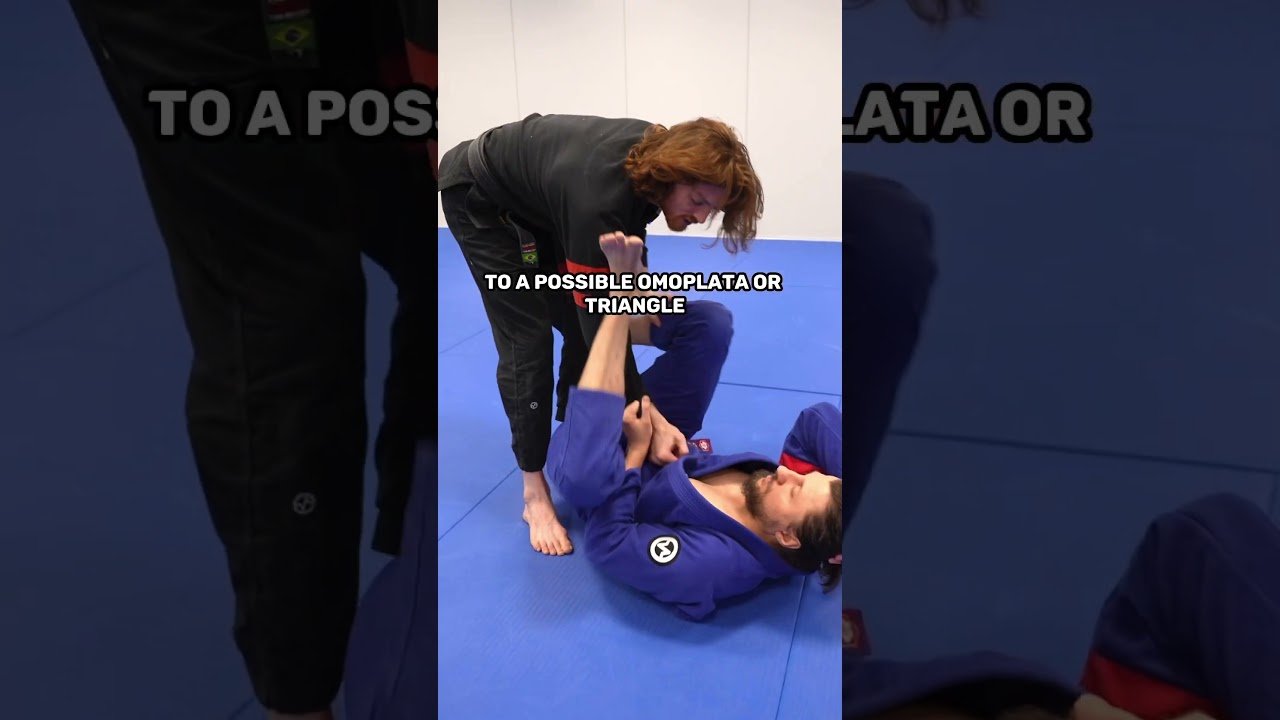
Trips and throws add a variable that pure mat-based positions don’t include: speed. An outside trip puts your head in proximity to your opponent’s shoulder and upper arm as you drive and rotate. A body lock throw or hip throw variation can position your ear against their shoulder or bicep during the rotation itself. A failed throw — where you’ve committed, they’ve based out, and you’re both fighting for the next action — often ends with your head in an awkward position as momentum is still carrying through.
Speed changes the character of the contact. A throw or a failed takedown scramble where your ear makes contact involves much more impact than the slow pressure of someone sitting in head-and-arm control. High-velocity contact can cause localized ear trauma in a single repetition that slow grinding work would take dozens of exposures to replicate. That distinction matters when you’re deciding whether ear guards make sense not just for live rolling but for dedicated takedown drilling sessions.
How Ear Guards Behave During Shots and Scrambles
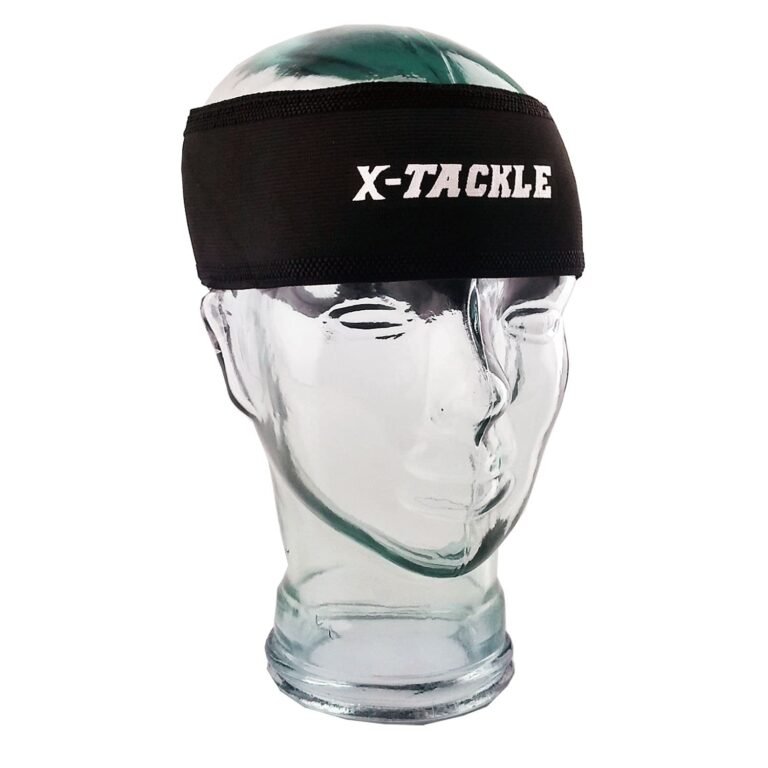
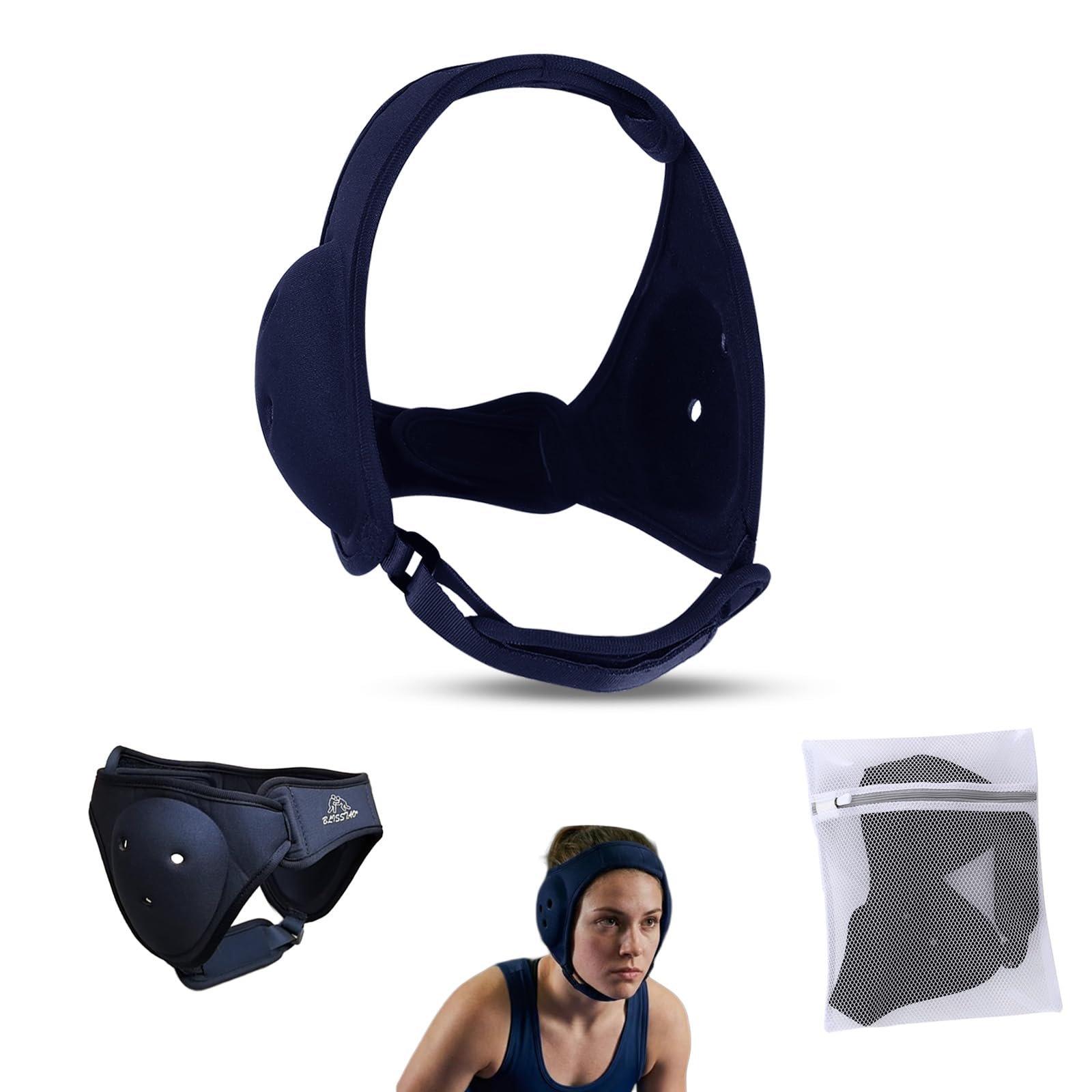
Standard ear guard design — a hard or semi-rigid outer cup over foam interior, secured by a head strap — holds up well in stationary positions. The takedown phase tests retention differently. A committed sprawl, a crossface, or a scramble where your head is driving against resistance generates lateral force that single-strap designs struggle with. The ear guard shifts under directional pressure, and when it shifts, the cup is no longer covering what it’s supposed to cover at exactly the moment you’d most want it there.
This is a hardware problem rather than a strategy problem. Ear guards that combine a rear strap with a top strap hold their position under lateral loading better than single-strap models. Softer shell designs that conform to the head under pressure stay seated better during fast movement than rigid options that can only sit in one fixed position or shift out. If your ear guard routinely migrates during shots and scrambles, the answer is a retention system matched to the activity — not skipping ear protection during the phase where it’s most needed.
There’s also a practical attention cost when gear moves mid-round. Adjusting an ear guard during a live scramble takes your focus off position, and your training partner isn’t waiting. Getting the right fit before rolling — and checking retention during warmup drilling — removes that variable entirely.
Matching Protection to Your Game
Not every no-gi player accumulates the same takedown exposure. If your game is primarily guard-based — you pull early, work from leg entanglements, and the clinch is a brief transitional moment before you get to the mat — your ear exposure in the shot phase is relatively low. You spend most of each round in positions where contact, when it happens, is slower and more predictable.
If your game is wrestling-forward — you shoot regularly, chase body locks, work single legs to back exposure, live in scrambles — you’re spending significant time in the takedown phase every round. For that player, ear protection during takedown drilling matters at least as much as during live rolling. Drilling shots and sprawls with a cooperative partner at near-full speed creates the same contact patterns over and over, concentrated on the same points on your ear in the same sequence. Unlike live rolling, where the contact shifts constantly based on the scramble, drilling loads the same spot repeatedly. That’s the kind of cumulative exposure that shows up quietly over a training season.
The Cumulative Math Nobody Runs
Cauliflower ear develops through accumulated trauma in most cases. A single hard sprawl that catches your ear probably won’t cause permanent damage on its own. But if you’re running takedown entries multiple times per session, several days a week, the math compounds. Each rep feels minor because each rep is minor. The cumulative total across a training season is not.
The point where ear guards stop feeling optional is usually the point where someone notices changes — firmness developing in the cartilage, a slight shift in shape — and asks whether they should start wearing protection. The better question is what the total volume of takedown work has been over the preceding months. The damage that’s visible is the result of cumulative exposure that felt like nothing in individual sessions. Wearing ear guards in the takedown phase doesn’t prevent every possible injury, but it consistently reduces the per-rep contact load across all those repetitions. In a phase of training you repeat hundreds of times a month, that reduction compounds in the same direction the damage would have.
Sources
NCAA Wrestling — Rules and Equipment
FloGrappling — No-Gi Grappling Coverage