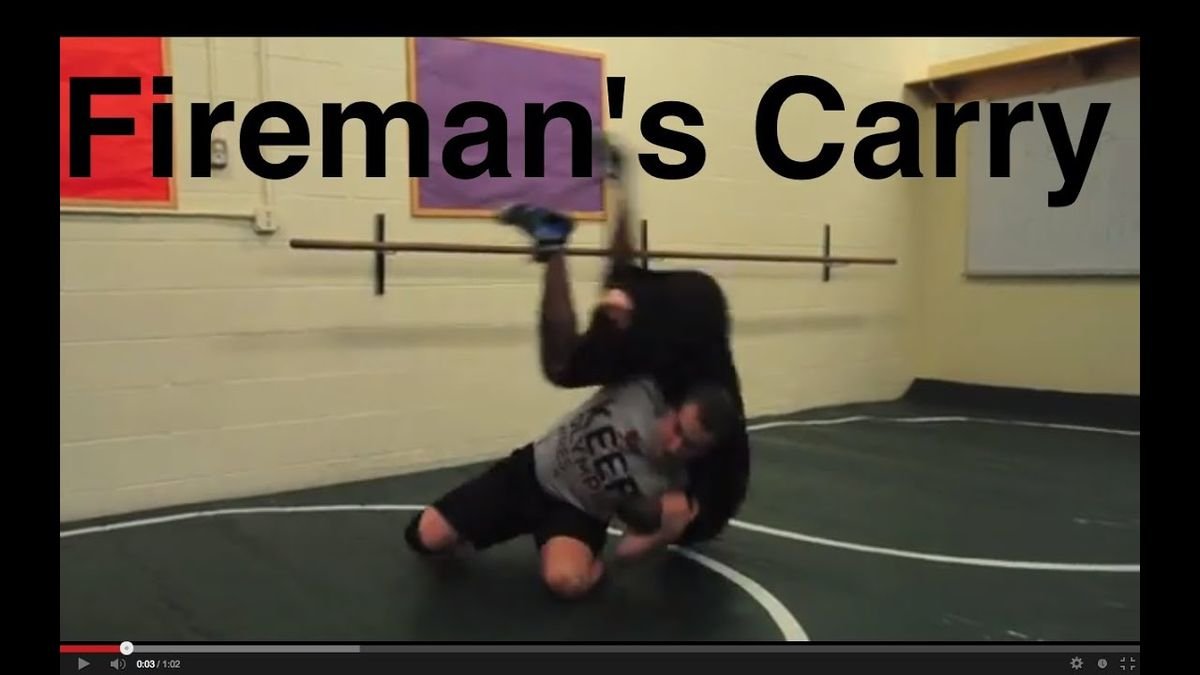
Fireman’s Carry No-Gi: 5 Steps to Set Up and Finish the Takedown
The fireman’s carry shows up less often on the mats than the double leg or the ankle pick, and that’s precisely why it works. Most opponents drill their double-leg defense obsessively — sprawling, blocking the hips, driving the head down. They don’t train against a technique that attacks from a different angle, uses rotational force instead of linear drive, and puts them in the air before they process what’s happening. At the ADCC and high-level submission wrestling events, the fireman’s carry isn’t just a wrestling novelty; it’s a legitimate takedown that opens back takes and leg lock entries that a straight double doesn’t give you.
This guide breaks down the full sequence: the grips that set it up, the drop and carry mechanics, how to finish the roll, and where to go after the takedown. It also covers the failure points — because the fireman’s carry is one of the few techniques where the breakdown almost always happens before the opponent hits the mat, not after.
Why the Fireman’s Carry Works in No-Gi
In folkstyle and freestyle wrestling, the fireman’s carry is typically set up from a collar-elbow tie with a wrist grip. The wrist control gives you the arm you’ll carry. Without a collar in no-gi, you build that control from an underhook or front headlock instead — the entry changes but the fundamental mechanic stays the same.
What makes the fireman’s carry effective at every level is the angle of attack. A double leg goes straight through your opponent’s center of gravity. The fireman’s carry attacks diagonally — you’re pulling the arm one way while pivoting through their near hip, creating a rotational force that’s nearly impossible to defend with a straight sprawl. That diagonal angle is the reason opponents who have good double-leg defense often have no answer for a fireman’s carry coming from the same clinch position.
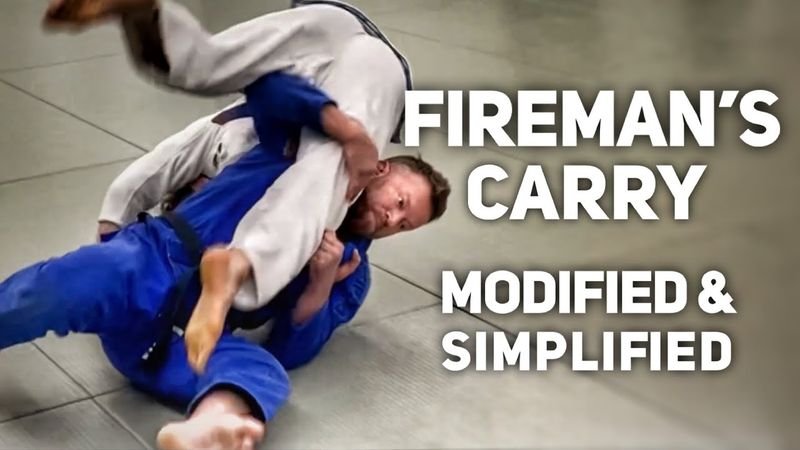
There’s also the finishing position. A completed double leg puts you in front of the opponent — you get top position, but you’re staring at their guard. A completed fireman’s carry regularly puts you at their side or behind them. Grapplers who understand this use the fireman’s carry specifically as a back-take entry, not just as a takedown. The submission threat after the technique is dramatically higher than the takedown alone suggests.
Setting Up the Fireman’s Carry: Two Grips That Work in No-Gi
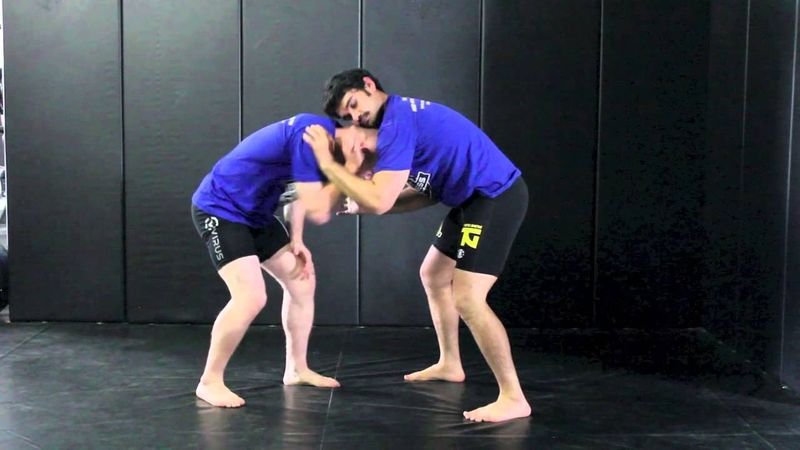
The most reliable no-gi setup uses an underhook on one side combined with wrist control on the same side. You’re controlling the arm you plan to carry before you move — that arm isn’t going anywhere once you have the wrist. The second setup, which works when an opponent is actively fighting your head control and overcommitting forward, is a front headlock where their arm is already near your neck.
From underhook plus wrist control, the sequence is:
- Establish your underhook on the right side, driving your right shoulder into their chest and upper arm
- Use your left hand to grip their right wrist and pull it toward your centerline — you’re pre-loading the arm
- Keep your head on the same side as the underhook, pressed into their body just below the shoulder
- Step your left foot forward past their right foot, cutting your level as you step — your hips drop as the foot lands
That step is the entry point where most grapplers lose the technique. You’re not shooting straight in like a double leg. You’re angling your body to their side, which is what allows you to get under the arm and across their back. Stay square and your opponent stuffs it with a hip-bump sprawl before you’ve even loaded the carry.
The Drop Step and Knee Scoop
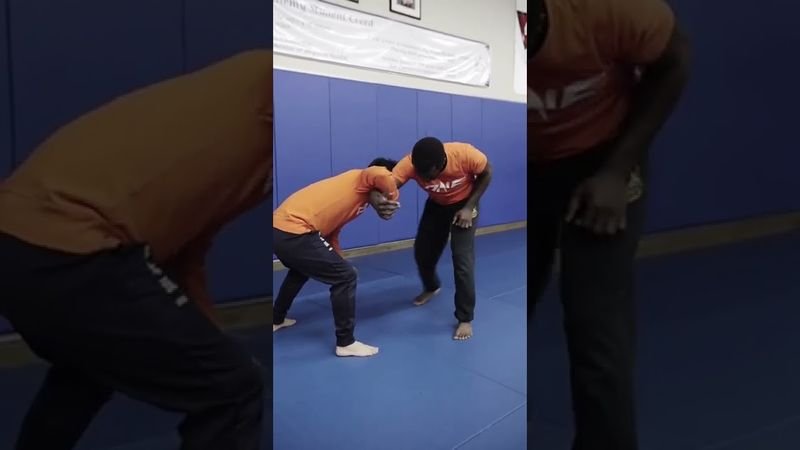
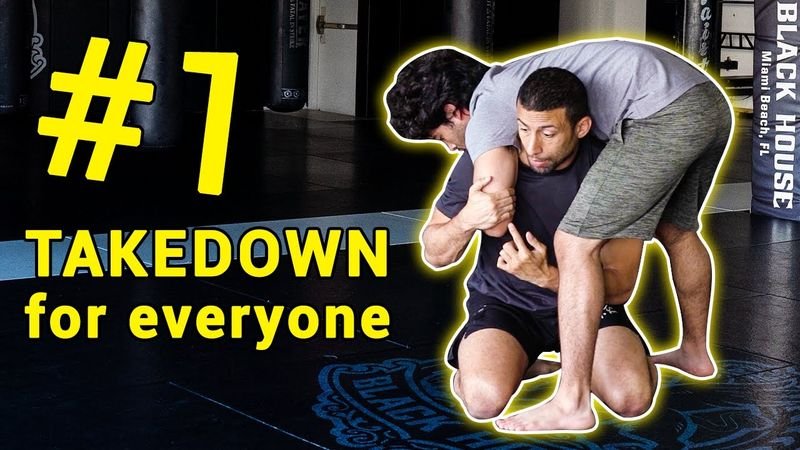
Once you’ve stepped through at the angle, two things happen simultaneously: your right knee drops to the mat, and your right arm scoops behind their right knee. At the same time, your left arm — the one controlling the wrist — pulls their right arm up and over the back of your neck, draping it across your left shoulder.
The scoop location matters more than most instructors emphasize. New grapplers reach for the ankle, which is too far down — it gives the opponent time to post their foot and scramble before you’ve loaded them. The scoop goes behind the knee, lifting the leg at the joint and collapsing their base on that side. As their weight commits over your back, the carry is already halfway done.
Head position throughout: drive it into their ribcage on the underhook side, facing downward. Don’t lift your head before you’ve loaded them. If your head comes up early, they can turn into you and use your elevated head as a handle to sprawl or spin behind you.
Loading and Finishing the Carry
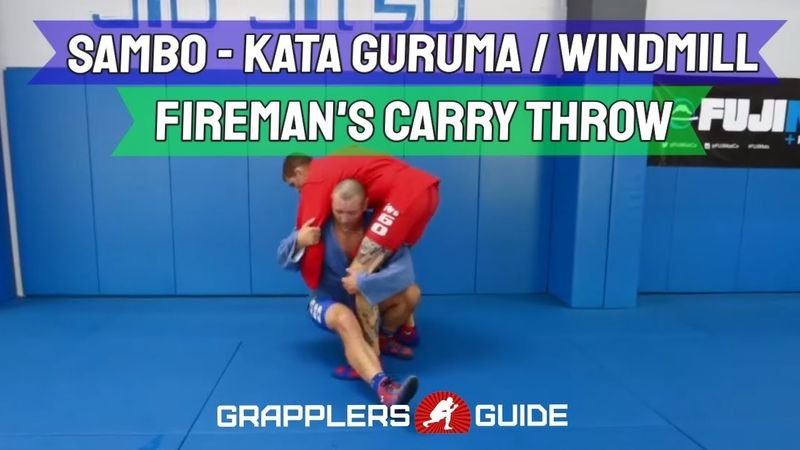
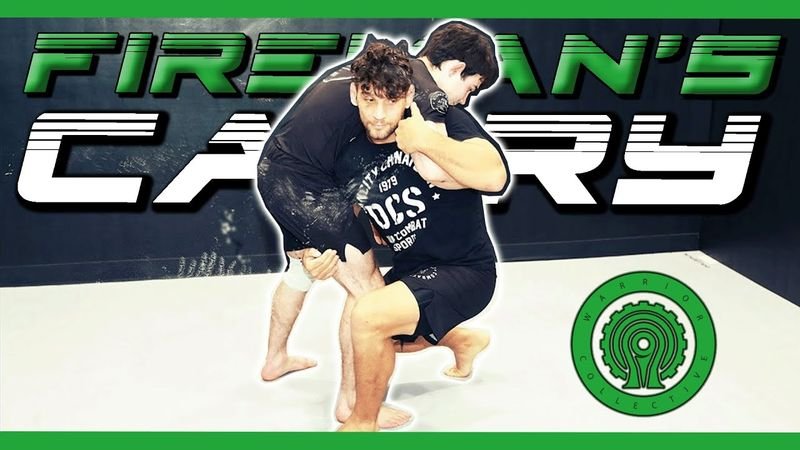
With the arm across your neck and the knee scooped, you’re in the carry position: your opponent balanced diagonally across your back, their right leg lifted, their weight committed over your shoulders. From here, the finish is a roll — not a straight lift, and not a slam. You’re rotating them, not pressing them.
You roll to your right, throwing the opponent over your right shoulder. Your right arm drives the knee across as you initiate the roll, and the arm draped across your neck guides the direction. Where they land depends on their reaction:
- They roll with it and land on their back to your right — you come up in side control or catch half guard as they try to recover
- They fight against the roll and turn into you — their back faces you as they land, which is the cleanest back take you’ll find off a takedown in no-gi
- They post hard with their far leg to stop the roll — you drive through with your legs and body weight, forcing the takedown through their resistance rather than pure leverage
The back-take conversion from the second outcome deserves particular attention. If your opponent rolls into you, their back is naturally presented as they land. Your left arm is already near their far shoulder from the carry. Establishing the seatbelt requires one motion. This back take is why the fireman’s carry often scores more submission opportunities than a clean double leg does — the finishing position is so dominant that even a good recovery attempt often concedes back exposure.
Fireman’s Carry from a Sprawl Recovery
One of the most practical applications in no-gi is converting a failed double leg takedown into a fireman’s carry. You shoot the double, your opponent sprawls — hips down, chest on your back, legs extended behind them. The standard recovery options are getting to your knees for a front headlock or hitting a granby roll. The fireman’s carry is a third option that catches heavy sprawlers off guard because it uses their weight against them.
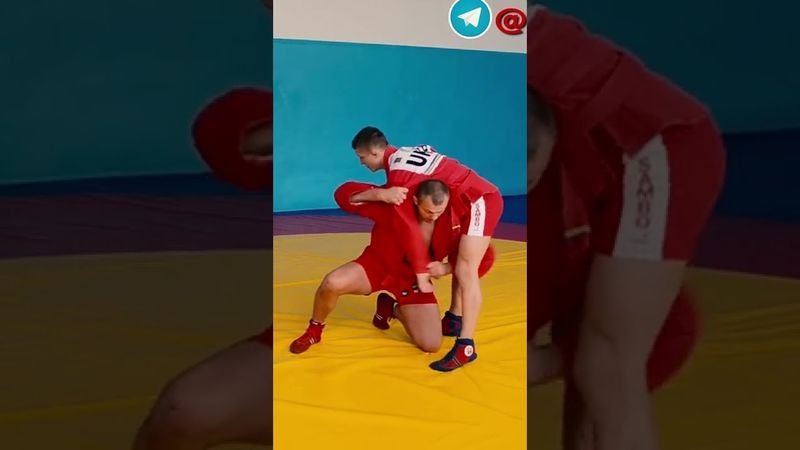
As you recover from the sprawl, you already have arm access. Shoot your inside shoulder under their armpit, scoop the knee on that side, and drop to the knee exactly as you would from a standing entry. Because they’ve been pressing their weight down on your back in the sprawl, their base is already compromised — their weight is forward and heavy, which is exactly the position that makes the carry easiest to finish. Many grapplers find the fireman’s carry from a sprawl recovery comes even faster than from a standing entry because the opponent’s weight is already going where you need it to go.
Defending Against the Fireman’s Carry
Knowing the defense sharpens the offense — it shows you exactly where the technique has to be precise.
The most effective early stop is keeping tight elbows. The fireman’s carry depends entirely on controlling the arm that gets draped across your shoulders. If your elbows stay in and your shoulder is shrugged forward, your opponent can’t drag that arm across. When you feel someone taking an underhook with wrist control, drop your elbow immediately and bump your hip toward them to strip the grip before they step through.
If they’ve already gotten under your arm, the wizzer (overhook) is the main counter. Drive a hard overhook around their neck with your free arm. A strong wizzer prevents the carry by locking their position and gives you the leverage to hip-turn away or drop for your own leg attack. A well-timed wizzer combined with a step-around has turned many fireman’s carry attempts into back takes for the would-be defender.
The third defense — posting the far leg — works once they’ve already dropped to their knee. Step your far leg back hard and drive your weight down. It’s difficult to roll someone who has a solid base on one side; the carry depends on their weight being fully committed over your back. A strong post stops the roll long enough for you to work back to neutral or sit for a leg attack of your own.
Variations That Expand When You Can Hit It
Once the base technique is reliable, three variations extend the threat into situations where the standard carry won’t finish.
The lateral drop adds a hip-toss direction to the throw instead of rolling straight over your back. Rather than pivoting and rolling to your right, you drop sharply to your side and throw the opponent across your body. This works better against taller opponents whose center of gravity is harder to clear over your back in a direct roll — the lateral direction brings their weight over your hip instead.
The leg lock entry uses the fireman’s carry setup to go directly into ashi garami rather than finishing the takedown. As you drop and scoop the near knee, instead of completing the carry, you pivot outward and sit to the outside of their leg — dropping directly into outside heel hook position. This is most effective when an opponent is strongly defending the carry by pulling their upper body back; their defense opens their leg for you to enter the leg entanglement. For grapplers who are already training leg locks, this connection from the fireman’s carry entry to a heel hook finish is a significant offensive chain.
The front headlock entry removes the need for a standing setup entirely. From a front headlock — which you find yourself in during scrambles, when an opponent is in turtle, or when you’re riding out a failed shot — you simply reach under and scoop the near knee while you already have their head controlled. Their posture is broken and their weight is forward. The carry from here often requires less setup than any standing entry because you’ve already taken their structure away.
For more wrestling takedowns that transfer cleanly to no-gi BJJ, the principle is consistent: techniques built without grips work in no-gi precisely because they were designed to function against full resistance. Grapplers who invest time in their back control game find the fireman’s carry worth adding specifically because it delivers that position more consistently than most other takedown options.
Add the fireman’s carry to the end of your drilling sessions — five minutes of entries, five minutes of finishing. The first week it feels awkward. By week three it starts showing up in live rolling without a conscious decision to use it, which is the signal that a technique has actually been absorbed.
Sources
- USA Wrestling — Technical Education Resources — National governing body for wrestling in the United States; technical reference for takedown classifications and mechanics
- GrappleArts — Takedowns and Clinch Work — Stephan Kesting’s widely referenced no-gi and submission wrestling technique library
- Submission Searcher — Kata Guruma / Fireman’s Carry — Technique database documenting fireman’s carry (kata guruma) variations and applications across grappling disciplines