Truck Position No-Gi: 5 Attacks That Make This 10th Planet Setup Work
Most no-gi grapplers spend their careers drilling the same back take sequence. Arm drag to seat belt to hooks in. It works, and that’s exactly the problem: everyone trains against it. The truck position offers a different route to the same back control territory — one that most training partners have never built defensive muscle memory against.
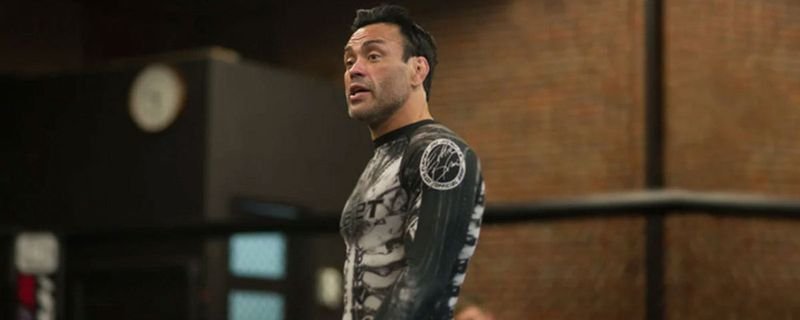
The truck was built inside the 10th Planet Jiu-Jitsu system by Eddie Bravo, who spent years turning the turtle position from a defensive scramble into an offensive launchpad. His student Geo Martinez later built an entire competition game around it, winning at submission-only events using twister setups and banana splits that opponents simply weren’t prepared to defend. The position never went mainstream, and that’s exactly why it still works.
What Is the Truck Position in No-Gi?
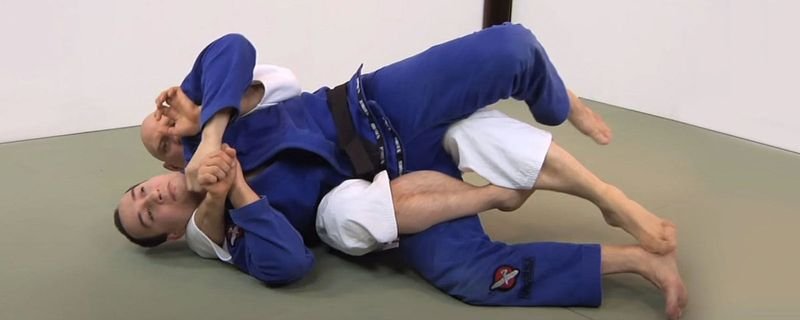
The truck is a control position that targets your opponent’s lower body. You get there by hooking one of their legs from the outside in a figure-four configuration — your leg locks around their leg while you control their hip. They end up on their side, one leg trapped, the other exposed, and their ability to base or move is eliminated.
Think of it as a lower-body version of the crucifix: you’re controlling a limb and a hip simultaneously, creating a position where they have to choose between two bad options. If they try to roll away, they expose the back. If they try to push back into you, they drive their leg further into your hook. The position feeds on bad escape attempts rather than good technique.
What makes it specifically valuable in no-gi is the lack of grip dependency. Gi players rely on fabric grips to maintain back control. In no-gi, those grips disappear and back takes often become scrambles. The truck controls the hip and leg mechanically — the figure-four doesn’t need cloth to stay in place, which makes it more reliable in sweaty, slippery rounds.
According to BJJ Heroes, the truck was originally derived from wrestling but the first systematic development of attacks around the position happened inside 10th Planet. Eddie Bravo’s teams at EBI (Eddie Bravo Invitational) demonstrated repeatedly that the position could produce submissions at high competition levels — not just in the gym.
The Two Entries That Actually Work Under Pressure
There are theoretical entries from several positions, but two of them produce the truck position consistently enough to build a real game around. Both rely more on timing than force, which matters more than most grapplers expect when they first try the position.
From the Turtle
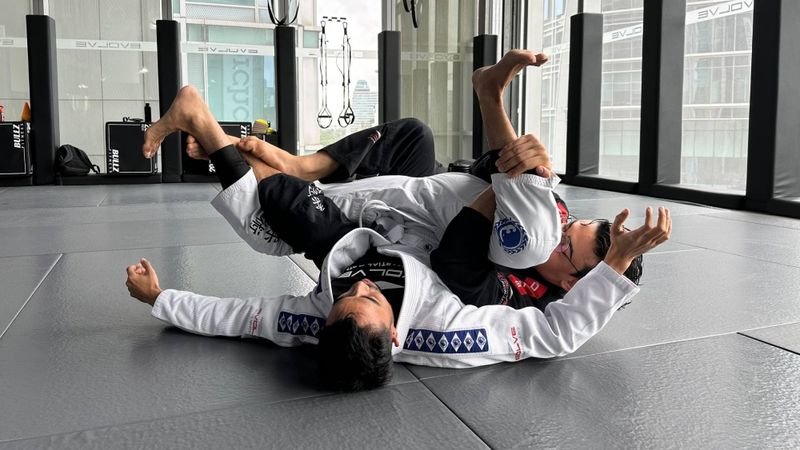
The turtle entry is the foundation. When your opponent is on hands and knees — whether they got there from a guard pass, a takedown defense, or a scramble — you move to their side and insert your inside leg through their legs, from behind. You’re looking to hook their near leg with your far leg, creating the figure-four. Once the hook is set, you drive your weight forward and pull their hip up, which forces them onto their side. From there, you grab their far leg with both arms to complete the truck control.
Timing is everything here. Geo Martinez, in instructional footage reviewed by BJJ Eastern Europe, doesn’t force a static turtle — he waits for the opponent to push back or change direction, then uses that movement to insert the hook. Fighting for the hook against a fully braced opponent costs too much energy. Catching it mid-movement is the actual skill.
From Top Side Control
The second entry is less intuitive but comes up often enough to know. From top side control, hook your opponent’s near leg with your bottom leg, then grab their far leg with your hands. This traps both legs and lets you roll toward their legs, landing in the truck on the other side. It’s slower and requires a moment where you leave the top position, which makes it riskier against experienced grapplers — but it’s the right call when the turtle entry isn’t available after a guard pass.
5 Attacks From the Truck Position
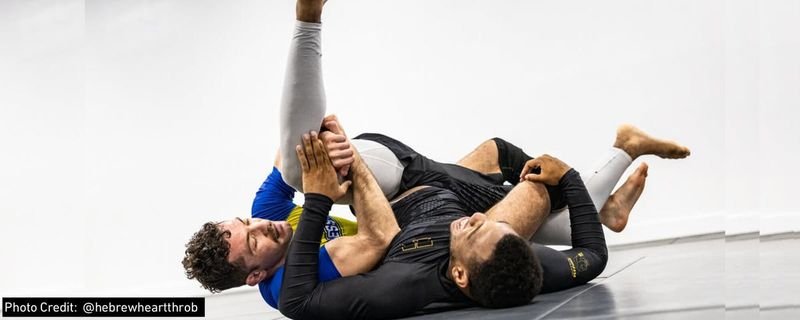
The truck position’s value comes from having five distinct attacks that connect to each other. Once your opponent starts defending one, another opens. That cycling of threats is what makes experienced truck players difficult to handle — not any single technique in isolation.
1. The Twister
The twister is the signature finish and the one your opponents are least likely to have practiced against. Once you have the figure-four hook and control of their far leg, you insert a hook behind their far hip and use your top arm to pull their head and neck backward while your legs drive in the opposite direction. The result is a spinal rotation — lower body locked one direction, upper body cranked the other.
The twister is banned in gi BJJ under IBJJF rules, which means most competitors have never drilled a defense against it. In no-gi and submission-only formats, it’s legal, and the lack of familiarity is a consistent advantage. Vinny Magalhães hit the twister at the 2015 ADCC World Championship — one of the very few times it has appeared at that competition level — demonstrating that the position is a genuine high-level threat, not just a training curiosity.
2. The Banana Split
The banana split targets the free leg — the one you’re not hooking in the figure-four. From the truck, reach your arm around the thigh of your opponent’s free leg and pull it toward your chest while driving their hooked leg in the opposite direction with your lower body. The groin stretch activates quickly and escalates fast. Most people tap before the dangerous range because the sensation alone is enough of a signal.
What makes the banana split effective as a second option is that it works off the same initial control as the twister. If your opponent tucks their chin and hunches forward to protect against the twister, they expose the free leg. If they protect the free leg by driving it back into you, the twister opens. Brandon McCaghren, a 10th Planet black belt who has written extensively about truck attacks, describes the banana split and twister as “threat pairs” — each one defended at the cost of the other.
3. The Calf Crank
The calf crank is the fastest finish from the truck position and the first submission most people catch in drilling. With the figure-four in place, drive your shin into your opponent’s calf while extending your hips. Depending on your leg position, the pressure targets either the calf muscle or the Achilles tendon. It loads quickly and doesn’t require the same upper body positioning as the twister — it comes almost entirely from leg extension.
This matters for beginners entering the truck system because you don’t need all the upper body control first. The calf crank can be the very first finish you catch, which gives you immediate returns on the drilling investment and motivates you to spend more time on the position. McCaghren’s curriculum starts with it for exactly this reason.
4. The Back Take
Not every attack from the truck has to be a submission. From the truck control, you can roll your opponent toward you and take their back with both hooks — and this back take is cleaner than most scramble-based versions because you maintain control of one leg throughout the roll. They can’t bridge, spin, or base out to stop you.
In competition footage, Martinez uses the back take frequently as a cleanup option when opponents defend the twister or banana split effectively. It’s not a consolation — the rear naked choke from full back control produces submissions at every level of grappling. The truck functions as a reliable highway to the back rather than an alternative to it. If you’re comfortable in the twister and banana split threats, the back take becomes available every time opponents over-defend those options.
5. The Vaporizer
The vaporizer is the least common of the five but worth understanding when opponents start predicting the others. From the truck, push your opponent forward while maintaining the leg hook, applying pressure through a modified calf compression that targets the knee from a different angle than the standard calf crank. It’s a 10th Planet-specific term for a position that doesn’t have a standard defense protocol in most BJJ academies.
Its value is primarily surprise. The first time someone feels it, they don’t know what they’re defending. That uncertainty creates a tap even when the physical pressure alone might not be enough. Once opponents know it’s coming, its effectiveness drops — but by that point, you’ve had time to improve your twister and banana split attacks.
Who Made the Truck Position Work in Competition?
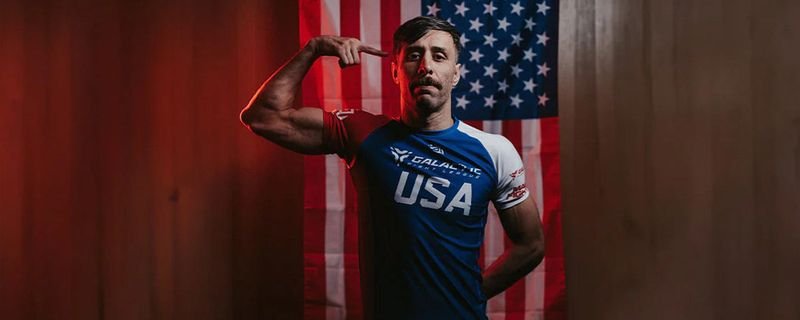
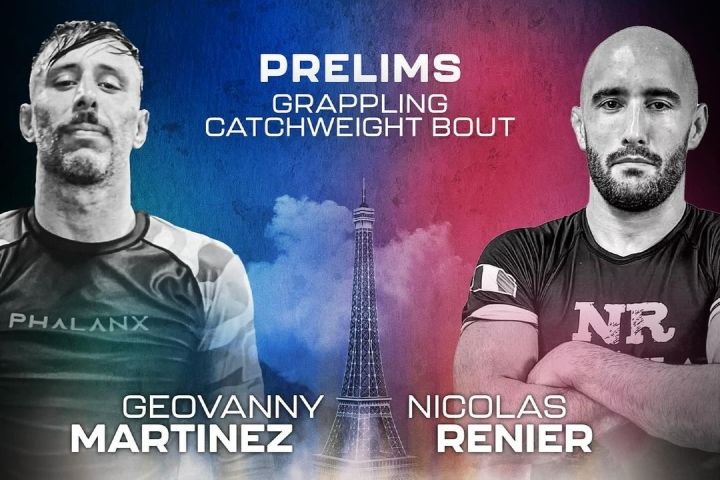
Geo Martinez built the most complete competitive application of the truck position. A 10th Planet black belt under Eddie Bravo, Martinez won multiple submission-only matches using truck entries, earning the nickname “Freakahzoid” partly for his willingness to compete from positions that made no sense to opponents who had never seen them. His instructional Truck the World, available through BJJ Fanatics, remains the most comprehensive resource on truck entries and finishes.
Vinny Magalhães’s 2015 ADCC twister is the other landmark moment. That match showed the wider grappling world that the truck position wasn’t just a 10th Planet gym drill — it was a legitimate competition tool at the highest level. Eddie Bravo’s EBI events featured the position regularly, with multiple 10th Planet competitors demonstrating entries and finishes that the rest of the no-gi world had no vocabulary to defend.
The position never spread beyond 10th Planet’s competitive ecosystem the way heel hooks or leg locks did. That’s a gap, not a ceiling.
Why Your Training Partners Aren’t Ready for This
Ask a competitive no-gi grappler how to escape the truck position and most will hesitate. Outside of 10th Planet academies, it rarely appears in drilling rotations. That unfamiliarity is the position’s most reliable feature.
The most common mistake opponents make is pushing backward when the truck is applied. That seems logical — you’re being turned onto your side, so you push back. But pushing back drives your leg further into the figure-four hook and removes your own ability to turn away from the submission threat. The correct defense involves quick footwork to remove the hook before it sets, which is a response most grapplers never get to practice because the position doesn’t come up.
If you’re already drilling back takes, the truck fits naturally into that training rotation. Entry from the turtle, establish the figure-four hook, and cycle through the five attacks above. The position won’t replace your main game — it extends it into territory your opponents haven’t mapped. That’s worth the drilling sessions it takes to get reliable with the hook insertion. Timing on the turtle entry will take the most repetitions. Once that’s automatic, the finishes come faster than you’d expect.
Sources
- BJJ Heroes — The Truck Position — History and development of the truck in competitive BJJ
- BJJ Eastern Europe — Everything You Need to Know About the Truck Position — Technique breakdown with practitioner commentary
- Elite Sports — BJJ Truck Position: History, Setup, Entries, Attacks & Submissions — Comprehensive technique overview
- BJJ Fanatics — Truck the World by Geo Martinez — Primary instructional resource for truck position development