Cauliflower Ear: A No-Gi Grappler’s Guide to Prevention and Headgear
Roll long enough without protection and eventually you feel it: a hot, tender swelling on the outer ear after a hard scramble. Maybe your ear got mashed under a knee during a stack pass, or ground into the mat while you defended a takedown. That throb is the first chapter of cauliflower ear, and how you handle the next 48 hours often decides whether your ear stays normal or hardens into the lumpy, permanent shape that so many grapplers carry. This guide walks through why the deformity happens, what ear guards actually do to stop it, and how to keep training hard without sacrificing your ears in the process.
What Cauliflower Ear Actually Is
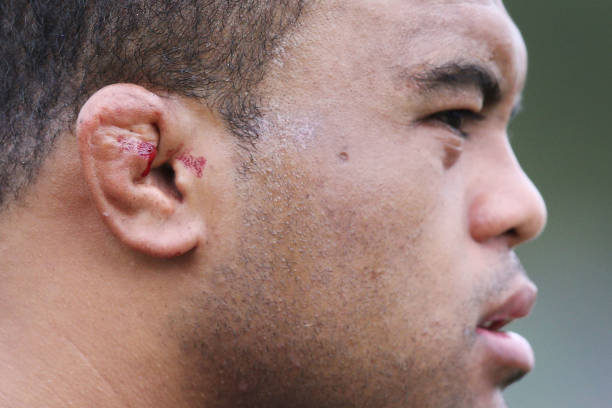
The medical name is auricular hematoma, and understanding the anatomy makes the whole prevention picture click into place. The visible part of your ear, the auricle, is shaped by a thin layer of cartilage. That cartilage has no blood supply of its own. It survives entirely on nutrients delivered by the perichondrium, a tissue membrane bonded tightly to its surface. When your ear takes repeated friction or a blunt blow, the perichondrium shears away from the cartilage underneath, and the space that opens up fills with blood and fluid.
Now the cartilage is cut off from its food source. Deprived of nutrients, the body responds the only way it can: it lays down new fibrocartilage and eventually calcifies the pooled blood into a hard, irregular mass. That is the lumpy “cauliflower” look. Once it hardens, it does not go back. The ear you see on veteran wrestlers and old-school grapplers is scar tissue and reshaped cartilage that has set like concrete. This is why cauliflower ear prevention and fast treatment matter so much more than anything you can do after the fact.
Why No-Gi Grapplers Are Especially Exposed
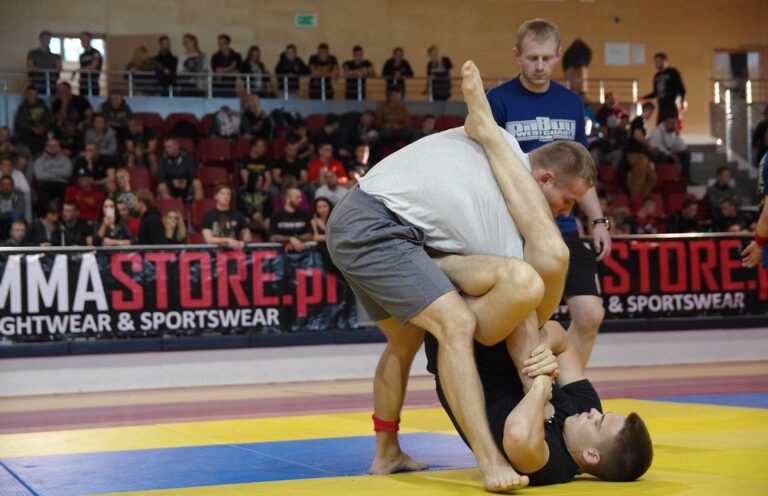
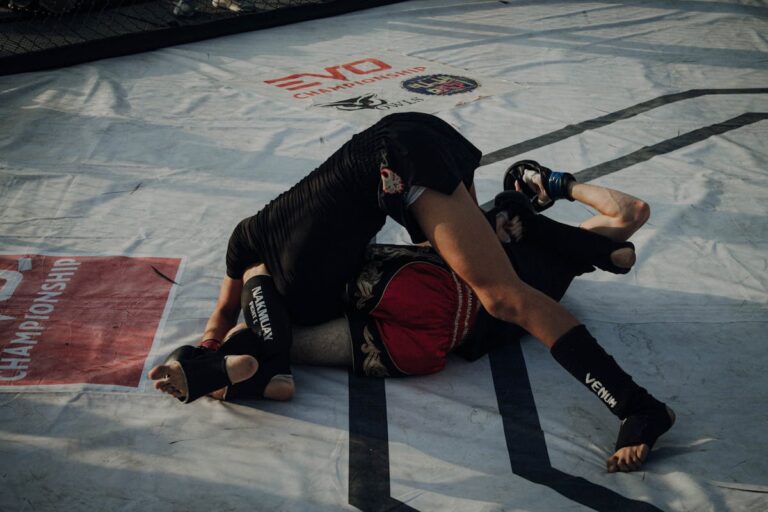
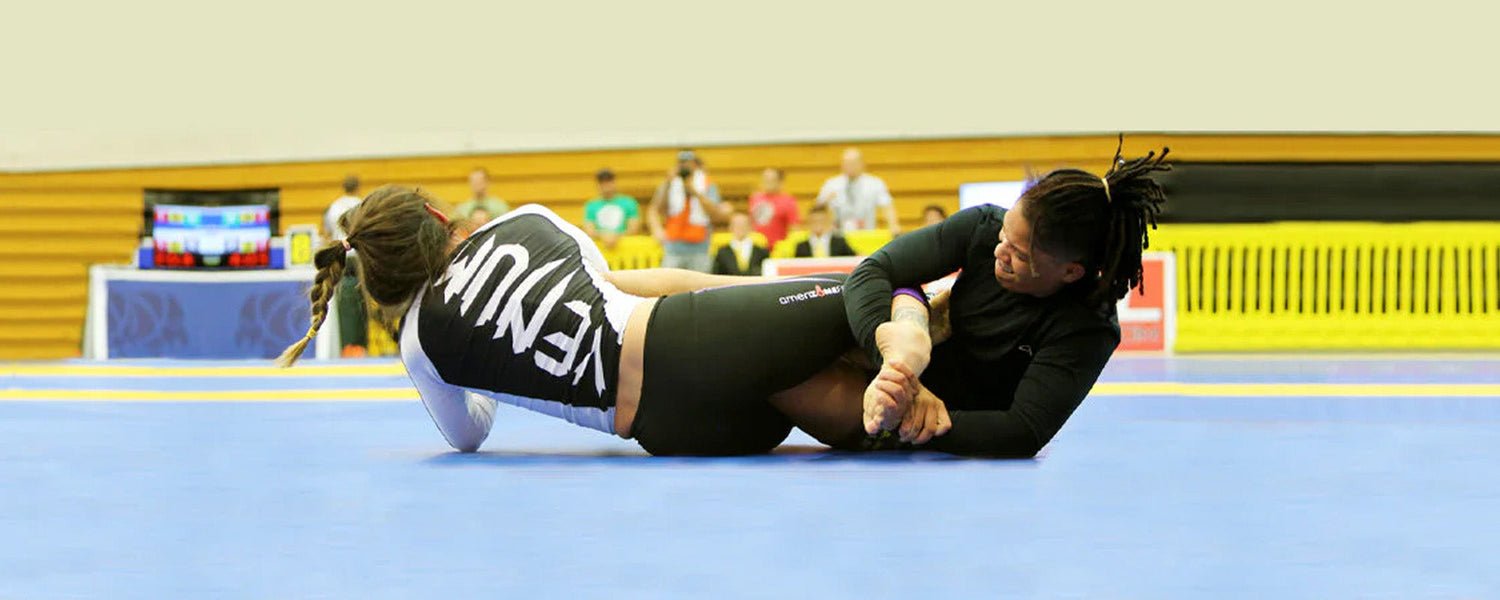
Every grappling art puts the ears at risk, but no-gi has its own pressure points. Without lapels and sleeves to grip, control is won through head position, underhooks, and body-lock pressure. That means more heads driving into shoulders, more ears grinding against the mat during scrambles, and more chin-strap-style crossfaces where a forearm rakes directly across the side of your skull. The ear is caught in the middle of all of it. For a detailed breakdown of which positions put your ears at the greatest risk, this breakdown of no-gi cauliflower ear positions and pressure points is worth reading alongside this guide.
Takedowns raise the stakes further. A sprawl buries your ear into the mat while you fight for the underhook. A snapdown drags the side of your head across the surface. Wrestling-heavy no-gi rooms, where shots and re-shots happen every round, tend to produce cauliflower ear faster than a slow, technical guard-based game. It is not about being tough or reckless; it is simple exposure. The more your ear gets rubbed and compressed, the more chances that perichondrium has to peel.
Timing matters too. Ear damage compounds over a training career in ways that single-session soreness does not. A minor shear that goes untreated in your first year becomes the weakened spot that folds under every hard roll afterward. Grapplers who catch it early and start protecting stay clean for decades; the ones who dismiss the first few incidents usually end up with permanent deformity before their third year on the mat.
How Ear Guards Prevent the Damage
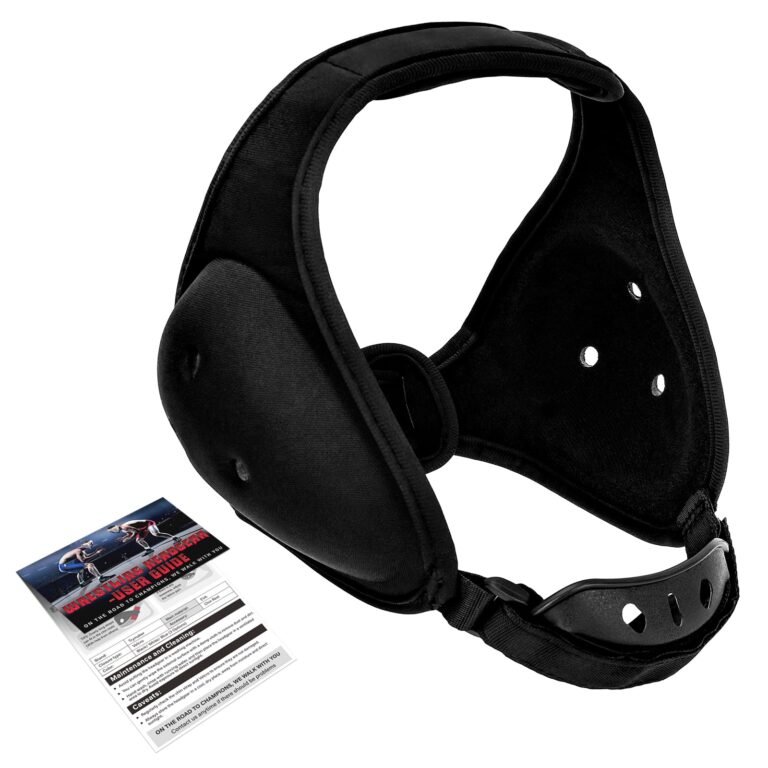
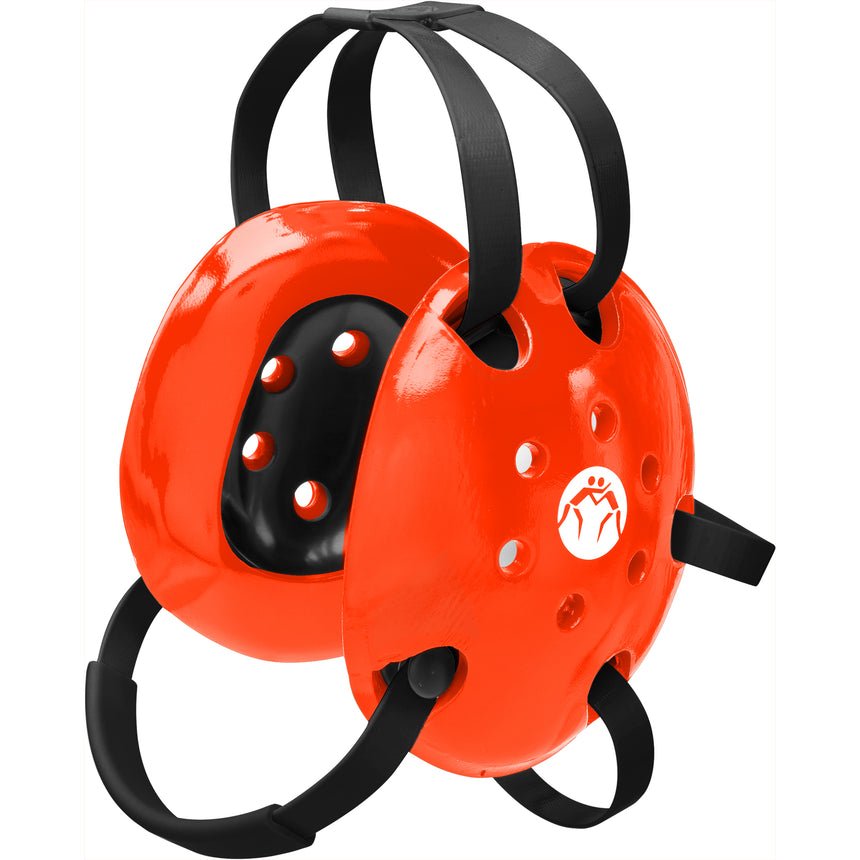
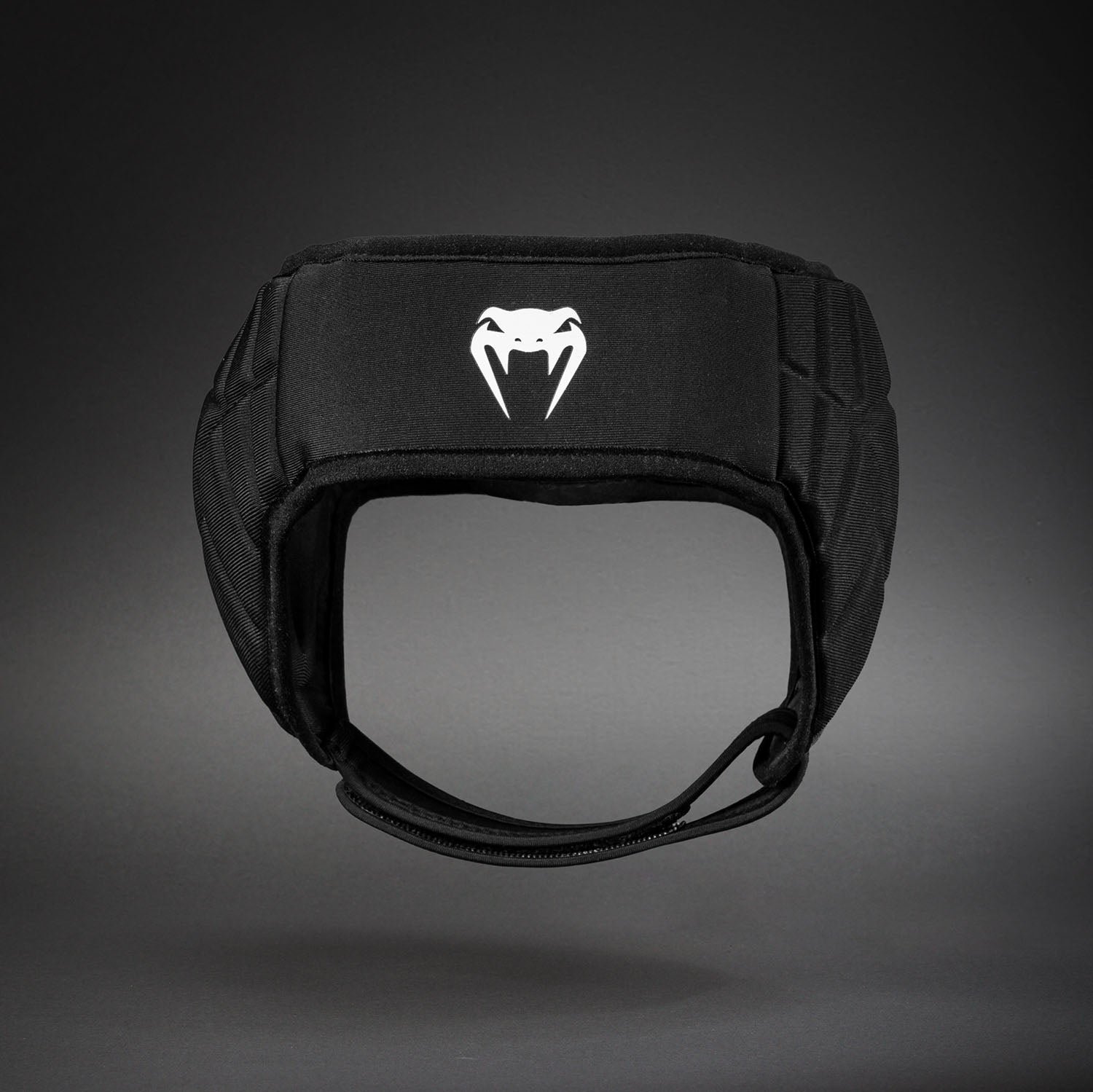
Wrestling headgear, the kind with hard plastic cups over each ear held by an adjustable strap system, is the single most effective piece of prevention gear a grappler can wear. It works on two fronts at once. First, the rigid cup absorbs and distributes any blunt impact so the force never concentrates on the delicate cartilage. Second, and just as important, it eliminates the direct friction between your ear and the mat, your partner’s body, or a sweaty forearm. No shear, no separation of the perichondrium, no hematoma. If you are deciding between traditional wrestling headgear and BJJ-specific ear guards, this comparison of wrestling headgear versus no-gi ear guards covers the key differences in construction, fit, and on-mat feel.
The catch is fit. Headgear that sits loose slides during a scramble and can actually pinch the ear against its own edge, which is worse than nothing. A good set locks the chin cup snug, keeps the ear cups centered, and stays put when someone cranks a crossface. Spend the few minutes it takes to dial in every strap before you rely on it. If your room runs hot on takedowns, treat headgear like a mouthguard: something you simply do not roll without.
The Objection Every Grappler Raises
Plenty of people resist headgear because they think it telegraphs that your ears are a target, or because it feels unusual to grip against in a clinch. Both concerns are overstated. Training partners are not hunting your ears; the damage comes from ordinary positional friction, not deliberate attacks. And the mild grip a partner gets on the strap is nothing compared to the months you will lose to a swollen, infected ear that needs draining.
There is also the cosmetic argument, the idea that cauliflower ear is a badge of honor. That is a personal call, but it is worth being honest about what the “badge” actually is: permanent scar tissue that can muffle hearing, harbor recurring infections, and ache in cold weather for the rest of your life. Wanting to keep your ears intact does not make you soft. It makes you someone who plans to train for decades instead of a couple of hard seasons.
What To Do The Moment It Starts
Prevention is the goal, but you should know the emergency protocol because early treatment can still save an ear. The instant you notice tenderness, warmth, or a soft swelling on the outer ear, start icing it and apply gentle compression. Cold constricts the blood vessels and slows the bleeding into that new pocket; compression discourages fluid from pooling in the first place. The window here is short, roughly the first day or two, before the fluid begins to organize and harden.
If a fluid pocket has clearly formed, this is where you stop being a hero and see a professional. Draining an auricular hematoma is a medical procedure. A doctor aspirates the fluid with a needle or makes a small incision, then applies a compression dressing or bolster to keep the perichondrium pressed back against the cartilage while it re-adheres. Doing this yourself with a shop needle is how ears get infected, and a cartilage infection is a genuinely serious problem. Get it drained properly, wear the compression they give you, and stay off the mat until it is settled.
The ear you save is almost always the one you protected before the first swelling, not the one you nursed after it hardened.
Building Ear Protection Into Your Training Habits
Headgear is the centerpiece, but a few habits stack on top of it. Manage how you drill: when you know a round is going to be a wrestling grind, that is exactly the round to strap in. Keep your training surfaces clean, because broken skin on a rubbed ear is an open door for infection. And pay attention to the difference between the normal soreness of a hard session and the specific hot, localized tenderness that signals a fresh hematoma. Catching that difference early is what separates a scare from a permanent lump.
Communication with training partners helps more than most grapplers admit. If your ear is already showing early swelling, tell the person across from you before you roll. Most experienced grapplers will adjust their head positioning without making a big deal of it. The gym is a shared environment, and protecting yourself does not mean going light — it means being deliberate about the moments that matter. A few targeted adjustments during high-friction rounds can make the difference between an ice pack at home and an emergency drain at the clinic.
It also helps to think of ear protection the same way you think about the rest of your no-gi kit. You wear a rashguard so grips slide off you and your skin stays covered against friction and mat burn; headgear is the same logic applied to the one part of your body that scars permanently and does not heal back. A snug rashguard and a snug set of ear guards are both about removing the friction points that quietly wear you down over hundreds of rounds. Neither is glamorous. Both keep you rolling.
The Long Game
Cauliflower ear is one of the few grappling injuries that is almost entirely preventable and almost entirely permanent, which is a strange and useful combination. It means the decision is genuinely in your hands. If you strap on headgear for the hard rounds, ice and compress at the first sign of trouble, and see a doctor before a fluid pocket has a chance to set, you can train no-gi for twenty years with normal ears. If you skip all of that, the mat will eventually collect its toll. Neither path makes you a better grappler on its own, but only one of them lets you keep hearing clearly and sleeping on your side long after you have stopped competing.
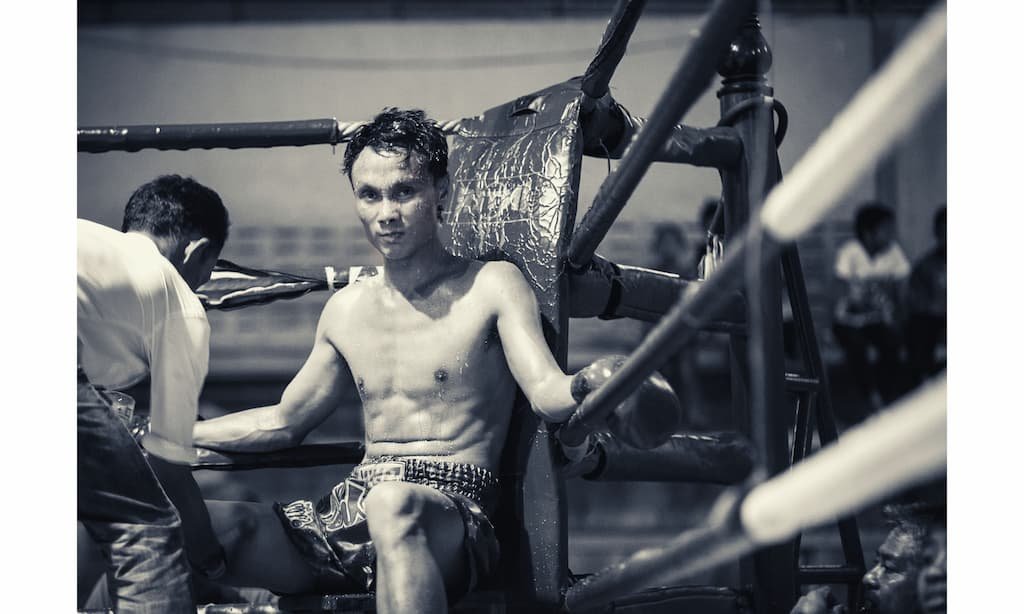
Take the exposure seriously, protect the tissue while it is still healthy, and treat any swelling as the time-sensitive problem it is. If you compete, it is also worth knowing how competition organizers handle headgear — rules vary by ruleset, and some allow it while others do not. What the major no-gi rulesets say about ear guard use in competition is a useful reference before your next event.
Recommended Gear
Looking to protect your ears before the next hard round? Browse wrestling headgear and ear guards built for grappling: Shop wrestling headgear on Amazon →
Sources
- StatPearls (NCBI) — Auricular Hematoma — Clinical overview of auricular hematoma etiology, treatment, and complications
- Wikipedia — Perichondrial (auricular) hematoma — Anatomy and mechanism of cauliflower ear formation
- Mayo Clinic — Hematoma: First aid and care overview — General guidance on hematoma treatment and medical referral