Torreando Pass: 7 Essential No-Gi Guard Pass Keys
The torreando pass is the fastest way most no-gi grapplers ever get around an open guard, and it’s the pass Yuri Simões rode to 11 guard passes across two ADCC campaigns. Strip away the kimono and the mechanics change more than people admit: no pant cuffs to anchor, sweatier limbs that slide out of your hands, and a guard player who can wrestle up the second your pressure drops. Done right, it’s the cleanest entry into side control in the sport. Done lazy, it hands your opponent a free single leg.
What Is the Torreando Pass?
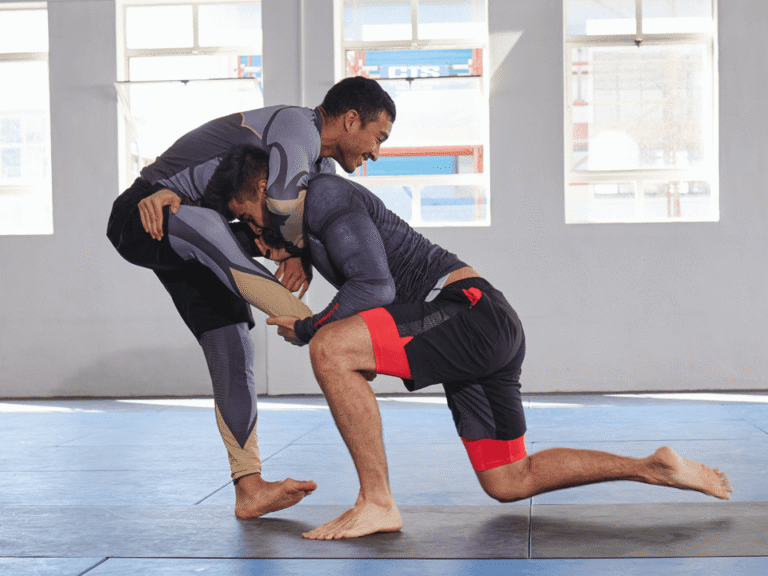
“Torreando” is Portuguese for bullfighting, and the name is literal. You control the legs the way a matador controls a bull — not by fighting the charge head-on, but by redirecting it to empty space. You grip the opponent’s lower legs, apply a bit of inward pressure so they push back, then throw their legs to one side and step around while they’re committed the wrong way. You finish in side control, knee-on-belly, or a scarf-hold pin depending on how hard they scramble.
It belongs to the family of standing, distance-based passes rather than the pressure passes like the knee cut or body lock. That distinction matters. A torreando is a timing pass: it rewards the grappler who reads the moment the guard opens and moves before the retention system loads. It punishes hesitation harder than almost any pass in the game.
Torreando Pass Gi vs No-Gi: What Changes Without Pants
In the gi, the classic torreando grip is deep in the pant cuffs at the ankles. That grip is a handle — you can steer a leg from the far end like a tiller. No-gi erases it. There is nothing to hold at the ankle except a sweaty, mobile foot that slips free the instant the opponent flexes.
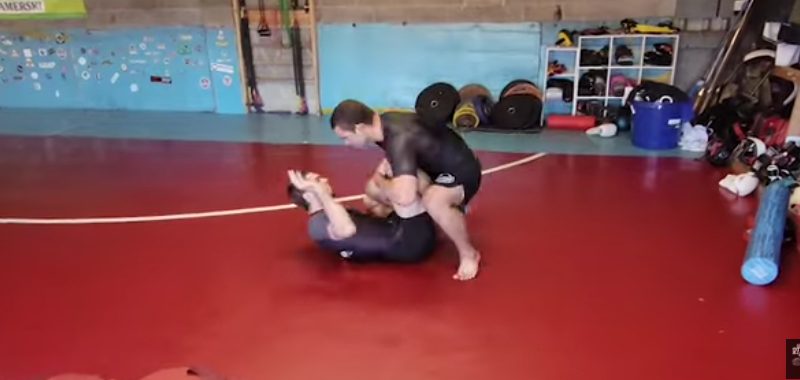
So the no-gi torreando moves the control point up the leg. Instead of ankles, you grip behind or just below the knees, cupping the joint with a monkey-paw grip and driving your weight forward through your arms. Gripping closer to the hips gives you more control over the whole leg and makes it far harder for the guard player to shrimp a knee back inside. The trade-off is reach — you’re closer, so a good guard player can grab a collar tie, an underhook, or shoot for your legs. The pass gets faster and riskier at the same time.
Why the Torreando Rewards No-Gi Grapplers
No-gi guard passing is a race against reguarding, and the torreando is the fastest vehicle in the garage. The pass that dominates modern no-gi statistics is the body lock, but the body lock is a grind — it can eat two minutes off a match. The torreando is the opposite: it’s over in under a second when the timing is right, which is exactly why it fits a ruleset with no lapels to slow anyone down.
There’s also a conditioning argument people miss. A pressure-heavy passing game burns your gas tank as hard as it burns your opponent’s. Speed passing spends timing instead of cardio. In a hard round or a long tournament day, a grappler who can win the pass with a well-timed torreando keeps energy in reserve that a pure pressure passer has already spent. The catch is that timing is a fragile skill — it’s the first thing to leave when you’re tired or rushing, which is why the seven keys below matter more as the round gets deeper.
7 Keys to a Clean No-Gi Torreando Pass
Every one of these keys exists to solve the same problem: in no-gi, you cannot rely on friction to hold a position. You hold position with pressure, angle, and speed. Miss one and the guard comes back.
1. Grip the knees, not the ankles
Set your grips behind the knees or on the top of the shins just below the kneecap, thumbs down, elbows in. This is the single biggest adjustment from gi passing. A knee grip controls the hip through the leg; an ankle grip in no-gi controls nothing once the foot is wet. Keep your arms slightly bent so you can drive weight down instead of just holding the legs at arm’s length.
2. Load them before you throw
Push the legs toward the opponent’s chest first. When you compress the legs, most people instinctively push back to recover space — that reaction is your engine. You throw with their push, not against it. Skip this step and you’re using pure muscle to fling two legs that outweigh your arms. Load first, then redirect.
3. Throw to the pocket, not across the room
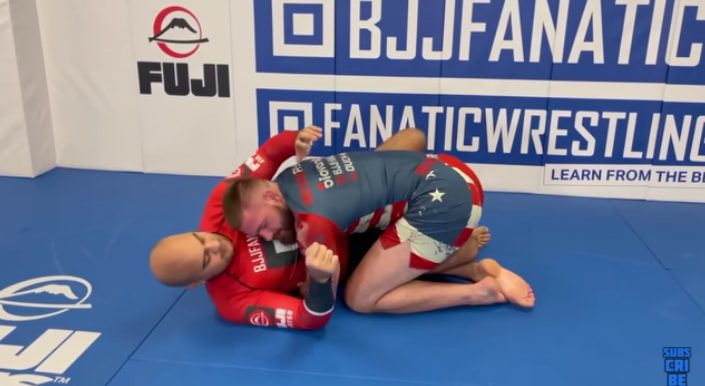
The most common torreando error is a big, dramatic swing of the legs. It looks decisive and it fails constantly, because a wide throw gives the opponent time and a clear axis to spin on. Throw the legs down and slightly to the side — into your own hip pocket. It’s a short, sharp displacement that ends with their knees pointed away from you and their hips flat.
4. Kill the space instantly
The window between clearing the legs and establishing side control is where 90% of torreando passes die. The moment their legs hit the mat, your chest has to be dropping toward their shoulder line. In the gi you might get away with a beat of delay because the cloth slows their hips. No-gi gives you no such grace — hesitate half a second and they reguard or turn in. Speed here is not optional.
5. Pin the near hip or shoulder as you circle
As you step around, drop a forearm or hand onto the near-side hip or shoulder and pin it to the mat. This is the no-gi replacement for the collar or lapel grip you’d use in the gi to stop the reguard. Without it, a flexible guard player simply follows your circle and reinserts a knee shield. Pin one end of the body while your legs finish the trip around the other end.
6. Control the head at the finish
Once you clear the legs and arrive at side control, an underhook or a cross-face on the head is what actually holds you there. No-gi opponents are slippery; a chest-only pin slides off. Getting the cross-face early also shuts down the most common escape — turning to knees — before it starts. Pass to the head, not just to the side.
7. Have a plan for the wrestle-up
The best no-gi guard players don’t try to reguard against a torreando; they wrestle up to their feet the instant their legs get shoved down. If you feel them coming up, don’t panic-sprawl blindly — meet it with a front headlock or a snap-down and treat it as a wrestling exchange. A torreando that turns into a scramble is not a failed pass. It’s a transition, and the passer who trained for it wins the scramble.
Where the No-Gi Torreando Pass Breaks Down
The torreando has a real ceiling, and honest passers admit it. Against elite guard retention it slows down, and the old-school ankle version barely functions at the black-belt level. Knowing the failure points is what separates a pass you drill from a pass you can actually hit on a live opponent.
The de la riva and reverse de la riva guards are built to punish exactly this pass — the hooking leg latches your lead ankle the moment you try to circle. Seated and single-leg-X guards convert your forward pressure into a leg entanglement, which in modern no-gi means you’ve passed straight into a heel hook attack. And any guard player who gets a knee shield or a frame across your hips mid-throw stalls the whole thing. When the torreando stalls, the smart answer is to chain it — a stuffed torreando flows naturally into a knee cut or a body lock pass once you close the distance.
Drilling the Torreando Into Your No-Gi Game
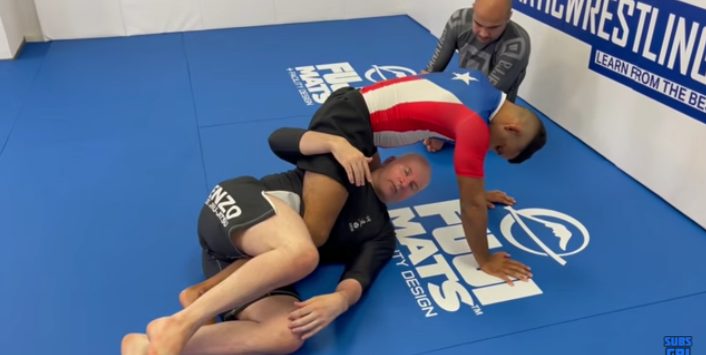
Treat the torreando as a distance manager, not a finisher you force. Start every drilling round from open guard with your partner giving 50% resistance and one instruction: try to reguard or wrestle up the moment you feel the throw. That resistance teaches you key four — killing the space — faster than any number of cooperative reps. When your partner can’t reguard against your speed, bump the resistance.
Pair it with a pressure pass in the same session. The torreando and the leg drag cover each other beautifully: when speed fails, you already have your hands near the legs to drag into the pin. Passing at a high level in no-gi is never one technique — it’s a speed pass and a pressure pass that feed each other, so the guard player never gets to settle into a single defensive rhythm.

See the No-Gi Torreando in Action
Watching the footwork beats reading about it. This breakdown covers the no-gi grips and the timing of the throw:
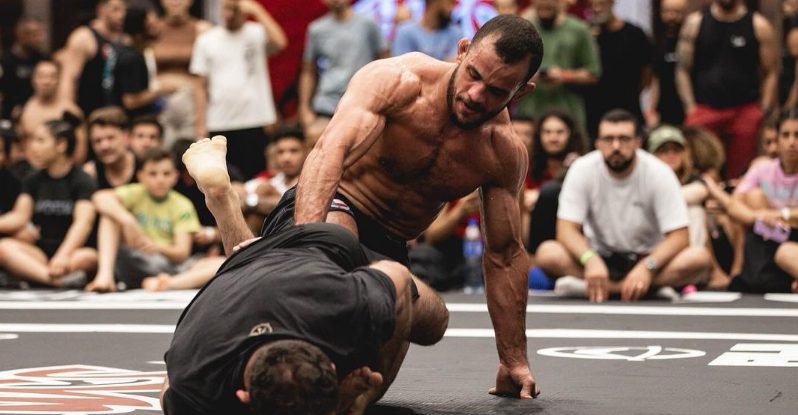
The uncomfortable truth about the torreando is that it’s a beginner-friendly pass with a black-belt ceiling — easy to learn, brutal to master, and completely dependent on the half-second most people waste after they clear the legs. Fix that half-second and it becomes the most reliable entry into side control you own. Get your grips to the knees, load before you throw, and be sprinting to the head before their legs land.
Sources
- BJJ Heroes — Analysis of Guard Passing in the ADCC — data on top ADCC passers and why no-gi passing tightens up.
- Evolve MMA — What Is the Toreando Pass in BJJ — grip variations and the five main toreando finishes.
- Grapplearts — How to Counter the Toreando Guard Pass — the retention answers the pass has to beat.