Ankle Lock BJJ: 7 No-Gi Setups That Force the Tap
The ankle lock in BJJ is the only true leg submission a white belt can legally use in IBJJF, and it tapped more top-10 ADCC competitors in the last two years than most coaches realize. In no-gi, with no friendly lapel for your opponent to grip and stall the finish, the straight ankle lock becomes faster, sharper, and far harder to muscle out of. The seven setups below are the ones I see actually working at open mats, weekly subs-only matches, and recent FloGrappling-broadcast events — ranked roughly by how often the average no-gi player can chain into them.
Why the Ankle Lock BJJ Players Ignore Is Quietly the Best Tap in No-Gi
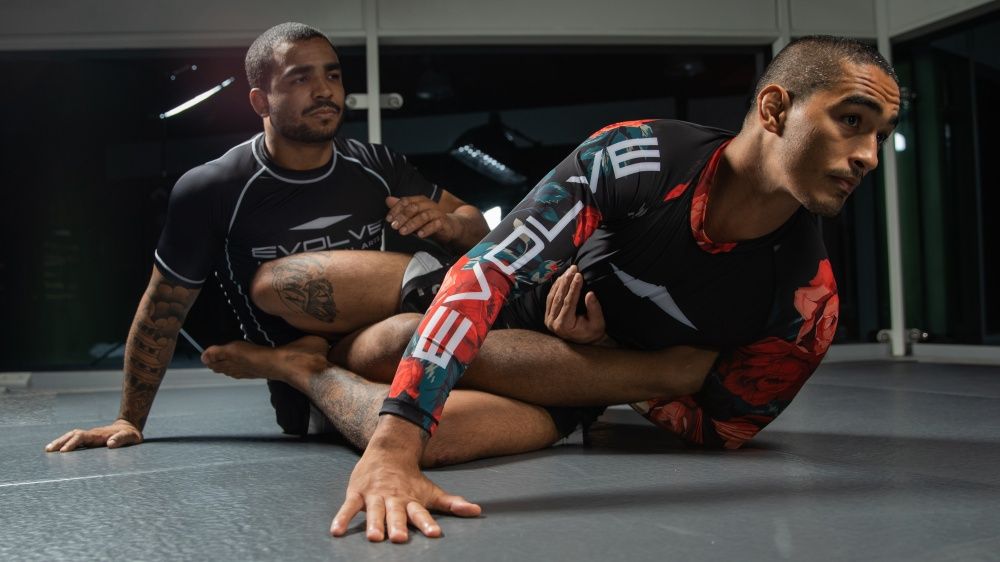
The straight ankle lock attacks the talocrural joint and the Achilles tendon by levering the foot away from the shin. When applied correctly from ashi garami, the finishing pressure is rotational and linear at the same time, which is why opponents who think they are safe by hiding the heel still tap. Mikey Musumeci has built a sub-only career around this single submission, hitting it at black belt against opponents who have spent a decade hunting heel hooks — and the reason he keeps catching them is that the heel-hook-obsessed leg locker forgets that the foot is still attached to a working talocrural joint.
In no-gi the technique sharpens because there is nothing to grab. You cannot stall by gripping the pants. You cannot pommel out using a sleeve. You either move your hips and break the entanglement, or your foot rotates past where it wants to live. That is also why the same submission you learned as a beginner is now showing up in IBJJF No-Gi Worlds and ADCC trials with regularity.
Setup 1: Straight Ashi Garami from Sit-Up Guard
If you only learn one ankle lock entry, learn this one. From seated guard with the opponent kneeling, shoot your inside leg between their legs, wrap your outside leg over their hip, and pummel to a tight ashi position. The moment your knees stack and your hips elevate, the foot is yours. Drop to the same side as the trapped leg, secure your leg lock grip, and arch your hips through.
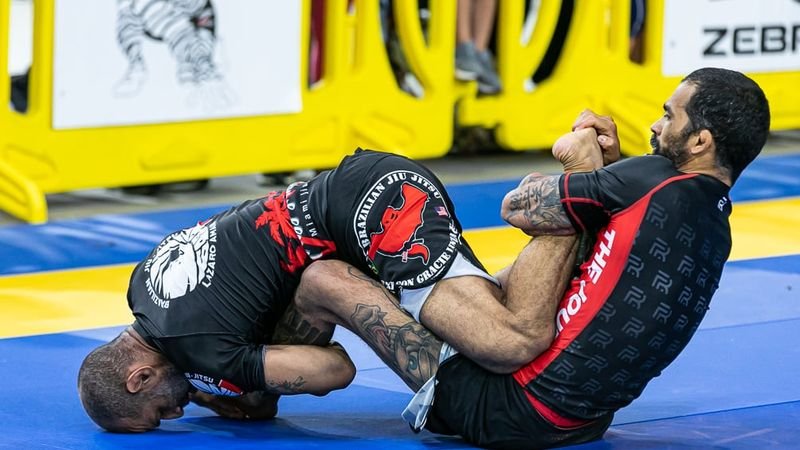
The mistake most people make is grabbing the foot before locking the entanglement. The foot will slide. Pin the leg with your knees first, then attack the ankle.
Setup 2: The Imanari Roll Entry
Masakazu Imanari built a 38-win MMA career off this entry, and Garry Tonon has used it to terrify high-level grapplers for the last decade. From a standing or kneeling exchange, drop low, shoot your bottom leg deep across the inside of your opponent’s lead leg, and roll into ashi garami in one motion. You land already entangled.
The Imanari is faster than the textbook ashi entry but more punishing if you miss — your back is exposed on the way down. Practice it against partners who will scramble, not just nod and let you finish. Our complete Imanari roll breakdown covers the safety reps you need before drilling it live.
Setup 3: Single Leg X to Ankle Lock
Single-leg-X is one of the cleanest gateways into the straight ankle lock because the position already controls the same foot you want to attack. From bottom, hook one leg deep behind your opponent’s standing leg, wedge your shin against their hamstring, and use your outside leg to push their knee away. Sweep them or wait for them to back-step — either way, your leg-finishing position is built in.
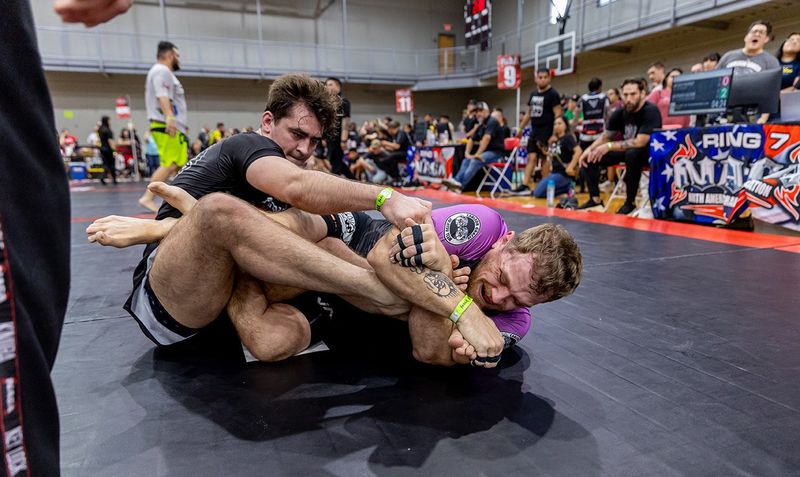
If they sit to defend, you transition directly to ashi and finish. If they post, you may have a heel hook visible — but the straight ankle is still the safer and often quicker tap. Our single leg X breakdown walks through the sweep options that feed into this entry.
Setup 4: 50/50 with the Reaching Grip
50/50 has a reputation as a stalemate position, mostly because two evenly matched leg lockers can sit there for five minutes hunting heel hooks neither will land. The straight ankle changes that. Once you are in 50/50, sit up, reach across, and grab the far foot in your near-side armpit. Drop back, control the foot above the laces, and finish.
This works in no-gi because there is no collar grip for them to break your posture with. The 50/50 ankle lock is one of the few subs in the rule set where pace beats positioning — whoever attacks first usually finishes first.
Setup 5: Honey Hole / Saddle Switch-Up
If you train at a Danaher-influenced gym, you know the saddle (inside sankaku) is the leg locker’s throne. The classic finish is the inside heel hook, but black belts who train against high-level opponents often switch to the straight ankle when the heel rolls out of position. The setup is identical: pummel into the saddle, lock the figure-four, and instead of attacking the heel, swing your top arm over the shin and trap the ankle.
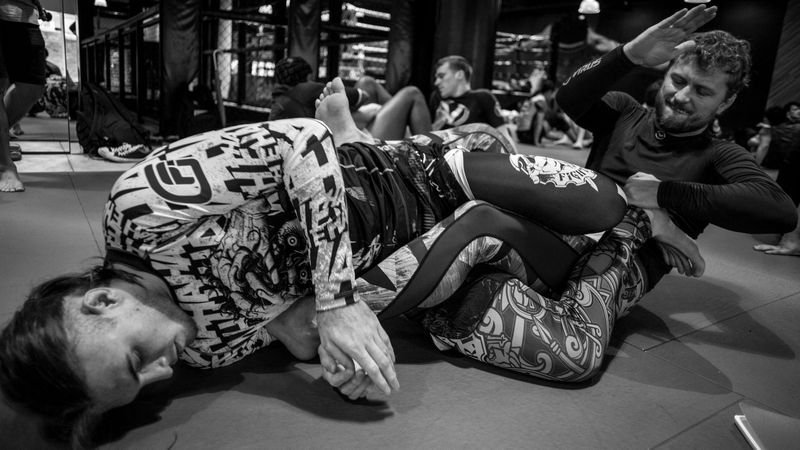
The straight ankle is also your insurance policy when you find yourself in a federation that bans heel hooks at your belt. IBJJF only allows heel hooks at brown and black no-gi, but the straight ankle is open from white belt upward. That alone makes it the most useful leg lock at the lower-belt competition level.
Setup 6: De La Riva to Ankle Lock (Caio Terra’s Specialty)
The De La Riva ankle lock, sometimes called the Caio Terra footlock, is one of the most underused entries in modern no-gi. From a DLR hook, sit up toward the trapped leg, scoop the foot with your near-side arm, and roll back into a side-finishing position. The trick is keeping your DLR hook live throughout — if your hook collapses, the foot slides loose.
This entry rewards smaller athletes. Caio Terra, a multiple-time IBJJF no-gi world champion at rooster weight, hit this finish on opponents twice his size because the geometry does not care about strength. Hips, angle, grip — that is the entire equation.
Setup 7: Toreando Pass Counter Into Ashi
This is the one that wins money in scrambles. When a top player tries to bullfighter past your guard, you do not block their pass — you welcome it, then snatch the trailing leg as they post. As they step around, swing your outside leg over their hip and dump them into ashi. You end the scramble already entangled with the ankle exposed.
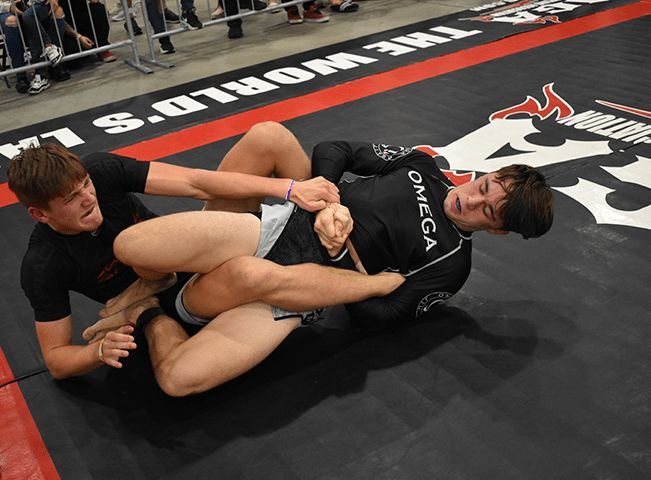
I have watched this counter end matches in under 30 seconds at submission-only events. The passer commits, the bottom player rolls under, and the leg is gone. It does not work every time — experienced passers can post on the hip and stuff it — but the failure mode lands you in open guard, which is not a loss.
Finishing Mechanics That Actually Matter
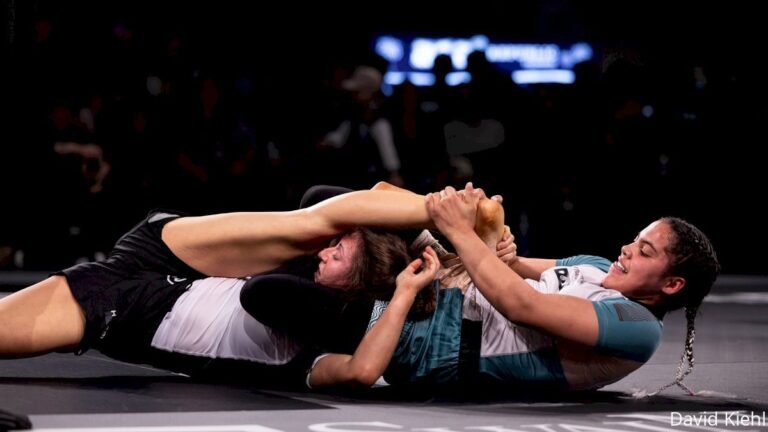
Most people apply the ankle lock wrong. The grip is not on the foot; it is on the ankle bone. The blade of your forearm should slide under the Achilles tendon until it stops at the heel. Your wrist locks in place. Your other hand cups your bicep or grabs your own collar. The finish is not a “squeeze.” You arch your back, drive your hips toward the ceiling, and slowly extend.
Speed kills training partners. The Achilles ruptures with very little warning. Apply pressure in a one-Mississippi-two-Mississippi count, and stop the second you feel a pop, a tap, or anything that sounds like a tap. This is doubly true in no-gi where there is no sleeve to soften the grip.
Where the Ankle Lock Fits in the IBJJF Rule Set
Straight ankle locks are legal at every belt under IBJJF rules, both gi and no-gi. Heel hooks, toe holds, and knee bars are restricted to brown and black at the no-gi level, and remain banned in gi competition for adult IBJJF. IBJJF’s official rule book spells out the full submission allowance list. For ADCC, which has the most permissive ruleset in major no-gi competition, all leg locks are legal — which is why the ankle lock still gets ignored there in favor of heel hooks. That ignorance is the opportunity.

NAGA, Subversiv, and most other submission-only promotions allow the straight ankle from white belt upward. If you compete in a regional submission-only league and you can hit a clean ashi-to-ankle finish, you will probably medal. Most of your bracket has spent their training time on guard passing, not on leg locks.
Three Mistakes That Cost You the Finish
The first is leaving the knee line free. If your opponent’s far knee is not pinned, they can pivot and escape every time. Stack your knees, squeeze them together, and refuse to give up the entanglement.

The second is gripping the foot itself. The toes will rotate. Grab the ankle bone, with the Achilles cradled in the crook of your elbow, and the rotation goes through the joint instead of around it.
The third is rushing the finish. Sub-only matches at the regional level are 8 to 12 minutes. Take 30 seconds to perfect your grip and posture, and you will finish. Rush in 8 seconds and you give up the position to a defender who knows how to grip-fight the foot loose.
Pairing the Ankle Lock with Heel Hook Defense
The best leg lockers are also the best leg lock defenders. If your training partner is also hunting your foot from 50/50 or ashi, the answer is not always to attack first — it is sometimes to angle out, threaten the ankle, and force them to defend instead of attack. Our complete heel hook no-gi guide covers the defensive side, but the short version is: knees together, foot pointed at the ceiling, hips heavy.

Lachlan Giles built his reputation on the heel hook at ADCC 2019, but if you watch his open mats and seminars now, the straight ankle is what he drills with white and blue belts. Why? Because it teaches the entanglement mechanics that every leg lock depends on. Learn the ankle lock first, and the heel hook becomes trivial.
Drill This Week, Tap Next Week
Pick one setup from the seven above. Drill it 50 times on each side this week. Then live-roll it against a partner who knows it is coming. If you can hit it on a willing partner, you can start hunting it against a resisting one the week after. The straight ankle lock is the only leg lock submission you can realistically add to your game in 30 days — everything else takes a year of mat time. Start with the ashi sit-up entry, get your grip mechanics dialed, then add the Imanari and Single Leg X once your control is reliable. Next time you draw a heel-hook hunter in competition, give them an ankle they did not see coming.
Sources
- Evolve Daily — BJJ 101: The Ankle Lock — finishing mechanics from ashi garami
- BJJ Heroes — Straight Ankle Lock, Achilles Lock, or Botinha — technique history and lineage
- FloGrappling — Is This Legal Ankle Lock A Heel Hook in Disguise? — modern ruleset analysis
- Evolve Daily — Caio Terra and the DLR Ankle Lock — smaller-athlete geometry breakdown
- IBJJF — Official Rule Book — current legal submission tables
Browse our top-rated rashguards and no-gi gear at the RashguardGuy shop →