
Surfing and Water-Sport Rashguards: A Grappler’s Crossover Guide for 2026
Rashguards started in surfing decades before they became no-gi grappling’s signature uniform, and in 2026 the wheel has come full circle. With more athletes splitting their week between the mat and the ocean — paddle-outs on rest days, wave warm-ups before training camps — the search for a rashguard that survives saltwater, blocks tropical sun, and still feels right under a guard pass has never been more practical. This guide ranks the best rashguards for surfing and water sports in 2026, with hard picks, fabric breakdowns, and crossover notes for grapplers who already live in compression sleeves.
From the Surf Lineup to ADCC — A Quick Origin Note
The first commercial rashguards appeared on Australian beaches in the early 1980s, designed to stop wax, sand, and wetsuit chafing from tearing up surfers’ chests. Forty years later, IBJJF made them mandatory under no-gi rules, and the global rashguard market is now worth more than the entire BJJ apparel category was a decade ago. The fabric science from one sport has bled directly into the other — flatlock seams, four-way stretch panels, sublimation printing, UPF treatments — and that is why a smart 2026 buying guide cannot really separate them anymore.
That said, a rashguard built for a 90-minute surf session is not identical to one built for a sweaty no-gi round. Knowing where they diverge will save you money and a season of chafe.
Surf Rashguards vs. No-Gi Rashguards: Where They Diverge
UPF and Sun Protection
Surf rashguards almost universally carry a UPF 50+ rating, meaning they block at least 98 percent of UVA and UVB radiation. Most no-gi rashguards do not bother — you are indoors, under fluorescent lights, getting smashed by a 200-pound training partner. If your primary use is water sports, do not buy a rashguard without an explicit UPF rating printed on the label. Implied protection is not protection.
Saltwater and Chlorine Durability
Saltwater eats elastane (spandex) faster than sweat does, and chlorine eats it faster still. Surf-specific rashguards use higher polyester ratios — typically 80/20 or 85/15 polyester-to-spandex — to extend life. A pure 80/20 BJJ rashguard with sublimation print can survive ocean use, but expect colors to fade in a season and the cuffs to relax within 30 to 40 sessions.
Cut, Length, and Mobility
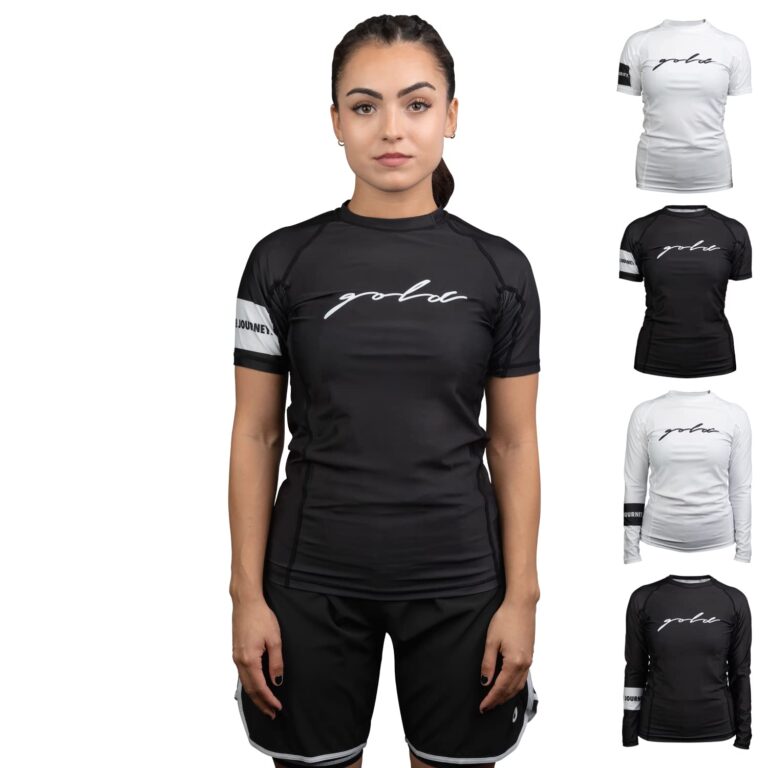
BJJ rashguards run long in the torso so they tuck and stay tucked under shorts during scrambles. Surf rashguards run shorter and trimmer through the shoulders to free up paddle motion. If you have ever felt a rashguard ride up while popping to your feet, you bought the wrong cut. The 2026 trend is toward athletic cuts that split the difference — long enough to tuck under board shorts, narrow enough across the deltoids to paddle without binding.
Best Rashguards for Surfing and Water Sports 2026
These five picks cover every realistic use case in 2026 — daily warm-water surfing, cold-water paddling, kayaking, snorkeling, SUP, open-water swimming, and the grappler’s crossover bucket. Prices reflect 2026 retail in USD.
1. Vissla 7 Seas 50/50 — Best Overall
Vissla’s 7 Seas line is the rashguard most surf shops still recommend without hesitation in 2026. The 50/50 model uses recycled polyester and spandex in an 82/18 blend, carries a UPF 50+ rating, and runs about $42 retail. Flatlock seams sit far enough off the lats to disappear during paddling. The cut is athletic-tall — a 5’11” frame at 175 pounds wears a medium with no ride-up over board shorts.
2. Patagonia R0 Sun Hoody — Best UPF Long Sleeve
For tropical, equatorial, or southern-hemisphere summer use where sun is the bigger threat than cold, the Patagonia R0 hooded long sleeve is hard to beat. Stretchy nylon-elastane blend, hood that fits under a brimmed hat, thumb loops to keep the cuffs in place during paddle strokes, and a $69 price tag. It is the choice for SUP, kayak fishing, snorkel days, and anyone who has already had a precancerous mole frozen off.
3. O’Neill Reactor II 2mm — Best for Cold Water
Once water drops below 65°F (18°C), a thin neoprene reactor top adds enough thermal insulation to extend sessions by 30 to 60 minutes without committing to a full wetsuit. The Reactor II’s 2mm panels and minimal seams sit closer to a rashguard than a wetsuit and pair well over a thin polyester base layer in February in California or June in southern Australia. About $89 in 2026.
4. Hyperfly Procomp Hydro — Best Crossover Pick for Grapplers
Hyperfly’s Procomp line was already an IBJJF tournament favorite, and the Hydro variant adds a higher-polyester body panel (87/13), bonded seams instead of flatlock, and a slightly longer cut that still tucks under board shorts. It is the closest a no-gi-first rashguard has come to legitimate water-sport performance. If you train no-gi four nights a week and surf on weekends, this is the single rashguard that handles both. About $54.
5. Body Glove Performance — Best Budget
At $25, the Body Glove Performance short-sleeve is not fancy, but it carries UPF 50+, holds up to 50-plus saltwater sessions before the seams start to relax, and replaces cleanly without buyer’s remorse. For travel rashguards you will lose, lend, or stuff in a wet bag for three days, it is the rational pick.
Use Cases: Which Rashguard for Which Sport
Surfing
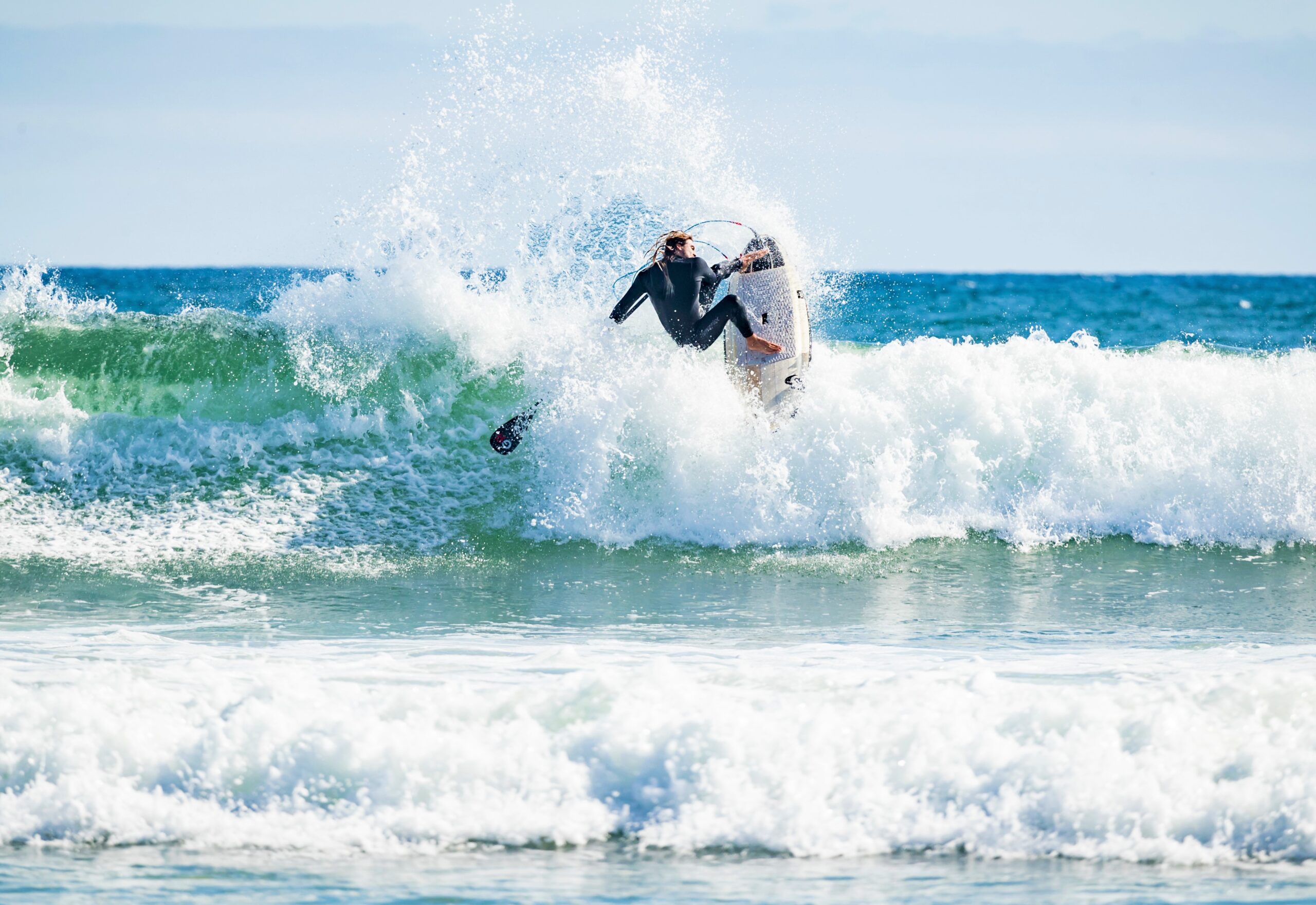
Default to a long-sleeve, UPF 50+, athletic-cut rashguard in 80/20 polyester-spandex. The Vissla 7 Seas 50/50 hits all three. Short-sleeve only if water temperature exceeds 80°F and you are wearing reef-safe sunscreen on the forearms.
SUP and Paddleboarding
Sun exposure is constant on a board you spend hours standing on. Hooded long sleeves like the Patagonia R0 are worth the premium. Thumb loops keep the cuffs from creeping up the wrist between strokes.
Snorkeling and Free Diving
Reef contact is the silent threat. A standard surf rashguard handles 90 percent of incidental scrapes. Pair with a 1mm neoprene shorty if you snorkel for more than 90 minutes at a time.

Kayaking and Rowing
Repetitive shoulder rotation punishes thick seams. Look for bonded or laser-cut seams along the lat line. The Hyperfly Procomp Hydro is unusually good here despite its grappling roots.
Open Water Swimming
Tighter compression cuts win for hydrodynamics. Most pure surf cuts run too loose. A no-gi competition rashguard, fitted snug, often outperforms a surf shop pick for open-water training in protected bays and lakes.

2026 Buying Checklist
Before you click buy, run through this short list. Every miss is a refund, a season of chafing, or a faded shell three months in.
- UPF 50+ rating printed on the label, not just implied by marketing copy
- Polyester-to-spandex ratio of 80/20 or higher for repeated ocean use
- Flatlock or bonded seams positioned away from the lats and underarm
- Athletic or surf-specific cut (avoid pure compression cuts for paddling)
- Reinforced cuffs that do not relax in saltwater after 20 sessions
- Sublimation print, not screen print, if you want the design to last
- Returnable from the retailer — fit varies wildly between brands and runs
Saltwater Care and Storage
Saltwater is the silent killer of rashguard lifespan. Three rules cover 90 percent of it. First, rinse with fresh water within an hour of leaving the beach — salt crystals continue grinding into the fibers as the garment dries. Second, never machine-dry a rashguard. Heat collapses elastane and the cuffs go floppy in a single cycle. Third, store flat or loosely folded, not balled-up wet in a gear bag for two days. Saltwater plus heat plus pressure equals dead rashguard.
For sublimated prints, add a fourth rule: avoid prolonged direct sunlight during drying. UV breaks down sublimation dyes faster than the saltwater does. A shaded balcony or indoor drying rack is ideal. Done well, a $42 rashguard lasts three full surf seasons. Done poorly, it lasts six months and you are buying replacements at twice the cost-per-wear.
Crossover Notes for Grapplers Who Hit the Waves
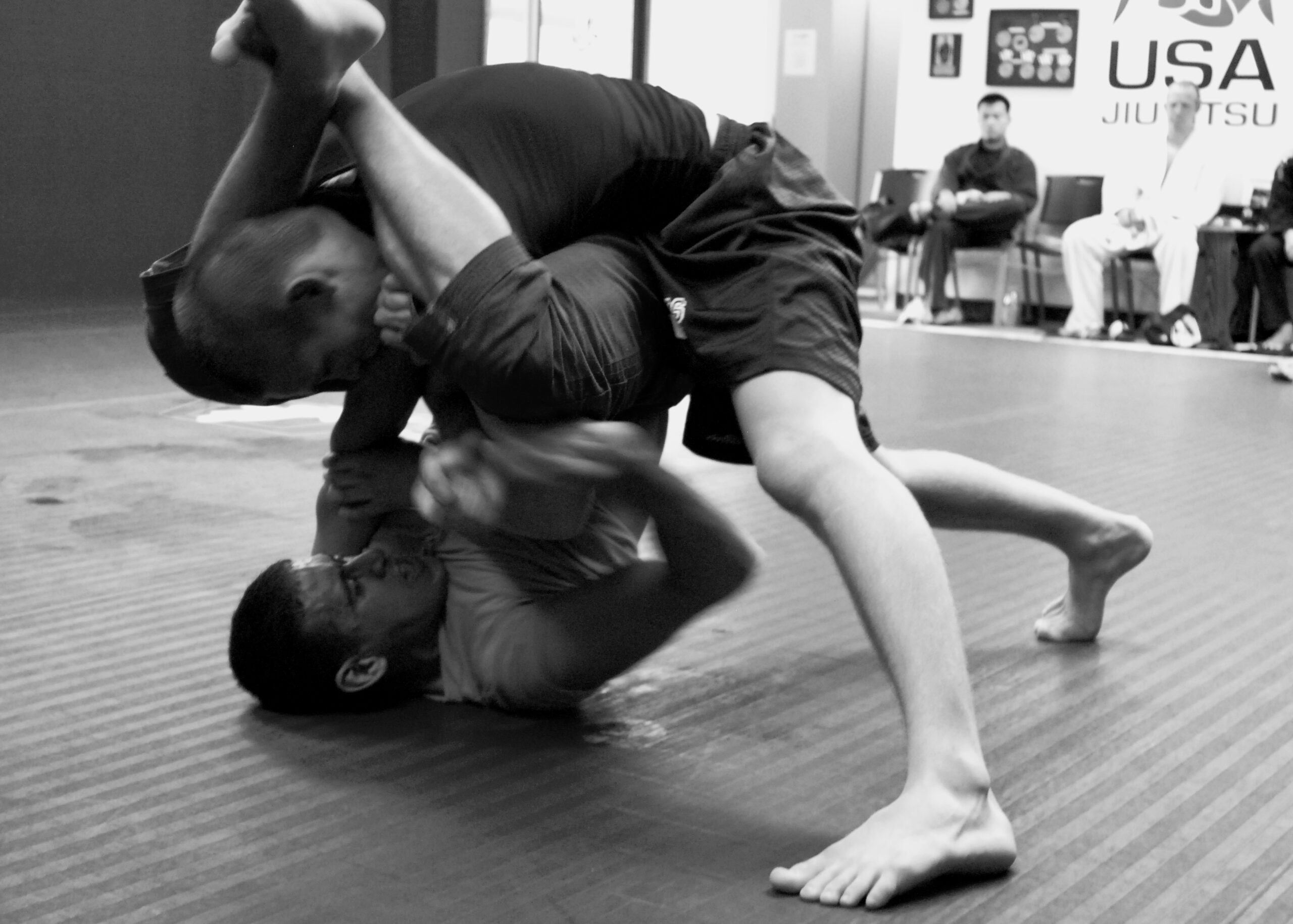
If you already own three or four no-gi rashguards, you do not necessarily need a dedicated surf one for occasional ocean use. A standard 80/20 no-gi rashguard works for sub-two-hour sessions in moderate sun. Just understand the trade: the ocean shortens its life sharply, the colors fade faster than they would on the mat, and the long torso may bunch under board shorts during pop-ups.
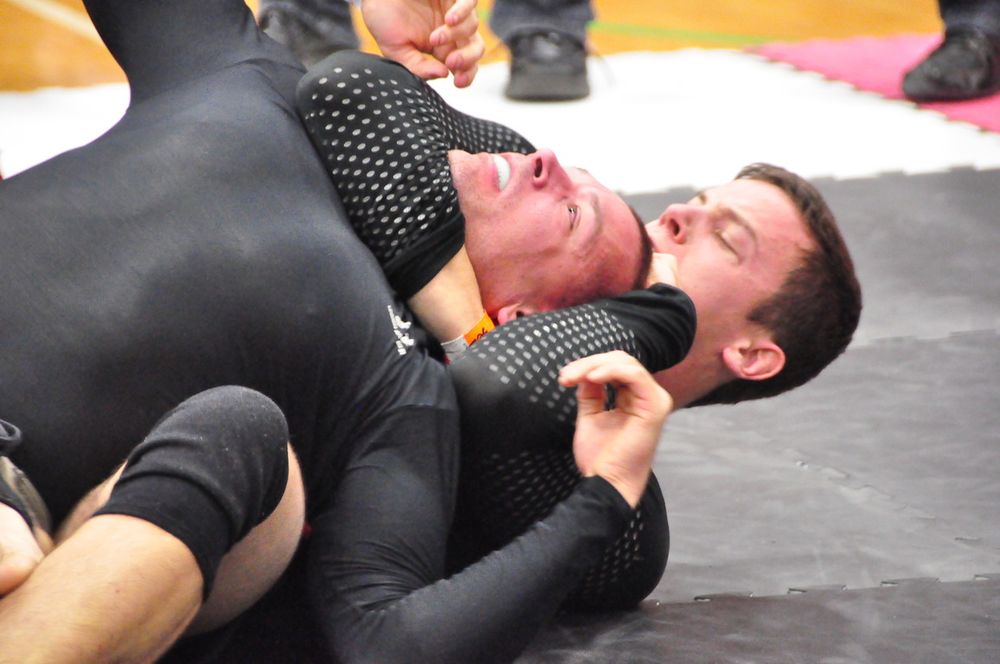
The reverse is also worth knowing. Surf-specific rashguards generally underperform during no-gi grappling rounds. The shorter cut rides up during guard retention and back takes, and the higher polyester ratio runs hotter on the mat, where evaporative cooling matters more than UV blocking. Rotate gear by use case, or pick a true crossover model like the Hyperfly Procomp Hydro and be honest that you will replace it twice as often as a single-use piece.
FAQ
Can I use my no-gi rashguard for surfing?
Yes, for casual or short ocean sessions. Expect faster fade, faster cuff relaxation, and limited UV protection unless the label specifies a UPF rating. For more than a few hours per week in the water, buy something purpose-built.
Long sleeve or short sleeve for water sports?
Long sleeve almost always wins. Forearm sunburn during paddle sessions is the most common rashguard regret. Short sleeve is fine for cool, overcast climates or pool training, but anywhere in the tropics, default to long.
Is UPF 50+ overkill for short sessions?
No. UV exposure is cumulative, and reflected glare off water adds roughly 25 percent to surface UVB at the skin. UPF 50+ is the practical baseline for any water sport in any latitude under 45 degrees.
How tight should a surf rashguard fit?
Snug, not compression-tight. You should be able to pinch a quarter-inch of fabric at the chest. Too loose chafes; too tight restricts the deltoid through paddle strokes and underwater duck-dives.
Final Take
The best rashguard for surfing and water sports in 2026 is the one with UPF 50+, an 80/20 polyester-spandex (or higher) ratio, and a cut that matches your primary use — surf cut for paddling, athletic cut for crossover. The Vissla 7 Seas 50/50 is the safe pick for most readers; the Hyperfly Procomp Hydro is the answer for grapplers who refuse to keep separate gear drawers; the Patagonia R0 is the call when sun is the headline threat. Buy once, rinse properly, store flat. The rashguard outlives the boardshorts, every time.
Sources
- Vissla 7 Seas product line
- Patagonia R0 Sun Hoody specifications
- O’Neill Reactor II technical sheet
- Hyperfly Procomp Hydro materials guide
- Skin Cancer Foundation — UV radiation reference
- FloGrappling — no-gi rashguard standards coverage
Browse our top-rated rashguards and no-gi gear at the RashguardGuy shop →