Duck Under No-Gi: 7 Keys to Finish the Takedown Cleanly
Brock Lesnar never wrestled a day of jiu-jitsu, but every UFC heavyweight who shot in on him early in his career learned the same lesson: a stuffed shot without a backup plan gets you flattened out. The duck under is that backup plan. It’s the takedown wrestlers reach for when a single or double leg gets sprawled on, and it works just as well as a first option once you can read the arm position that opens it. No-gi grapplers who skip straight to leg attacks without building this one are leaving a two-point, low-risk entry on the table.
What a Duck Under No-Gi Actually Looks Like
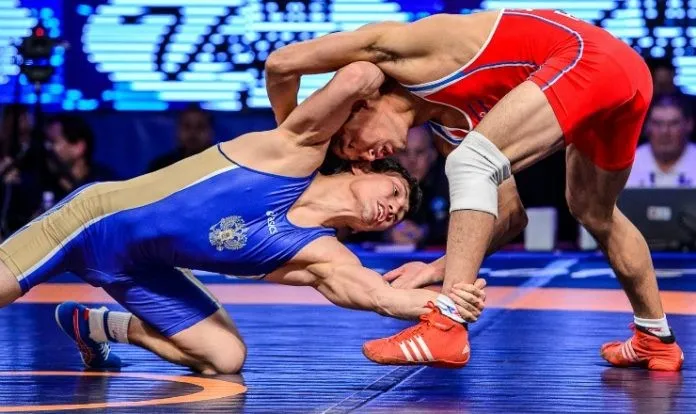
Strip away the jargon and a duck under is a head position problem disguised as a takedown. Your opponent’s arm is up — whether they put it there with an overhook, a collar tie, or just reaching to shrug you off — and you use that open lane to get your head to the other side of their body before they can close it. Once your head and shoulder clear the armpit, you’re no longer in front of them. You’re beside them, with one arm trapped over your shoulder and a clean path to their back.
John Smith built an entire Olympic and World Championship career on three takedowns: the low single, the high crotch, and the duck under. He didn’t need a fourth. The reason coaches still teach his version of the technique four decades later is that it isolates the one detail most wrestlers get wrong on their first hundred reps — driving the head across to the far shoulder, not just down.
Reading the Arm Before You Commit
A duck under that starts before the arm is actually raised is just a wrestler bending over in front of a standing opponent, and that ends badly. The setups that work share one thing: they get a grip on the wrist or elbow first, then use that grip to lift the arm into position rather than waiting for it to drift up on its own. A collar tie that rides high, an overhook that overextends, or a two-on-one that pries the elbow away from the ribs all create the same window.
This is where no-gi grapplers coming from a straight jiu-jitsu background tend to rush. They see the gap and shoot immediately, without controlling the limb that’s supposed to stay out of the way. Control the wrist for even half a second longer than feels necessary, and the arm can’t snap back down to block the lane you’re about to take.
The Level Change That Actually Opens the Door
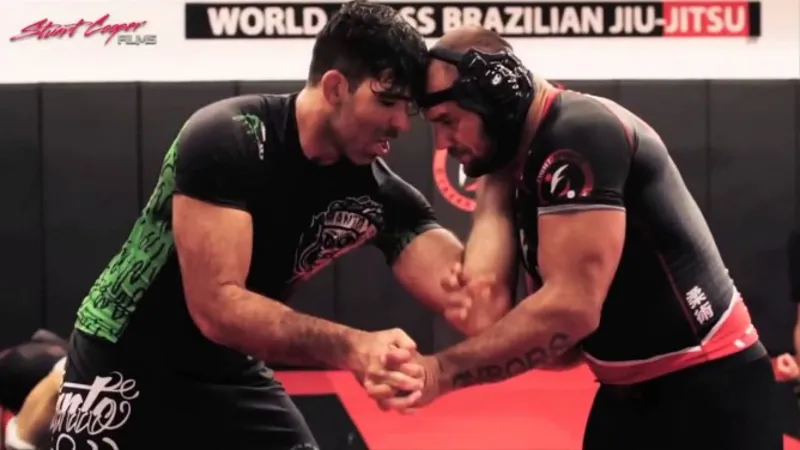
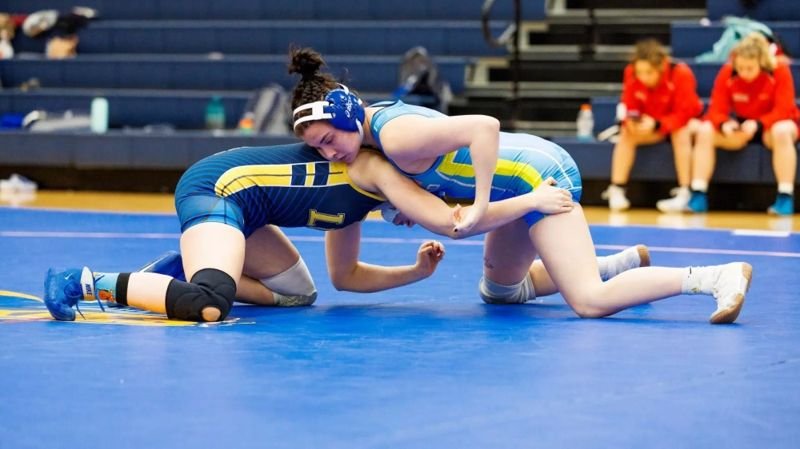
A shallow level change is the single most common reason a duck under gets stuffed. Dropping your knees two inches and leaning forward doesn’t change anything about your opponent’s hip height relative to yours — it just puts your head lower while your stance stays the same. The level change that works is sharp and total: hips drop, lead foot steps in underneath you, and your head goes through at a height that’s genuinely below your opponent’s armpit, not just below where it was a second ago.
Wrestlers who grew up in folkstyle or freestyle programs have this drilled into muscle memory before they ever touch a mat in a no-gi grappling gym. Grapplers who come up purely through BJJ usually have to build it on purpose, and it’s worth the rep count. The same level change that opens a duck under is the one behind a clean double leg, so the carryover to the rest of a no-gi takedown game is immediate.
Drive to the Far Shoulder, Not Straight Down
Here’s the detail that separates a duck under that scores from one that turns into a scramble on the feet: your head and near shoulder need to cross all the way to your opponent’s far side, not just dip under the raised arm and stop. If you duck straight down, you’re still standing in front of them with your head exposed, and in no-gi grappling that’s exactly the position a guillotine gets built from — there’s no collar to slow the choke down the way there is in the gi.
Driving through to the far shoulder solves two problems at once. It gets your head out of guillotine range, and it puts your body at their side, which is the only angle a back take or body lock actually works from. If you’ve ever wondered why some duck unders look effortless and others turn into a 50-50 shoving match, this is almost always the difference.
Finishing to Back Control or a Body Lock
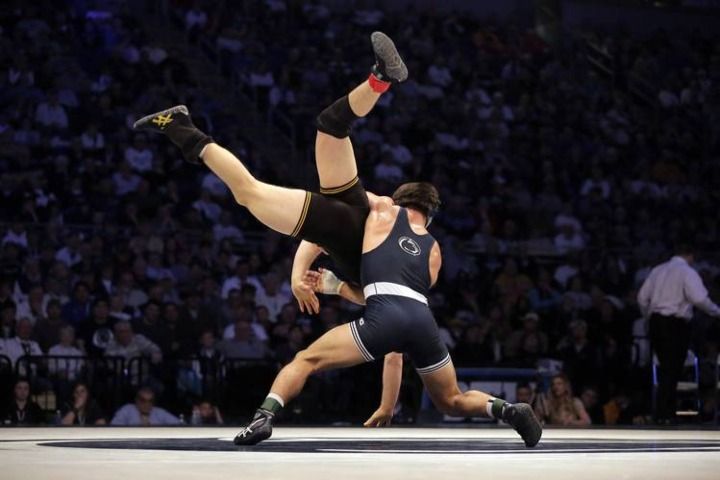
Once you’re at their side with an arm cleared overhead, there are two finishes worth drilling, and which one you pick depends on what the opponent gives you. If they keep their hips square and try to spin out, circling behind into back control with hooks or a body triangle is the higher-value finish — in most no-gi rulesets a taken back is worth more than a standard takedown, and it sets up a far more dangerous follow-up than a mat return does.
If they turn into you and try to face off rather than spin, locking a body lock around the waist and finishing with a hip-driven mat return is the simpler path. Andre Galvao, a six-time ADCC world champion, teaches this exact branch point in his no-gi takedown instruction: read whether the opponent is running or fighting face-to-face, and let that decide which finish you commit to rather than forcing one every time. The move is legal across every major ruleset — ADCC, IBJJF no-gi, and submission-only formats all score it the same as any other takedown, with no restrictions on the back-take finish the way some rulesets restrict slams.
Three Mistakes That Get You Reversed
The most common failure isn’t technical — it’s sequencing. Grapplers either duck before the arm is actually controlled, stand up out of the level change too early because the finish feels awkward, or stall at the opponent’s back without committing to the mat return and let them square back up. Any one of those three turns a scoring takedown into a stalemate or, worse, hands the opponent a scramble where they’re now the one attacking.
A cleaner way to think about it: the duck under has three checkpoints — control the arm, change levels fully, drive past the armpit to the far shoulder — and skipping any single one doesn’t make the technique 75% as effective. It makes it not work at all. That’s a harder pill to swallow than “practice more,” but it’s the honest version of why this takedown looks so different between a beginner and someone who’s drilled it for years.
Chaining It Off a Stuffed Shot
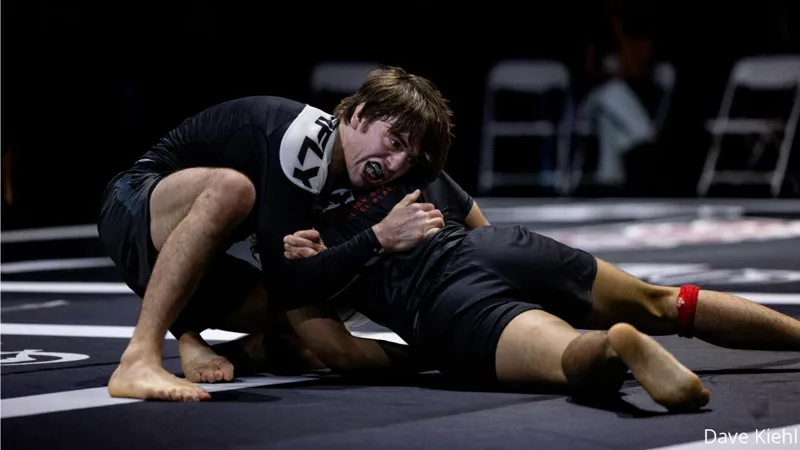
The duck under rarely needs to be the first thing you throw. It’s most effective as the answer to a sprawl. Shoot a low single or a high crotch, get sprawled on, and the same arm-raising reaction that happens when an opponent posts to stop your shot is often the exact window a duck under needs. This is standard no-gi wrestling takedown chain logic: no single shot needs to work on its own if it sets up the next one.
It also pairs cleanly with a body lock takedown once you’ve already got the waist — if the opponent fights the body lock by turning away and raising an arm to create space, that’s the duck under window showing up a second time in the same exchange. BJJ Eastern Europe’s breakdown of the duck under to knee pinch covers a third chain worth drilling, for grapplers who want a leg-attack finish instead of the back or a body lock.
Drilling It Without a Wrestling Background
Grapplers who didn’t wrestle growing up usually need more reps on the level change than on the finish, because the finish is intuitive once the body position is right. Start static: have a partner hold their arm up, and drill nothing but stepping in and driving your head to the far shoulder, slowly, fifty times a side before adding any resistance. Add light resistance only after the head position is automatic, then add full speed, then add the live setup where your partner actually controls when the arm goes up.
Skipping straight to live reps is the reason most grapplers plateau on this takedown around a 30% success rate and assume it’s just not their technique. It almost always is — it just wasn’t drilled in the order that builds the head position first.
One more detail worth drilling separately: the hand fighting that precedes the shot. Most grapplers treat hand fighting as dead time before the real technique starts, but it’s where the arm actually gets raised in live rounds. Spend five minutes of every warm-up on nothing but collar ties and wrist control against a partner who’s also trying to win the grip, and the arm position a duck under needs will start showing up on its own instead of needing to be manufactured.
Where It Fits in a No-Gi Takedown Game
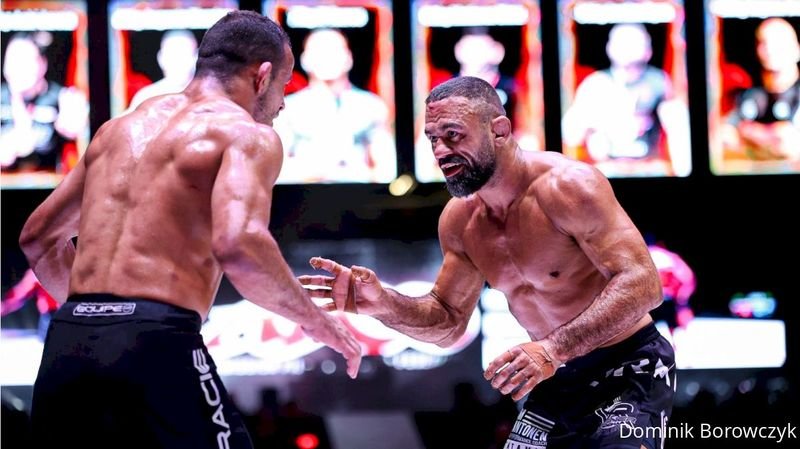
A duck under won’t replace a good double leg as a primary weapon, and anyone who tells you it should hasn’t tried using it against someone who keeps a tight guard with their elbows in. What it does better than almost anything else is punish the grapplers who hand-fight sloppily, raise an arm to create space, or over-commit to a collar tie. Against that type of opponent — which, in most no-gi gyms, is the majority — it’s a faster, lower-risk path to the back than fighting through a double leg sprawl ever will be.
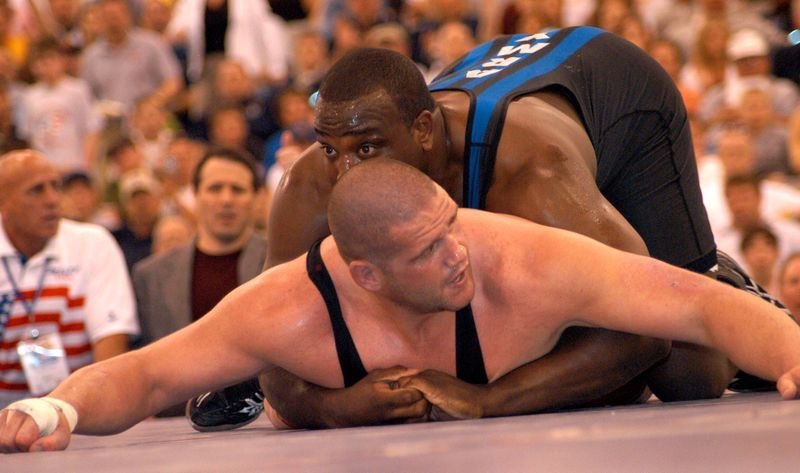

Build the level change first, the head position second, and the finish will take care of itself. That’s the order John Smith taught it in, and nothing about no-gi grappling has made the sequence obsolete.
Sources
- Key Details Of The Duck Under by John Smith — Fanatic Wrestling — technical breakdown of Smith’s duck under mechanics
- Duck Under: Steps, Key Details & Mistakes — Darce — step-by-step technique reference
- Duck Under: How It Works, Counters & Legality — Jiu-Jitsu Authority — ruleset legality and counters
- The Duck Under To Knee Pinch — BJJ Eastern Europe — chained setup for BJJ takedowns