Cheap Rashguard Quality Tests: Seams, Sale Cycles, and Wear Patterns Under $50
Walk into any no-gi academy and half the white belts are wearing rashguards that already pill at the elbows, gap at the underarm seams, or stretch out at the neckline after twenty washes. The price tag isn’t the problem — plenty of sub-$30 rashguards hold up for a full year of hard rolling, and plenty of $50 ones blow out by month four. The real problem is what new grapplers fail to inspect before they hit the buy button. This guide walks through the stitch tests, GSM signals, sale-cycle windows, and wear-pattern realities that separate a $25 rashguard you keep wearing from a $25 mistake you throw out.
Three Ways Cheap No-Gi Rashguards Actually Fail
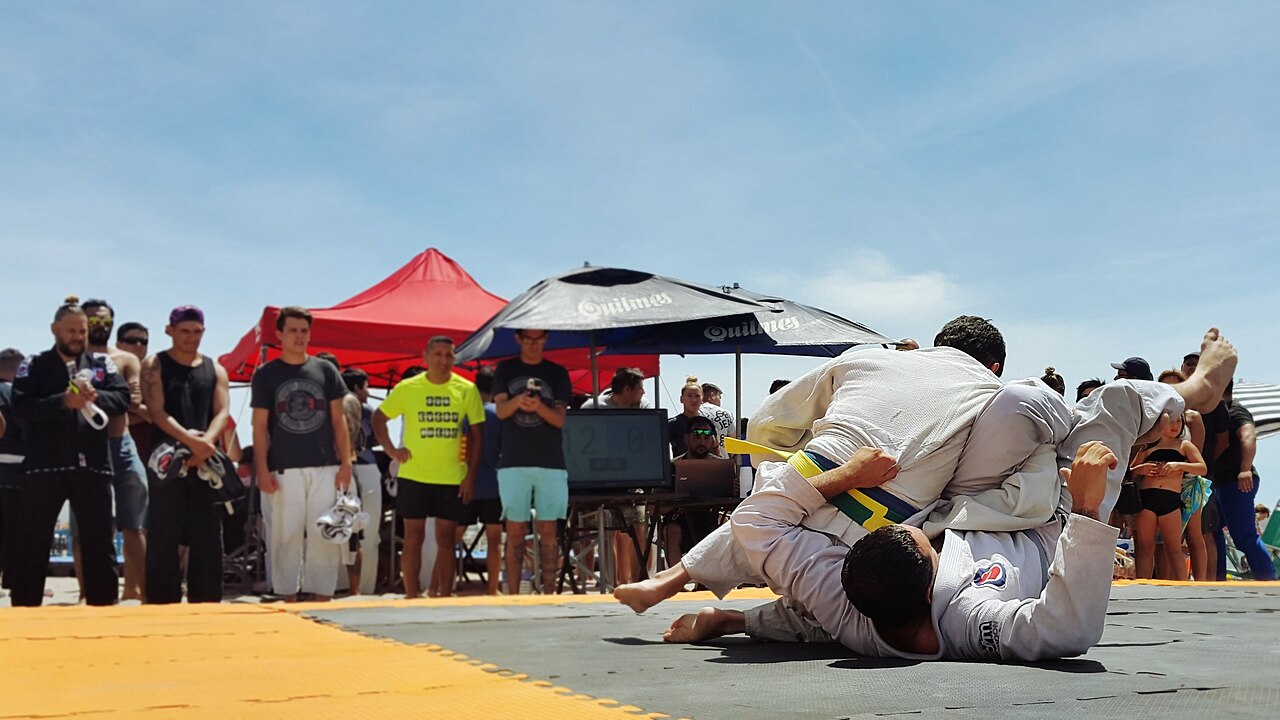
Before you compare price points, understand what you are trying to avoid. Cheap rashguards almost always fail in one of three modes, and each mode maps to a specific construction shortcut a manufacturer took to hit a $20–$25 retail target.
The first failure is pilling. After two months of friction at the elbows, armpits, and lat panels, low-quality polyester starts shedding tiny fiber balls. The rashguard still functions, but it looks years old and feels rough against your training partner’s skin. Pilling is almost always a fabric-blend issue: too much filler polyester, not enough spandex, and no anti-pill finishing treatment.
The second failure is seam blowout, typically at the underarm or down the side panel. This happens when the manufacturer skipped the underarm gusset or used a zigzag stitch instead of a true flatlock. You feel it during a scramble, hear a small rip, and from that day forward the rashguard is borderline unwearable in competition.
The third failure is neckline stretch-out. Cheap collars use a single-needle hem that loses memory after twenty hot washes. The rashguard becomes baggy at the chest, rides up during inversions, and stops sealing against your skin — which defeats the whole purpose of wearing one in no-gi.
The Stitch Test: What to Inspect Before You Pay
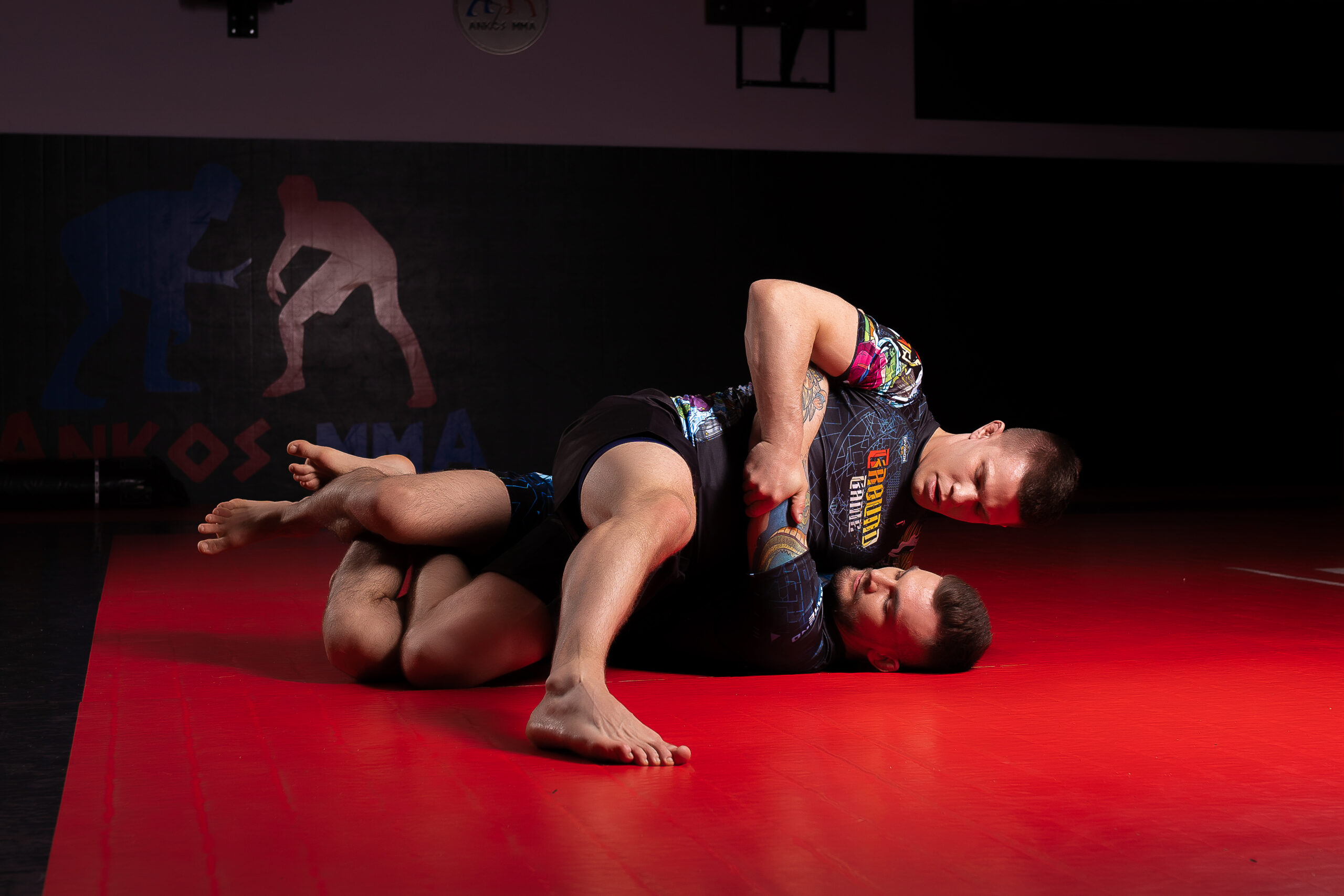
Stitching is the single biggest predictor of how long a budget rashguard will last, and the good news is that brands routinely tell you what they used — you just have to read past the marketing copy and zoom in on the product photos.

Flatlock Versus Zigzag Seams
Flatlock seams lie flush against your skin and against your opponent’s skin. They use four or six threads instead of two and create a wide, flat join that does not raise off the fabric. Zigzag stitching is cheaper, faster to produce, and abrades against anyone you clinch with. If a listing says “4-needle flatlock” or “6-thread coverstitch,” that is a green flag. If it says nothing about stitching at all, assume zigzag.
The Underarm Gusset
A gusset is a small diamond or triangular panel sewn under the armpit to distribute strain across multiple seams. Cheap rashguards skip it because cutting one extra panel adds labor cost. Without a gusset, every overhook, every guard pull, and every underhook battle puts all the tension on a single seam line — and that seam will eventually let go. Zoom in on the armpit area in the product photos. If you see a smooth four-way intersection of fabric panels, there is a gusset. If you see two pieces of fabric meeting in a straight T-shape, there is not.
Hem and Cuff Reinforcement
The waist hem is what keeps the rashguard tucked during scrambles. Better-built versions use a silicone gripper strip on the inside of the waist or a double-folded hem with two rows of stitching. Cheap ones single-fold and single-stitch, which is why they roll up the second your hips invert. The same principle applies to wrist cuffs — double-stitched cuffs survive twenty-plus washes; single-stitched ones fray within a month.
GSM and Why It Matters at the Under-$30 Tier
GSM stands for grams per square meter, and it tells you how dense the fabric is. Most rashguard brands publish this number somewhere on the product page. It is one of the clearest signals you have when comparing two budget options that look identical in photos.
- 200–220 GSM: lightweight, breathable, common in sub-$25 rashguards and hot-climate training tops. Less abrasion resistance, shorter life span.
- 230–260 GSM: the no-gi training sweet spot. Most $30–$45 rashguards live here. Good balance of breathability and durability for three to five sessions a week.
- 270+ GSM: tournament-grade weight. Heavier, more compressive, longer life. Usually $50 and up.
If a brand refuses to list GSM, that is its own data point. Reputable manufacturers publish the spec because they know educated buyers ask for it. Listings that lean entirely on adjectives — “premium,” “durable,” “high-performance” — without a single hard number are almost always at the lower end of the weight scale.
The Rashguard Sale Cycle Calendar
The single fastest way to move from $50 rashguards to effectively-$30 rashguards is to time your purchases. Discount cycles in the BJJ apparel space are surprisingly predictable, and most of them line up with broader US retail calendars plus a few sport-specific moments.
Predictable Annual Discount Windows
Memorial Day weekend, July 4th, Black Friday and Cyber Monday, Boxing Day, and the last week of January all produce 25–40 percent sitewide promos across the major no-gi brands. Black Friday is the deepest cut of the year — a $50 rashguard often hits $30 with a bundle code stacked on top. Late January is the quiet hero: brands need to clear Q4 inventory before new collections drop, and discounts on previous-year colorways climb to 50 percent or more.
Old Colorway Clearance Cycles
Most no-gi apparel brands refresh collections three times a year: spring (March/April), summer (June/July), and fall/winter (September/October). When new colorways launch, the previous run gets pushed to a clearance page at 30–50 percent off. The construction is identical — same fabric, same stitching, same gusset — and the only “flaw” is that the color is now a season old. For grapplers who do not care whether their rashguard matches the latest competition kit, this is the highest-value tier in the entire market.
Tournament Weekend Promotions
Brands routinely time promo codes around ADCC events, IBJJF Worlds, and major submission-only shows. The discount is usually smaller (10–20 percent) but stacks on top of clearance pricing if you read the terms carefully. Subscribe to the email lists of two or three brands you trust, then unsubscribe to anyone who does not honor stacking.
Six-Month Wear Patterns: $30 Versus $50

The honest comparison between tiers does not happen on day one. It happens at month six. A well-built $30 rashguard at six months still has tight cuffs, intact seams, mild pilling at the elbows, and a neckline that holds shape. A poorly-built $30 rashguard at the same six-month mark has stretched at the collar, frayed at the wrists, and developed pilling severe enough that the print on the lat panels is fading.
The $50 tier is more consistent. The fabric is denser, the seams are flatter, and the construction usually includes the gusset and double-stitched hems that the budget tier skipped. At six months, a $50 rashguard typically still looks competition-ready. At twelve months it shows mild wear. At eighteen months it gets retired to the back of the bag as a backup. That timeline is the actual reason serious grapplers gravitate toward the higher tier — it is not status, it is reliability.
Listing Red Flags Under $30
Once you know what good construction looks like, the bad listings start to stand out. These are the patterns that almost always indicate a rashguard you will replace inside a year.
- “One size fits all” sizing — fit will be wrong on roughly four out of five bodies.
- No GSM, no fabric-percentage breakdown, and no mention of stitching style anywhere on the page.
- Generic product photography lifted from multiple competitors — a sign the seller is dropshipping a generic factory rashguard.
- Reviews that mention shrinkage on first wash, or sleeves arriving noticeably different lengths.
- A wildly compressed price ladder with the same SKU at $9, $19, and $29 depending on the day — quality control is almost certainly inconsistent.
- No return window, or a return policy that explicitly excludes worn-once items.
When the Extra $20 Is Worth It — And When It Is Not
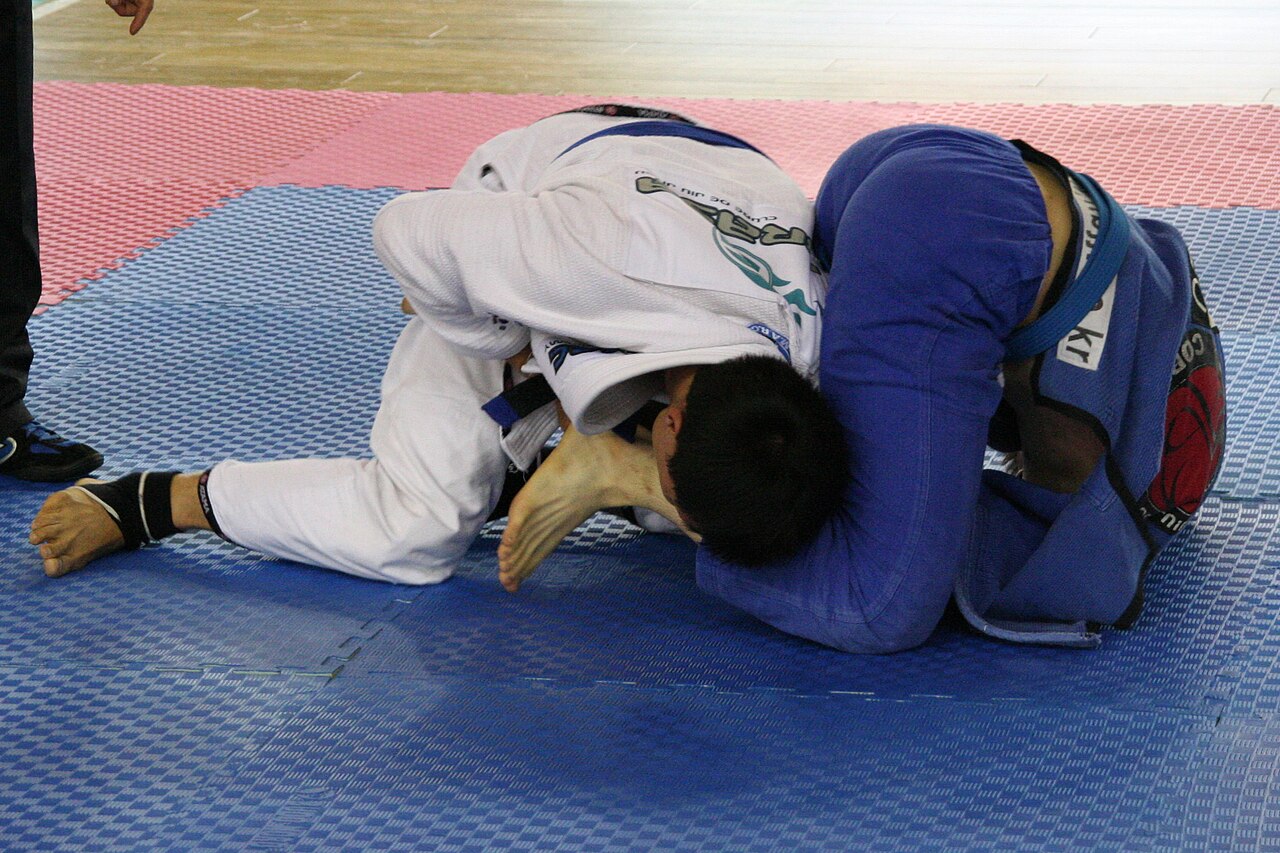
The extra $20 between a clearance $30 rashguard and a full-price $50 rashguard is most worth it when you train more than four times a week, when you compete more than twice a year, or when you live in a humid climate where rashguards go through high wash cycles. Volume of use compounds every quality difference in the construction.
The extra $20 is least worth it when you train two or three times a week, rotate three rashguards through the laundry, and treat them gently on wash day (cold water, no dryer). At that usage rate, a well-chosen $30 rashguard with a real gusset and flatlock seams will outlast a recreational lifter’s appetite for the same colorway. There is no shame in the budget tier — there is only shame in the unexamined budget tier.
A Realistic Two-Year Cost Comparison
Total cost of ownership matters more than sticker price, especially if you have any intention of treating BJJ as a long-term hobby. Here is the math most buyers never run.
- Three $25 rashguards at eight months each: $75 across two years.
- Two $50 rashguards at twelve months each: $100 across two years.
- Two clearance-cycle $30 rashguards at twelve months each: $60 across two years.
Sometimes cheap is genuinely cheaper, sometimes it is not, and the winning play is almost always the clearance-cycle $30 tier — same construction as the $50 line, last year’s color, half the lifetime cost of buying three throwaway sub-$25 rashguards in a row.
Where to Hunt Without Falling for Fake Deals
Once you know what to look for and when to look, the next question is where. Stick to brand-direct sites when possible — they get the clearance inventory first and are easier to file a return through than a marketplace reseller. Search results on large retailers are useful for comparing GSM, stitch type, and fabric percentages across brands side by side. Filter aggressively, sort by reviews, and read the one-star reviews first because that is where seam blowouts and shrinkage complaints surface.
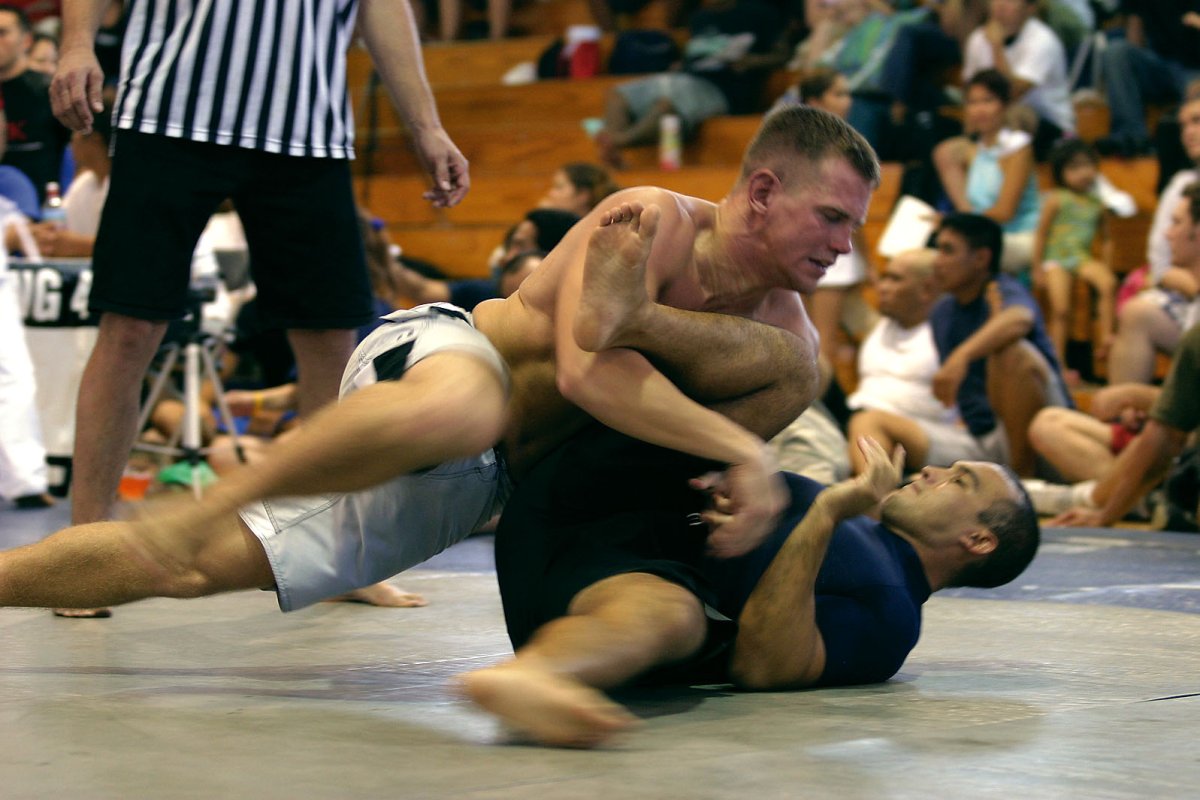
Two final habits separate smart shoppers from impulse buyers. First, build a watchlist of three or four rashguards you would buy at the right price, then wait for a sale cycle rather than buying full-price on a whim. Second, use product searches to compare current pricing across the brands you already trust — there is no reason to pay $50 in March for a rashguard that will be $30 in May. The discipline pays for itself within a single training year.
Sources
- Amazon — BJJ rashguard search results
- Wikipedia — Rash guard overview
- Hayabusa Fightwear
- Tatami Fightwear
- IBJJF — competition apparel standards
Need help ranking on Google? RankOnRepeat manages your entire blog — keyword research, writing, and publishing — so your business shows up when customers search. See how it works →
Browse our top-rated rashguards and no-gi gear at the RashguardGuy shop →