Arm Bar No-Gi: 7 Setups That Force the Tap
No submission has as many entries as the arm bar. In the 2024–2025 WNO season alone, it accounted for more finishes than any other single technique — from Tainan Dalpra’s S-mount transition at WNO 21 to the Haisam Rida arm bar over Roberto Cyborg Abreu that FloGrappling named Best Submission of 2022. The reason it stays dominant is that every top position in no-gi — guard, mount, back, side control — has a direct arm bar entry once you understand the mechanics.
If you already have a triangle choke, your arm bar improves automatically. The two are a natural pair — the triangle sets up the arm bar when the opponent postures to escape, and the arm bar chain forces the triangle when they pull the arm down. Learning them together compounds both.
How the Arm Bar Works in No-Gi
The arm bar hyperextends the elbow by using your hips as a fulcrum against the opponent’s upper arm while controlling the wrist. The mechanic is simple: their elbow points up, your hips press down on the upper arm, and you pull the wrist toward you. The joint fails when extension exceeds its natural range.
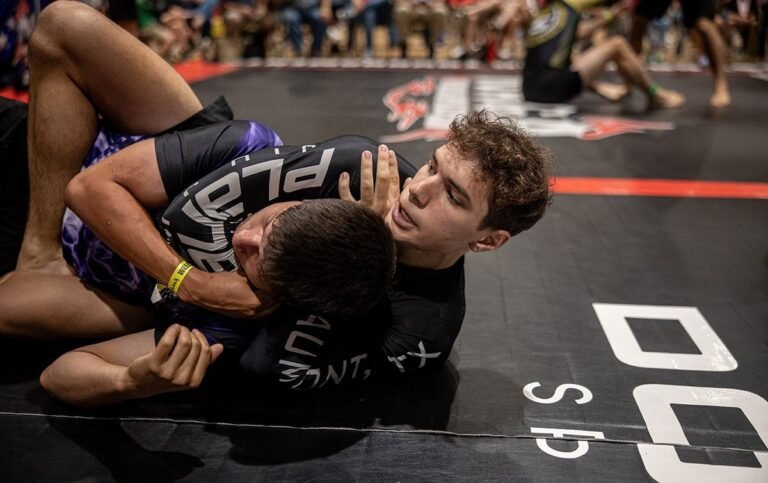
No-gi removes the collar and sleeve grips that help close the position in the gi. This makes wrist control the critical variable. You’re not holding a sleeve — you’re holding a sweaty forearm. The standard grip is a two-on-one wrist lock with your hands clasped around their wrist, thumbs down. This is the detail most beginners skip and the reason their arm bars get pulled out before the finish.
One mechanical detail that carries across every setup: your heels drive down on the opponent’s shoulder while your hips lift up. These are opposite forces working on the same joint. Get both active simultaneously and even strong opponents tap quickly.
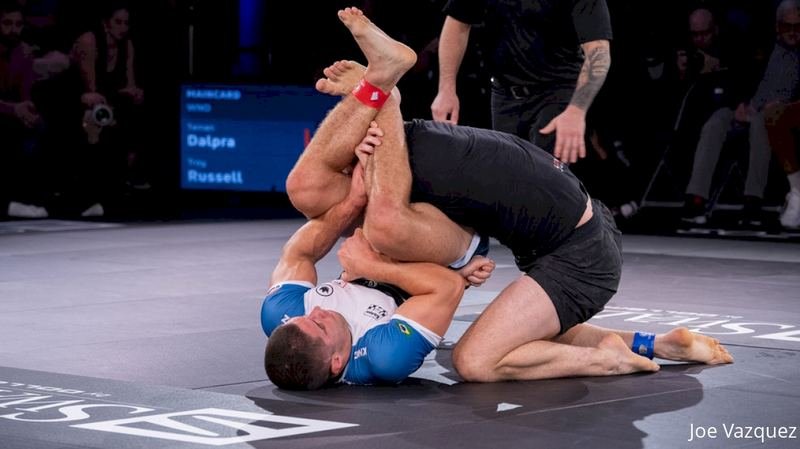
Tainan Dalpra finishing an arm bar from S-mount at WNO 21 — the S-mount transition isolates the arm before the finish.
Setup 1: Arm Bar from Closed Guard
The closed guard arm bar is where most grapplers learn the technique, and it’s still the highest-percentage entry at every level. The opponent is already between your legs; the arm you want is within reach.
From closed guard, break their posture by pulling their head toward your chest. As they posture back up, reach across and grab the far wrist. Pivot on your hip by swinging the leg on the same side as the trapped arm over their head. Keep your knees squeezed together — a gap at the knees is how they pull the arm out. Open your guard, get your hips close to the shoulder, squeeze, and extend.
The most common failure here is pivoting before controlling the wrist. The wrist control comes first. Once the wrist is locked and your knees are tight, the pivot and finish are almost automatic.
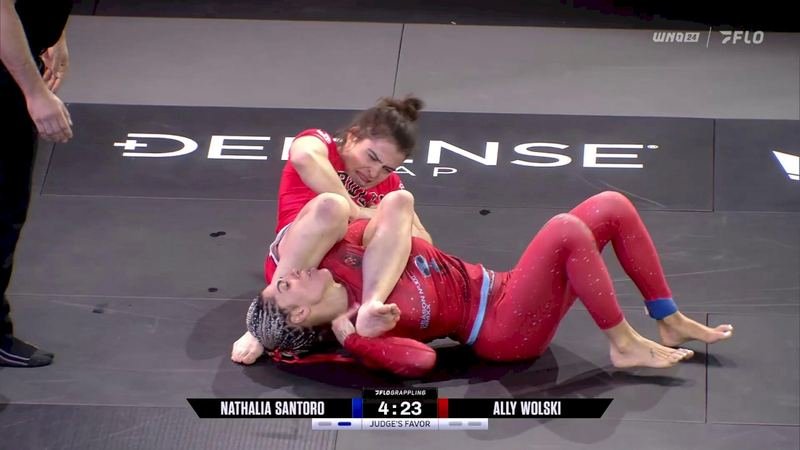
Ally Wolski finishes an arm bar at WNO 24 — the closed guard entry remains the foundation of any arm bar game.
Setup 2: Arm Bar from Mount
The mount arm bar requires a specific transition to make it clean: the S-mount. Flat mount gives you little control over which arm you attack — the S-mount pins one arm and isolates the other. Shift your base by moving one knee tight against their head and posting the foot of the other leg near their hip. This is the S-shape that gives the position its name.
From S-mount, the arm nearest your posted foot is already isolated. Drive that side knee tight to their armpit, fall back, and extend. The mount attack range expands significantly once you understand the S-mount as the base position rather than flat mount.
Tainan Dalpra used this exact transition at WNO 21 in his no-gi debut — drove into S-mount from flat mount, isolated the arm, and finished before the opponent could bridge. The speed of the transition is what prevents the bridge-and-roll counter.
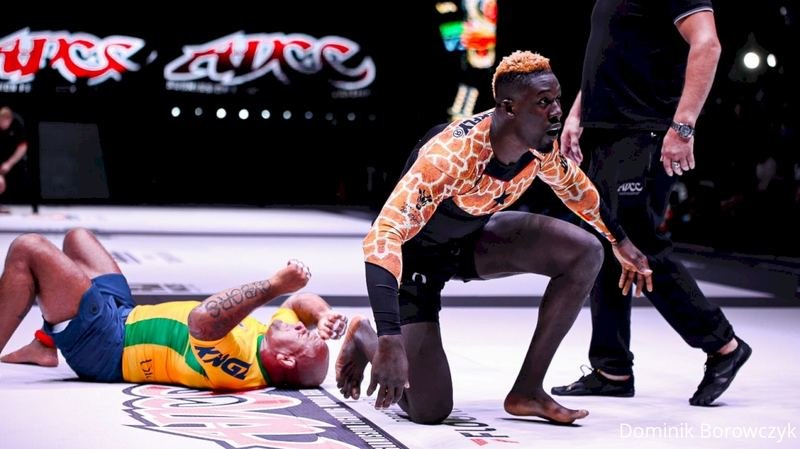
Haisam Rida arm bars Roberto Cyborg Abreu at ADCC 2022 — named FloGrappling’s Best Submission of the Year.
Setup 3: Arm Bar from the Back
Back control gives you arm bars that opponents rarely see coming because they’re focused on protecting their neck. The key is making the rear naked choke attempt the setup, not the finish.
From back control with your hooks in, shoot one arm under their armpit to attempt the RNC. When they shoot both hands up to defend the choke — which they will — one arm is now fully exposed. Swing your body around that arm, keeping it pinned with your armpit, and drop into the arm bar finish. You’re pivoting from behind rather than from guard, but the extension mechanic is identical.
The transition window is narrow. If you pause after they defend the choke, they’ll reset their position. The arm bar needs to start the moment both their hands go to their neck.
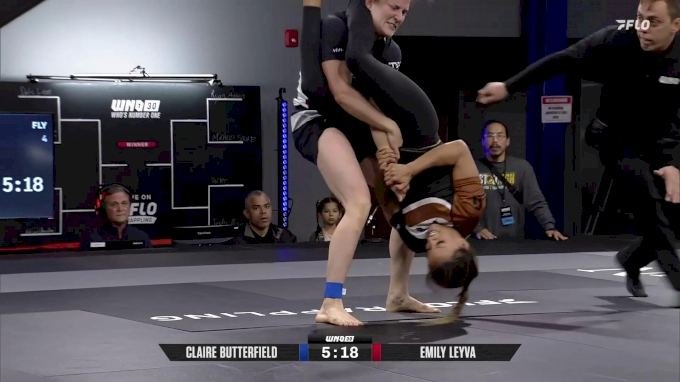
Emily Leyva arm bars her opponent on her WNO 30 debut — the back control transition is one of the least-expected arm bar entries in no-gi.
Setup 4: Triangle-to-Arm Bar Chain
The triangle and the arm bar are the two most dangerous guard submissions in no-gi, and they feed each other. When your triangle is locked and the opponent posts their free hand on your hip to defend, that free arm is now exposed. Release the triangle lock, control the wrist, and pivot into the arm bar. You don’t need to re-establish guard — you’re already in position.
The reverse chain works equally well. If your arm bar attempt from guard fails because the opponent pulls their elbow down to their chest, triangle the arm instead. Throw your leg over their head, lock the triangle, and finish. The opponent can’t defend both exits at the same time.
Competition footage from Sarah Galvao’s matches shows this chain used effectively at the elite level — she sets the triangle first to force the posture response, then transitions immediately when the arm comes up to defend.
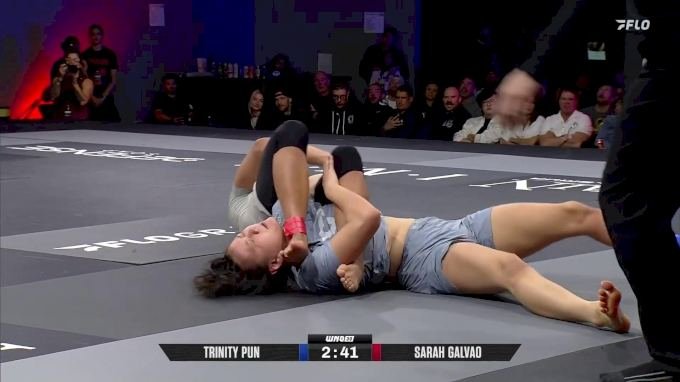
Sarah Galvao arm bar submission at WNO 30 — the triangle-to-arm bar chain forces opponents to choose which attack to defend.
Setup 5: Flying Arm Bar
The flying arm bar is not a flashy gamble — it’s a position-based attack with a narrow but reliable entry window. When you’re standing in front of an opponent who extends their arm to push you away, you have a direct line to their elbow.
From a clinch or collar tie, grab their extended wrist with both hands. Jump, swing your outside leg over their shoulder, and use your weight to fall into the arm bar. The finish happens in the air — you’re relying on the wrist control and the rotation to complete the extension before they can react.
Roberto Jimenez used exactly this setup to submit Elder Cruz at WNO 26 in 16 seconds — the second fastest finish in WNO history. Cruz pushed at Jimenez from the start, Jimenez grabbed the wrist, and the match was over before Cruz could process what happened. The entry works precisely because opponents who push defensively create the arm extension the technique requires.
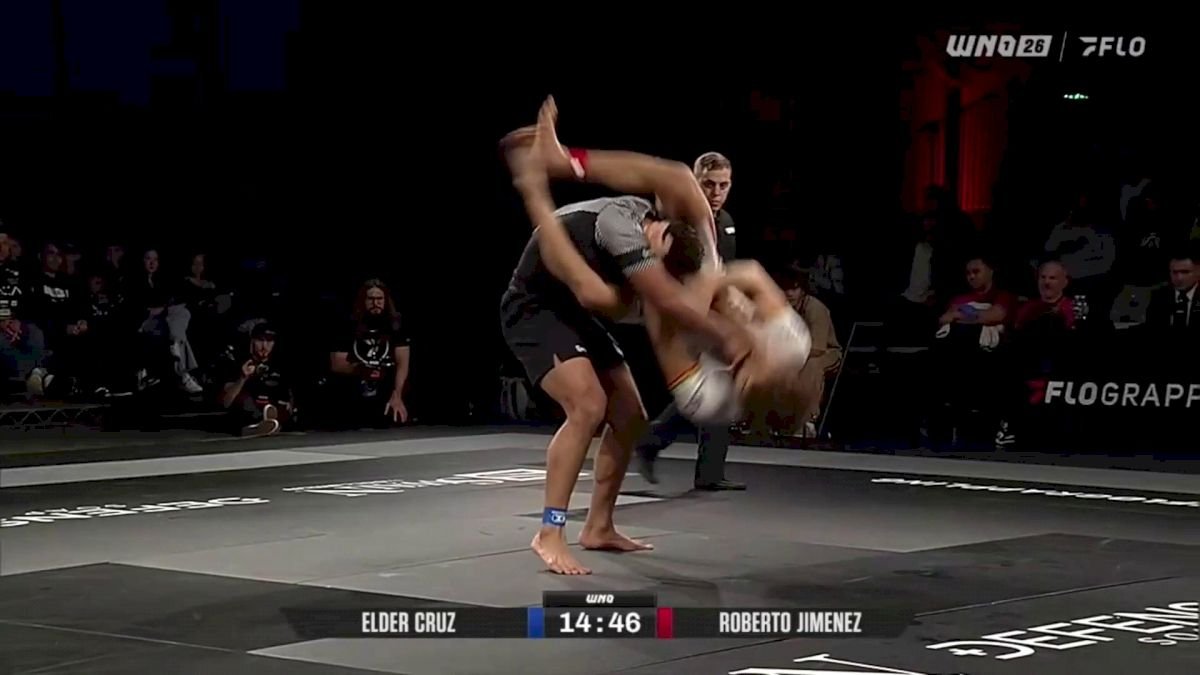
Roberto Jimenez lands the flying arm bar on Elder Cruz at WNO 26 — 16-second finish, second fastest in WNO history.
Setup 6: Arm Bar from Side Control Scramble
Most arm bar guides skip the scramble entry because it’s harder to teach in static drills. It’s also the most common position where arm bars actually finish in competition, because transitions create exposed limbs that both athletes can see.
When passing guard and transitioning to side control, opponents often push against your hip with a straight arm to create space. That straight arm is the target. Quickly grab the wrist, drive your hip over their elbow, and spin into the arm bar while keeping the elbow pinned. The key is acting on the exposed arm within the first second — if you wait for full side control, the moment closes.
The same opportunity appears when escaping bottom side control. As you create frames and start to move, the person on top often straightens their arms to base. Their posted arm is an arm bar waiting to happen if you can control the wrist and spin before they pull it back.

Nathan Haddad finishes a hail mary arm bar at the ADCC West Coast Trials 2026 — mid-scramble arm bars require fast wrist control before the window closes.
Setup 7: Arm Bar from Turtle
When an opponent is in turtle, their arms are posted on the mat supporting their weight. This creates a structural arm bar opportunity that most grapplers miss because they’re looking for the back take instead.
From turtle top, reach under and grab the near wrist. Pull it toward the centerline while driving your hip over their elbow and pivoting your body perpendicular to theirs. They can’t pull the arm back easily because their own body weight is on it. The finish is a short, tight extension — not a full roll like the guard arm bar.
The turtle arm bar is most useful as a threat that creates back take opportunities. Once they know you’re attacking the arm from turtle, they’ll tuck their arms closer — which is the exact defensive posture that exposes the back for your seatbelt grip.
Xande Ribeiro breaks down his ADCC matrix arm bar — positional arm bars like the turtle entry rely on pinning the elbow before the opponent can react.
Three Mistakes That Kill the Finish
Loose wrist control is the single most common reason arm bars don’t finish. If you can feel the opponent pulling their arm toward their chest during the extension, you don’t have the wrist locked. Two hands, thumbs down, clasped tight — and pull toward your own chest as you extend your hips.
Finishing with your hips too far from their shoulder is mistake two. The fulcrum point is your hip against their upper arm, not their forearm. If there’s a gap between your hip and their shoulder, you’re pulling the elbow down rather than creating the two-force extension. Close the gap first, then extend.
The third mistake is opening your knees during the guard arm bar. A single finger-width of space between your knees gives the opponent a route to pull the arm out. Lock the knees tight before you start the extension, and squeeze them together as you finish. Opponents train to reach for that gap the moment they feel the arm bar start.
Sources
- FloGrappling — Roberto Jimenez Flying Arm Bar at WNO 26 — 16-second finish, second fastest submission in WNO history.
- FloGrappling — Tainan Dalpra Arm Bar Win at WNO 21 — S-mount transition arm bar at Dalpra’s no-gi debut.
- FloGrappling — Ally Wolski Arm Bar at WNO 24 — Arm bar submission finish at WNO 24, Austin TX.
- Digitsu — Armbar in BJJ: Complete Guide — Biomechanics, setup variations, and historical submission statistics.
- Progress Jiu Jitsu — How to Master the Armbar in BJJ — Detailed breakdown of standard armbar entries from multiple positions.