Knee Slice Pass No-Gi: 5 Steps to a Reliable Pressure Pass
The knee slice pass is everywhere in modern no-gi grappling. Watch any high-level submission wrestling match — ADCC, Polaris, Who’s Number One — and you’ll see it land repeatedly. There’s a reason for that. The mechanics work with or without fabric to grab, and in a lot of ways no-gi is where this pass truly thrives.
In the gi, your opponent can use your own collar against you. They can grab your sleeve to stall the cut. They can hide behind fabric grips that slow the whole thing down. Strip all that away, and what you’re left with is a pass that rewards hip pressure, body positioning, and timing — exactly the qualities that separate good no-gi grapplers from average ones.
If you’re already working your torreando pass or building out your no-gi grip fighting, the knee slice fits naturally into that game. It’s a pressure pass that flows into fast passes — which means once you own it, your entire guard-passing sequence gets more dangerous.
This guide covers the five most reliable no-gi entries, the grip adjustments you need to make, the mistakes that kill the pass, and the counters you’ll face once training partners start expecting it.
What Is the Knee Slice Pass?
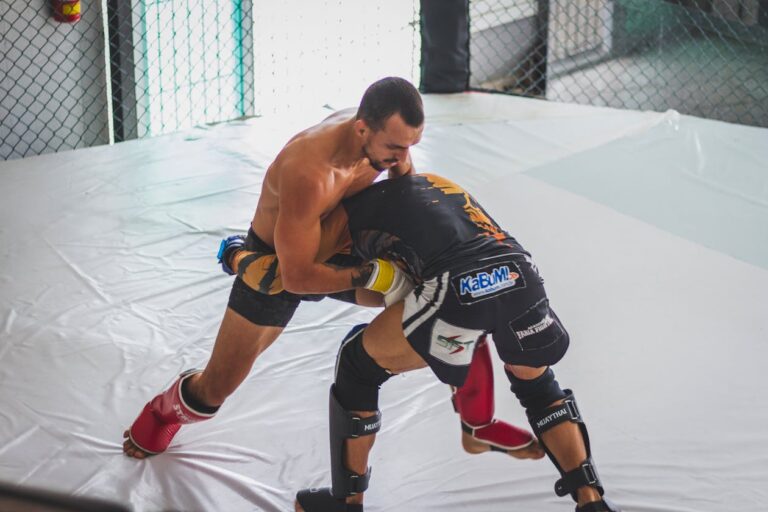
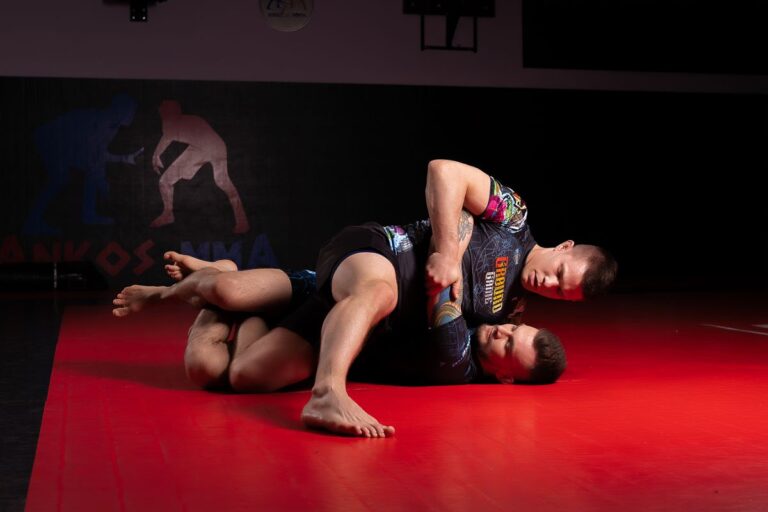
The knee slice pass — also called the knee cut pass — is a guard-passing technique where you drive your inside knee diagonally across your opponent’s thigh to split their legs and advance to side control or mount. Your shin acts as a wedge. Your hip pressure does the pinning. Your upper body controls the shoulder and head angle to keep them flat.
The mechanics are deceptively simple: you’re using your knee like a blade, slicing through the gap between their legs while your weight transfers forward and down. When executed correctly, your opponent’s bottom leg gets pinned to the mat before they can get it underneath you, and their top leg gets pushed aside by your cutting knee.
What makes this pass so effective at high levels is the chain it creates. The knee slice threatens in a direction that forces your opponent to respond — and the moment they react predictably, you already have a counter ready. The leg drag, the body lock, the double underhook pass — they all flow naturally from knee slice pressure. You’re not just passing guard; you’re running a passing system.
The key body positions to understand before drilling:
- Your passing knee drives across and down, targeting the opponent’s inner thigh
- Your back leg stays posted wide for base — never let both feet collapse inward
- Your near arm pins their far hip or controls their near knee to prevent frames
- Your head goes to the mat-side, shoulder pressure into their chest to flatten them
- Your hips rotate toward them as your knee cuts — hip orientation drives the whole pass
5 No-Gi Knee Slice Setups
Setup 1 — From Half Guard Top
Half guard top is the most natural starting point for the knee slice, and it’s where most grapplers first encounter the pass. You’re already in position — your inside knee is between their legs, they’re trying to work to underhook or come to turtle, and you need to free the leg.
The no-gi grip change here is critical. In the gi, you’d post a collar grip and use it to drive their head down and away. Without the collar, you need to control their head directly. Reach across with your far arm and grab behind their head or ear — just enough to break their posture and prevent them from framing into your face.
From there, the sequence is: establish your underhook on the near side, drive their head down with your far arm, pressure your chest into theirs, and start to windshield-wiper your trapped knee toward the mat. Your hips drop and rotate away from them as the knee clears. Keep your base leg posted wide so you don’t get pulled down into deep half when the knee frees.
The biggest half guard mistake is rushing. Grapplers yank the knee back when they should be pressuring it out. The knee slices when there’s no space — create that vacuum first with hip pressure, then the knee finds its own path out.
Setup 2 — After a Torreando
The torreando and the knee slice are a natural combination. In the torreando, you’re already moving the legs laterally — once you push both legs to one side, your inside knee can immediately slice across as you chase their hips.
The transition looks like this: you push their legs to your left with a two-on-one grip on their legs, their hips square back up trying to recover, and in that moment you drop your right knee across the inner thigh and drive your weight forward. The torreando created the exact alignment you need — their legs are stacked slightly, your knee has a clear path, and they’re momentarily off-balance from the hip push.
For no-gi, use shin control instead of pant grips. Your hands control the top of their shin or the back of their knee when you redirect the legs. As you transition to the knee slice, the far hand moves to the hip or the shoulder. The near hand can stay on their knee to prevent them from recovering the guard as your knee cuts through.
This two-pass combo is worth drilling as a single flowing sequence, not two separate techniques. Rep the torreando-to-knee-slice transition until your knee is already cutting before you consciously decide to do it.
Setup 3 — Against the De La Riva Hook
The De La Riva guard is a nightmare for flat-footed passers, but the knee slice is one of the cleanest answers to it. When someone has their DLR hook in, they’re wrapping your lead leg and angling their body to sweep or take the back. The knee slice works by using their own hook tension against them.
Here’s what changes in no-gi against DLR: without pants to grab, your opponent has less control over the DLR hook itself, but they can control your body more easily if you’re not tight. You need to neutralize the hook early by pushing their knee down with your near hand as you establish a wrist tie on their far arm.
The entry sequence: push their hooking foot down and off your leg with your near hand, post your back leg wide to prevent the sweep angle, reach your far arm across to wrist control or bicep control on their far arm, drop your hip away to pop the hook off, then cut the knee. As your knee passes their thigh, your near hand transitions from their knee to their hip to complete the pass.
The DLR knee slice is the most timing-dependent variation on this list. You’re working against their leverage, and the window for the cut is shorter. But once you drill the hip drop that pops the hook, the pass becomes very reliable — especially because DLR players are expecting knee cut attempts and usually have a specific counter (back take attempt) that you can anticipate.
Setup 4 — Knee Slice to Leg Drag Combo
This isn’t a setup so much as a passing system — and it’s arguably the most important one on this list for serious competitors. The knee slice and the leg drag are connected at the hip (literally).
When you try to knee slice and your opponent reads it, they’ll try to push your knee back down and recover their guard. In doing so, they often create the leg drag setup for you. As their leg posts to the mat trying to block your knee, you grab their calf or ankle with your far hand and drag it across your body to the opposite side. Now they’re completely off-balance and you’re passing in the opposite direction.
The key detail for no-gi is that the leg drag requires you to actually own the leg — you need to clamp it to your hip, not just hold it with your hands. Drive your hip into their knee as you drag, and use your elbow to trap their leg against your side. Without the gi grip, if you’re just holding with your hands, they’ll easily pop the leg free.
Drill the combo in both directions: knee slice attempt → opponent pushes knee down → leg drag. And then: leg drag attempt → opponent pulls leg back → knee slice. Once both transitions become automatic, your passing becomes genuinely difficult to predict.
Setup 5 — Double Underhooks Entry
The double underhooks knee slice is the high-pressure version of the pass — popular with wrestlers and heavies who want to commit fully to the pass rather than flow between options.
From a standing position, you crash in low on your opponent’s guard, shooting for double underhooks under their legs. Once you’ve controlled their legs with both arms coming under — think wrestling leg scoop, not guard pass grip — you drive them to one side. As their hips angle to absorb the pressure, you immediately release one underhook (the near side) and cut your knee across their inner thigh.
The double underhook entry creates overwhelming pressure for a specific reason: you’ve removed all their frames from inside. With both your arms threading under their legs, they have no post, no frame, no inside position to stop the knee from cutting through. The only way to stop this version of the pass is an early reaction before the underhooks are established.
In no-gi, the double underhooks entry is slightly lower percentage than in the gi because the slippery skin contact makes it harder to maintain the underhooks against someone who’s actively pumping their hips. The trade-off is that when it lands, the pass is extremely tight and there’s minimal scramble risk. Pair it with a consistent head pressure — chin to their sternum — to remove their ability to create any frame at all.
No-Gi vs Gi: What Changes?
The knee slice works in both gi and no-gi, but the adjustment list is long enough that it’s worth treating them as meaningfully different passes:
Grips: In the gi, you use collar grips, sleeve grips, and pant grips throughout. In no-gi, you’re working with wrist ties, bicep control, body locks, and direct limb grabs. Your near hand goes to their hip or their inside knee. Your far hand controls the shoulder or goes around the head.
Friction: This one surprises newer grapplers — no-gi is actually better for knee slice because your skin-on-skin contact with their thigh creates natural friction. In the gi, your knee is pressing through fabric, which has less grip. The naked shin on their thigh tends to stick and pin more effectively.
Pace: No-gi passes generally have to happen faster. Your opponent can’t grab your shorts or belt to slow you down, but they can use body locks and limb grabs that feel different. The knee slice needs to flow in under 2-3 seconds once initiated — if you’re still setting it up after 4-5 seconds, your opponent has already adjusted.
Head control: The collar grip in gi naturally pushes the head down and away. Without it, you need to either post your palm on their jaw/face (not always clean), reach for the ear, or use your chest pressure alone to keep them flat. Many no-gi practitioners use a crossface instead — elbow across the face to tilt the head away.
YouTube: Knee Slice Pass in Action
Knee Cut Passing: The Complete Guide — a thorough breakdown of the mechanics and variations from open guard.
Sources
- Examining the Knee Slice Pass (No Gi) — BJJ Fanatics
- How to Counter the Knee Slice Pass — BJJ Fanatics
- How to Perform the Knee Slice/Cut Pass in BJJ — Evolve MMA
- Blow Through the De La Riva Guard with the Knee Slice — BJJ Fanatics
- Knee Slice Magic with JT Torres — BJJ Fanatics
Image credit: evolve-mma.com