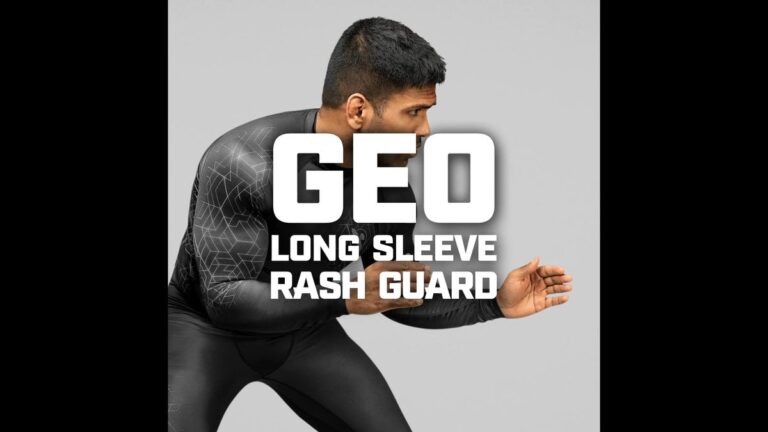
Designed for the Mat: What Women Grapplers Actually Need in a No-Gi Rashguard
The women’s no-gi scene has never moved this fast. Between ADCC, Who’s Number One, and a FloGrappling calendar that keeps expanding, elite women grapplers compete at a pace that was unthinkable a decade ago. The gear has had to catch up — and when it comes to rashguards, there’s still meaningful ground to cover.

That gap shows up most clearly on the mat. For years, women training no-gi either bought men’s cuts in smaller sizes or wore unisex options built around male proportions. The gear functioned — barely — but it didn’t account for how women’s bodies actually move under submission pressure, in scrambles, or across a two-hour open mat. This guide breaks down what actually makes a rashguard work for women in no-gi and why those requirements are distinct enough to take seriously before buying.
The Unisex Cut Problem
When rashguard brands design a “unisex” garment, they’re designing for a male baseline. The torso taper, the sleeve circumference, the chest panel width — all calibrated to male anatomy, then adjusted in scale. A women’s small in a unisex line is usually a men’s extra-small with a different colorway and a resized pattern. The proportions haven’t changed; they’ve just shrunk.
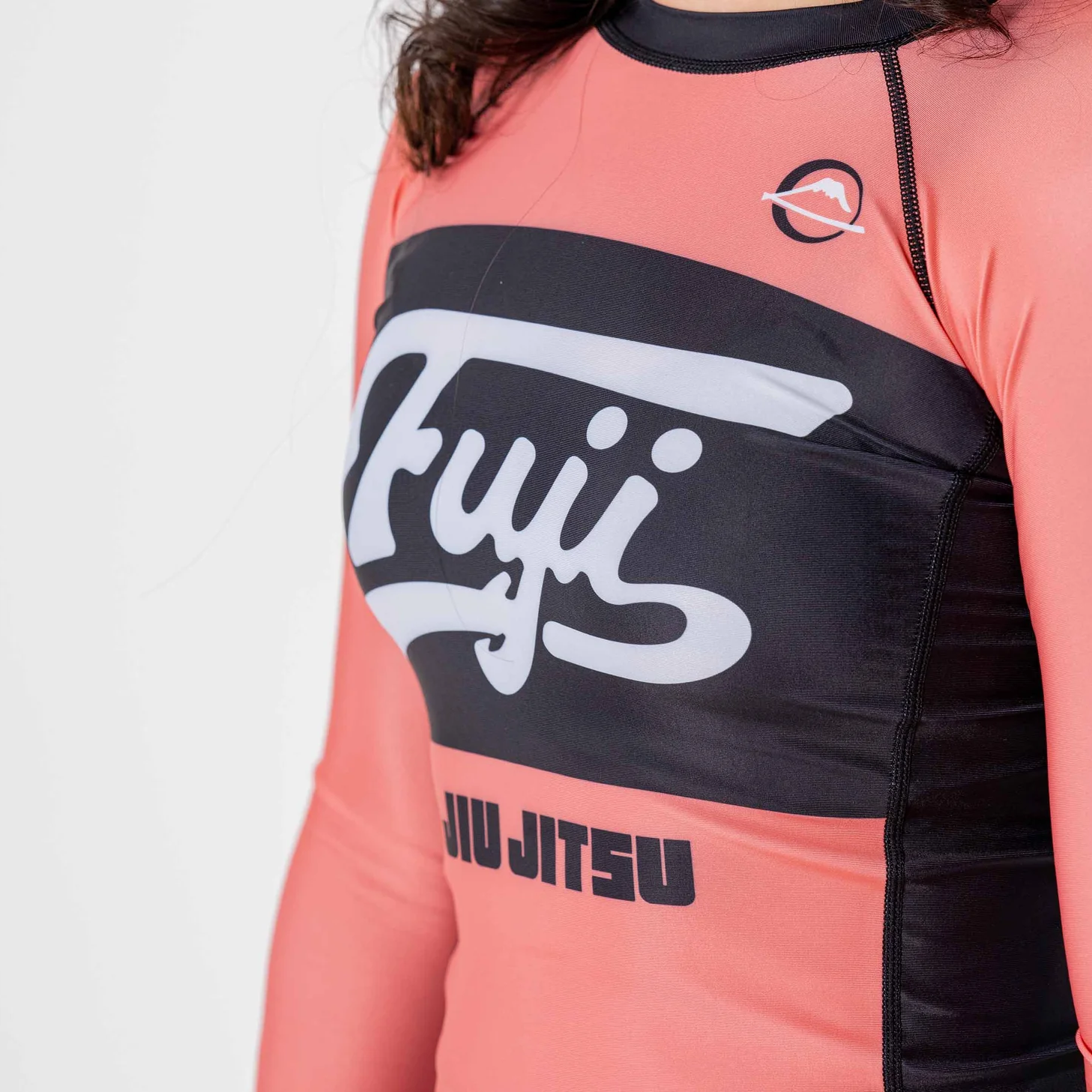
The problems that surface during live rolling are predictable. The chest panel rides up under pressure. The torso length is wrong for female proportions. The shoulder seams land in the wrong place, creating drag points that catch during takedowns or top-position scrambles. In a light drilling session, these are annoyances. At competition intensity, they become genuine liabilities — you’re spending mental bandwidth managing your gear instead of managing your opponent.
Brands that have invested in purpose-built women’s cuts address this at the pattern level rather than the scaling level. The chest panel is constructed differently — either with a separate piece for the bust or with enough horizontal stretch engineered into that zone to accommodate range of motion without distorting. The torso is cut shorter relative to the sleeve length, and the hip coverage is calibrated to prevent ride-up during guard retention, leg lock entries, and hip escapes.
Coverage That Holds Through Every Position
Coverage in a women’s rashguard isn’t primarily an aesthetic question — it’s a functional one. When a rashguard rides up during a hip escape, it exposes skin to mat burns and disrupts the grip-reduction benefit the fabric is supposed to provide. A rashguard you’re constantly pulling back down is one you’re not wearing correctly for the mat environment.

Chest Panel Construction
The chest panel is where budget women’s rashguards fail most visibly. The fix is either a structured panel that accommodates the bust without stretching across it flat, or a fabric with enough four-way stretch that the panel moves with the body rather than across it. The better options in the women’s market use a combination: a shaped panel with high-stretch fabric and flatlock seams that sit away from high-contact zones.
Flatlock stitching matters here because raised seams across the chest create friction points under a top player’s weight. After a few hundred rolls, those friction points mean mat burn and skin irritation on the sternum and ribs. Flatlock lies flat, distributes load evenly, and stays comfortable through long training sessions. Any women’s rashguard that uses raised seams across the bust area is cutting corners at the most structurally important point in the garment.
Length and the Ride-Up Problem
The ideal rashguard length for women in no-gi clears the hip bone and stays there through every position — guard retention, back takes, single-leg scrambles, ashi garami entries. That means longer than most unisex designs assume, and with enough stretch in the lower hem that tucking into shorts isn’t necessary just to maintain coverage.

Some brands have addressed this with a curved hem — slightly shorter in front, longer in back — which accounts for the way the lower torso stretches differently during leg-lock and hip-heavy positions. It’s a small design detail with a real functional payoff. If you’re evaluating a rashguard online, look at the listed “back length” measurement specifically; front-length measurements are often misleading because they don’t reflect what happens when you’re moving through a full range of grappling positions.
Fabric Weight and Compression Level
Women’s no-gi has become faster and more submission-oriented at the elite level, and that has changed what the best competitors want from fabric. Heavier compression fabrics — typically 200 GSM or above in polyester-spandex blends — are favored for competition because they reduce grip surface for your opponent, hold their shape under pressure, and maintain structure after repeated wash cycles at competition volume.
For training, the calculus is different. A slightly lighter fabric — in the 180 GSM range — tends to breathe better and feel less restrictive across a multi-hour open mat. Many women prefer this weight for drilling and technique work, reserving heavier competition-weight rashguards for hard live rounds and events. Running two different weights in rotation isn’t gear obsession; it’s a practical way to extend the life of your competition piece.
The spandex percentage matters beyond raw weight. Most premium rashguards run 15–20% spandex in the blend. Higher spandex content increases stretch but reduces long-term durability — the fabric eventually loses recovery, bagging at the knees and shoulders after heavy wash cycles. Brands that hold up over a full season tend to use mid-range spandex ratios and invest in the weave construction and sublimation quality rather than simply loading up on elastane for stretch.
What Elite Women Grapplers Have Pushed Brands to Build
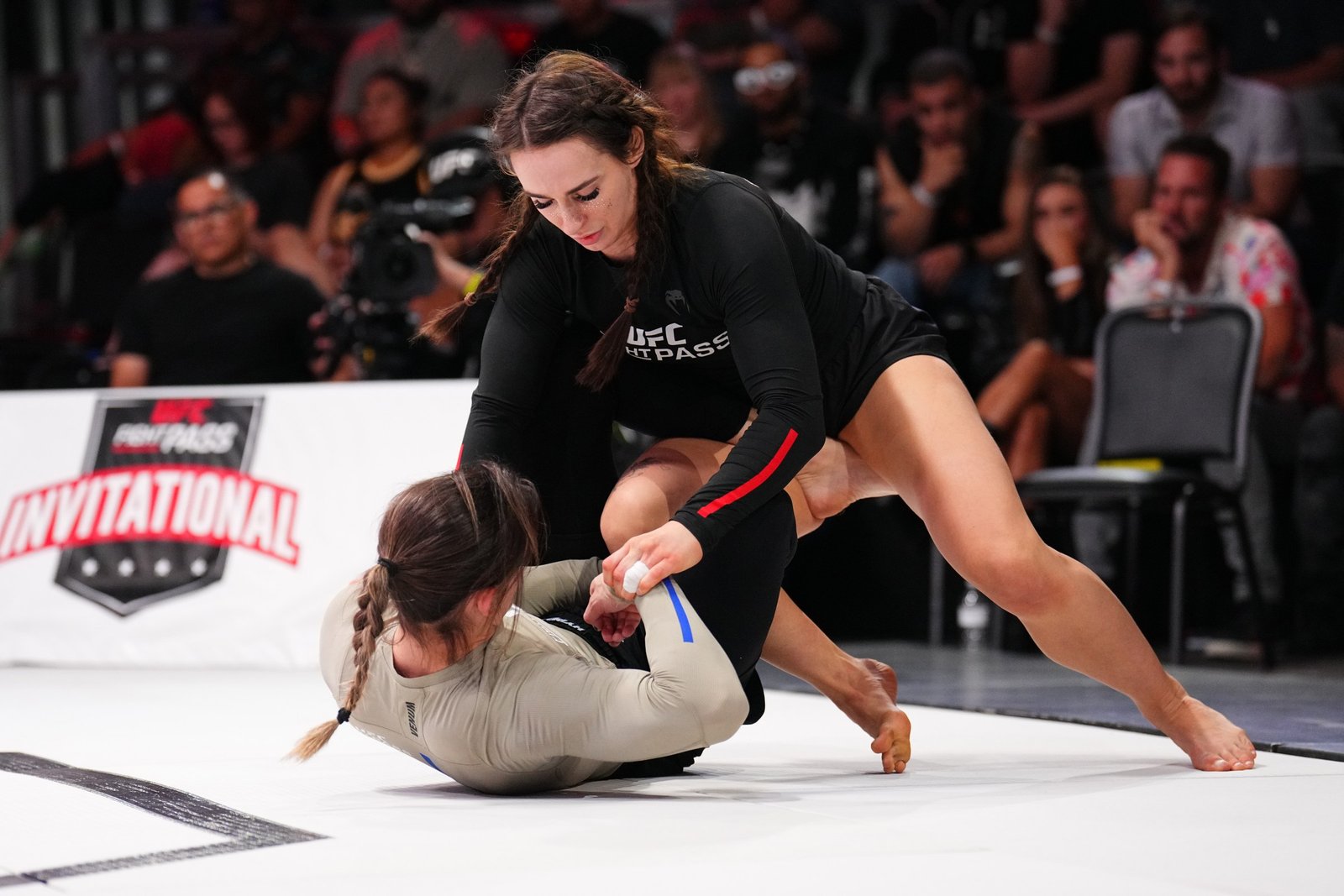
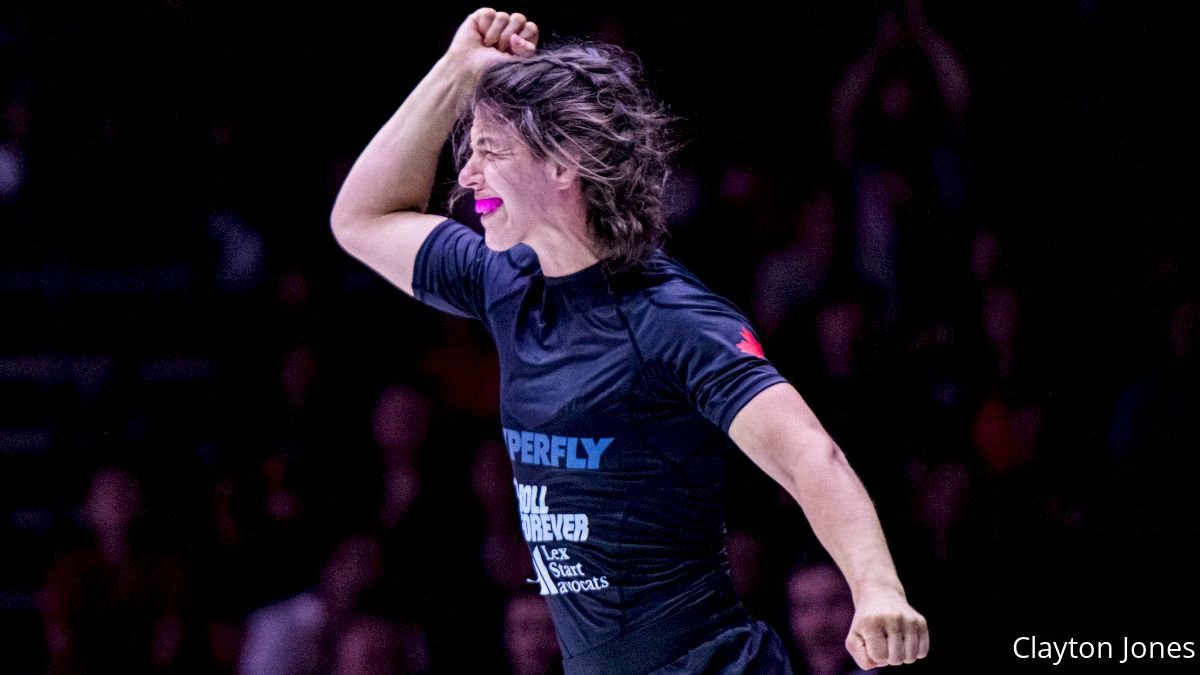
The push for better women’s rashguard design hasn’t been abstract. Competitors like Ffion Davies, Danielle Kelly, and Kendall Reusing compete at a level where gear failure has real consequences — and the conversation around women’s-specific no-gi gear has grown significantly as the competitive circuit has expanded. The consistent themes that have emerged at the elite level: length that stays put through leg lock entries, chest construction that doesn’t distort under a top player, and sublimation printing that holds through an extended training season.
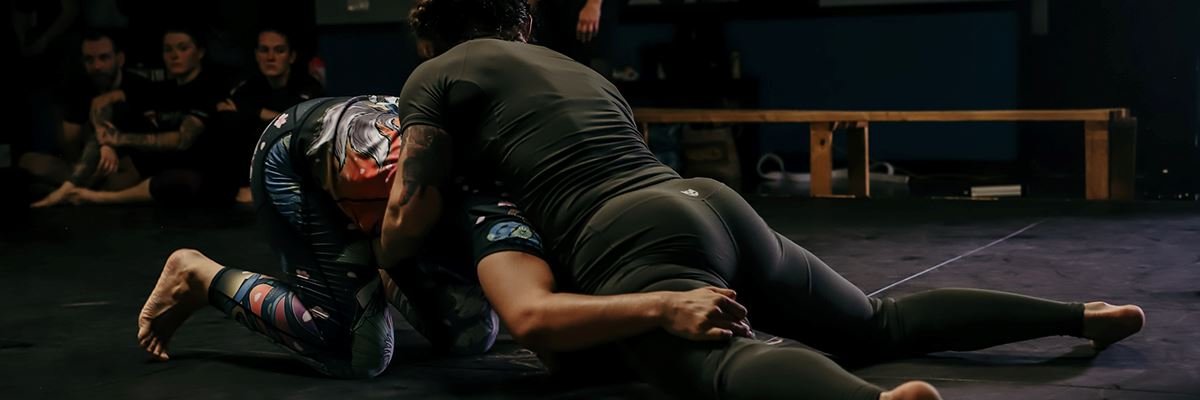
On that last point, a rashguard that’s faded, cracked, or peeling at the design after thirty washes is a hygiene concern as much as an aesthetic one — worn sublimation is a surface where bacteria accumulate and skin infections become more likely. The brands that have built genuine followings among elite women competitors are the ones that incorporated actual rolling feedback into design revisions, not just scaled a men’s pattern down and added a different color scheme.
One detail that matters more than most buyers realize is sleeve attachment. Raglan sleeves — where the sleeve runs continuously from the collar to the cuff without a shoulder seam — eliminate one of the main friction points during takedown scrambles. Set-in sleeves are cheaper to manufacture but create a shoulder seam that sits exactly where top players apply pressure. For women who spend time in top position or in standing grappling exchanges, raglan construction is the right call.
Training Gear vs. Competition Rashguards
The same principle that applies to men’s rashguard selection applies here, with an added layer: women’s competition-specific rashguard options are still more limited than the men’s market, which means sourcing carefully matters more. At IBJJF no-gi events and ADCC qualifiers, rashguard color is determined by belt rank — the same convention that applies to men’s divisions. Having the right color in a women’s-specific cut isn’t always straightforward, and some brands make it significantly harder than it needs to be.

For training volume — five or more sessions per week — a rashguard needs to survive repeated washing without losing elasticity or letting the sublimation degrade. This rules out the very cheap end of the market quickly. A rashguard that costs half as much but lasts a quarter as long is a poor trade; the gear turnover cost and the time spent sourcing replacements adds up fast. The practical approach is to keep at least two training rashguards in rotation and one competition piece that doesn’t go into hard use. This extends the life of all three and means you always have clean, functional gear available regardless of how your training week falls.
Storage matters too. Rashguards that are left damp after training degrade faster, regardless of fabric quality. Hanging to dry immediately after a session — rather than leaving the gear compressed in a bag — significantly extends the elasticity and sublimation life of a rashguard. It’s the simplest maintenance step that most people skip.
How to Evaluate Before You Buy
The women’s rashguard market has improved meaningfully over the past three years. The gap between a purpose-built women’s cut and a scaled unisex option has narrowed at the premium end, though it remains real at lower price points. When evaluating a rashguard, the questions that matter most are practical: Does the chest panel construction account for female anatomy without distorting under pressure? Does the torso length provide mat-level coverage in every grappling position? Is the fabric weight appropriate for your training frequency and use case — training, competition, or both? And does the brand have a documented track record of sublimation durability across a real training season?
Size charts from brands that offer women’s-specific cuts are usually more reliable than those from brands offering unisex options, but even women’s size charts from different brands can vary significantly. If you’re between sizes, the standard advice is to size down for compression fit — but only if the chest panel construction can accommodate it without distorting. A rashguard that’s too tight across the bust will ride up and restrict shoulder mobility; a rashguard that’s too loose across the torso loses its grip-reduction function. If possible, buy from retailers with clear return policies until you’ve identified the brands and cuts that work for your proportions.
For a current selection of women’s-specific BJJ rashguards across the major brands, Amazon’s no-gi rashguard category has expanded considerably and covers most of the brands competing in this space at multiple price points.
Sources
- FloGrappling — elite women’s no-gi competition coverage
- ADCC Submission Wrestling World Championship — Wikipedia
- Women’s BJJ rashguards on Amazon