
Ear Guards for No-Gi: How Grapplers Actually Prevent Cauliflower Ear
Nobody warns you about your ears on the first day. You worry about getting choked, about tapping too late, about gassing out in the first round. Then a few months in, you notice a dull ache along the top of one ear after a hard session of head-to-head pressure passing. It feels warm. It feels a little puffy. That is the exact moment cauliflower ear begins — and the exact moment most no-gi grapplers realize the ear guards they scrolled past online were never optional gear for other people. They were for you.
Cauliflower ear is the most visible souvenir in grappling, and unlike a bruise it does not go away. This guide walks through what actually happens inside the ear, why no-gi grapplers are arguably more exposed to it than gi players, what ear guards can and cannot do, and the small window of time you have to act before the damage becomes permanent. It is not a ranked list of products. It is the reasoning you need so you can decide how much protection your own training deserves.
What Cauliflower Ear Actually Is
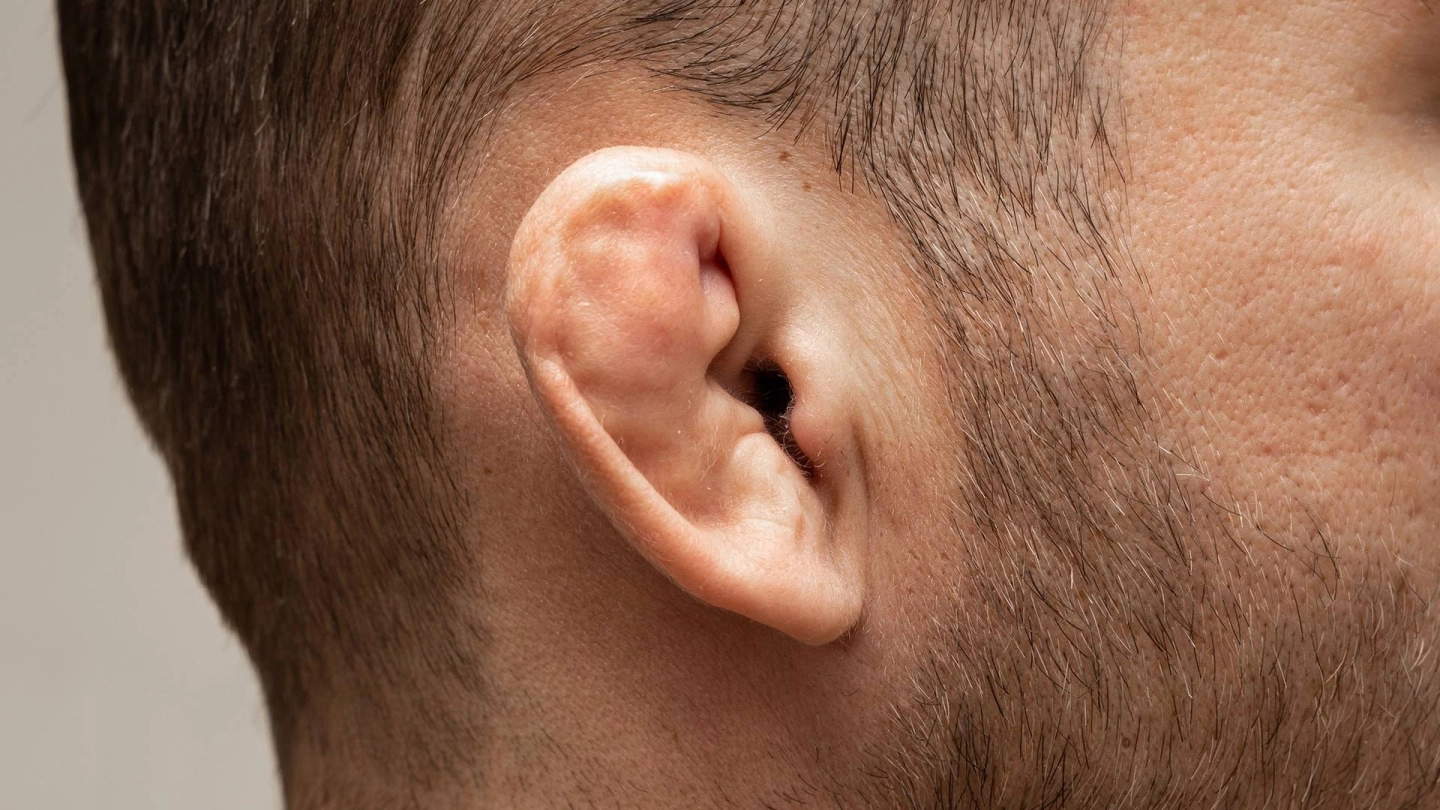
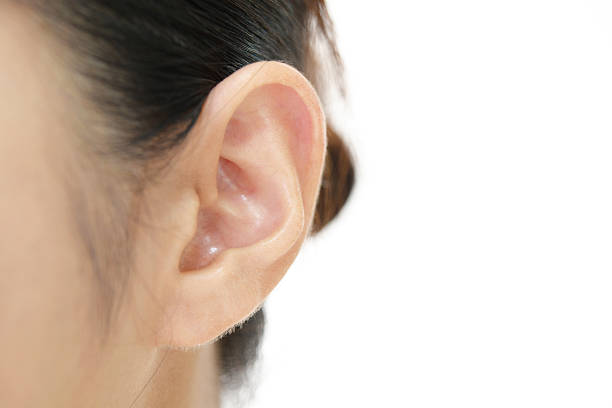
The technical name is auricular hematoma, and understanding it makes every prevention decision obvious. The outer ear is not muscle or fat — it is cartilage covered by a thin layer of skin. That cartilage has no blood supply of its own. It gets everything it needs from the skin pressed tightly against it, through a delicate connective layer called the perichondrium.
When your ear takes repeated friction and blunt force — grinding against a training partner’s skull during a guard pass, dragging along the mat in a scramble, getting crushed under an arm-triangle — the skin can shear away from the cartilage. Blood and fluid pool in the space that opens up. That is the swelling you feel. If the fluid drains or gets removed quickly, the ear can heal cleanly. If it sits there, the body treats it like a wound and lays down fibrous scar tissue, then new cartilage. The ear hardens into that lumpy, folded shape permanently. At that point no amount of ear guards, ice, or regret reverses it.
The key insight most beginners miss: cauliflower ear is rarely caused by one big impact. It is cumulative micro-trauma. It is the friction of a hundred rolls, not the drama of one collision. That changes everything about how you prevent it.
Why No-Gi Grapplers Are Especially Exposed
There is a common assumption that cauliflower ear is a wrestling problem, or a gi-BJJ problem, and that no-gi somehow sits in between. The reality is that no-gi grappling stacks several risk factors on top of each other.
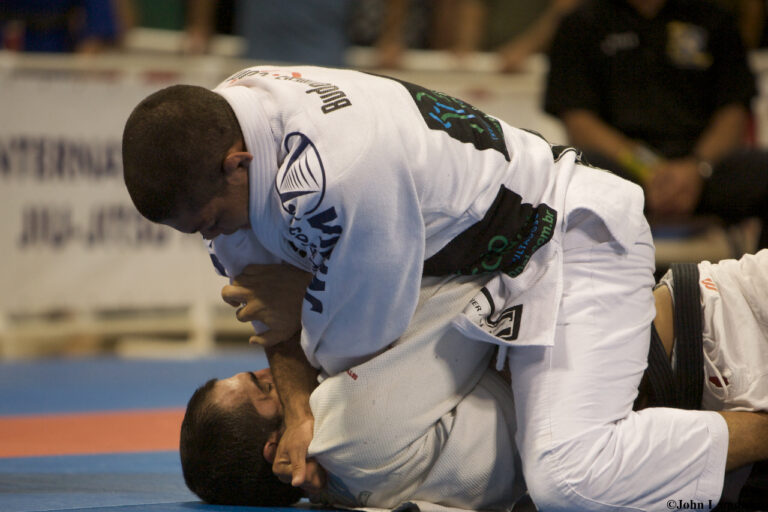
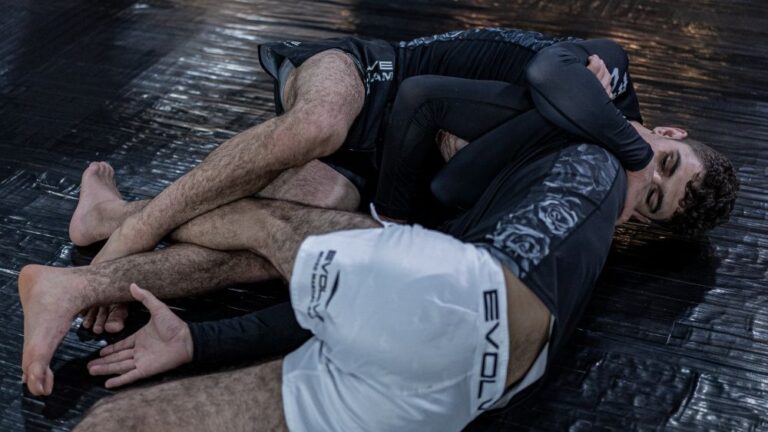
First, there is no collar to grip, so no-gi exchanges lean heavily on head positioning, underhooks, and tight body-lock pressure. Your head is a tool. You post it, you drive it, you use it to pin a partner’s hip during a pass — and every one of those actions grinds the ear. Second, no-gi rounds tend to be faster and more scramble-heavy than gi rounds, which multiplies the number of mat-drags and head collisions per session. Third, the culture of no-gi overlaps heavily with wrestling and MMA, disciplines where headgear is common but far from universal.
Front headlocks, dარrce chokes, guillotine battles, and head-outside single legs all park your ear directly against bone and force for extended seconds. If you train the modern scrambly no-gi game seriously, your ears are in the blast radius on almost every exchange whether you notice it or not.
What Ear Guards Do — And What They Don’t
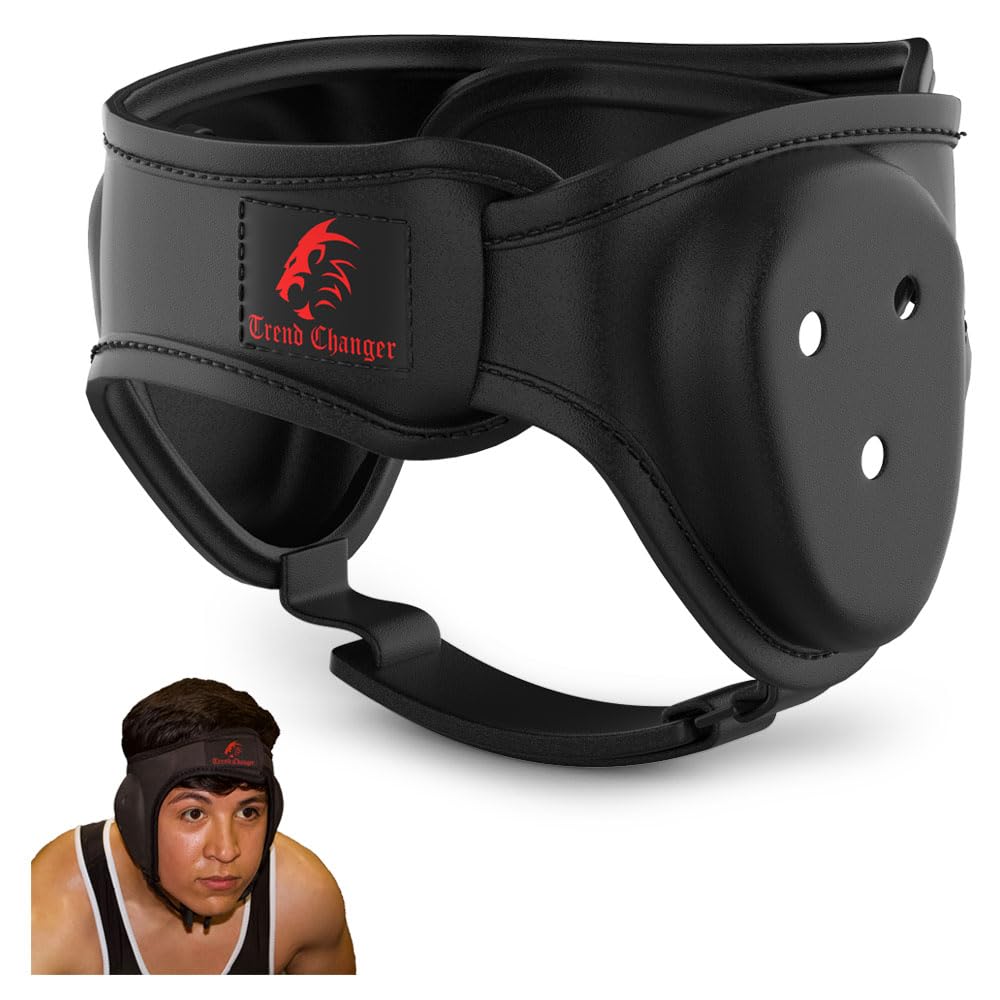
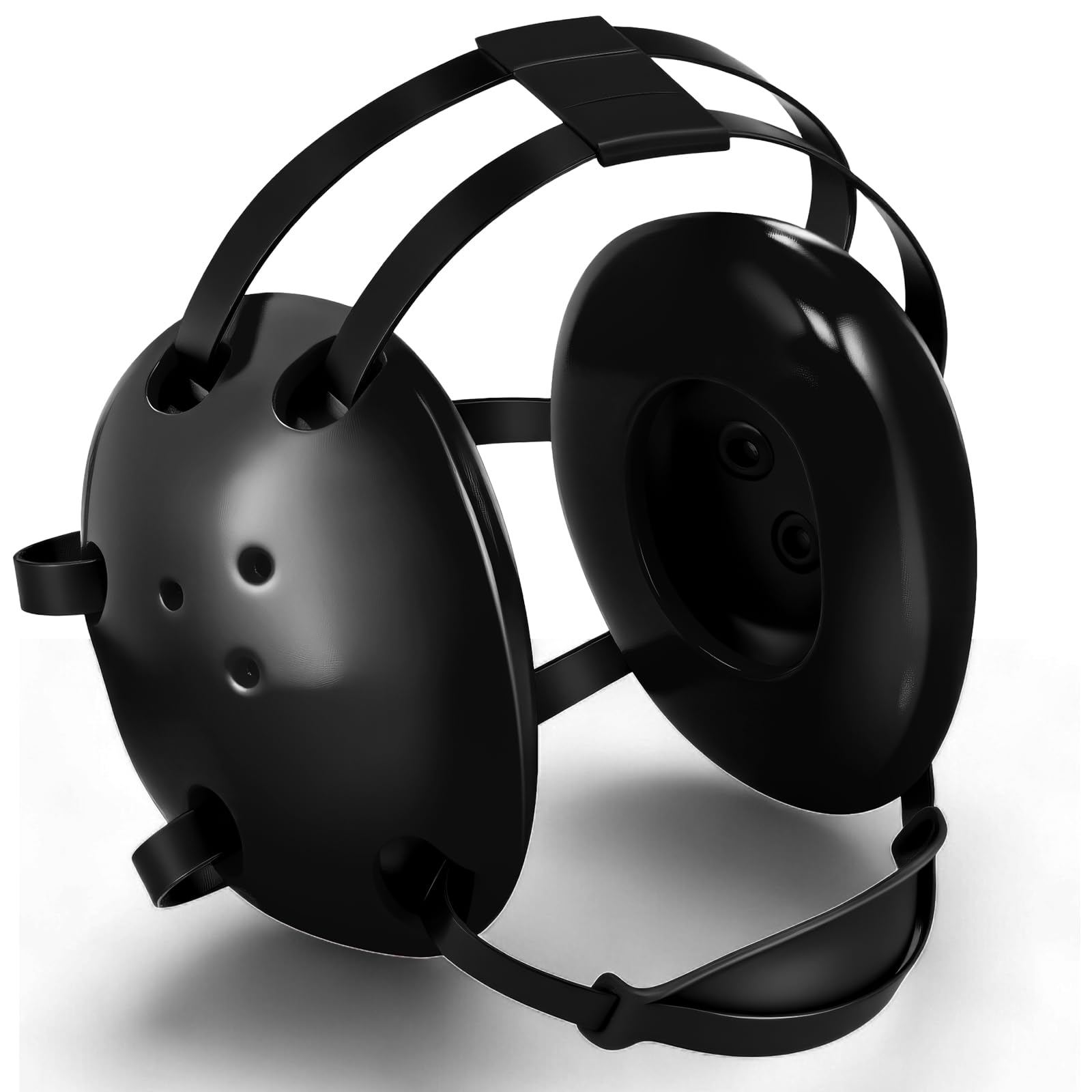
Ear guards, in practice, means grappling or wrestling headgear: a set of padded cups that sit over each ear, held by an adjustable strap system around the crown and chin. The cups take the friction and the pressure so your ear doesn’t have to. That is the entire job, and it is a good one.
Here is the honest limitation, though. Headgear reduces the shearing friction that causes most cauliflower ear, but it does not make your ears invincible. A hard, direct blow can still transmit force through the padding, and a poorly fitted strap can shift mid-roll and leave an ear exposed for exactly the exchange that hurts it. Ear guards are risk reduction, not a force field. The grapplers who protect their ears best treat headgear as one layer in a system that also includes good positional awareness and fast response to the first sign of swelling.
Fit is where most people go wrong. Headgear that is too loose slides and stops covering the ear during scrambles — the precise moment you need it. Headgear that is too tight gets abandoned in a drawer because nobody trains hard in gear that gives them a headache. You want the cups centered over the ears, the crown strap snug enough that a hard shake of the head doesn’t move it, and a chin strap you actually keep fastened. Then you want to forget it is there.
Choosing Between the Main Styles
Grappling headgear generally splits into two families, and the right pick depends on how and where you train rather than on which one is objectively “best.”
Traditional four-strap wrestling headgear
This is the classic setup you have seen on collegiate wrestlers: rigid ear cups, a four-point strap system, and a chin cup that locks everything in place. It offers the most secure fit and the most reliable coverage during explosive scrambles, which is why it dominates in wrestling rooms. The trade-off is bulk and a slightly claustrophobic feel that takes time to get used to. For no-gi grapplers who wrestle a lot, tie up in the clinch, and live in front headlock positions, the security is usually worth it.
![r/MMA - [SPOILER] Main card fighter's face is worse for wear, after the fight.](https://rashguardguy.com/wp-content/uploads/2026/07/ear-guards-cauliflower-ear-prevention-no-gi-5.jpeg)
Low-profile and minimalist ear guards
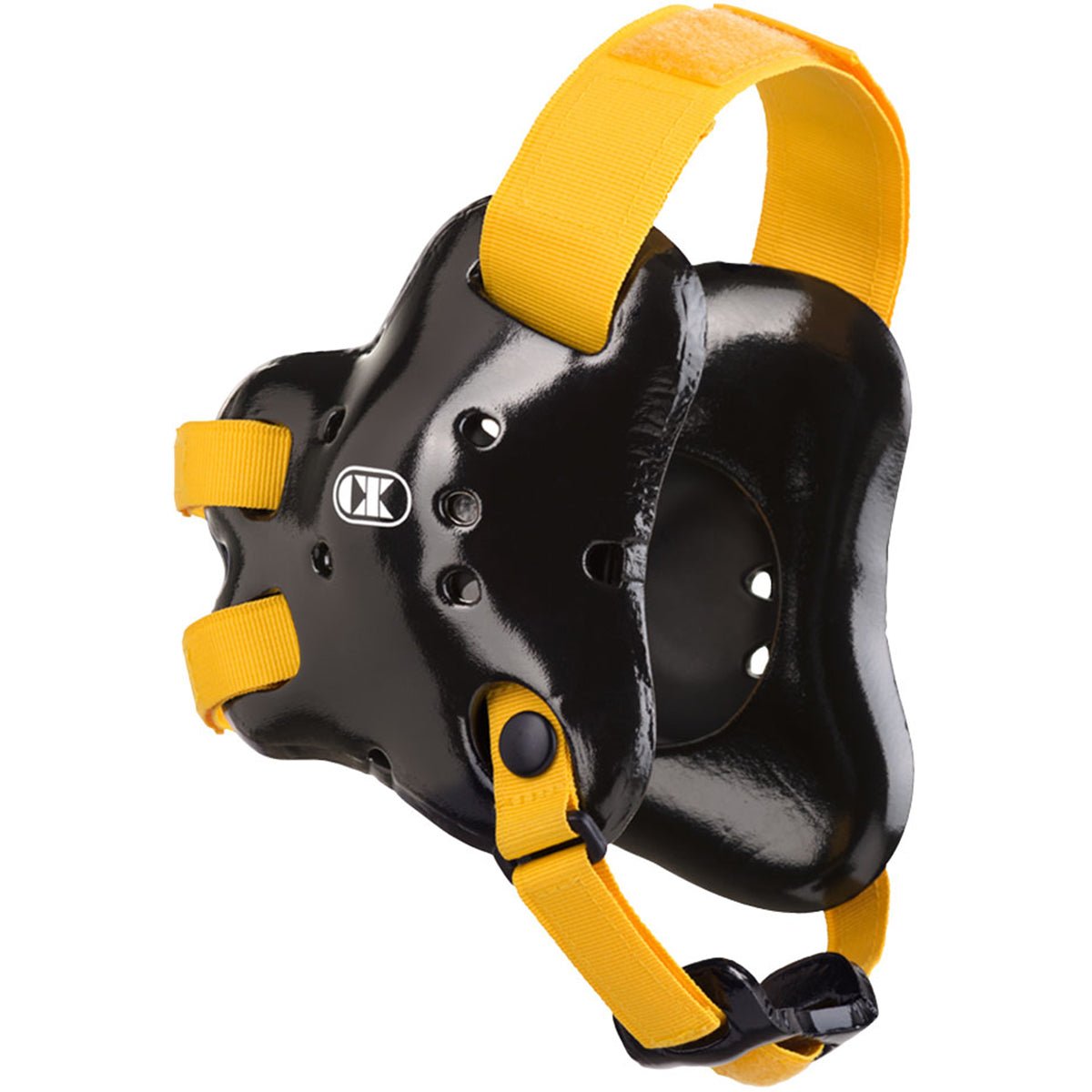
Newer designs strip the setup down to slim cups on a lighter strap, sometimes without a chin piece. They are more comfortable, less hot, and less likely to catch on a partner’s fingers or a rashguard collar. The trade-off is a fit that can slip more easily under heavy pressure. For grapplers whose main concern is friction during positional rounds rather than violent takedown scrambles, the comfort often means they actually wear the thing, and gear you wear beats gear you own.
If you’re shopping, search broadly and compare fit rather than chasing a single model. A quick wrestling and grappling headgear search surfaces both families side by side, and reading how each one’s straps adjust tells you more than any spec sheet.
When You Should Actually Wear It
Not every grappler wears headgear every round, and that is a legitimate choice as long as it is a deliberate one. The honest framing is a spectrum of exposure. If you already have some cauliflower ear and want to stop it from worsening, wear headgear consistently — the damaged ear is far more fragile and swells faster. If your ears are clean and you want to keep them that way, prioritize headgear during the highest-friction training: hard wrestling rounds, competition prep camps, and any session heavy on head-to-head passing and front headlock work.
Many experienced no-gi athletes wear ear guards for the intense parts of a week and skip them for lighter flow rolls. The risk with that approach is that cauliflower ear is cumulative, so the friction you shrug off on “easy” days still adds up. There is no perfect answer here — only a trade between comfort, vanity, and how much you care about the long-term shape of your ears. What is not defensible is wearing no protection, feeling that first warm swelling, and doing nothing about it.
The Window: What To Do The Moment Your Ear Swells
This is the part that matters most and gets talked about least. Ear guards are about preventing the swelling. But once an ear does swell, you enter a short window — usually a day or two — where the outcome is still in your hands. After that window, the fluid organizes into scar tissue and the shape sets for good.
The first response is immediate: ice and gentle compression to limit how much fluid pools, and rest from the friction that caused it. Ice slows the bleeding into the space; compression discourages more fluid from accumulating. This alone can be enough for a mild case caught early.
For anything beyond mild, the real fix is drainage — and this is where grapplers get themselves into trouble. Draining an auricular hematoma is a medical procedure. Done properly, a clinician aspirates or incises the fluid under sterile conditions and then applies a compression dressing so the skin re-adheres to the cartilage. Done in a locker room with a partner’s pocketknife and no sterilization, it invites infection into cartilage that has almost no ability to fight it off — a perichondritis infection can destroy far more of the ear than the original hematoma would have. If your ear needs draining, get it drained by someone qualified, and get it done fast. The speed matters more than the setting; a same-day clinic visit beats a heroic weekend of hoping it reabsorbs.
After a drain, compression is what actually prevents the ear from refilling and hardening. This is the step people skip, and it is why so many drained ears cauliflower anyway. Keep pressure on it as directed, and stay off the mat until it has stabilized. A few days of missed training is a trivial price against a permanently deformed ear.
Hygiene, Because Your Ears Are An Open Question
One overlooked angle: ear guards live pressed against sweaty skin for hours, and no-gi mats are a well-known reservoir for staph, ringworm, and other skin infections. Headgear that never gets cleaned becomes a petri dish parked directly over the exact tissue you are trying to protect. Wipe the cups and straps down after every session the same way you would a mouthguard, let them dry fully, and don’t share headgear. An infected ear is a worse problem than a cauliflowered one.
The Grown-Up Decision
Cauliflower ear carries a strange status in grappling culture — worn by some as a badge, dreaded by others as a disfigurement, and quietly regretted by plenty of veterans who wish they had bought ear guards in their first year instead of their fifth. There is no universally correct choice. Some grapplers genuinely do not care about the cosmetic outcome and would rather train unencumbered. That is their call to make.
What this guide argues for is not fear — it is an informed decision made before the damage, not after. Understand that the trauma is cumulative and friction-driven, that no-gi’s head-heavy game puts your ears squarely in the line of fire, that headgear meaningfully reduces the friction but does not eliminate the risk, and that the true emergency is the short window after the first swelling. Get those four things right and you can train the sport hard for decades with whatever ears you decide you want to keep. Ignore them, and your ears will make the decision for you.
Sources
- Wikipedia — Cauliflower ear (auricular hematoma)
- National Center for Biotechnology Information (NCBI) — clinical literature on auricular hematoma management
- Grappling and wrestling ear-guard headgear (product search)
Browse our top-rated rashguards and no-gi gear at the RashguardGuy shop →