Buggy Choke: 7 Steps to a Brutal No-Gi Finish
For most of jiu-jitsu’s history, getting flattened under side control meant one thing: you were about to lose. You survived, you framed, you prayed for a scramble. The buggy choke rewrote that script. A submission that finishes from the bottom of side control sounded like a party trick when it first showed up around 2020 — and then black belts started tapping to it on the biggest no-gi stages in the world. Today it sits in the same conversation as the darce and the rear naked choke as a legitimate no-gi weapon, not a novelty.
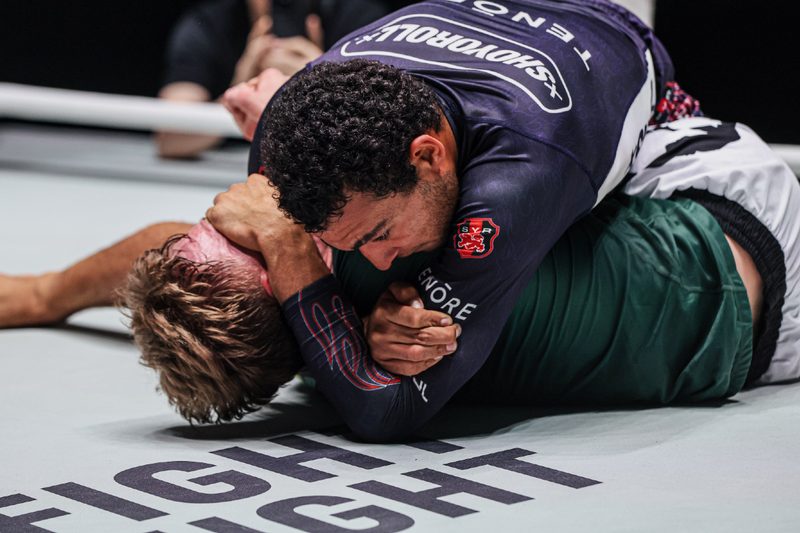
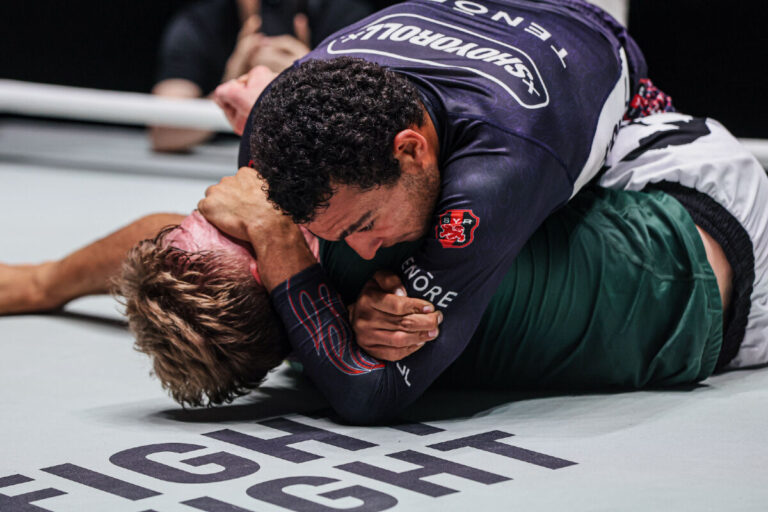
Bottom side control used to be a survival position. The buggy choke made it an attacking one.
What Is the Buggy Choke?
The buggy choke is a strangle you finish from bottom side control by wrapping one of your legs across the back of your own neck and trapping your opponent’s head and near arm inside that frame. Mechanically it’s closest to a reverse triangle — except the triangle is built with your leg instead of being locked around your opponent’s neck in the usual way. Most coaches describe it as a hybrid of a leg triangle and an arm triangle, since the pressure comes from your thigh on one side of the neck and your opponent’s own shoulder on the other.
The position that makes people doubt it is exactly what makes it dangerous. Your opponent thinks they’re winning. They’ve passed your guard, they’re chest-to-chest, they’re applying pressure. That confidence is the bait. When they reach across your body or let their head drift past your hip, the door opens. If you’ve drilled the no-gi triangle choke, the finishing geometry will feel familiar — you’re closing the same arteries from an upside-down angle.
Where the Buggy Choke Came From
The technique didn’t appear out of nowhere. Grapplers like Austin Hardt were hitting versions of it for years before it had a name. The label itself came from Daisy Fresh black belt Jacob “The Hillbilly Hammer” Couch, and it stuck because it was memorable and a little ridiculous — which fit a choke nobody took seriously at first.
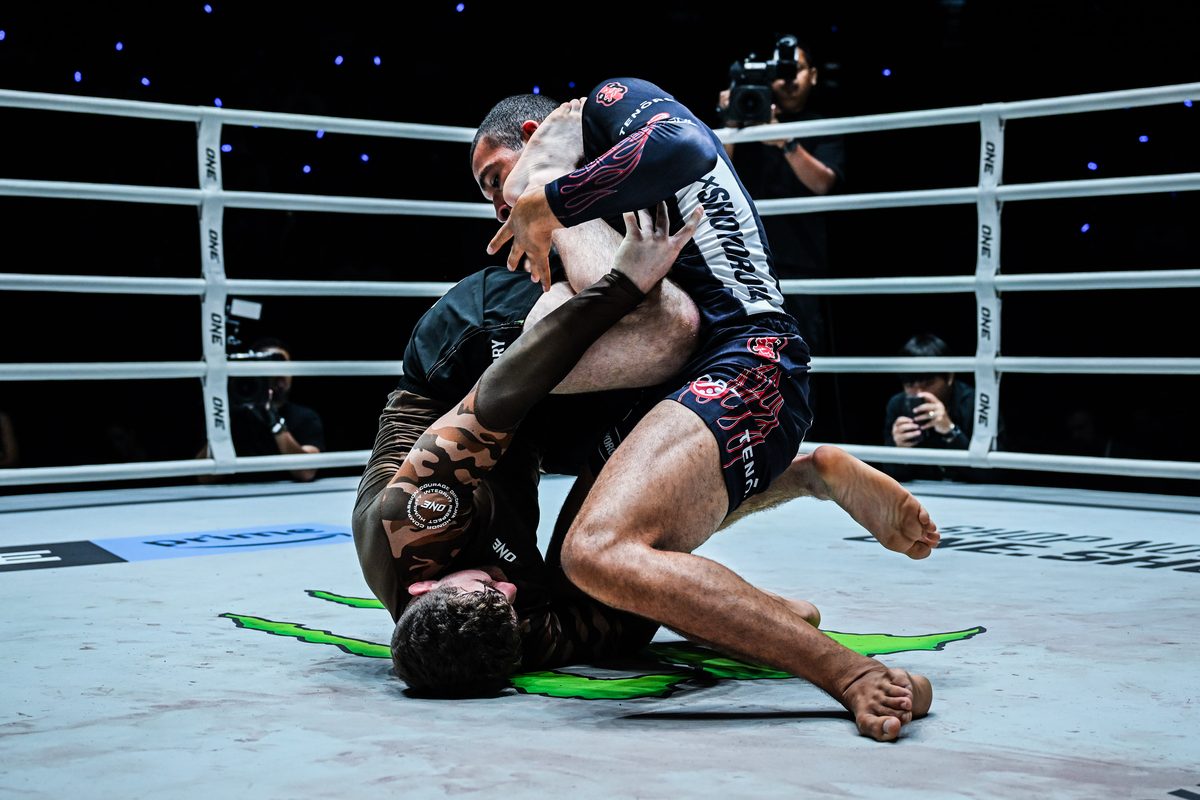
What changed everything was Kade Ruotolo. The ADCC and ONE Championship standout started finishing high-level opponents with it in front of huge audiences, and a curiosity turned into a must-drill submission almost overnight. When a world-class competitor taps an elite black belt with a move from the bottom of side control, gyms pay attention.

Kade Ruotolo’s success turned the buggy choke from a meme into a respected finish.
The Ruotolo brothers, Kade and Tye, both leaned into it and shared breakdowns that pulled the technique apart for everyone else. That openness is part of why the buggy spread so fast — unlike a lot of competition-tested moves that stay locked inside one camp, this one got taught publicly while it was still ascending.
Why It Works From the Worst Position
Pressure cuts both ways. When your opponent drives their weight into you from side control, they’re committing their head and shoulders forward to do it. That forward commitment is the raw material for the choke. The harder they push to flatten you, the more their neck and arm get fed into the trap you’re building underneath them.
The strangle is a blood choke, not an air choke. One carotid gets pinned by your thigh as your leg crosses behind your neck; the other gets compressed by your opponent’s own shoulder being driven into the side of their neck. Close both and the tap comes in seconds, regardless of how tough your opponent is. Toughness doesn’t beat a clean carotid choke — position does. That’s the same reason the arm triangle choke finishes bigger, stronger opponents from top side control. The buggy is its mirror image from the bottom.
The Buggy Choke Setup, Step by Step
Here’s the core sequence for the buggy choke from side control. Drill it slowly the first dozen reps — this is a neck-and-spine area, and rushing it is how training partners get hurt.
- Get to your side. If you stay flat on your back, your opponent’s weight smothers everything. Turn onto your hip toward your opponent so you have space to move your limbs.
- Trap the near arm. You need the arm your opponent has by your hips — the one they often slide across your body. Once it’s across, you have a path to their shoulder and neck.
- Clear your arm past their head. Do a small elbow escape and shoot your arm through so your tricep presses against the side of their neck. Think of throwing a slow uppercut underneath your own knee.
- Loop your leg behind your neck. Bring your bottom leg up and over so your shin or thigh sits behind your head, building the reverse triangle frame around your opponent’s trapped head and arm.
- Underhook at the crook of your knee. Feed your arm under your own knee to lock the structure. This is the detail that turns a loose tangle into a real choke.
- Connect your hands. Lock a gable grip to remove the slack and stop your opponent from posturing out.
- Curl and squeeze. Crunch your lat, point your toes, and pull everything tight as you lean into the pressure. Finish patiently — the tap arrives once both arteries close.

The structure matters more than raw strength — angle, then squeeze.
If you want a visual reference from the people who put this choke on the map, Kade and Tye Ruotolo’s own breakdown is worth ten written tutorials:
The Biggest Buggy Choke Mistakes
Most failed buggy chokes die for one of a handful of reasons, and almost all of them trace back to staying flat. If your shoulders are pinned to the mat, you have no room to thread your arm or loop your leg, and the whole thing stalls before it starts.
The second killer is grabbing for the finish too early. People feel the head trapped and immediately yank on a grip before the leg is properly behind the neck. Without that reverse-triangle frame locked, you’re just hugging your opponent’s head while they posture free. Build the structure first, squeeze second.
The last common error is forgetting to control the near arm. If your opponent pulls that arm out, the choke loses one of its two compression points and turns into a stretch that mildly annoys them. No trapped arm, no buggy choke.

How to Escape and Defend the Buggy Choke
This is the part most buggy choke tutorials skip entirely, which is strange, because defense is what keeps you off the highlight reel for the wrong reasons. The good news: the buggy is far easier to shut down before it’s locked than after.
The cleanest prevention is awareness. When you pass to side control against someone known for the buggy, do not let your head drift past their far hip, and do not feed your near arm across their centerline. Keep your trapped-side elbow tight and your posture stacked up rather than collapsed forward. A lot of buggy finishes are gifts from a top player who got greedy with pressure.
If your opponent has already started threading the choke, your priority is your posture and your trapped arm. Pull the arm back out and free your head by driving your chin toward your own chest and walking your hips away from their attacking leg. Some grapplers will give up side control entirely and spin toward the legs to kill the angle — losing position beats losing consciousness. The same posture-and-base principles that defend the no-gi darce choke apply here: deny the angle, never let the strangle settle.

When the choke is threatening, giving up the position is the smart escape.
Is the Buggy Choke Legit?
Skeptics had a point early on. A move from the bottom of side control violated decades of jiu-jitsu instinct, and plenty of coaches dismissed it as a flexibility stunt that would never finish anyone good. Then it kept finishing people who were very good. The record settles the argument better than any opinion can — the buggy choke has tapped accomplished competitors in major no-gi events, and that’s the only proof a technique needs.
It’s not a free submission, though, and treating it like one is a mistake. It rewards a specific moment — an opponent over-committing their pressure — and against a careful passer who keeps their posture and their arms tidy, the opening may never come. Think of it as a counter you cash in when someone gives you the position, not a sequence you force from scratch. That framing keeps it honest.

Drilling the Buggy Choke Safely
One myth worth killing: you don’t need to be a contortionist. The early reputation painted the buggy as a flexibility move, but the Ruotolos themselves have shown setups that lean on angle and arm position rather than extreme range of motion. If you can turn to your side and thread your arm, you can build a functional version. Tighter hips just mean you’ll rely more on the arm-and-shoulder compression than the deep leg loop.
Respect the neck and spine. Tap early when you’re the one caught, and apply slowly when you’re the one finishing — there’s torque on the neck here, and a partner who waits too long can tweak something that lingers for weeks. Build it into your bottom side control round-work rather than chasing it cold, and pair it with the strangles you already trust. A grappler comfortable with the rear naked choke and the triangle already understands the carotid mechanics; the buggy just delivers them from an unfamiliar address.

Add the buggy choke to your game and something shifts beyond one new submission: bottom side control stops feeling like a sentence. Once your training partners know you’re hunting from down there, they pass more carefully, give you less pressure, and hand you scrambles they used to take for free. That psychological tax might be worth more over a long competition than any single tap. Drill it this week, start from a position you usually hate, and find out who gets greedy.
Sources
- Evolve MMA — What Is The Buggy Choke In BJJ? — technique overview and mechanics.
- FloGrappling — Kade Ruotolo — competition record and event coverage of the choke’s most famous finisher.
- ONE Championship — Kade Ruotolo Athlete Profile — submission grappling results in major no-gi events.
Browse our top-rated rashguards and no-gi gear at the RashguardGuy shop →